






Listen and followApple PodcastsSpotifyYouTubeMore apps · Browse all episodes
“You can talk about Ukraine and the courage of the Ukrainian people as you talk to colleagues and patients and as you talk to family and friends in your community. The U.S. may be divided now, but we can speak as one people in support of democracy in Ukraine. When you speak as a clinician, you are a trusted voice, helping to unite your community and keep that community focused on values we share, values that give the patient care we do meaning.”
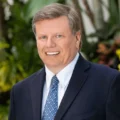
Michael Fine is a family physician.
He shares his story and discusses his KevinMD article, “What physicians can do in Ukraine.”
SUBSCRIBE TO THE PODCAST → https://kevinmd.com/podcast
RATE AND REVIEW → https://kevinmd.com/rate
FOLLOW ON INSTAGRAM → https://www.instagram.com/kevinphomd
FOLLOW ON TIKTOK → https://www.tiktok.com/@kevinphomd
GET CME FOR THIS EPISODE → https://earnc.me/Fcb7RQ
Powered by CMEfy – a seamless way for busy clinician learners to discover Internet Point-of-Care Learning opportunities that reward AMA PRA Category 1 Credit(s)™. Learn more at about.cmefy.com/cme-info
Transcript
Kevin Pho: Welcome to the show, where we share the stories of the many who intersect with our health care system but are rarely heard from. My name is Kevin Pho, founder and editor of KevinMD. Rate and review the show at KevinMD.com/rate. Subscribe at KevinMD.com/podcast. In today’s show, we welcome back Michael Fine. He is a family physician, and his latest KevinMD article is titled “What physicians can do in Ukraine.” Michael, welcome back to the show.
Michael Fine: Great to be here, Kevin. Thanks for doing it.
Kevin Pho: We’ll get into the article in a little bit, but for those who didn’t listen to our first episode, which was almost two years ago, just briefly share your story and journey to where you are today.
Michael Fine: Sure. I’m a family physician trained in Rhode Island. I got to work for a couple of years as the director of the Rhode Island Department of Health, and since then I have been working mostly as the chief health strategist for the city of Central Falls, Rhode Island, thinking about how we take care of the population of that city, which is the poorest and most diverse city in the state of Rhode Island.
Real physician voices, twice a week
Free, and one click to unsubscribe.
Kevin Pho: So in your position, tell us, what are some of the major health challenges that face the population there?
Michael Fine: The biggest health challenge was COVID-19. We were, at various points in the pandemic, the most infected place in the state, in the nation, and actually in the world. It’s a very poor and densely populated place, and that led to the rapid spread of the virus. We also struggle, obviously, with the health consequences of poverty and of people who are undocumented. All of those things together make it an at-risk population, but it’s also a population that’s dedicated to improving its health and improving its situation. It’s been called the Comeback City because it’s full of people who have filled themselves with energy.
Kevin Pho: All right. And when you talk about the health problems of the undocumented, just briefly, what are they?
Michael Fine: Of the undocumented, the biggest health problem is lack of access to care, compounded by living in close quarters. Many people live in a two-bedroom apartment with six, eight, 10, or 12 people sharing one bathroom and sharing one kitchen. And then people just have to work so hard. Most people who think about the undocumented don’t realize that people work two and three jobs just to keep their heads above water, because they’re trying to send money home.
So they work hard all the time, they’re exposed to lots of infectious diseases, and the stress of that life creates a kind of weathering that we don’t see in the rest of the population. And because they’re undocumented, they generally fear the use of health care and won’t go for routine primary care, even to a community health center, because they’re just scared.
Kevin Pho: All right. Let’s talk more about your KevinMD article titled “What physicians can do in Ukraine.” Now, before summarizing that article for those of you who get a chance to read it, just tell us what made you interested in this topic.
Michael Fine: I think it was hard for me personally not to be interested when Russia invaded the Ukraine on February 24th. To me, Putin was the embodiment of the kind of leader, if that’s what you want to call him, who has brought the world to its knees many times. This is, to me, Hitler and Stalin and Mussolini all rolled into one, here again, here in the 21st century, right in front of us, threatening the same kind of huge damage to democracy overall and to the people of Ukraine, all at the same time. So to me, it was hard to watch this and not do something. It was hard to watch this and sit on my hands.
So on February 24th, as soon as the invasion happened, I got on the phone and started trying to find someplace where I could go and help in some way. And I figured I’m an old guy, I don’t have much at risk, but I needed to do something to protect the people who are younger and are at risk. So I made a bunch of phone calls and didn’t get very far. In the early days of the invasion, nobody really knew what was happening.
And then over time, I managed to find someone who was from Rhode Island and was in Ukraine, a guy who is generally thought of as very conservative but who had gone to the Ukraine himself, a radio newsman, and he connected me to an organization called Humanity First. That let me arrange to go and to work at the border at Medyka, which is the border town in Poland between Ukraine and Poland. It was really the only place people could walk across the border, and that was the place you saw on television, where there were thousands and hundreds of thousands. And actually, by the time things calmed down, about 5 million people crossed out of Ukraine looking for safety, and many of them crossed at Medyka.
So I had the honor and privilege of working with Humanity First in a mobile, then tent, clinic, doing primary care and urgent care, whatever anybody needed, for people as they came across the border.
Kevin Pho: So take my audience into that experience. Tell us what you saw there.
Michael Fine: First, we saw people, and heard people, walking across by the hundreds a day, walking down this pathway from the border station to a series of buses they could take to get elsewhere in Poland. The buses would take them to trains and so forth. And those people were fleeing devastation. They were carrying their lives in their hands. The character of the pavement was such that you could hear the rattling of their suitcases as they rolled down, the constant rattling of their suitcases.
The human flood itself was fairly intense. The other amazing thing was that there were hundreds of people, volunteers from around the world working for nongovernmental organizations, doing all sorts of things to try to help and support these people who were running for their lives. So the people would be met at the border by volunteers in red and yellow vests, and the volunteers would help them carry their suitcases, sometimes wheel them in wheelchairs, and help them carry their pets from one place to the next.
Along the way, there were multiple places that would provide them with food and phone cards. They could have coffee, tea, chai, pizza, and all sorts of things, from an organization called Siobhan’s Trust and another one called World Central Kitchen. And there was something quite beautiful and quite amazing about these volunteers who had come just to help and support these people from the Ukraine whose lives were threatened, whose government was threatened, as democracy itself was threatened.
Kevin Pho: Now, to your understanding, what’s the situation there today?
Michael Fine: Obviously, the Ukrainian government has been fairly successful in the course of the last week or two in pushing back some of the invasion. But as we’ve all heard, I think the Russians have mobilized 300,000 more troops and are getting ready for a huge counterattack. There’s been a threat of a nuclear response, a threat that seems credible.
There are 7 million internally displaced people who have moved from eastern Ukraine, where the fighting is, to western Ukraine, where it’s safer. But many people are living in schools; most of the schools have been converted to refugee centers. Many people are living in old houses, houses that have been abandoned and have now woken up, in the countryside. And their medical care has been incredibly disrupted, because they’re not close to their usual source of care anymore.
So at the height, there were about 7 million internally displaced Ukrainians and about 5 million people who had left the country but tried to stay close by in Poland or elsewhere in western Europe, and many of those people have gone back. So there’s a lot of movement in and out of Ukraine and a lot of disruption of routine health care as a result.
Kevin Pho: What are some of the lessons that you’ve learned from your experience in Ukraine?
Michael Fine: One lesson is that international volunteers can be useful in the emergency. We were there at the border. We would take care of people who needed medicines refilled. We had a bunch of donated medicines from all around the country and tried to figure out how to match what we had to what people were used to taking. We were able to help people who had recently broken legs or were emotionally stressed, because the mental health issues were huge. But remember, people were just walking by us on their way to someplace else, so there wasn’t all that much we could do.
The real health challenges really depend on an infrastructure. At the end of the day, health care depends on peace. There’s no effective way, or very little effective way, for those of us from outside Ukraine to help professionally, because we don’t speak Ukrainian and the health care system has been disrupted. That means that we need to pay very close attention to the ways in which we can help. That means donations. It means support of Ukrainians and of our brother and sister health professionals any way we can.
I did a little work with some colleagues trying to find a place for the 5,000 Ukrainian medical students whose medical school was blown up by the Russians in Kharkiv, who didn’t have a place to study. There were real challenges to doing that, but a bunch of people worked on it. I think we weren’t that terribly successful, but just that we worked on it meant that people inside the Ukraine felt like the world was watching and that the world was with them.
We can do things like that. We can give money. We can talk about this situation and make sure that our communities and our patients understand the importance of the Ukraine to democracy itself, at a time when we’re a divided nation. So this is something that can unite us as we work together to support the people in the Ukraine who are taking the brunt of a terrible aggression.
Kevin Pho: Now, let’s talk in a little bit more detail in terms of specific things that physicians can do. You mentioned speaking on platforms, sharing their voice, and donations. What are some specific details that doctors can take as some of those next steps?
Michael Fine: In the op-ed, there are a bunch of organizations that are really great organizations and are helping both with medical care and with material support. So supporting those organizations, checking out their websites, sending money, then telling other people in your communities and telling your patients about it, I think, is an important piece.
It’s actually worth paying a fair amount of attention, as clinicians, to people who are themselves Ukrainian, because they’re incredibly stressed, and just, in the exam room, recognizing that and checking in on how their families are doing. I think those things are incredibly useful. In Rhode Island, we worked with two Ukrainian churches, making sure that they felt connected and supported, and I think that was helpful as well.
But I think the most important thing clinicians can do is to recognize that they themselves are trusted messengers, that physicians are the people who patients trust and listen to. And so when we say, “Gee whiz, it’s bad here, but think of what’s going on there, and let’s remember that we need to support and can support them,” I think that carries a huge amount of weight.
Kevin Pho: We’re talking to Michael Fine. He’s a family physician, and his latest KevinMD article is titled “What physicians can do in Ukraine.” Michael, for those physicians who are interested in traveling to these areas marred by conflict, you said that you had a few connections, but in general, what are some of the next steps that clinicians can take if they actually want to go to these areas of conflict and help in person?
Michael Fine: I think it is very useful to have prearranged something with an organization that is skilled at doing this, both for safety and for effectiveness. The last thing anybody wants is a bunch of American docs who are well-meaning but don’t speak Ukrainian running around in a conflict zone, putting themselves and other people at risk, without having a clear sense of mission and the logistical support you need to practice medicine intelligently.
So there are great organizations like the International Medical Corps and Médecins Sans Frontières, and I think the International Rescue Corps, that coordinate this work, and it’s worth going on their websites and seeing if the way they work works for you. Some of them require a fairly substantial commitment, six months to a year, and that’s more than some people can give, which is somewhat of a limit on it. And I think it’s really important to do that research before you go and find somebody who you can work with. I was able to do that with a colleague who went after I did.
Unfortunately, in the Ukraine, I don’t know which is correct, but at the moment there don’t seem to be good options for those of us who have two or three weeks to give. It requires a much longer commitment, but it’s worth thinking about, and it’s worth doing when it’s needed. The wonderful thing is that the stream of refugees coming across the border at Medyka has reduced fairly significantly, so the need for that kind of episodic, just-be-there-at-the-border urgent care is much diminished. That doesn’t mean there aren’t other sorts of needs, but it’s worth making sure that the Ukrainian Ministry of Health and Ukrainian organizations are looking for that kind of support, and making sure that there is clear work for people to do.
Kevin Pho: And my final question: What are some of your take-home messages that you want to leave with the KevinMD audience?
Michael Fine: The biggest take-home message is the importance of democracy itself. There’s no health care that we can do that has any meaning if we don’t have peace. The last time I got to talk to you was about Dr. Bernard Lown, and if he taught me nothing else, he taught me the importance of the context for medical care. He said over and over again, “If there’s a nuclear war, all the health care we do doesn’t matter. If there isn’t peace, all the health care we do doesn’t matter.”
And I, anyway, think democracy is critical to peace. So if there isn’t democracy, all the health care we do doesn’t matter. Making sure that we get our priorities straight and focus on that context, making sure that we do what we can do to protect democracy and create peace, is critical to our missions as health care workers.
Kevin Pho: Michael, thank you so much for sharing your story, time, and insight. Thanks again for coming back on the show.
Michael Fine: Thanks for having me. Hope to talk to you again soon.
Listen and followApple PodcastsSpotifyYouTubeMore apps · Browse all episodes