












Listen and followApple PodcastsSpotifyYouTubeMore apps · Browse all episodes
“It’s one of the hard things about anesthesiology. A window opens, you work like all get out, doing all sorts of things while the breeze blows in, then it’s shut again. Sometimes, you see your patient once more; sometimes, if things go awry, you might see them multiple times. Or your colleagues step in to help out if you are not there. Or the critical care or perioperative anesthesiologist work their magic for awhile. But basically, you welcome the orneriness in, and then, after the bustle and harumphing, you miss it.”
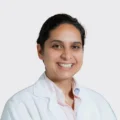
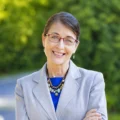
Audrey Shafer is an anesthesiologist.
She shares her story and discusses her KevinMD article, “The sick-sick patient and the anesthesiologist.”

This episode is sponsored by the Nuance Dragon Ambient eXperience.
With so many demands on their time, physicians today report record levels of burnout. Burnout is caused by many factors, one of which is clinical documentation. Studies indicate physicians spend two hours documenting care for every hour spent with patients.
At Nuance, we are committed to helping physicians do what you love – care for patients – and spend less time on clinical documentation. The Nuance Dragon Ambient eXperience, or DAX for short, is an AI-powered, ambient clinical intelligence solution that automatically captures patient encounters securely and accurately at the point of care. Physicians who use DAX have reported a 50 percent decrease in documentation time and a 70 percent reduction in feelings of burnout, and 83 percent of patients say their physician is more personable and conversational.
Rediscover the joy of medicine with clinical documentation that writes itself, all within the EHR.
VISIT SPONSOR → https://nuance.com/daxinaction
SUBSCRIBE TO THE PODCAST → https://kevinmd.com/podcast
RATE AND REVIEW → https://kevinmd.com/rate
FOLLOW ON INSTAGRAM → https://www.instagram.com/kevinphomd
FOLLOW ON TIKTOK → https://www.tiktok.com/@kevinphomd
GET CME FOR THIS EPISODE → https://earnc.me/59ffMF
Powered by CMEfy – a seamless way for busy clinician learners to discover Internet Point-of-Care Learning opportunities that reward AMA PRA Category 1 Credit(s)™. Learn more at about.cmefy.com/cme-info
Transcript
Kevin Pho: Hi, and welcome to the show, where we share the stories of the many who intersect with our health care system but are rarely heard from. My name is Kevin Pho, founder and editor of KevinMD. Rate and review the show at KevinMD.com/rate. Subscribe at KevinMD.com/follow.
Today on the show we have Audrey Shafer. She’s an anesthesiologist, and her KevinMD article is titled “The sick-sick patient and the anesthesiologist.” Audrey, welcome to the show.
Audrey Shafer: Thank you so much for having me.
Kevin Pho: We’ll get into the article a little bit. First off, briefly share your story and journey to where you are today.
Real physician voices, twice a week
Free, and one click to unsubscribe.
Audrey Shafer: I grew up in Philadelphia in a single-parent family. It was my mother, my sister, and me. It was a very arts-intensive family, which translates to not much money. My sister and I wound up being very interested in science and ultimately medicine, and we both became physicians. I think there’s a lot of stability in that.
I am currently, and have been for quite a while, on faculty at Stanford in the Department of Anesthesiology, Perioperative and Pain Medicine. My clinical work, though, is all at the Palo Alto veterans hospital. My academic work has focused on an area that’s called medical humanities, which is bringing the arts, humanities, and qualitative social sciences to bear for us to better understand what it means to be human, mortal, and embodied, and to care for each other when we’re ill.
Kevin Pho: We’ll talk more about that intersection between the humanities and medicine. Why is that so important?
Audrey Shafer: You know, I think what I hope to do in my writing about anesthesiologists is to show that even in this highly technical field of medicine, the human element is paramount. What I believe the arts and humanities do is broaden our view of what it really means to be human in this very diverse world. It enlarges our view much more than one can do just in living one’s own life. Hence I believe that the arts and humanities hold this ability to not only broaden your view but also deepen it, and allow you to think critically about what it is that we do in medicine.
Kevin Pho: All right. We’re going to talk more about one of your stories in your KevinMD article titled “The sick-sick patient and the anesthesiologist.” Now, for those of you who get a chance to read your article, just walk my audience through it. Share the story and why you decided to write it.
Audrey Shafer: I wrote it because in this world of anesthesiology, we don’t have a great span of time to get to know our patients. Frequently the patient has either not had a preoperative evaluation, or there is one that’s in the electronic record, but one is meeting the patient immediately before they’re going to go in for their procedure. I wrote this article because I wanted people to understand that the anesthesiologist cares deeply.
In my practice, we do have the sick patient, the one who is struggling to breathe even before going in for anesthesia and for some sort of invasive surgery, and that is of concern. So when an anesthesiologist expresses concern, it’s ultimately out of a love for that patient, out of caring that the patient is done right by.
The other wonderful thing about the patient population in my practice is that our patients are amazing. It is a diverse population, all adults but of many ages and different walks of life. But there is this population of people who are very self-reliant, who are used to depending only on themselves, and so this aspect of giving a stranger control over their life can be pretty disturbing for our patients. They’re not going to express it that way, but that aspect of control is important to these patients. So I wrote this article, which is based on a conglomeration of a number of patients, out of just deep love for the patient population I serve.
Kevin Pho: When a lot of people think about anesthesiology and anesthesiologists, the proverbial response is that they’re just behind a drape during surgery or some type of procedure. But anesthesiology is so much more than that, right? There are outpatient pain clinics, there are perioperative clinics. So talk more about the non-operating-room settings of what anesthesiologists do. Tell us a little bit about some of that.
Audrey Shafer: Absolutely. As you say, there are all kinds of subspecialties within anesthesia, some of which are operating-room-based, like cardiac anesthesiologists or neuroanesthesiologists, that sort of thing, but others which expand out into the rest of the hospital. There’s pain medicine, which has a clinic component and extended visits with patients over time. There’s critical care, the intensive care unit; anesthesiology is a pathway to becoming an intensivist. There is regional anesthesia, which is frequently linked to the operating room, but those specialists also take care of acute pain issues in the hospital. And there’s obstetric anesthesiology, which obviously cares for people who are about to have their baby.
Other subspecialties include pediatric anesthesiology. So some of our anesthesiologists are board-certified in multiple areas in order to qualify to handle patients in those very subspecialized, intricate areas of anesthesia.
Kevin Pho: I’m going to ask a question that puts you a little bit on the spot here, but can you think of a case or a patient that really demonstrates that longitudinal relationship an anesthesiologist has with a patient, one that really illustrates some of those other settings you talked about?
Audrey Shafer: At my hospital, I’m part of the perioperative medicine team, and what we do is go to see the postoperative patient. Frequently the anesthesiologist who actually provided care for that patient is in the operating room with other patients, and so we have a team who goes around, and it’s part of our teaching program through the Stanford anesthesiology residency program, where we meet with patients.
So, for example, I had a recent patient whom I had seen, and he seemed perfectly fine when I interrupted his breakfast in the morning. And sometimes, unfortunately, one is finding patients asleep and wondering, “They look good; maybe I should come back in a little bit so they can get that restorative sleep.” But anyway, he had seemed fine, only for me to hear, maybe two and a half hours later, of an E-team. As perioperative medicine, you’re part of the rapid response team, and we went to this E-team for this patient. He was not doing so fine.
So things rapidly change, but the fact that I had seen him and could report what his vital signs had been just a couple of hours before was helpful. He did fine, we continued to follow him, and he went home just fine. That is the kind of thing where being able to see somebody at multiple windows, and of course the nursing care, because they are following patients and are with patients, are very helpful with those reports to the E-team. We call it the E-team in our hospital, or the rapid response team. So that is the kind of thing.
Also, it’s just an understanding of how long the anesthetic effects might be expected to last, because frequently people will say, “Oh, that’s due to the anesthesia,” but really, most of that anesthesia is going to be gone. So it’s to eliminate some of the potential issues that people are thinking of.
Kevin Pho: Now, you said in a lot of cases anesthesiologists see patients only in small, or relatively small, windows of time. What are some techniques they can use to deepen that relationship even though they only see patients transiently, for short periods of time?
Audrey Shafer: That’s a really great question. I think that people who gravitate toward this field have the capacity to listen and to allow the patient to express themselves as fully as possible. Even though there’s a short period of time, it’s important that we take our time and not appear rushed at all, and I think that is picked up really easily by the patient. So there’s settling in.
Another aspect our anesthesiology trainees have, besides really being interested in listening, is the ability to focus. One of the absolutely lovely things about being an anesthesiologist is that you are given this gift of being able to focus on one patient. You know that you cannot leave the operating room when you’re anesthetizing a patient; it absolutely is not going to happen. So this focus on the patient starts as soon as you meet the patient, and I think they respond to that, that you are fully there and want to hear what their concerns are.
Kevin Pho: We’re talking to Audrey Shafer. She’s an anesthesiologist, and her KevinMD article is titled “The sick-sick patient and the anesthesiologist.” Audrey, we have a wide spectrum of medical specialties who listen to this podcast. Are there any misconceptions or misperceptions about anesthesiology and anesthesiologists that you’d like to clear up?
Audrey Shafer: Absolutely. I think you mentioned one: that the drape goes up and the anesthesiologist is maybe twiddling their thumbs or something on the other side of the drape. This does not happen. It’s a practice where we become the eyes and ears and senses for the patient throughout, and really the anesthesiologist views their role as a protector and guide for the patient. Yes, we try to appear calm and collected even during a crisis, but really there is intense, intense attention being paid. And respect that we are colleagues who are interested in being fully informed of any changes that occur during a case, and things like that.
So yes, you are correct. I think there are probably misconceptions about every specialty, but being an anesthesiologist, I think I am more sensitive to those that occur about my sphere.
Kevin Pho: And my final question: What are some of your take-home messages that you want to leave with the KevinMD audience?
Audrey Shafer: I’m a teacher, and I would just like to encourage anyone who is considering going into medicine, who is in medical school, who is trying to decide what to do. Because anesthesiology rotations tend to be elective, and you don’t really know what you love until you are immersed in that area, I would encourage all those people to at least take a two-week elective in anesthesiology. It will help let you know whether you yourself are interested in it, and no matter what specialty you go into, it enables you to understand what your patients are going to undergo when they have procedures that require anesthesia care. So I think that is my message.
And to anyone, as I have recently had to experience anesthesia and surgical care myself: Physicians are patients too, and your anesthesiologist cares for you.
Kevin Pho: Audrey, thank you so much for sharing your time and insight. Thanks again for being on the show.
Audrey Shafer: Thank you.
Listen and followApple PodcastsSpotifyYouTubeMore apps · Browse all episodes