









Listen and followApple PodcastsSpotifyYouTubeMore apps · Browse all episodes
“Not too long ago, a circumstance occurred. I have experienced similar circumstances several times in my career. However, this time, my response was different. It was like a switch in my brain flipped. I was ready to leave clinical medicine. It was time for the next chapter.
Wow! It was a moment of surprise, relief, and excitement, quickly followed by a WTF? Where was this thought coming from? There was no “maybe I should consider a change.” I was so sure that I was ready to leave that I was concerned. What was happening? I had never before said to myself, let alone others, that I was ready to leave clinical medicine. Sure I had joked with colleagues on bad days. We brainstormed very cynically what else we could do with our medical degree. But I was never serious. Or was I?”
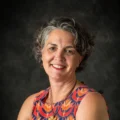
Deborah Bradley is a board-certified medical oncologist, certified executive coach, avid mountain biker, and adrenaline junkie. She can be reached at her self-titled site, Debbie Bradley, MD, and on Instagram @debbie_bradley_md, Facebook, and LinkedIn.
She shares her story and discusses her KevinMD article, “What it means to leave clinical medicine.”

The Podcast by KevinMD is brought to you by the Nuance Dragon Ambient eXperience.
With a growing physician shortage, increasing burnout, and declining patient satisfaction, a dramatic change is needed to make health care more efficient and effective and bring back the joy of practicing medicine. AI-driven ambient clinical intelligence promises to help by revolutionizing patient and provider experiences with clinical documentation that writes itself.
The Nuance Dragon Ambient eXperience, or DAX for short, is a voice-enabled, ambient clinical intelligence solution that automatically captures patient encounters securely and accurately at the point of care. Physicians who use DAX have reported a 50 percent decrease in documentation time and a 70 percent reduction in feelings of burnout, and 83 percent of patients say their physician is more personable and conversational.
Rediscover the joy of medicine with clinical documentation that writes itself, all within the EHR.
VISIT SPONSOR → https://nuance.com/daxinaction
SUBSCRIBE TO THE PODCAST → https://kevinmd.com/podcast
RATE AND REVIEW → https://kevinmd.com/rate
FOLLOW ON INSTAGRAM → https://www.instagram.com/kevinphomd
FOLLOW ON TIKTOK → https://www.tiktok.com/@kevinphomd
GET CME FOR THIS EPISODE → https://earnc.me/qq2F90
Powered by CMEfy.
Transcript
Kevin Pho: Hi, and welcome to the show, where we share the stories of the many who intersect with our health care system but are rarely heard from. My name is Kevin Pho, founder and editor of KevinMD. Rate and review the show at KevinMD.com/rate. Subscribe at KevinMD.com/podcast. Today’s show is with Deborah Bradley. She’s a medical oncologist and executive coach. We’re going to talk about her KevinMD article titled “What it means to leave clinical medicine.” Deborah, welcome to the show.
Deborah Bradley: Thank you so much, Kevin. I really appreciate you having me on today.
Kevin Pho: OK, let me do your article in a little bit. First off, share your story and journey to where you are today.
Deborah Bradley: Yes. I have wanted to be a physician for as long as I can remember. I graduated from medical school over 20 years ago now. I took the traditional path, straight through residency and straight through fellowship in hematology oncology. I was initially in academics, then decided to go to private practice, and I’ve spent the rest of my clinical career in a position that I would say is somewhere in between.
More recently, I have actually made the decision to leave clinical medicine. Monday the 10th was actually my last day, and I am starting the next chapter on the 17th, going into industry, pharma, and I’m really excited to see where this takes me.
Real physician voices, twice a week
Free, and one click to unsubscribe.
Kevin Pho: Wonderful, and I think we’re going to talk about this journey in your KevinMD article titled “What it means to leave clinical medicine.” I’m certainly interested in hearing more about your own transition, but just for my audience who didn’t get a chance to read your article, walk my audience through it. Share the story of why you decided to write it.
Deborah Bradley: I actually wrote two articles. My first was making the decision to stay, and then I followed it up with what it means to leave clinical medicine. It is interesting, because I feel like medicine is just in a really hard place right now, and I think many of us are saying, “This isn’t what we signed up for. What is happening today? How have we gotten here?”
I came into clinic one day and I was like, “I’m done. I’m done. I just can’t do this anymore. I’m not willing to do this anymore.” It was the strangest thing, because it was like a switch flipped in my brain, and all of a sudden I was like, “I am done.” In my first article, I was really breaking that down and unpacking it and saying, “What does this mean? How did you get here?”
And I was actually experiencing fear: “Yeah, I know what I want to do. It’s time for me to retire from clinical medicine. It’s time for me to get on with the next chapter.” But clinical medicine is all I know, and it’s what I’ve been doing for over 20 years. So when my decision to leave was initially there, I was like, “Whoa, hold on. I can’t do this,” right? It was really fear speaking.
When I wrote that article, I realized that in this journey, I was going through the stages of grief, and at that point in time, I was actually bargaining. My next article, on what it really means to leave, is where I shared my stages of grief in leaving something that I dreamed of and reached. I was like, “Is this some kind of arrival fallacy?” And I think that no, it’s not an arrival fallacy.
I was like, “Am I burned out?” And I was definitely burned out about a year ago. I mean, I was like crispy bacon, uneatable, the kind you just toss in the trash, right? There’s no recovering or eating that bacon. But I’ve done a lot of things. I hired a physician coach. I’ve worked with physician groups, and I feel like I’ve really gotten to a really good place where I’m now a recovering people pleaser. I’ve learned to set some boundaries. I’m very happy in the rest of my life. So I was trying to figure out, “Why can I just not make myself happy here?” And it was this realization that it’s time to move on. It’s time for me to do the things that really ignite my passion again.
It’s like the music had stopped in medicine. I think a lot of it is the moral injury that we’re experiencing on a day-to-day basis. For me, that was a boundary, and it was, “This is just not something that I want to do, that I’m willing to do.” But it’s such an important part of my life, my identity, that I had to go through the stages of grieving.
I spent a lot of time in denial, even though I think I knew about a year ago, when I walked into the room of this very young patient that I identified too strongly with. I was like, “Wow, if this was me in a week, would I be happy?” No, I’d have a lot of regrets. And I started to think, “Is this what I want to be doing? Do I want to be spending my days in Epic? Do I want to keep giving up my nights and my weekends and risking my life to drive to work on snowy days, icy days? What do I want to keep doing?” And for me, it was like, “I don’t think I want to do that.” But I really didn’t see the other opportunities as available to me, because again, I was like, “This is what I do.”
With denial, it was like pushing this huge beach ball down into the water, over and over again, and it would just pop up. For me, it was popping up as anxiety and depression. It wasn’t until I could get past the denial of, “Hey, you know what? This was your dream. You’re successful, you’re doing well. I think I’m a good doctor. I’m taking good care of patients.” But it’s just not what I want to do anymore.
So I then went through anger: “You know what? The system’s broken me,” right? I realized I was in this victim mentality, but I was like, “I didn’t sign up for this. They have finally broken me.” And bargaining, again, when I wrote that article: “No, I can stay. I’m just going to stay on my terms.”
And then finally, I got to acceptance, really realizing that with acceptance, I had to really drop my people-pleasing. I had to make decisions with uncertainty, and I really had to learn to walk with fear, right? I was stepping into something that’s brand new for me and that I’m not an expert on. I think that just took time.
I think it’s so important to take the time to really find yourself and figure out who you are if you reach that point, because I feel like right now there are so many people who are unhappy and want to flee. And people could say, “What are you doing?” right? But I think it’s just so important to find yourself, and I feel like in medicine we give so much that we can really lose ourselves.
Kevin Pho: So in this time period, when you were going through these stages and considering leaving clinical medicine, give us a time course of how long this process took.
Deborah Bradley: It was a year. It was really a year.
Kevin Pho: And was it the medicine itself, or was it all the things surrounding medicine, whether it’s the EMR or the bureaucracy or the obstacles? Give us a sense of what exactly was leading to your moral injury.
Deborah Bradley: Yeah, I think it was a little of both. For me, when I started, it was always that we’re the people who could get it done, right? If something wasn’t happening, if our patient needed it, I felt like I could always make it happen, one way or another. And I realized at this point in time, sure, we were in the pandemic, and there were all kinds of supply chain issues, but it got to the point that if I felt that the patient really needed something, if the insurance company said yes, then I guess I could do it. If there was IV contrast available, we could do it. And if I wanted to directly admit a patient, is there a bed? Are there enough nurses?
I think I would have eventually made this decision, but I don’t know, maybe a couple years ago. Who knows, right? You don’t know. But I definitely think going through that moral injury on a day-to-day basis, almost like these micro traumas, right, like people poking you daily, really forced me, or I’m not going to say forced, but really got me to the point where I’m like, “This is a boundary that I’m not willing to accept.”
But I think if I’m also realistic, I’m a medical oncologist, and although I am honored to have been a medical oncologist and to have played such a significant role for these patients for many years, I also realize that that is very draining, right? When you walk in and you tell someone they have a new diagnosis of pancreatic cancer, you’re changing the course of their lives, usually not for the better, and it takes a lot of energy to do that day in and day out.
So I think I also got to the point where it was just like, “OK, I’ve been doing this for a long time, and I don’t have the passion to continue to do it. I’m tired.” And I felt, you know what, the patients deserve more, right? They deserve better. There was certainly some guilt of, “Wow, this is the Great Resignation. If I leave, I’m not withholding my moral obligation of continuing this journey with patients.” But I also had to recognize that I need to follow my heart, I need to follow what’s important to me, and that if I don’t have that passion, it’s not fair to myself, and it’s not fair to the patients to continue to show up in that way.
Kevin Pho: So after you made the decision to leave clinical medicine, give us a sense of your mindset in terms of how you decided to proceed with your next career steps.
Deborah Bradley: Yeah. For me, I have a lot of background in research. The beginning of my career was very academic, so I’m very fortunate in that it is something that I’ve enjoyed, and I had actually been thinking about it for probably 6-8 months: “You know, I miss this.” So I was like, “OK, I can go into the industry, pharma arena, and I can still be a medical oncologist. I can still indirectly affect patient care, maybe even at a larger level.”
So for me, it was really an easy decision. It wasn’t like I needed to go find something that I could do, but there was this passion inside of me to go ahead and get back to those roots. So I’m very fortunate that for me, the answer was obvious.
Kevin Pho: We have a lot of physicians who listen to the show and who write on KevinMD, and I’m sure that you coach a lot of physicians who are in positions similar to what you were feeling. They’re feeling moral injury every day, and they’re feeling that there are so many obstacles preventing them from giving the best care they possibly could to patients. Now, you took the next step and actually left clinical medicine, but what about those other physicians who are in that gray area? They may still be in those stages that you were talking about. What’s your advice to them in terms of how best to proceed going forward?
Deborah Bradley: Yeah, I think the first one is to really take a look inside. Who are you, and where’s your North Star? You know, what’s really driving you? And I think also to recognize that as a physician, there are many other things that you should do.
Now, I’m not advocating for people to leave clinical medicine. Again, it’s something I very much dreamed about and enjoyed, and I feel that it was an honor to be there. One of the things that I think is very important is for us to have an identity that’s more than just a physician, right? You have to have other ways to charge up your battery, and I like to tell my clients, “You’ve got to show up at least on a high yellow,” right? Because you are going to get drained nowadays. Ideally green. So what gets you to green?
So it’s twofold. Number one is really taking a look at yourself and getting rid of all the other “what will people think,” “who will I be if I’m not a clinician,” and “is there anything else that I can do as an MD?” Well, yeah, there’s tons of stuff that you can do. And for me, and for many that I talked to, those aren’t even possibilities that are available to them, right? We have a lot of skills that are transferable.
But again, number one is to make sure that you’re not running away, right? That you’re not leaving in desperation, just “get me out of here,” because I fear that, again, that’s not going to fix it. I think it’s really to work with someone, take some time, journal, hire a coach, work with a mental health professional, but really find yourself. And I think when you can show up as your authentic self, then the rest falls into place.
Kevin Pho: I think that’s one of the prevailing themes that I also try to spread: Physicians are more than their degrees, right? You don’t want to be defined as just being a physician who goes to the hospital or goes to the clinic and just sees patients all the time. Now, that’s of course easier said than done. So you mentioned that you recommended these physicians hire outside help to find who their authentic selves are. From your experience, when you do your own coaching, how difficult is it for those physicians to find who they are and find identities other than being a clinical physician?
Deborah Bradley: I think it’s really hard at first, right? I myself got there, but it took time, right? As physicians, we’re very used to saying, “Oh, I can just Google it, or I can just do whatever I need. I can fix this,” right? But I don’t think we’re very good at accepting that sometimes we need another view, right? That we need people to help us see our blind spots, that we need to just talk about what we’re experiencing on a day-to-day basis, because it’s a lot.
So it absolutely takes time, because I feel like we’re cultured, we’re trained to be physicians, right? And to always be a physician and to always put our patients first, the hospital first, everything first. So it definitely takes work. But it is certainly possible, and I am so grateful that I’m now at the point where I show up empowered and I show up as my authentic self. I now recognize, you know what? Not everyone’s going to like me. And when I’m thinking, “Oh my gosh, what are they thinking?” they’re probably not even thinking about me at all.
And looking at my own thoughts, I realized how much time a day I was wasting in these thought tornadoes. Again, these were things that I was creating in my mind. So yeah, it’s getting to the point where you’re your authentic self, and you show up, and you show up doing what makes you happy. I like to say I’m now the CEO of my life, and I show up the way that makes me happy, in work and out of work.
That’s really my goal for everyone: Again, you are who you are. Don’t try to hide it. Don’t try to be what you think other people think you should be, or I think the worst is what we think other people think we should be. I think so much of this is what we do to ourselves, or these expectations we put on ourselves.
Kevin Pho: We’re talking to Deborah Bradley. She’s a medical oncologist and executive coach. Her KevinMD article is titled “What it means to leave clinical medicine.” Deborah, if you were to relive your life to this point again, is there anything that you would have done differently?
Deborah Bradley: Absolutely. I really wish that I would have hired a coach, or even known what a coach was, much earlier on. It’s interesting; in business it’s so common. But I would have hired someone to really just help me through, and I would have tried to get rid of people-pleasing, and I would have tried to set boundaries and be comfortable showing up as my authentic self from the get-go. I think that’s the key: I am who I am. Don’t try to be someone else.
Kevin Pho: And my final question: What are some of your take-home messages that you want to leave with the KevinMD audience?
Deborah Bradley: I think number one is that it’s really hard out there. So give yourself some compassion, right? You’re not broken. We’re not broken. We’re very resilient people. So hang in there, and take care of yourself. My second takeaway is if you want to leave, it’s OK. There are so many things that you can do. And I think my third takeaway is, but you don’t have to leave, right? Figure out what charges up your battery, and make sure you do it. You are much more than just a physician.
Kevin Pho: Deborah, thank you so much for sharing your story, time, and insight. And thanks again for being on the show.
Deborah Bradley: Thank you, Kevin. I really appreciate you having me on today.
Listen and followApple PodcastsSpotifyYouTubeMore apps · Browse all episodes