
















Listen and followApple PodcastsSpotifyYouTubeMore apps · Browse all episodes
“It seems too good to be true, but it is: physical activity improves every health outcome we can name. Note that some of those benefits arrive in the long term, some in the short.
It’s critically important to remember that although the mortality benefits of exercise fade out at a certain level, the health benefits do not. Exercise offers the option of a healthier life, just not eternal life.”
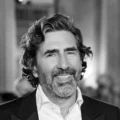
Craig Bowron is an internal medicine physician.
He shares his story and discusses his book, Man Overboard!: A Medical Lifeline for the Aging Male.

The Podcast by KevinMD is brought to you by the Nuance Dragon Ambient eXperience.
With so many demands on their time, physicians today report record levels of burnout. Burnout is caused by many factors, one of which is clinical documentation. Studies indicate physicians spend two hours documenting care for every hour spent with patients.
At Nuance, we are committed to helping physicians do what you love – care for patients – and spend less time on clinical documentation. The Nuance Dragon Ambient eXperience, or DAX for short, is an AI-powered, ambient clinical intelligence solution that automatically captures patient encounters securely and accurately at the point of care. Physicians who use DAX have reported a 50 percent decrease in documentation time and a 70 percent reduction in feelings of burnout, and 83 percent of patients say their physician is more personable and conversational.
Rediscover the joy of medicine with clinical documentation that writes itself, all within the EHR.
VISIT SPONSOR → https://nuance.com/daxinaction
SUBSCRIBE TO THE PODCAST → https://kevinmd.com/podcast
RATE AND REVIEW → https://kevinmd.com/rate
FOLLOW ON INSTAGRAM → https://www.instagram.com/kevinphomd
FOLLOW ON TIKTOK → https://www.tiktok.com/@kevinphomd
GET CME FOR THIS EPISODE → https://earnc.me/glNKO9
Powered by CMEfy.
Transcript
Kevin Pho: Hi, and welcome to the show. Rate and review at KevinMD.com/rate. Subscribe at KevinMD.com/podcast. Today we welcome back on the show Craig Bowron. He is an internal medicine physician, and he’s the author of the book Man Overboard!: A Medical Lifeline for the Aging Male. There’s an excerpt from that book on KevinMD. Craig, welcome back to the show.
Craig Bowron: Hey, thanks.
Kevin Pho: Thanks for being here. So we’ll talk about your book and excerpt in a little bit, but first off, just briefly share your story and journey to where you are today.
Craig Bowron: Yeah. I grew up in farm country in northern Illinois. We weren’t from a literary background, or even from a college background, so I was kind of the first kid to go off to school. I got interested in biology, and in undergrad I was a pre-med and an English major, kind of an odd combination. I was able to sandwich the two, and I don’t know if I did either one of them particularly well, but I got into med school at Southern Illinois University and graduated from there.
I felt like at that point, having gone straight from undergrad to medical school, I needed some time just to clear my head. I had thought too much for too long. So I moved up to Minneapolis with a friend and just did odd temp jobs and read books and kind of reconnected with the world. And then I ended up starting an internal medicine residency program at Abbott Northwestern, which is in downtown Minneapolis, and did that for a while, and was a chief resident.
And then it was 1996, and one of my fellow residents, who graduated the year before me, said, “Hey, do you want to stick around and join my group?” I said, “What are you doing?” He said, “Well, we’re going to take unassigned patients from the emergency room, and then there’s a couple of clinics in the west metro, and we’ll do all their admitting.” I was like, “Right, yeah, I’ll stick around to do that.”
Well, here we are, 27 years later, and it turns out we were hospitalists. The term wasn’t even around, I don’t think, or we certainly didn’t apply it to ourselves or know that it was. I never, ever thought, I really was planning on being a small-town doctor. I never thought I’d end up doing this. But yeah, I joke among my group that I’m now, as I call myself, a silverback hospitalist. I’m the old guy with the stories of the old days, when we were just starting as a hospitalist group, and of course they roll their eyes. We didn’t even have an EMR; we had to write stuff down on paper. So I kill them with those kinds of stories.
Real physician voices, twice a week
Free, and one click to unsubscribe.
Kevin Pho: So over your decades-long career in internal medicine, what’s the biggest evolution in internal medicine that you’ve observed?
Craig Bowron: Well, we like to complain, right? But I mean, come on, the electronic medical record is such a game changer. One thing I can tell my younger partners is, someone who had been here a month ago, or they left a week ago, they come back into the emergency room, and they’ve got a big sternotomy, I mean, and not much else. And they’re like, “Well, I was just here.” “So, well, where’s the chart?” “Well, it’s coming up from records.” “Is it here yet?” “No, it’s not here yet.” So you call records, and they say, “Well, we sent it up.” “Well, it’s supposed to be there.” And without that, you knew nothing, virtually only hearsay from what the patient said.
And now you can just walk in, and you can read up: I know you were here three weeks ago, and then we did this and this. I know this person did your surgery. I know you saw the surgeon in follow-up five days ago. I know you saw your primary. So yeah, we all have our complaints. It’s not a perfect system. It’s a billing system maybe more than a charting system, I get that. So I’d say that.
And then the future of hospital medicine is exactly what they predicted: people who are more complicated staying for shorter amounts of time. That is happening, and it just continues to happen. It’s not even like a straight curve; it just seems to go up and up. So sometimes I leave the patient’s chart, walk away from the room, and my head spins, and I think, I cannot believe what we are balancing. They’re on some targeted therapy, they’re on immunotherapy, and they’re on oral anticoagulants and an antiplatelet because they’ve got stents, and they’ve got barely functioning, barely stable kidney function. And to think that it’s only going to get more so, only going to get more so. I mean, I’m sure we’ll find a way.
So I’ll say maybe the EMR, and then just the rising complexity. And the good news is we’re keeping people alive that we didn’t. We see that with the novel therapies, in particular advanced cardiovascular stuff. But how to do that? Whoo.
Kevin Pho: So as part of your story, you mentioned that you were an English major, and you decided to use that in your writing, in your book, Man Overboard!: A Medical Lifeline for the Aging Male. So how did this book come about? Why is there a need to write a book about the aging male?
Craig Bowron: I start with an SNL story. I saw Jason Sudeikis was on SNL sometime last year, and he was talking about the surprising success of Ted Lasso, and he said, “I really didn’t expect that, because it’s about two things that Americans hate: soccer and optimism.” And I was listening to that and laughing, kind of like, OK, I’ve written a book for a group of people who don’t read that much, or not near as much as women, men, about a subject that they like to avoid, that is, health. So how’s that for a marketing plan?
So it is, in some sense, I’m kind of half joking, but it is kind of a niche market. If you’re a person who’s ever tried to pitch a men’s health book, the feedback you get from literary agents and from publishers is just like, “Love the idea. It’ll never sell.” And I think some of it is, yeah, men just don’t read as much as women, if you look at who buys books. But some of it is really just that there’s something uniquely male about getting old. Now, the pressure that women live with is to remain beautiful, to maintain their beauty, and men’s value is a lot about physicality. And both those things, there’s a bit of a battle, but as we get older, we take it hard.
One of the things, I think, when I do read stuff that’s written to men, it’s either ridiculously simple, it’s all about erectile dysfunction and muscle building, like two extremes, and most men are like, yeah, those are maybe of concern to them, but not to that degree. I don’t need to be muscle-bound. I’m not looking to reincarnate Schwarzenegger. So there was no middle ground; everything seems to be kind of extreme. I don’t think men are stupid. We’re not stupid. I just think when it comes to health care, we’re a little disinterested and maybe even a little scared.
Kevin Pho: How did you write your book to reach out to this demographic? How did you make men more interested in their health? So what approach?
Craig Bowron: Well, my writing started with a column in a magazine called Minnesota Monthly, which is associated with Minnesota Public Radio, and the editor at the time was a graduate of the Iowa Writers’ Workshop, a very creative guy. And I grew up, I didn’t read a lot. There wasn’t a lot of literature in our house. I read a lot of Dave Barry, the humorist. Honestly, I read that in Reader’s Digest; that was mostly what was around, and the newspaper. And so early on, when I got done with residency and started reading stuff that was written to the public, I was like, why does it have to be so overly serious, so threatening? Why can’t you learn about otitis media and have fun with it? I mean, getting ill is not fun.
So from the very beginning, for me it was just like that. I remember somebody wrote in and said, “I’m not even interested in hemorrhoids, but I read your whole article,” because it just sucked me in. The New Yorker does that. You’re at the end of some New Yorker article, and it’s, whatever, 1,500 words on the industrial uses of starch, and you think, why would I read that?
What I hope I’ve done is, in some ways, written a fun but factual book. It’s lighthearted. It’s a bit of a lament for aging males. I mean, it’s a personal book. I consider myself a pre-geezer, which, you can contest this, I made it up myself: 55 to 70 is what I call pre-geezers, and 70 and beyond is geezerhood. So I consider myself a pre-geezer, and some of it was just grappling with my own sort of thing. So it’s very personal, but for most of all my writing, I’ve never tried to take myself too seriously. I take the information very seriously. I think most of the public is kind of done with the “Sit down and shut up, I’m your doctor.” I think they’re just done with that. So in some ways it wasn’t too hard for me, because that’s kind of been my tone.
The book starts out with a poem. I’m not much of a poet, but it starts with this poem called “Song for the Aging Male,” and it goes, “Throwing off the shackles of youth, I reached for the stars and pulled a hip flexor. Damn it.” And I think that’s the lament part. Hopefully readers can say, “I recognize that.” I had a friend who was pulling into a parking garage. He pulled past the card sensor a little bit, so he had to hyperextend to swipe his parking card. Three weeks. I think as you get older, you can either cry or laugh, and I think sometimes laughing is a better option.
Kevin Pho: So for the aging male, in your view, what are some of the major health issues that they should be on the lookout for?
Craig Bowron: Well, I start by saying, “Hey, let’s do this. Let’s be fear-focused.” Fear focus can be good. So from early on, from our teens on to our mid-40s, mostly if you’re going to die, it’s from what they call accidental deaths. A good chunk of that is motor vehicle accidents, what they call poisonings, which would be basically alcohol or drug overdoses, gunshot wounds, and some other things. But by the time we move into our mid-40s and truly become aging, it’s cancer and heart disease, basically neck and neck, back and forth, all the way to the end.
I talk about nutrition, activity, exercise, and balding; there are a lot of those topics. But particularly the back half is really like, OK, these are the things that are going to shorten your life, so let’s get serious about those. So there’s a heavy focus on cardiovascular disease: What are the risk factors, and what can you do about them? And basically I took a chapter apiece for the most common male cancers, so prostate, colon, and lung, and talk about the ins and outs of those. There is a chapter on mental health, which I think is finally getting its due. People are talking about it. So there’s a chapter on that; there’s a big focus on that.
Kevin Pho: So as it relates to men, what are some of the mental health issues that they have to be on the lookout for?
Craig Bowron: So in some ways the beginning of that chapter is the most personal, because I kind of talk about where I grew up. I grew up in a very good family, but people didn’t talk about their emotions. It was just like, tough, suck it up. “Toughen up, boys. You’re going to suck it up.” Nobody’s happy. They just were not spoken about.
And as it happened, I grew up in a river town. It was like three towns down from a mental health facility. I think it was probably a TB sanitarium, but then it had been converted to a mental health facility of the state of Illinois. And occasionally we’d drive by, and they’re like, “Those are the mentally ill over there. They live in those brick buildings and don’t come outside. That’s the mentally ill; everyone else is normal.” But what you find out, particularly as a physician, because you’re privy to the minds and the moods of so many people, you figure out that we’re all our own brand of crazy.
And so there are certain criteria you need to officially have an anxiety disorder, but we all deal with symptoms of anxiety. You don’t have to have an official diagnosis of depression to deal with depressive thoughts. And I think to me that’s the big thing. We get it: It’s not them and us. We are all, every day, dealing with our moods and our anxieties. And COVID, I think, helped that a little bit. I think it kind of brought to light that what you’re feeling is what a lot of people feel all the time.
So it’s all these chapters. It’s a big book; it has a lot of different chapters in it. And intentionally, gosh, you can write a whole book about colon cancer, and it’s been done. That was not my goal. My goal was, can I give people the nuts and bolts of it, a concept, like, OK, I get it. I know where it starts, I know where it goes, I know how they look for it, I know what the basic treatments are, I know that it’s a better diagnosis than lung cancer. So that was in a lot of ways the challenge of the book, to make it smart but readable, and not too long.
Kevin Pho: We’re talking to Craig Bowron. He’s an internal medicine physician. He’s the author of the book Man Overboard!: A Medical Lifeline for the Aging Male. So, Craig, I think the scenario that you talked about earlier, about how men often want to avoid their health, plays out in the exam room, because a lot of times when I do physicals for older males, they don’t necessarily want to be there. Sometimes they’re dragged in by their wives, and a lot of times they don’t want to open up about their health. So do you have any tips in the exam room, what kind of questions we could ask older males, on how they could be more cognizant and open up about their health?
Craig Bowron: That’s a tough question. As a hospitalist, I don’t do the work you do. I think as a hospitalist, what I’m fortunate to have is, it’s checkmate. It’s time to talk. “You’re in the hospital, buddy. Whatever you told Kevin, it ain’t holding up here.” So I get the advantage that they want to talk, and they’re ready to admit to it, and so I don’t have to have the conversation that you do.
It does remind me, I was talking to a gastroenterologist about my book, and he laughed, and he goes, “Women are the best patients. They come in, and they’ve got their list. There are seven medications, and then they have three questions that they want you to answer. And then my male patients come in, and they’ve got one symptom that they want you to figure out, and when you say, ‘Well, what meds are you on?’ they’ll say, ‘Well, I don’t know. My wife takes care of that.'” So part of the book is to say, come on, this John Wayne shtick just doesn’t fly.
And I would think for you, my guess would be it’s your relationship. As they get to trust you and to recognize you, they may not say it the first time, but if you didn’t push them too hard and you were open to what they did say, it’s the next time. It’s like for us in the hospital: Sometimes we have hospice conversations, and it’s not about the here and now; it’s about three admissions from now, when they’re ready to talk, when they’re ready to see what’s going on. I wish I had three good tips. My guess is that you and your relationship is the only thing that’ll get them to open up, because there’s no kind of magic key. And for how we men are, sometimes the harder you push, the more tight-lipped.
Kevin Pho: Any take-home messages that you want to leave with the KevinMD audience?
Craig Bowron: I’d love to do a column sometime with you, to see what is part of growing older as an aging male. Is this the new normal? Is this abnormal? I’m feeling this, I’m feeling this, but there’s no book on what is normal. What’s normal for a 58-year-old? Should a 73-year-old be feeling that? Should a 68-year-old be feeling this? I’d love to, and because I don’t do clinic work, I think that’s even harder for me, to sort out what is normal.
I’d be interested in, when someone’s coming to you and says, “I had this,” you’d say, “I think that’s normal for a lot of men your age.” It’d be fun to create some kind of thing, if you will, so we can all sort of know, “That’s normal. I see that in a lot of men.” I bet you probably have it in your head because of your clinic work. I don’t so much. So yeah, that’s my message.
Kevin Pho: All right, Craig, thank you again for coming back on the show to talk about your book, and you’re always welcome to contribute another piece.
Craig Bowron: Well, thanks. Appreciate it.
Listen and followApple PodcastsSpotifyYouTubeMore apps · Browse all episodes