

















Listen and followApple PodcastsSpotifyYouTubeMore apps · Browse all episodes
“Both pain and obesity can have a multitude of causes. Therefore, reducing pain and body weight should be approached in a multifactorial way; nutritionally, physically, mentally, and emotionally. Failure to do so may result in short-term success but long-term failure.”
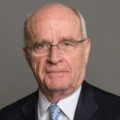
Francisco M. Torres is an interventional physiatrist specializing in diagnosing and treating patients with spine-related pain syndromes.
He shares his story and discusses his KevinMD article, “We cannot ignore nutrition’s impact on both pain and obesity.”

The Podcast by KevinMD is brought to you by the Nuance Dragon Ambient eXperience.
With so many demands on their time, physicians today report record levels of burnout. Burnout is caused by many factors, one of which is clinical documentation. Studies indicate physicians spend two hours documenting care for every hour spent with patients.
At Nuance, we are committed to helping physicians do what you love – care for patients – and spend less time on clinical documentation. The Nuance Dragon Ambient eXperience, or DAX for short, is an AI-powered, ambient clinical intelligence solution that automatically captures patient encounters securely and accurately at the point of care. Physicians who use DAX have reported a 50 percent decrease in documentation time and a 70 percent reduction in feelings of burnout, and 83 percent of patients say their physician is more personable and conversational.
Rediscover the joy of medicine with clinical documentation that writes itself, all within the EHR.
VISIT SPONSOR → https://nuance.com/daxinaction
SUBSCRIBE TO THE PODCAST → https://kevinmd.com/podcast
RATE AND REVIEW → https://kevinmd.com/rate
FOLLOW ON INSTAGRAM → https://www.instagram.com/kevinphomd
FOLLOW ON TIKTOK → https://www.tiktok.com/@kevinphomd
GET CME FOR THIS EPISODE → https://earnc.me/JoXBSH
Powered by CMEfy.
Transcript
Kevin Pho: Hi, and welcome to the show. Rate and review the show at KevinMD.com/rate. Subscribe at KevinMD.com/podcast. Today we welcome back to the show Francisco Torres. He’s an interventional physiatrist specializing in diagnosing and treating patients with spine-related pain syndromes. He’s the author of the book Epigenetics and the Psychology of Weight Loss: How to Lose More Weight With Less Effort. There’s an excerpt from that book on KevinMD titled “We cannot ignore nutrition’s impact on both pain and obesity.” Francisco, welcome back to the show.
Francisco M. Torres: Thank you, Kevin, for having me again.
Kevin Pho: We’re going to talk about the book and the excerpt a little bit, but just for those who didn’t get a chance to listen to our first episode together, briefly share your story and journey to where you are today.
Francisco M. Torres: Sure. Like you mentioned, I’m an interventional physiatrist. I did a fellowship at LSU and then settled down in Florida. I’ve been here for the last 30 years doing pain management, including wellness too, which is my passion.
The story goes back. I grew up with a lot of anxiety, to the point that I wrote my memoirs about trauma and post-traumatic stress disorder, and that affected my weight. I come from a family where everybody’s big. They didn’t pay too much attention to what they were eating, and they were chronically inflamed. As a matter of fact, several members of my family, my mother and my father, died from falls and compression fractures. So I was heading down the same path.
During residency, you know what happens. You’re so stressed out, you want to be successful, you want to finish, and nutrition is not really a priority. So I kept going. When I turned 40, I tried to do a transformation, and I made an amazing transformation, but it only lasted three months, and then I went back. Then, in my late 40s, I had a heart event. I had chest pain and went to the ER. I was having referred pain, but the bottom line was that they did a CT and there was nothing wrong with my heart. But the cardiologist said, “If you don’t change your way of living, you’re not going to make it.” That really motivated me to change. I made an amazing transformation that even impressed me, and it lasted for 10 years. I was very good.
But one of the things that I have learned as I go, which I think is the difference in what I’m trying to do with this book, is to pay a little bit more attention to the psychology of weight loss. You can make a huge transformation physically, but if you don’t change mentally, it’s going to be very hard to maintain. It happened to me. I was constantly harassed, I guess, in many ways, with people saying that my after picture was Photoshopped. Every time that happened, I started doubting myself. And I said, “You know what? That’s what happens with patients.” We can make them lose the weight, but if they don’t have a very strong mental power to maintain that weight, they’re just going to lose it very easily.
Real physician voices, twice a week
Free, and one click to unsubscribe.
Kevin Pho: All right, so your book is titled Epigenetics and the Psychology of Weight Loss: How to Lose More Weight With Less Effort. Your excerpt focuses on nutrition’s impact on pain and obesity, so let’s talk about that excerpt on KevinMD. Tell me, why did you decide to write that one?
Francisco M. Torres: Because being in pain management, and even as a general practitioner, you can see that we have a problem with obesity and overweight, which is affecting patients’ health. When you start dealing with pain, the problem is that we start to make an assumption that because they’re overweight, because they’re obese, they’re going to have more pain. I started doing a little research on how to approach that issue, which I have on a daily basis, and that’s why I put in a little bit of a chapter, which is also based on the testimonial of one of my patients.
And that’s the beauty: My patient, Jim, agreed to tell his story, which was amazing. He is a patient who injured himself. He had a very busy business, and then he went through bariatric surgery. He lost an amazing amount of weight, but he gained it back right away, and he had to lose his business. All the doctors would say, “Hey, you’re too fat. We cannot do surgery.” They even sent the patient to me to do procedures, and I had my doubts. I said, “I cannot even see the needle with the fluoroscope.” But I talked to him, I told him my story, and we talked about whether he really wanted to change. When he told me that he had a very strong why, about his family, we started working together.
And oh my goodness, right now it’s an amazing story, because he went from no chances to being very successful. He has lost 200 pounds and cut down significantly on his pain medication. And the beauty is that now he’s working out every day. He sees purpose. Basically, what we did was make several adjustments to make it easy to work out.
Kevin Pho: Tell me about the intersection between obesity and pain. How does obesity aggravate chronic pain?
Francisco M. Torres: We know that people who are obese tend to be less active, so their joints, their ligaments, and their muscles are going to be deconditioned. So you’re going to be predisposed to hurt yourself very easily, because you don’t have the muscle tone to brace yourself. I think that’s a given. Plus, our cardiovascular system also needs to be in good shape, and with that extra amount of weight, the tissues don’t have blood flow going into them. So again, they’re more prone to have injuries, including fractures, like we had in my family, with osteoporosis from the lack of exercise. And then they’re more prone to have those fractures, which are debilitating and incapacitating.
Kevin Pho: Take us into your exam room. If you’re seeing someone for chronic pain, or seeing someone for the first time for a pain consult, and they are obese or overweight, how do you introduce nutrition? Take us into the exam room. How do you talk about that?
Francisco M. Torres: Yeah, it’s a very good question, because I do some indirect questioning. I check with them about their lifestyle, what they’re looking for, and what makes them wake up every morning, and I try to get that big why. If I get a very strong why, I don’t care how big the patient is or how difficult it is. I think we’re going to be successful, or at least we’re going to make some progress.
The other thing that I tell them, because I went through all this and I continue to learn, is to make things simple. I tell my patients, “You don’t need to go to the gym to work out,” because a lot of people, including myself, feel that way. I was very threatened going to the gym and seeing all these fit people and seeing myself in the mirror. I said, “I don’t feel comfortable,” and a lot of my patients go through that. So I try to make them more comfortable with the concept of exercise, and also to see that it’s not a diet. The problem with diet is that the first three letters of “diet” are “die.” So I don’t want them to be restricted.
Kevin Pho: How do you do that? How do you make them feel more comfortable about exercise?
Francisco M. Torres: Well, with simple things. Sometimes I say, “Look, when you’re watching TV,” like now we have games, “get up off the couch.” And then I put them through a simple routine where they can still be watching TV and increase their heart rate while they’re doing that. The same thing: I tell my patients that many times, when I’m brushing my teeth in the morning, I do squats. The thing is to use your everyday activities to increase your heart rate and build up muscle mass.
Kevin Pho: Tell me a success story about how your advice led patients to lose weight and how that helped with their chronic pain.
Francisco M. Torres: Well, like I said, go back to Jim, because he cut down significantly on his pain medication. Now he is so fit that if he misses an appointment with his trainer, he feels really horrible. Now he’s walking, and he became president of the homeowners association. He has a purpose. I think what I’m offering them is a purpose to be active and physical.
I always tell the story. I recently became a grandfather, and it’s so cool that I can keep up with him. And then when they compare me with the other grandparents, who are overweight, they prefer me. I know it’s selfish, but that’s a reality. You have a purpose.
Kevin Pho: A lot of people come to you for chronic pain, and because they’re in pain, they cannot exercise. So what comes first?
Francisco M. Torres: The first thing, Kevin, is I tell them you can only lose 5 percent of your body weight with exercise. Exercise is overrated for weight loss. It’s a wonderful tool, and I tell them it’s to maintain the weight. Like for me, I work out really heavily, but that gives me a little bit of room to eat more and be a little bit less careful with what I’m eating. That’s what I tell my patients. But it’s really wrong to think that because they’re not exercising, they are not able to lose the weight.
And I think that once we talk about that, it’s about what they’re eating. We go through a food diary. That’s another thing, Kevin. People tell me, “Oh, I eat healthy.” But when you talk to them individually, what is healthy is not that healthy. And then they see it in writing and say, “Oh, I didn’t know that. I didn’t know that I had to do this or that.”
Kevin Pho: Do you spend a lot of time talking about nutrition in the exam room when they come to you for chronic pain?
Francisco M. Torres: Yeah, because it’s my passion, and I have gone through so much, and I continue to learn. I also talk about this in the book. One of the things that surprised me was that after 10 years, I thought I had already made it and was comfortable. With the pandemic, I was part of that pandemic depression. Once the gym closed, I became very depressed. I gained another 20 pounds, like 19 pounds, from COVID. And when I tried to come back, I hurt myself, and I had to go through major pain. So I understand how easy it is to deviate. That’s why you have to do repetition. I talk to them about the morning Hour of Power: You just have to have a routine and not change it.
Kevin Pho: Without telling us all your nutrition secrets, what are the main nutrition points you emphasize in the exam room when you talk to patients who come to you for chronic pain?
Francisco M. Torres: Well, again, it’s based on each patient, because they have different problems. Some people are addicted to sugar, some people are addicted to soda, so I have to identify what their problem is. And then alcohol too. The other thing that I have to do with them is make it easy. So instead of giving them a lot to do, I just cut something or move things. I’m big on intermittent fasting, and that’s the first thing I do. I start by saying, “Hey, why don’t we limit the time that you eat to eight hours? And then don’t worry about what you’re eating in those eight hours. Let’s just start playing.” Once you start to do some things very slowly, they seem to do well that way.
Kevin Pho: All right, so your book is titled Epigenetics and the Psychology of Weight Loss: How to Lose More Weight With Less Effort. What are some of the other main key points that you want readers to come away with?
Francisco M. Torres: Well, I just want to admit that I thought we were all born with a specific genetic setup, and that there was no way I could have a six-pack. I kind of figured this out on my own, and now that I have started doing the research, I understand that what I did was modify my genes through epigenetics. So I think it’s exciting. I think it’s never too late to change.
Kevin Pho: For those who aren’t familiar with epigenetics, what is that?
Francisco M. Torres: Well, it’s just that you have the code that you don’t change. That’s the fixed code; those are the genes. But then you have the epigenetics, the molecules on top of them, which are prone to change with your behavior and with your thought process. That’s why meditation is so powerful, and prayer. All these things are just modifying the way those genes express.
Kevin Pho: All right, we’re talking to Francisco Torres. He’s an interventional physiatrist, and his KevinMD article, which is an excerpt from his book, is titled “We cannot ignore nutrition’s impact on both pain and obesity.” Any tips from your book that you could give as advice to primary care doctors who may be seeing patients with chronic pain and obesity in the exam room? Any tips that you could share with us that we could apply?
Francisco M. Torres: Well, I think the first thing, because this comes up almost constantly, is to tell the patient that only 5 percent is what you can lose with exercise activity. I would just say up front, “I don’t buy that story.” I think we need to come back and sit down. I think food diaries, for me, are very revealing. I tell the patient, “You don’t even have to write them down. You can take pictures when you see it at the table.” And once you start seeing what they’re doing, for example, they assume that cereal is good and healthy because it lowers cholesterol, then you just have to correct the amount of sugar. I think that’s basically what I would do initially, to be sure that you identify what is making that patient overweight.
Kevin Pho: All right. And my final question: What are some of the take-home messages that you want to leave with the KevinMD audience?
Francisco M. Torres: I think that what you need is somebody who really believes in you. First of all, you have to believe in yourself that you can change, no matter how bad you are. My story, my patient’s story, Jim’s story: You can do it. But you need to have a coach, a good doctor who believes in you.
Kevin Pho: All right, Francisco, thank you so much for coming back on the show and sharing your time and insight.
Francisco M. Torres: Thank you so much, Kevin. I appreciate it.
Listen and followApple PodcastsSpotifyYouTubeMore apps · Browse all episodes