
















Listen and followApple PodcastsSpotifyYouTubeMore apps · Browse all episodes
“Doctors with mental illness don’t need more suicide awareness — we’re aware. And we don’t need confidential treatment opportunities. What we need is assurance from all invested parties — our employers, credentialing bodies, and licensing officials — that it will be OK if we need help, we can get what we need, and that everything for the job can be sorted out once we’re well. Because it turns out, in most cases, that’s true — and in the instances where it isn’t, that’s the reality we need to work towards.”
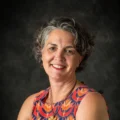
Alison Baum is a family physician.
She shares her story and discusses her KevinMD article, “Physicians with mental illness shouldn’t hide.”

The Podcast by KevinMD is brought to you by the Nuance Dragon Ambient eXperience.
With so many demands on their time, physicians today report record levels of burnout. Burnout is caused by many factors, one of which is clinical documentation. Studies indicate physicians spend two hours documenting care for every hour spent with patients.
At Nuance, we are committed to helping physicians do what you love – care for patients – and spend less time on clinical documentation. The Nuance Dragon Ambient eXperience, or DAX for short, is an AI-powered, ambient clinical intelligence solution that automatically captures patient encounters securely and accurately at the point of care. Physicians who use DAX have reported a 50 percent decrease in documentation time and a 70 percent reduction in feelings of burnout, and 83 percent of patients say their physician is more personable and conversational.
Rediscover the joy of medicine with clinical documentation that writes itself, all within the EHR.
VISIT SPONSOR → https://nuance.com/daxinaction
SUBSCRIBE TO THE PODCAST → https://kevinmd.com/podcast
RATE AND REVIEW → https://kevinmd.com/rate
FOLLOW ON INSTAGRAM → https://www.instagram.com/kevinphomd
FOLLOW ON TIKTOK → https://www.tiktok.com/@kevinphomd
GET CME FOR THIS EPISODE → https://earnc.me/wy3oag
Powered by CMEfy.
Transcript
Kevin Pho: Hi, and welcome to the show. Rate and review at KevinMD.com/rate. Subscribe at KevinMD.com/podcast. Today on the show, we have Alison Baum. She’s a family physician, and we’re going to talk about her KevinMD article, “Physicians with mental illness shouldn’t hide.” Alison, welcome to the show.
Alison Baum: Thank you so much.
Kevin Pho: So we’ll get into the article in a little bit, but first off, just briefly share your story and journey to where you are today.
Alison Baum: Yeah, for sure. I’m a typical physician, I think. I decided on my path relatively early on in life, like a lot of us, I think, and I didn’t really waver from it. I was guided by a need to feel financially secure, but I didn’t have a way to pay for it, so I joined the military. And I had various mental illnesses along the way, and I didn’t feel like talking about them until now. Now I’m kind of an open book.
In medical school, I had an eating disorder, and that was the first time I sought help of any kind. And then in training, I was diagnosed with anxiety and depression. And then when I was family medicine faculty, it all kind of came together, and I was diagnosed with bipolar disorder. That’s when I took a step back from full-time practice. I took a few part-time jobs from home, and then COVID hit, so I ended up just doing the telemedicine. My husband is an ER doc, so he kind of took over the earning, and I am now just a mom. I’m at home, and it’s wonderful. It allows me to take care of my mental health. And yeah, that’s what got me here today.
Real physician voices, twice a week
Free, and one click to unsubscribe.
Kevin Pho: So during your medical training, you mentioned that you were diagnosed with an eating disorder during medical school. What was that like for you?
Alison Baum: That was the hardest time for me to come forward for any kind of mental health concern. After that, it was a lot easier, because I was used to seeking help. But it was so shameful for me to admit that I had a problem. I just remember going to the psychiatrist’s office, and I was shaking, wondering, “Are they going to be able to help me?” I knew about the rates of recidivism, and I just wondered, “Why am I even doing this? Am I going to have to give up my coping mechanisms? Are my classmates going to find out?” But of course, I got help, and then it went away. It was really a lot easier than I thought it would be.
Kevin Pho: How easy was it for you to find help, to turn to a psychiatrist? Did you have any other support from family, classmates, faculty, or the school itself?
Alison Baum: I never, well, I told my family several years later. I had a close friend or two who I had told, and it turned out they had eating disorders as well. So it’s actually a more common coping mechanism during medical school than you’d think, and actually, I’m sure some of your listeners will be nodding their heads listening to this. But yeah, my GP in medical school was very supportive, and nobody was thinking about kicking me out of medical school or talking about me behind my back.
I think that is something that physicians worry about: Are people talking about me behind my back, or are people judging me? Any time I worried about that, it was all in my head. It was me judging myself and worrying on behalf of others about what they were thinking of me, but no one was actually worrying about me. It was myself.
Kevin Pho: And then you mentioned that during residency, you continued to have behavioral health issues that were certainly challenging. What was it like during residency? Because I can only imagine that was a very stressful and difficult time.
Alison Baum: Actually, things got a lot simpler for me once I chose family medicine, because initially I chose urology, and there was a lot of night call and a lot of night float. I wasn’t diagnosed with bipolar disorder until much later, but it turns out that with bipolar disorder, you really need to guard your sleep. And I was completely unhinged when I was not sleeping well. We call these computers on wheels COWs, and I just remember pushing around the COW after 36 hours of no sleep, just tears streaming down my face, not functioning.
So after two years of urology, I resigned, and I was allowed to switch into family medicine, and I was like a different person. People wondered, “Well, why are you so good at family medicine?” And it’s because I’d had two years of practicing being functional in something else. Anyway.
Kevin Pho: That’s a good idea. Give us a contrast of how different those two training paths were, family medicine versus urology.
Alison Baum: I really enjoyed my urology training. I enjoyed the problem sets, and my professors were wonderful to me. I can’t complain about the training program itself. It’s just that I was not able to handle working at night, and I didn’t understand why. I couldn’t fathom how these people around me were able to do what they could do. I just felt like a weak human being. I don’t know how to put it other than that.
And then when I switched into family medicine, it’s not that there wasn’t night work, but it was night float, and in the program that I was in, the attendings took a lot of the night work off of us. Also, it was after the instatement of the 80-hour work week, so things changed quite a bit just between those times. So yeah, it was just a happy set of circumstances.
Kevin Pho: All right. And you talk more about your story in your KevinMD article. It’s titled “Physicians with mental illness shouldn’t hide.” So tell me the reasons why you decided to write this article and share your story on KevinMD.
Alison Baum: Yeah, definitely. I think in the last year or so, there’s been a lot of activism on behalf of physicians for mental health. There’s so much good work being done, but to me, a little bit of it is tone-deaf, and it doesn’t seem like there are too many physicians who are willing to come forward and share their stories, which I think can be very helpful. And for me, I really have nothing to lose. I think maybe my last state license is coming up, and I’m not going to renew it anyway. Maybe I will, I don’t know. But I really have nothing to lose sharing my story.
Kevin Pho: It’s so difficult for physicians to share mental health stories.
Alison Baum: I think so. I’ve thought about this, and I think there are two reasons. One, they’re definitely afraid of losing their license, which, I’ll tell you in a minute, is not something to worry about. But I think the other reason is that they’re very ashamed of their colleagues finding out, and that one is not talked about as much. When I talk to my friends about the reasons they’ve not sought help in the past, either for marriage struggles or for relatively minor things like anxiety, when it gets around to it, they just don’t want their friends to find out.
Kevin Pho: And you mentioned that losing your medical license wasn’t as much of a concern. Talk more about that.
Alison Baum: Not at all, which is interesting, right? I mean, there are a few things more severe than bipolar disorder. So when I started putting that on my applications for things, I thought, “Well, here we go, but I’m going to be truthful about it,” because I think not being truthful about it, and then having an adverse action happen and having it get found out afterwards, would be far worse. But I got credentialed at three different jobs. I did get three different state licenses, and they didn’t ask. So that’s the other thing: Most states don’t ask. But even at the jobs where I got credentialed, I never got asked any other questions.
So I think what happens is that these people are physicians, and they understand that people are going to have all sorts of illnesses that could or could not impair you. But if you have enough insight to say that you have something and you’re treating it, you’re probably good to go.
Kevin Pho: Now, is this somewhat of a unique situation? Typically, from what you’ve heard, if people put behavioral health issues on hospital applications, on state medical licenses, is your story a typical pathway?
Alison Baum: So this is a good question. You hear all of these horror stories, right? “Oh, I had marriage counseling, and I had my license suspended for five years.” And I do not know who these people are, but I’ve done some calling around to different states and talked to their licensing boards. Indiana is one that I hold a state license for, and I called and said, “Hey, I wasn’t bipolar when you licensed me, but I am now. Is there anything that I need to do?” And she said, “Well, no, that’s on their application.” She said, “No, just make sure you renew, because if it lapses, then you’ll have to apply again.” I mean, I don’t think these states are looking for reasons to take your license away.
The other thing is, I’ve been reading. Every state publishes a newsletter that has adverse actions on licenses, and so you can look and see the reasons that physicians have had adverse actions on their licenses. And if you’re worried about mental illness being one of them, you can just look and see if someone’s had their license suspended or revoked for mental illness, and I’ve yet to find one. I won’t give anybody away, but in one of the states that I was licensed in, out of probably 100 physicians, one of them had bipolar. And for this physician, it wasn’t because they were bipolar, it was because they’d had an inappropriate relationship with a patient. But guess what? There were also 20 other physicians that had inappropriate relationships with patients, and they weren’t bipolar. Physicians do things, right? I mean, you can have your license revoked or suspended for a bunch of things. So I don’t think that’s what they should be worrying about.
Kevin Pho: Now, as you were navigating this process, did you have anyone to guide you through it, anyone that you could ask questions? Because I can only imagine this isn’t something, like you said, that a lot of physicians talk about. Who guided you through this process, if you had anyone?
Alison Baum: It’s a good question. I had a friend who had been through this previously, who was a few steps ahead of me in the process, and she was able to guide me and tell me that it would be fine. And I also had some colleagues in the military who were very supportive. But in terms of looking at the state license and figuring out that I should tell the truth, I don’t know how I knew that would be all right, other than just knowing that was the only way forward.
Kevin Pho: Do you have any thoughts about going back to clinical medicine?
Alison Baum: No. So that’s the funny thing. I’ve been doing a lot of thinking about autonomy and how we as physicians don’t always realize that we have it, and I certainly didn’t. From a young age, I realized I was on this path, and I never thought about it. But I think I was going into medicine just because I was on that path, and I never really looked around to see if I needed to do anything else. So I loved medicine, and I loved talking to the patients, but I don’t think I need to go back.
Kevin Pho: Now, as you reflect on your journey through everything that you’ve been through, is there anything that you would have done differently?
Alison Baum: I wish I had known that my inability to handle sleep was a warning sign. That’s something that I would like to pass on to anyone who might be in training listening to this: If you just can’t understand why, when you’re on night float, you start having really dark thoughts, just listen to that. It might be more than you think.
Kevin Pho: And during your premedical years, before medical school, were there any signs or inklings that there might be behavioral health issues going forward?
Alison Baum: The eating disorder, the kind of pattern that I followed, was actually an early sign of bipolar as well. I would get a manic period, and I would just get all this energy, and I’d lose a ton of weight, and I’d have just grand plans. And then when that would go away and I’d become depressed, I would gain 20 or 30 pounds, and that was not all right with me. So if I had known that was the pattern, I would have been able to call it what it was, but I didn’t. You don’t have a ton of insight, unfortunately.
Kevin Pho: We’re talking to Alison Baum. She’s a family physician, and we’re talking about her KevinMD article, “Physicians with mental illness shouldn’t hide.” Alison, any piece of advice that you would give to physicians, medical students, and physicians in training if they also have their own mental illnesses?
Alison Baum: Yes. I would say that if you’re at all thinking about seeking help, about seeing anybody for a mental health struggle, just do it. You don’t know how close to drowning you are, and it’s not the time to be thinking about seeing someone or staying in secret, because I’m here to tell you it’s going to be just fine. You don’t know how close you are to being in serious trouble, because you’re stuck inside your own head. Just go see the nearest doctor, and they’ll help you out. That’s the best thing to do.
Kevin Pho: And my final question: What are some of your take-home messages that you want to leave with the KevinMD audience?
Alison Baum: I would just like to say that I really appreciate all of the activism that’s being done currently in physician mental health. It’s a really exciting time, and I know that more work is going to be done, but I would love for more physicians to come forward and share their stories, because I think that can only be good.
Kevin Pho: Alison, thank you so much for sharing your story, time, and insight, and thanks again for being on the show.
Alison Baum: Thank you.
Listen and followApple PodcastsSpotifyYouTubeMore apps · Browse all episodes