











Listen and followApple PodcastsSpotifyYouTubeMore apps · Browse all episodes
Join us in this episode as we talk to Mike Campsey, an interventional cardiologist who shares his inspiring journey of resilience and recovery after suffering from a massive stroke. Hear his advice on what stroke victims and their families can do to cope with the aftermath, as well as his personal tips for maintaining mental and physical health, including the benefits of breathwork, meditation, and cold exposure. Don’t miss this insightful conversation about finding purpose and growth in the face of adversity.
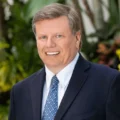
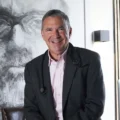
Mike Campsey is an interventional cardiologist.
He shares his story and discusses his KevinMD article, “From stroke to strength: one person’s story of overcoming challenges.”

The Podcast by KevinMD is brought to you by the Nuance Dragon Ambient eXperience.
Ambient intelligence augments human capabilities to make our lives easier. The applications are many, especially in health care. Ambient clinical intelligence is offsetting the most pressing challenges in health care today, such as burnout, physician shortages, physician and patient dissatisfaction, and underperforming financial outcomes, by applying the technology to clinical documentation.
The Nuance Dragon Ambient eXperience, or DAX for short, utilizes artificial intelligence and natural language processing to automatically document care. It securely listens to and captures the natural, clinician-patient encounter conversation unobtrusively, and turns that conversation into a clinical note for the clinician’s review and signature directly in the electronic health record. You just talk naturally, and DAX does the rest.
DAX is being used by thousands of physicians across 30 different specialties nationwide. It has already won the Silver Stevie award in the health care technology category and was ranked #1 for improving clinician experience in KLAS’s top 20 emerging solutions.
VISIT SPONSOR → https://nuance.com/daxinaction
SUBSCRIBE TO THE PODCAST → https://kevinmd.com/podcast
RECOMMENDED BY KEVINMD → https://kevinmd.com/recommended
GET CME FOR THIS EPISODE → https://earnc.me/iJZppy
Powered by CMEfy.
Transcript
Kevin Pho: Hi, and welcome to the show. Subscribe at KevinMD.com/podcast, and get CME for this episode by clicking on the CME link in the show notes. Today we welcome Mike Campsey. He’s an interventional cardiologist, and his KevinMD article is titled “From stroke to strength: one person’s story of overcoming challenges.” Mike, welcome to the show.
Mike Campsey: Thank you very much, Kevin. I appreciate it.
Kevin Pho: We’ll get into your article in a little bit, but first off, just briefly share your story and journey to where you are today.
Mike Campsey: Well, my story began on November 17 of 2021, when I had a stroke. It was a very big stroke. It left me without use of my right side and without my speech. It actually happened when I went down to the basement to work out, about 5:15 or 5:20 in the morning. About 10 minutes later, while doing some jumping jacks or calisthenics, I realized my right arm wasn’t working as well as it should. I started to make my way to the door, and the next thing I know, I’m on the ground, kind of playing with my right hand, which wouldn’t move. It felt like it was really sort of pasted to the floor at that point. I think at that point, that’s when I realized, “Hey, I’m having a stroke.”
So I had a couple of options. I could go right around the corner, where one of my wife’s friends had spent the night, or I could go to the bottom of the stairs in the basement, which was about a 20-foot crawl. That’s the way I elected to go. So I crawled over there, and I don’t know how long it took me, probably 30 minutes or something like that, to get over there. My wife was two floors up, behind closed doors, with the ceiling fan on, the noise machine on, all that kind of stuff. And I seemed to make enough racket down in the basement to awaken her. At that point, she came down the stairs and realized that I was having a stroke. My wife’s a nurse by background, and that’s really what got the ball rolling.
Once EMS arrived, they confirmed that I was having a stroke, basically through my vitals and looking at me. They then asked where we wanted to go, and we said WVU. So they got Life Flight. We live on a decent-size piece of property with a big front yard, so they were able to drop Life Flight right in my front yard. And then it was a waiting game. It took about 20 minutes for the helicopter to get there. Once it arrived, I can tell you one thing that is very important to know: Your claustrophobia does not go away with a stroke. They loaded me into the back of the helicopter, which is a very tight-fitting space, and they flew me about 17 minutes to WVU.
Once I got to WVU, they wheeled me right from the emergency department to the CT scanner to make sure I didn’t have a bleed and to confirm that I was having a stroke. Once they confirmed it, they gave me the lytics, which I’m sure would have worked, but then they took me to the neuro IR suite, intubated me, paralyzed me, and I got an interventional procedure to pull the rest of the clot out.
From there, I remember waking up in the ICU. I don’t remember what I said or anything like that, but I can tell you that my wife said when I first tried to speak, it was just a word salad, meaning that I couldn’t form a sentence, basically, which was scary for her, not so scary for me. I still was not really afraid of what was going on at that time. But gradually, my right leg worked fine, mostly fine. With my right hand, I couldn’t really get my hand up to my mouth yet. But again, gradually, over a couple of days, I was regaining more and more function. My speech was getting better and better. And then, I think I said, 48 hours later, I walked out. I didn’t even let them take me out in a wheelchair. My wife, of course, was holding my arm, but we walked out, and she drove me home.
And that part of it was quite an experience. I didn’t write that into my article because it’s a 750-word limit, so I really wanted to focus more on my recovery at that point. So I started with my recovery. But yeah, it was quite an experience.
So when it came time to write my article, I focused on the recovery. I got better from a neurologic standpoint very quickly. I feel like within two weeks, I was doing much, much better. My speech was still a little hesitant and so forth, but it was getting better quickly. I think I said I graduated in eight weeks from both physical therapy and speech therapy. I really didn’t feel that they had much more to offer me. And I went back to work in three weeks.
At the time, I was a chief medical officer at this hospital in Wheeling. I went back, I was walking, I was talking, but I wasn’t fully functioning normally at this point in time. My speech just didn’t feel like it was where it needed to be. My hand, my arm, and my leg were working fine, and I was still having episodes of aphasia. In particular, I had one episode where we were in a meeting, and they were going around the room asking people how they felt about a particular topic that we were discussing. One of the docs asked me, and I just couldn’t get out the words to say what I wanted to say. For me, that was incredibly embarrassing. But I stuck with it. I kept going back and kept coming back, and gradually, I feel like that has resolved. My speech is much, much better now.
And then, around the start of that year, 2021 going into 2022, the anxiety started in my head, and that was pretty frightening stuff.
Real physician voices, twice a week
Free, and one click to unsubscribe.
Kevin Pho: So before getting into that part of recovery, let me backtrack and just ask you. During that time of uncertainty, that recovery period after a stroke where one is never sure how quickly one will recover, or if they’re going to recover fully or not, what was going through your mind at that time? Were you scared? Were you worried about what you could and could not do? Just tell us your thought process during that initial recovery period.
Mike Campsey: Yeah, I think that originally, I should have been terrified, right? I lost half of the function of my arm and my leg, and my speech was horrible. But I wasn’t terrified. I wasn’t afraid of how I was going to recover or how much I was going to recover. To be honest with you, I don’t even think that I doubted for one second that I was going to recover. So even though I think that most people in that situation would think that’s what they were fearing, I had no fear of recovery. I really thought I was just going to recover. Maybe as quick as I did, maybe not as quick as I did, but I knew that I was going to recover.
Kevin Pho: And then, sometime after, you mentioned that there were some behavioral health components to your recovery, like the anxiety. So talk more about that.
Mike Campsey: Yeah, so I think it was probably eight weeks afterward, I started to have these thoughts in my head and so forth, and they would go down a dark path. I didn’t know whether I was going to hurt myself or my family. I just had this fear, this underlying fear, and I had no confidence. Obviously, that was an issue. I was depressed, anxious, all of the above.
So I went to a therapist for a while, and as it turned out, he was a specialist in post-traumatic stress disorder. He felt that that’s what I had, that I had post-traumatic stress disorder. And really, I didn’t know whether to believe him or not. I went and I read about it, and once I read about it, it’s essentially when something that you don’t like, or you didn’t ask for, or you don’t want to happen to you, happens to you, and then it affects your brain. At that point in time, I believed him. And so we kind of went down that path for a while.
Therapy definitely helped me, but I couldn’t get all the help that I needed from the therapist. So he recommended that I try a medicine, and I did go on a medicine, and that helped a little bit more. The whole time in the background, I’m doing all this online research and so forth and just looking for help, right? I took courses in confidence and courage and so forth, and everything that I did seemed to help a little bit. I think once I fell into meditation and had a decent exercise regimen, breathwork really helped me. I’m not so good at meditation, but the breathwork really helped for me. And then when I discovered the cold therapy technique, cold showers and cold plunging have really helped me as well.
Kevin Pho: So you’re not the first person who’s mentioned cold plunging, cold therapy. What’s the theory behind that in terms of helping you recover?
Mike Campsey: Well, I think that there’s good scientific evidence that it does a couple of different things. One is the initial cold shock of going into the cold, which stimulates your sympathetic nervous system, these cold shock proteins and so forth. And then your dopamine levels go up, like two-and-a-half-fold, over the four, five, six, seven, eight hours afterward. And if you’re doing this, just a couple of minutes a day is all it takes; 11 minutes is what is recommended in the literature to get the minimum benefit, or sort of the benefit out of it.
The other thing is the parasympathetic drive, because it’s a recovery process, too. It kicks in. So you’re really sort of exercising, I think, your sympathetic and your parasympathetic nervous system by doing this. And of course, there are the vasoconstriction and vasodilatory effects as well. So I think it has been a major factor in my recovery.
Kevin Pho: How are you doing now?
Mike Campsey: I am doing much better, thanks. I’m doing much, much better. I think I’m back to doing most of the things that I want to do. I had a really nice fall last year. I did sort of a hike with my oldest daughter. We hiked the Grand Canyon from the North Rim to the South Rim, which is 26 miles in one day. That was historic for both of us. Good trip. And I think my head is getting better, a little bit better every day. I still worry a little bit, but it’s getting better.
Kevin Pho: Now, you’ve been through quite the medical experience and recovery. How has that changed you as a physician?
Mike Campsey: Yeah, I am more patient now with my patients. I will sit and listen to them. I notice things with my patients now that I never really noticed before. For instance, I had a patient the other day who came in with a myocardial infarction, and I took her to the cath lab and opened up her obtuse marginal vessel, and she did well. But afterward, she was telling me that she’s an athlete, that she has to get better and so forth. Normally, I would be like, “Yeah, yeah, OK. I understand you’re an athlete.” But I actually asked her what that means. And you know what she told me? She said she started running marathons when she was 56 to 58 years old. She now runs in the Boston Marathon. And she said that she’s a climber. I was like, “Well, you’re a climber.” And she said, “Yeah.” She climbs all these places out west. It’s just amazing, so inspiring, what she tells me.
And then one other story I’ll tell you real quick: a 91-year-old guy that we went up to see the other day on the floor. Just the sweetest guy. Optimism. He was so optimistic about life and where he was. And he told me, “You’re going to make it.” I don’t think that I was sort of portraying that that’s what I needed, but as I thought about it over the last couple of days, it’s what I needed to hear.
Kevin Pho: Tell us about your support systems during this difficult time. You mentioned seeing that therapist, and I’m sure that you went through various amounts of therapy and physical therapy after a stroke. Tell us about your surrounding support systems that helped you through this time.
Mike Campsey: Well, my home network is huge. My wife, I think I called her my hero in the story that I wrote. She’s been fantastic. And I have three daughters. They’re awesome to me, very supportive. We just talk it out. We joke about it sometimes, which is important for me.
And then at work, I’ve got a really good network of advanced nurse practitioners and physicians that I work with. Everybody’s just been incredibly supportive of me. I had plenty of support getting back into the cath lab; I went back about three months after the event. Everything has been incredibly, incredibly supportive.
And I will say one more thing. In the article, I talked about a high-performance coach and how she became sort of my therapist. She was unbelievable, too. I owe her a lot, and I thanked her for it.
Kevin Pho: What is a high-performance coach?
Mike Campsey: His name is Brendon Burchard. He has a 12-point system that he recommends they go through with you. It’s about everything from brain health to exercise to perseverance and so forth, and that’s what they go through with you. I think it was very helpful for me to go through those things at that time.
Kevin Pho: Now, for those who unfortunately suffer a stroke, what kind of lessons can you share with them from your own experience?
Mike Campsey: I would say, as soon as you recognize that you’re having a stroke, you don’t blow it off. You go to the emergency department to get help, right? I mean, that seems so obvious, but we see patients every single day who ignore their symptoms. They say, “Well, I’m just going to go to bed, and I’ll wake up in the morning. I’ll see if it’s better.” And they wake up, and their arm doesn’t work anymore or something like that. It’s crazy.
Two, I think they have to take their meds. I think blood pressure, cholesterol, and antiplatelet or antithrombotic medications are so important to these patients. I think that our risk of stroke moving forward could be so much lower if we just took our medicines and paid attention to what we’re doing.
And then the third thing is, I would say that you will prevail. You should prevail. You’re going to get better every day. I think that time heals everything. And life’s short. You have to move forward. You have to move on. There’s no other alternative.
Kevin Pho: We’re talking to Mike Campsey. He’s an interventional cardiologist, and his KevinMD article is titled “From stroke to strength: one person’s story of overcoming challenges.” Mike, tell us some of your take-home messages that you want to leave with the KevinMD audience.
Mike Campsey: Yeah, to the effect that life is short, and you should work hard to make sure that you are living the life that you want to live, that you’re not living it for somebody else. That would be my biggest take-home message.
Kevin Pho: Mike, thank you so much for sharing your story, time, and insight, and thanks again for being on the show.
Mike Campsey: Thank you. Appreciate it.
Listen and followApple PodcastsSpotifyYouTubeMore apps · Browse all episodes