Listen and followApple PodcastsSpotifyYouTubeMore apps · Browse all episodes
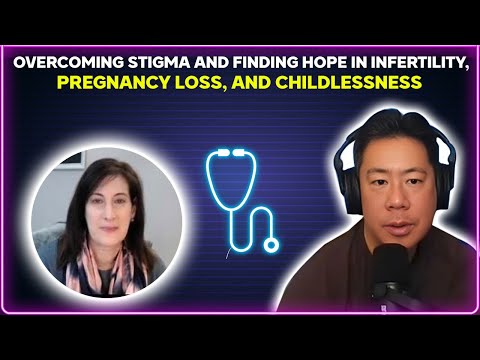
Join us for a thought-provoking episode as we sit down with life and wellness coach Gail Miller, a maternal-fetal medicine physician. We dive into a topic that is often kept silent but affects so many – infertility, pregnancy loss, and involuntary childlessness. Gail discusses the emotional pain and stigma associated with these issues and the importance of empathy and support for those who are struggling. We also explore the challenges faced by those who are aging without children and how health care professionals can provide nonjudgmental support to patients dealing with reproductive history. Tune in for an insightful conversation about resilience, hope, and the power of compassion.
Gail Miller is a life and wellness coach and a maternal-fetal medicine physician. She is the founder, Path Onward Life Coaching, and can be reached on LinkedIn, Facebook, and Instagram.
She shares her story and discusses her KevinMD article, “Childlessness: Your patients and colleagues may be grieving silently.”

The Podcast by KevinMD is brought to you by the Nuance Dragon Ambient eXperience.
With a growing physician shortage, increasing burnout, and declining patient satisfaction, a dramatic change is needed to make health care more efficient and effective and bring back the joy of practicing medicine. AI-driven ambient clinical intelligence promises to help by revolutionizing patient and provider experiences with clinical documentation that writes itself.
The Nuance Dragon Ambient eXperience, or DAX for short, is a voice-enabled, ambient clinical intelligence solution that automatically captures patient encounters securely and accurately at the point of care. Physicians who use DAX have reported a 50 percent decrease in documentation time and a 70 percent reduction in feelings of burnout, and 83 percent of patients say their physician is more personable and conversational.
Rediscover the joy of medicine with clinical documentation that writes itself, all within the EHR.
VISIT SPONSOR → https://nuance.com/daxinaction
SUBSCRIBE TO THE PODCAST → https://kevinmd.com/podcast
RECOMMENDED BY KEVINMD → https://kevinmd.com/recommended
GET CME FOR THIS EPISODE → https://earnc.me/Y5OYed
Powered by CMEfy.
Transcript
Kevin Pho: Hi, and welcome to the show. Subscribe at KevinMD.com/podcast and get CME for this episode by clicking on the CME link in the show notes. Today we welcome back Gail Miller. She is a life and wellness coach and a maternal-fetal medicine physician. Her KevinMD article, which we’ll talk about today, is titled “Childlessness: Your patients and colleagues may be grieving silently.” Gail, welcome back to the show.
Gail Miller: Thank you. Thanks for having me.
Kevin Pho: Now, we’ll get into the article in a little bit, but for those who didn’t listen to our first episode together last fall, just briefly share your story and journey to where you are today.
Gail Miller: Sure. So I am a maternal-fetal medicine physician and a life coach, and my clients are women who are childless not by choice. I’m also a TEDx speaker, and my message there was about childlessness and grief. I became a life coach because I found so much benefit from life coaching myself, because of my own journey with childlessness.
What I found is there’s a lack of therapists and coaches who really understood this, who really understood infertility. It doesn’t mean that you have to go through this yourself to understand, but it certainly is helpful. And I found coaches and therapists who just really had a lack of understanding, and some inappropriate comments and recommendations. And so I decided this is what I need to do, and that’s what I set out to do: become a life coach to help other women who are involuntarily childless.
Real physician voices, twice a week
Free, and one click to unsubscribe.
Kevin Pho: And you talk more about this in your KevinMD article, and you mentioned a lack of understanding, not just among the general community, but even among therapists and other life coaches as well. So tell us, and you can talk more about this when you talk about your article, what are some of the biggest misperceptions? What are some of the things that you want us to understand about childlessness?
Gail Miller: So the biggest misconception is that this is something you can’t grieve. It’s really common to be told, “You can’t miss what you never had.” Well, in reality, you can, and that is called disenfranchised grief.
Kevin Pho: So have therapists or people actually told you that?
Gail Miller: Yes, yes. I have clients, and I’ve had patients, who are pregnant but have gone through fertility issues, or they’ve had miscarriages, and they’ll hear comments about miscarriage as well: “At least it was early.” OK, it doesn’t matter. It’s still painful; it’s still a loss. And then they’ve been told things like, “But it wasn’t, it’s not a person.” Unless it’s someone you can touch and feel, they can’t understand. And so that is just a big misconception, that this is something where, “Well, it didn’t happen, so it’s not a human you lost, so you can’t feel grief.” And you absolutely can.
Kevin Pho: So tell us some of the stories that you’ve heard in terms of the emotions, just to help us understand. You know, no one can certainly understand exactly what you or your clients are going through, but just give us a sense of some of the emotions that are in play here.
Gail Miller: Yeah, so the thing is, it’s a loss of a future that you’d planned. And it’s not just women and men who are childless who go through this. Parents who have a child with an illness, a chronic illness, you’ve imagined your future with this child, and now that future is gone, and you grieve that future even though your child is there. And it’s the same for someone who is childless. You’ve imagined that future even if you never got pregnant. The minute you want to have a child, you’ve imagined everything, down to their wedding that you’re going to, everything, and now you don’t have that. So it is grief over the loss of the future.
And then, similarly, for anybody going through infertility treatments, you’re grieving that natural conception that is supposed to be so easy, but it’s not. And so there are so many emotions that come with this that are only now being recognized. And it’s also something that is common among our colleagues, infertility and childlessness, and we don’t realize it’s going on, because there’s such shame and stigma attached to this that people don’t want to talk about it.
Kevin Pho: Tell us some of the stigma. What are some of the reasons why people don’t want to talk about this?
Gail Miller: So we get messages all the time that motherhood is the most important job you can have. And so if you’re someone who’s struggling to become a mother, you’re dealing with infertility, or you’re someone who’s beyond that and at the point where you know you will never have children, you start to think, “Well, that’s the most important job in the world, and I can’t do that. Then what’s wrong with me? What does that say about me?”
There are also these assumptions that are made about anyone who’s childless, but more commonly with women, more so than men, which is that you must be selfish. So first, I want to say, for anyone who chooses not to have children, they are not selfish. They are making a personal decision. And for someone who wanted to have children but can’t, we’re also not selfish. There are accusations, all that: “You didn’t try hard enough.” “There are always options.” Well, there aren’t always options. There are comments made to people who have gone through IVF, didn’t get pregnant, and made the decision to stop: “Well, you gave up.”
I have one. She’s not a client; it was a story that I heard in a group from someone who went to a physician. It was a plastic surgeon, so it wasn’t related in any way to her fertility, but somehow it came up that she doesn’t have children, and she said, “Well, my husband and I went through IVF for three years, and we’ve taken a break.” And the response from the physician was, “Oh, I have a friend who’s been going through IVF for 10 years. You’re early in this. Don’t give up.” And it was like, OK.
There are so many physical, emotional, and financial struggles when it comes to IVF, and to tell someone, “Don’t give up,” you’re minimizing what they’ve gone through. You’re telling them something that’s not really true. Nobody walks in anybody else’s shoes. So to say, “Don’t give up,” and “You’re early in this,” is really invalidating what they’ve gone through and the grief they’re experiencing.
Kevin Pho: Well, tell us some of the other high points in your article, where you talk about this. It’s titled “Childlessness: Your patients and colleagues may be grieving silently.”
Gail Miller: Yeah, so I think even my clients will recognize, I mean, we’re all familiar that some of our emotional, psychological struggles manifest in physical ways, and I’ve had many women who are like, “You know, I know my fatigue is because I’m anxious, or I’m sad, I’m grieving,” or whatever. They will tell you this, but they don’t want to bring it up with a physician. And physicians, often, when you have 10 minutes to address a whole host of problems, or even just one, it’s hard often to recognize that maybe there’s some underlying emotional issue that needs to be addressed.
And particularly in women, not just older women, but even younger women in their 30s and 40s who know, they’ve had a hysterectomy or whatever, they’re at the point where they realize they won’t have children, there’s also a fear underlying that, and that is the fear of growing old with no one to take care of you. Not that anybody should have a child or children to take care of you when you’re older, and we all know there are seniors who have children who don’t take care of them, but this is a known: You know you won’t have anybody. And it’s an underlying fear that, again, can manifest in physical symptoms.
So just a quick, “Hey, is there something about your fertility status? Is it a sensitive issue? Is there in any way something you want to talk about?” That may be a great segue. And then you don’t have to delve into this. Nobody’s asking you to counsel these women. It’s, “Here are some resources that are available.”
Kevin Pho: Tell us some positive interactions that you’ve seen from your coaching, just to give us a scenario. Say in primary care, I’m in primary care, and this scenario may come up. What are some positive scenarios that you’ve seen in coaching on how to address this properly?
Gail Miller: Really, just having a sensitivity and recognizing the words. You know, we say words matter, and so it’s recognizing that, asking someone, “Is this a sensitive issue for you?” rather than just kind of delving in. And then, if they say yes, “How can I help? What resources do you need?” That’s very simple and doesn’t take a whole lot of time. And then you have the recognition, “Well, they need this help,” and also that maybe these physical symptoms are a result of the underlying grief that they’re experiencing.
Kevin Pho: Now, let me ask from the other side, because I’ve talked to a lot of health care professionals on the show about their infertility journey or their childlessness experience. What are some things that they can do? What are some resources that they could turn to, to help them through that experience or journey?
Gail Miller: So there are a host of support groups. Where I would start is a national organization that has support groups for people dealing with infertility, and they’re now adding in some more focus on childlessness, when you’ve reached that point where you know this is not going to happen. In addition to me being a life coach for women who are childless not by choice, there are other support coaches. There’s Fertility Found; she’s a physician, Dr. Kate Chandler. There is a support group for women who are both single and childless not by choice. So those are just a few of them. There are also religious organizations, and I have a list, so if anybody would like help with the resources, please reach out to me.
Kevin Pho: And in terms of breaking that stigma, especially among medical professionals, addressing this issue in a nonjudgmental way, what are some ways that we can break that stigma?
Gail Miller: First is to kind of look at what your thoughts are on it. If you are thinking, “Anybody can get pregnant,” or that someone who is childless, whether they’re dealing with infertility now or they’re past that point, that thought that someone who’s childless is selfish, I would start with that. I would start with the assumptions that you make of people who are childless, because in order to break down that barrier or that stigma, we have to change our thoughts about it and not make assumptions: “You didn’t try hard enough.” So the first step is to really step back and think about, “What do I think about this? What are my assumptions?”
Kevin Pho: We’re talking to Gail Miller. She’s a life and wellness coach and a maternal-fetal medicine physician. Her KevinMD article is titled “Childlessness: Your patients and colleagues may be grieving silently.” Gail, tell us some of your take-home messages that you want to leave with the KevinMD audience.
Gail Miller: My take-home message, probably the biggest one, is to recognize that your patients and your colleagues are really suffering from this grief within, with their infertility and childlessness, but you may not realize it, because it is a hidden grief, and that it does get manifested in physical symptoms. So it’s just very quick and easy. If you see someone who doesn’t have children, a simple solution is to just address it: “Is this something that’s sensitive for you?” If they tell you yes, then that may be an issue for them. If it’s someone who has chosen to be child-free, they’re going to say no, and that’s great; you move on.
Kevin Pho: Gail, thank you so much for sharing your story, time, and insight. Thanks again for coming back on the show.
Gail Miller: Thanks for having me.
Listen and followApple PodcastsSpotifyYouTubeMore apps · Browse all episodes