








Listen and followApple PodcastsSpotifyYouTubeMore apps · Browse all episodes
Join us for an insightful podcast episode as we delve into the significance of cultural competency training for physicians in providing health care for LGBTQ+ individuals. Our guest, Michael Pessman, a gerontologist, shares his expertise on the unique challenges faced by the LGBTQ+ community when accessing health care. We discuss the importance of addressing discrimination and stigma, and the consequences these have on trust and patient care. Michael highlights the benefits of cultural competency training, including reducing health disparities, improving patient satisfaction, and increasing access to care. We also explore the impact of Illinois HB 4654, a bill that mandates cultural competency training for physicians, on promoting equity, social justice, and inclusive health care practices. Join us as we uncover the path towards creating a more understanding and accepting health care system for LGBTQ+ individuals.
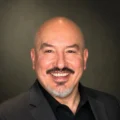
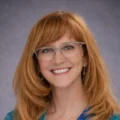
Michael Pessman is a gerontologist.
He shares his story and discusses his KevinMD article, “Breaking down barriers: Illinois bill calls for cultural competency training for physicians to improve health care for LGBTQ+ community.”

The Podcast by KevinMD is brought to you by the Nuance Dragon Ambient eXperience.
Ambient intelligence augments human capabilities to make our lives easier. The applications are many, especially in health care. Ambient clinical intelligence is offsetting the most pressing challenges in health care today, such as burnout, physician shortages, physician and patient dissatisfaction, and underperforming financial outcomes, by applying the technology to clinical documentation.
The Nuance Dragon Ambient eXperience, or DAX for short, utilizes artificial intelligence and natural language processing to automatically document care. It securely listens to and captures the natural, clinician-patient encounter conversation unobtrusively, and turns that conversation into a clinical note for the clinician’s review and signature directly in the electronic health record. You just talk naturally, and DAX does the rest.
DAX is being used by thousands of physicians across 30 different specialties nationwide. It has already won the Silver Stevie award in the health care technology category and was ranked #1 for improving clinician experience in KLAS’s top 20 emerging solutions.
VISIT SPONSOR → https://nuance.com/daxinaction
SUBSCRIBE TO THE PODCAST → https://kevinmd.com/podcast
RECOMMENDED BY KEVINMD → https://kevinmd.com/recommended
GET CME FOR THIS EPISODE → https://earnc.me/YV9Gc9
Powered by CMEfy.
Transcript
Kevin Pho: Hi, and welcome to the show. Subscribe at KevinMD.com/podcast. Get CME for this episode by clicking on the CME link in the show notes. Today we welcome back Michael Pessman. He’s a gerontologist. His most recent KevinMD article is titled “Breaking down barriers: Illinois bill calls for cultural competency training for physicians to improve health care for LGBTQ+ community.” Michael, welcome back to the show.
Michael Pessman: Thank you, Kevin. I appreciate that.
Kevin Pho: So we’ll get to the article in a little bit, but for those who didn’t listen to our first episode together, just briefly share your story and journey to where you are today.
Michael Pessman: Sure. My name is Michael Pessman. I live in Chicago, Illinois. I have an advanced degree in aging, which is gerontology. I am a gerontologist, and I’m passionate about advocating for older people. In this latest piece, I kind of branch out into a different part of my life. Although I do think that older people fit in this piece, it’s kind of a different direction for me today.
Real physician voices, twice a week
Free, and one click to unsubscribe.
Kevin Pho: All right, so let’s talk about this article. What made you write it?
Michael Pessman: I actually was at a working group back in January, and I met a gentleman by the name of Mike Ziri. He’s the public policy director for Equality Illinois, and they were talking about a bill that they were trying to bring to a vote in the Illinois House. It was a bill called Illinois HB 4654 that would require physicians in Illinois to get cultural competency training for the LGBTQ patients that they have. They were looking for support, and they were looking for people to do what they can to bring awareness that this bill would be very important if passed.
I want to be very clear: I’m fortunate to live in a city and state where being gay is not discriminated against. I know it’s a very hot topic, with Florida’s anti-gay laws and so many other states going the opposite direction. I’d like to think that we could go in the right direction here in Illinois, and I’m just very passionate. I am a member of this community, the LGBTQ community. I identify as a gay male, so this issue really hits close to home. For years, when I was younger, I was questioning, so I think there’s also that part of the community that people often forget about, who can’t decide one way or another for a variety of reasons.
So I believe that everyone deserves health care equality in the state, no matter if you’re in Chicago, an urban area, or a southern part of the state. I grew up in a very conservative part of the state, so I understand both angles.
Kevin Pho: How did this bill come together? And maybe give some context in terms of why someone felt the need to bring up this bill regarding cultural competency training.
Michael Pessman: Very good question, Kevin. Well, we know, and I do mention this in the article, that people in this community are much more likely to experience discrimination, stigma, and bias when seeking health care services. I knew that going into it, but it was startling just to see how many articles are written about this that have been peer-reviewed. I mean, they’re completely legitimate, and it made me sad that we’re in 2023 and we can’t overcome some of the stigma and make health care available and comfortable for all. I think it was really that my community has known this for a long time, and because we are progressive here in Illinois, I think that we are prone to lead the nation in this effort.
What I found most shocking, and I have to interject this, Kevin, is that there are no states that require this for licensure renewal with physicians. It exists in Washington, D.C., where nurses are required to have this training, but not physicians.
Another thing I found very surprising, and I go on a little bit about it in the article, is that medical students actually would like this. So I found that to be a very good spot in the article, because that gives me hope for the future. Our young doctors, who are going to be leading the way, want this training; they see this as important, and there’s actually some pretty good research on that as well. So that was very surprising, a good part, a silver lining. I guess that’s what I would call it.
Kevin Pho: So you mentioned some of the stigma and discrimination that those who identify as LGBTQ+ face when they access the health care system. Is this something that you’ve experienced yourself, and if so, what does that look like?
Michael Pessman: It is not something I’ve experienced myself. I’ve had friends; I’ve talked to friends. I think that because I live in a bubble here in Chicago, my doctors are very open, and I seek service at Howard Brown, which is very welcoming. They would be on the opposite end of the spectrum.
But I’ve had friends, being raised in a different part of the state. I had one friend who was not out to his doctor, who was very offended by the way he was asked to take an HIV test, just because the doctor assumed he was gay, but they didn’t talk about it. He didn’t go back to that doctor, because he felt very hurt. Maybe the doctor was just trying to be empathetic, but approach is everything, and without having that knowledge of how to approach a patient, there’s a disconnect, and that can lead to trauma with doctors. This person now lives here in Chicago and has come full circle, but it was very traumatic, and this is something that he remembers. That’s just one example of many. We want to make it so that doctors feel comfortable that they know how to approach these sensitive topics. I mean, they’re very sensitive.
Kevin Pho: So we talk about cultural competency training, and that’s a buzzword that, as you know, means a lot of things to a lot of people. So in this context, what would that mean to you?
Michael Pessman: That would mean to me that doctors would have that exposure. It’s kind of a social justice piece. It’s also a way that they can build trust with their patients, rapport between patients and providers, and it would just be a great step toward more inclusive and equitable health care systems. And I think it’s just the moral and right thing to do in the society that we live in. My goal is that everyone gets treated with respect and dignity in the health care system.
Kevin Pho: You mentioned earlier that some of these topics are very sensitive to approach. Now, what would be some examples or topics that would come up during this training that physicians need to be aware of?
Michael Pessman: Sure. Well, just addressing that this community has more anxiety and depression than the average person out there, and also paying further attention to suicidal ideation and attempts. I have many friends who have tried that, unfortunately, and the health care setting should be a safe space to talk about why people are having these. Oftentimes there is sexual trauma in people’s past. Partner violence is a big thing that’s unspoken, and in a health care setting, people should be made comfortable to talk about that.
Also, for men who have sex with men, there are a number of STDs that should be tested for regularly, such as syphilis, gonorrhea, and chlamydia. I’d like to see that be part of the training: having those regular assessments and screenings for STIs and also HIV, but in a mindful, compassionate way. Routine vaccinations for hepatitis A and B. HPV is also prevalent in my community. Clinical implications include preventive and wellness care to prevent or treat tobacco use, which also has a higher incidence in my community, and just promoting overall well-being.
Kevin Pho: Now, for those clinicians who haven’t gone through such cultural competency training, what are some red flags? What are some pitfalls? What are some things that they should not do in the exam room?
Michael Pessman: I think don’t make any assumptions just because you think that someone might be LGBTQ. Ask compassionately; kind of hint. I had a podiatrist visit a few months back here in Chicago, and he was very subtle. My doctor is fantastic, and he was just laying a few clues that he’s open-minded, rather than bluntly asking somebody. I think that can put people on the defensive right away, and we want this to be a very welcoming environment. My podiatrist was extremely welcoming. He let me know in his own way that he was open-minded, that he treats all.
Also, in talking to some students, I did speak to some students who are in medical training. They talked about how, even though they have gay friends, they’re going to be clinicians, and they are interested in this training because they want to help people. They’re getting into this business not just to make money but to help people. I didn’t consider that; that was surprising, and it also uplifted me to hear that students are getting into this business to help people. That, I think, is forgotten.
Kevin Pho: So the bill is Illinois HB 4654. What exactly does that call for? What kind of training does that call for?
Michael Pessman: Well, it calls for a certain amount of hours when doctors or clinicians in Illinois go to renew their license. I think it could be done online. In Washington, D.C., they have this training, these credit hours, that they could watch online. But I think it could really transform people, even doctors here in Chicago who live in an urban area. They could learn something. There’s a lot about the training that I didn’t talk about that could be beneficial, and I just think it’s the moral and right thing to do. But yeah, I’m a big proponent of this, and here in Illinois we would be the first state to do that, and I think that we are poised to do that. We are leading the Midwest in so many areas. People come to Illinois for health care because of the excellence and the choices we have here.
Kevin Pho: And what’s the current status of this?
Michael Pessman: It is dead on arrival. It has been since January of this year. It is stagnant, so it needs to be brought back up for a vote. I don’t know if that’s going to happen, but bringing awareness, such as this podcast here with you today, and writing this article are steps in the right direction to start that discussion, and I’m hopeful that possibly this can be brought back up.
Kevin Pho: So talk about some of the opposition arguments that you’ve heard against this.
Michael Pessman: Well, I’ve heard that there are a lot of hours that physicians have to do anyway, and this would be an added burden. I think they’re asking for 12 hours; that could be negotiable. I think any training whatsoever, I’d be a fan of. So it’s just burdening. Doctors are very busy people, I understand that, and that has been some of the negative comments. I will say that the American Medical Association, based right here in Chicago, advocates for this training, not this bill specifically, but for this training for physicians, because they understand that equity, health equity for all, is very important.
Kevin Pho: And my final question, Michael: Tell us some of the take-home messages that you want to leave with the KevinMD audience.
Michael Pessman: Sure. My take-home message would be that as a society, we have a moral obligation to ensure that individuals receive the health care they need to live healthy and fulfilling lives. And I would ask that everyone take steps to ensure that this is taken up.
Kevin Pho: Thank you, Michael. Thank you so much for coming back on the show and sharing your time and insight. Take care.
Michael Pessman: Thanks, Kevin.
Listen and followApple PodcastsSpotifyYouTubeMore apps · Browse all episodes