Subscribe to The Podcast by KevinMD. Catch up on old episodes!
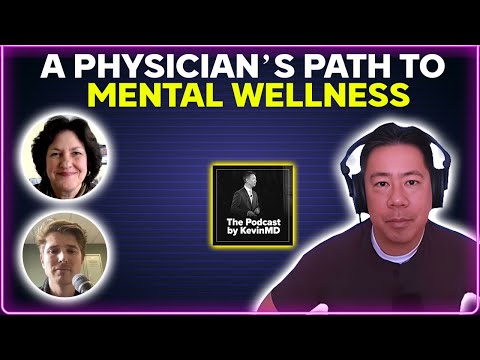
Join guests Kim Downey, a physical therapist, and Bryce Bowers, a family physician, as they discuss the challenges and triumphs of the medical profession. Delve into the world of health care, burnout, mental health, and creative outlets for physicians. Get inspired to share your own story and connect with fellow health care professionals.
Kim Downey is a physical therapist. Bryce Bowers is a family physician.
They discuss the KevinMD article, “Why write? Physicians share their stories of healing through writing.”

Our presenting sponsor is Nuance, a Microsoft company.
Do you spend more time on administrative tasks like clinical documentation than you do with patients? You’re not alone. Clinicians report spending up to two hours on administrative tasks for each hour of care provided. Nuance, a Microsoft company, is committed to helping clinicians restore the balance with Dragon Ambient eXperience – or DAX for short. DAX is an AI-powered, voice-enabled solution that helps physicians cut documentation time in half. DAX Copilot combines proven conversational and ambient AI with the most advanced generative AI in a mobile application that integrates directly with your existing workflows. DAX Copilot can be easily enabled within the workflow of the Dragon Medical application to bring the power of ambient technology to more clinicians faster while leveraging the proven and powerful capabilities used by over 550,000 physicians.
Explore DAX Copilot today. Visit https://nuance.com/daxinaction to see a 12-minute DAX Copilot demo. Discover clinical documentation that writes itself and reclaim your work-life balance.
VISIT SPONSOR → https://nuance.com/daxinaction
SUBSCRIBE TO THE PODCAST → https://kevinmd.com/podcast
RECOMMENDED BY KEVINMD → https://kevinmd.com/recommended
GET CME FOR THIS EPISODE → https://earnc.me/JGx5rt
Powered by CMEfy.

ADVERTISEMENT
Transcript
Kevin Pho: Hi, welcome to the show. Subscribe at KevinMD.com/podcast, and get CME for this episode by clicking on the CME link in the show notes. Today we welcome back Kim Downey. She’s a physical therapist and physician advocate. And we welcome Bryce Bowers, he’s a family physician. The KevinMD article is “Why write? Physicians share their stories of healing through writing.” Kim and Bryce, welcome to the show.
Kim Downey: Thank you, Kevin. Great to be here.
Bryce Bowers: Thank you, Kevin, for having us.
Kevin Pho: Kim, it’s wonderful to have you on again. I know that you’ve brought so many physician guests on the show to share their stories. So how did you find Bryce, and what about his story resonated with you?
Kim Downey: Well, this will be fun for you to hear, because this time Bryce found me. And it’s one of those examples of you, Kevin, making ripples that you wouldn’t know about if we didn’t tell you.
So it was October 15th, the day you published the fourth of the group of articles, this one that I did with Dr. Charity Hicks, Dr. David Fessell, and Dr. Todd Otten. And within a couple hours of when I shared this on LinkedIn, several physicians reached out to me that I had never heard from before, with private messages wanting to share their stories with me and/or wanting to collaborate.
And Bryce was one of them. He thanked me for sharing the post, and he said he could relate to and he loved reading articles like this, that they inspire him. He told me about his blog he just started, Badge of Burnout, and he’s an excellent writer. And he said if there’s any other opportunities like what I posted, including participating in a podcast or something, that he’d be happy to share. And he thanked me for the things that I was doing.
So then we arranged a Zoom and we wanted to collaborate. So since he was such an excellent writer, I had come up with the idea for this article, and I was trying to think of somebody that we could collaborate with. And Dr. Behrooz Behbod, I had read his audio book and I knew he was an excellent writer as well. So I sent him a message, and I think when he responded within 30 minutes, he had already written the piece. So that’s pretty much how we got together.
Kevin Pho: Fantastic. And Bryce, tell us about yourself. Tell us your story.
Bryce Bowers: Yeah. So I grew up in Michigan, unfortunately still here freezing. I did live in Southern California for a bit. But basically I was kind of a late bloomer to med school. It’s not something that I really thought I was always going to do. I decided my junior year of undergrad, and so then I got to take a victory lap in college, which is never really a bad thing.
But I got into med school and things were going really well. I was here at Michigan State and having a good time. But getting into med school and the pressures that come with it, I started to feel really just different. I didn’t know exactly what it was at the time, I wasn’t sure if it was anxiety or depression or just burnout, right, which is really what I write about now. But I just really had no idea what any of those things were, and everybody around me seemed fine. And so I just kind of pushed through.
And so I did a little bit of work hard, play hard mentality, and kept going. But I do remember, after my step one exam, just feeling a complete sense of exhaustion and cynicism, and feeling just so jaded and tired. And that was the first time I think I really burned out, but again, I just had no idea what it was.
So I kept going, I kept pushing on, and I finished my third and fourth year. And the pressure kind of obviously continues to mount, because the goal is residency and that’s what you want to get into. So I signed up for a scholarship while in medical school, because the recruiter scared me really good about having to pay back loans. So I joined the Navy, and then I had decided family med. And so that’s where I went out to Southern California to do my first year.
And then that’s where the wheels kind of fell off for me. I enjoyed the work and everything, but it was a lot, and I was 2,000 miles from home, and a bunch of new responsibilities and everything. And so I went through my intern year and I was really struggling, and I didn’t tell anybody, not a single soul in the world. And so that’s one of the big lessons I’ve learned.
But I really started to struggle with anxiety, depression, substance abuse. And ultimately it led to me getting processed out of the Navy, for health reasons essentially, because I just wasn’t doing well.
And I came back home to Michigan. I didn’t even know if I wanted to go back into medicine. I was really struggling with some of the stuff that happened. And lo and behold, I got back into residency, and I had made that decision. But even when I got back into residency, I still struggled with burnout again. It just kept hitting me again and again.
So that’s where I kind of landed on this whole, where I’m just completely on fire now about this physician burnout stuff. And part of the piece with writing for you, Kevin, was, I just learned that there’s something that I need to do outside of medicine to really balance me out. And so writing, and now my podcast, are doing both those things.
And this is stuff that I never heard when I was in medical school, and I wish I did. And I think if I did, I think it would have helped somebody, or helped me. So that’s my goal. I just want to reach people, anybody that’s struggling with what I struggled with, because I don’t want them to make the same mistakes I did, basically. So that’s where I’m at now, and I’m in my last year of residency. I’m about to graduate in five months, and I’m completely on fire about this stuff. It’s great.
Kevin Pho: So Bryce, as you were telling your story, when you said that burnout was hitting you over and over again, tell us, what exactly did that feel like for you?
Bryce Bowers: Yeah, that’s a good question. And I would like to say that every burnout is a little bit different for everybody. I make the analogy that I treat diabetes in patients, and hypertension, but it manifests differently in everybody, right? And so I think the same is true for burnout.
But for me, it’s a lot of cynicism, a lot of exhaustion. It’s a great amount of irritability, just being very irritable. Feeling tired, like I could just sleep all of the time. Very procrastinating, not motivated.
And signs from people around me. Going home and friends just telling me, you just don’t seem the same, you just seem despondent, and those sorts of things. And obviously that overlaps with anxiety and depression. And then your labs, my labs start piling up and my notes start piling up and things like that.
And so it’s a little bit different for everybody, but for me, that’s how I know I’m headed down a bad road, if all those things are kind of coming together.
Kevin Pho: Now Bryce, when you were going through this, and before you started your podcast and writing, was there anyone else around you that was going through the same thing, as far as you could tell?
Bryce Bowers: You know, I see it every single day of my life, even to this day right now. I think all of us physicians, especially in residency, are just struggling with the same things.
But I ask them about it, and it’s just kind of like this somewhat complicit attitude, like, well, it’s just the way it is. And I accepted that mentality for a while too. But ultimately now I just realized, if I accept that mentality, that’s going to get me to a very dark place again, and I don’t want to be there.
And so that’s why I’m trying to encourage people to speak up and say something, because I do see it in everybody. I see it in med students, I see it in residents, I see it in attendings, and everybody in between. So I think it’s time to acknowledge it and do something about it.
Kevin Pho: So Kim, as you’re hearing Bryce’s story, I think Bryce is a little bit of a contrast, because a lot of the physicians that talk about burnout, they’ve been in practice for a while, but Bryce is currently still in training, almost graduating soon. Tell me, what are some of the thoughts that are going through your mind, Kim, as you hear Bryce’s story?
Kim Downey: Well, I’ve heard his story before, between reading his Badge of Burnout blog and also our conversation. But it just makes me sad, and just passionate that it shouldn’t be this way.
And Bryce, he has these TikTok videos and he just tells it like it is out there, and everybody should follow him because he has so much wisdom. And I just want Bryce to take really good care of himself, because he’s really going to make a difference. He just tells it like it is, so it’s very hard for me to hear.
And actually tonight I’m going to give a presentation for the first time, for my friend’s Parkinson’s support group, how caring for your doctor gets you better care. And I’m getting the word out there. I’ll tell a little bit about my own journey and how addressing physician wellness became my life’s purpose. And then I’m going to share a little about how difficult things are, and some of the factors contributing to burnout and moral injury and all that. And then just the things that patients could do, and why they need to care about their doctors, even if it’s for selfish reasons, to get good care.
Kevin Pho: And Kim, when you hear Bryce saying that he sees burnout every day, even among medical trainees and medical students, these are people just at the very beginning of their medical careers, already burned out. What does that say about the profession going forward?
Kim Downey: Well, it’s very discouraging. And for me it’s such a stark contrast that I didn’t know until I was involved in these spaces.
Because me as a physical therapist, I graduated way back in 1988, and it was only a four-year bachelor’s then, and it was incredibly intense. We were accepted as freshmen, and there was no computer, so we had to write 200 muscle cards with information, like, by hand. And all that stuff, and we had very long days. We did the cadaver dissection in the basement of Jacobi Hospital and we were gone 12 hours a day.
But I have to say that our program, we weren’t competing with each other. If they accepted us as a freshman, we could go all the way through as long as we kept our grades up, and the professors were supportive of us and we were supportive of each other. And I’ve checked with some of my college friends, because I would say to you, was that your experience too? And it was.
So it’s been so sad and frustrating and disappointing to me to hear how different medical school is, as far as bullying and shame and everything that happens, and people don’t know about that. So I just wanted to get the word out and share, and it has to change. It doesn’t have to be like that. We as physical therapists, we all graduated, but we were happier, basically.
Kevin Pho: So Bryce, tell us some of the response that you’ve been getting ever since speaking out, whether through your blog, through your podcast. What have some of the responses been?
Bryce Bowers: Yeah, that’s a great question. Honestly, I’ve been expecting a lot more negative response, but some, and I really haven’t had a lot of negative response, which I’m thankful for. I’m always good with feedback and having some critical discussions.
But I tell you, I say this a lot, and I said it in a few others like my podcast, there’s people that have reached out to me and said, I needed to hear this today. This was exactly what was on my mind. This is something that’s going to help me going forward. And if it’s just one person that reached out to me and said that, then I’m good.
So it’s been very overwhelming. I’ve built a really good community, starting with Kim. Kim, I like to say, is patient zero, because she really got me plugged in with all of these great people, and I’m so thankful to her.
So in this community that I built on LinkedIn, I just get nothing but support. And people, even like doctors that have been practicing for years, that to me I look up to, and I’m like, wow, you’ve been a physician for so long, but they’re just reaching out to me like, Bryce, this stuff is so great, thank you for sharing this.
And so that feels really good, and obviously it kind of feeds into that cycle of wanting you to keep doing it. But I do this stuff, I mean, I’ll do it for no likes. I just think it’s important, and it’s what’s the fire that’s lit inside me right now.
Kevin Pho: So Bryce, what can we do about this? You’re at the beginning of your medical career, you’re about to become an attending in a few months. You said that you see medical students every day burnt out, and these are people just literally at the very beginning and already starting behind the curve when it comes to burnout. What are some of your solutions? What are some things that we can do?
Bryce Bowers: Yeah, that’s also a good question, because I always like to tell people, like, I don’t like to just complain and not have a solution. I don’t go to my attending with a patient and just say, well, I don’t know what to do.
And these are hard problems and hard solutions too. And I think, like you said, Kevin, going back to the root, getting a hold of these trainees and medical students right at the beginning. Because there’s so much in our curriculum about, obviously, what we need to know, but I argue this stuff is, you need to know this. You can’t not hear these stories and stuff.
And so I was talking with someone the other day, a coach, and he said they had asked him for input on their curriculum. They said, well, we don’t have space for that. And I agreed with him when he said, well, you don’t not have space for this, about burnout and stuff like that.
And so I think that’s where it is, and that’s where I’m really motivated. Both med students and residents, because once you burn out, it’s extremely hard to come back from. So that’s why, when I tag everything on my Instagram, my TikTok, my blog, I do gear it towards med students and residents. Everybody of course, because you can burn out as a teacher. But I just, we’ve got to get it early, otherwise it’s really hard to get back. It really is.
Kevin Pho: And Bryce, have you seen the needle being moved since the beginning of your efforts?
Bryce Bowers: I think so. I mean, a lot of my work, I bring up the broken health care system and I bring up all the obstacles that we physicians face, the administrative work and every other pressure on us.
And I’m starting to realize that, like, me alone, while I do enjoy the work, we have to work together to move the needle. And Todd Otten is someone that I’ve spoken with, and I know Kim knows as well, and that’s kind of his big thing, is we have to unify. We can’t have these single outliers, we have to unify our voice.
So if I’ve helped one person, I think I’ve moved the needle, and that’s enough for me. But I obviously want to move it a lot more than just one person. So, but it takes all of us, in all facets of health care, like Kim too.
Kevin Pho: We’re talking to Kim Downey and Bryce Bowers. Kim is a physical therapist and physician advocate, Bryce is a family physician. The KevinMD article we’re talking about is “Why write? Physicians share their stories of healing through writing.” I’m going to ask each of you just to briefly share your take-home messages to the KevinMD audience. Kim, why don’t you go first.
Kim Downey: Sure. So I would like to share a takeaway from Dr. Behrooz Behbod, who collaborated on this article with us and was sorry he wasn’t able to be here today, but you can find him on LinkedIn or online at The Entrepreneurs Doctor.
So this is his takeaway. He says, in a world that moves at such a rapid pace, it’s easy to overlook the power and beauty of the written word. Writing is like being a doctor for our thoughts. It has the remarkable ability to slow down our thinking, allowing us to be fully present in the moment. It’s in this state of mind that we can tap into our innate creativity, wisdom, and well-being. We become more aware of our emotions, desires, and aspirations.
As we immerse ourselves in the act of writing, we listen intently to the whispers of our soul and allow our deepest truths to unfold. In this stillness, we discover fresh new insights that can help us overcome any challenges that stand in our way. Writing is not just a means of communication, it’s a profound journey of self-discovery. Remember, we’re always just one insight away. Love, Behrooz.
So that’s one of his two famous quotes that I would say, and his other one is, there’s always more than one way forward. And I’m going to add to that, for all of us, no matter who you are, sometimes you may need someone else to help you see it. Talk to someone else you can trust. And as Dr. Robert Kornfeld says, never, ever, ever give up.
Kevin Pho: And Bryce, we’ll end off with you. Your take-home messages to the KevinMD audience.
Bryce Bowers: Yeah, my take-home message is this, really. I think to some degree, at some point, if you’re in medicine, in the medical journey, you’re going to struggle at some point. I almost find it inevitable.
And for anyone out there that is struggling, anxiety, depression, substance abuse, anything that’s going on in your life, I just highly encourage you to seek out help. It’s OK. It’s the right thing to do, if you’re struggling, to acknowledge it and be courageous and come forward and ask for help, because you may find yourself further down the road than you ever want to be.
So while I understand it’s tough, please, please just acknowledge how you’re feeling and try and get some help. Because I just learned, in the past, really since I’ve gotten into this space, that 300 to 400 physicians die by suicide a year, which is extremely unacceptable. It’s twice as high as the general population. And so we’ve got to do something about this.
So it starts with you, it starts with all of us, but please, please come forward. You can reach out to me, anybody. Please just get help if you need it.
Kevin Pho: Kim and Bryce, thank you so much for sharing your stories, time, and insight, and thanks again for coming on the show.
Kim Downey: Thank you, Kevin.
Bryce Bowers: Thank you, Kevin.