















Listen and followApple PodcastsSpotifyYouTubeMore apps · Browse all episodes
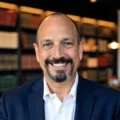
We sit down with Marita McCahill, founder of a consulting firm specializing in health care growth strategy. We delve into the importance of managing your online presence as a health care provider, particularly in the context of transitions between practices. Marita shares valuable insights on how health care professionals can effectively communicate with patients during these transitions, emphasizing the importance of establishing a strong online presence. She also highlights the pitfalls of relying on employers to manage online profiles and the long-term benefits of investing in personal branding online. If you’re a health care provider looking to navigate transitions in your career and enhance your online presence, this episode is a must-listen.
Marita McCahill is the founder of practiceGRO, a health care growth strategy consulting firm. She is passionate about developing, implementing, and executing creative programs to help health care practitioners build brand awareness, improve patient relations, and scale their practice. She can be reached on Facebook and Instagram @practice_gro.
She discusses the KevinMD article, “Practice permanently closed: How to avoid this costly mistake.”

Our presenting sponsor is Nuance, a Microsoft company.
Do you spend more time on administrative tasks like clinical documentation than you do with patients? You’re not alone. Clinicians report spending up to two hours on administrative tasks for each hour of care provided. Nuance, a Microsoft company, is committed to helping clinicians restore the balance with Dragon Ambient eXperience – or DAX for short. DAX is an AI-powered, voice-enabled solution that helps physicians cut documentation time in half. DAX Copilot combines proven conversational and ambient AI with the most advanced generative AI in a mobile application that integrates directly with your existing workflows. DAX Copilot can be easily enabled within the workflow of the Dragon Medical application to bring the power of ambient technology to more clinicians faster while leveraging the proven and powerful capabilities used by over 550,000 physicians.
Explore DAX Copilot today. Visit https://nuance.com/daxinaction to see a 12-minute DAX Copilot demo. Discover clinical documentation that writes itself and reclaim your work-life balance.
VISIT SPONSOR → https://nuance.com/daxinaction
SUBSCRIBE TO THE PODCAST → https://kevinmd.com/podcast
RECOMMENDED BY KEVINMD → https://kevinmd.com/recommended
GET CME FOR THIS EPISODE → https://earnc.me/T2AB6v
Powered by CMEfy.
Transcript
Kevin Pho: Hi, and welcome to the show. Subscribe at KevinMD.com/podcast, and get CME for this episode by clicking on the CME link in the show notes. Today we welcome Marita McCahill. She’s the founder of practiceGRO, a health care growth strategy consulting firm, and today’s KevinMD article is titled “Practice permanently closed: How to avoid this costly mistake.” Marita, welcome to the show.
Marita McCahill: Thank you.
Kevin Pho: So we’ll talk about your article a little bit, but first off, let’s briefly share your story and journey.
Marita McCahill: So a little bit about me is that I started out in management consulting and doing some marketing in that area. Then, as things evolved, I just have a bunch of friends and family in the health care industry, particularly physicians, and they used to come to me and ask me some questions about marketing. I realized, as a niche, health care providers really don’t know a lot about how to market themselves and why it’s important, for their own brand and for their own practice growth. So I started specializing in that area, and it really just took off from there.
Kevin Pho: So tell me the type of practices that you work with.
Marita McCahill: Primarily small- to midsize providers. It could be orthopedic groups; it could be primary care groups. Primarily they’re independently owned, but I also have worked with chiropractic practices and then some for-profit health care providers that are separate from hospitals. So I have a variety of clients.
But really, what I started seeing was that individual practitioners, when you go through, say, med school, don’t get any training on the business side of medicine. As I worked with different clients, I saw how this lack of education really came back and hurt providers later on in their careers. That’s where I came up with this. I developed a course for providers, the CME course, that teaches you the importance of your own branding, personal branding, and also how to grow your practice, but grow it strategically, where you get the patient, your ideal patient. So you’re not just attracting any patient, but the ones you really want to serve.
Real physician voices, twice a week
Free, and one click to unsubscribe.
Kevin Pho: So you mentioned that sometimes that lack of business knowledge has come back and hurt physicians later on in their careers. So what would be an example, or a story, of that?
Marita McCahill: OK, so this is covered in the article, but a really great example is a surgical oncologist who was in practice 20-some years. He was a hospital-based physician, and during the pandemic he decided to change where he practiced and moved an hour away to work for a different provider, a different hospital system. When that happened, his previous provider essentially marked him online as permanently closed. So his patients, when they would Google him, couldn’t find him, and when they called the old practice, they were told, “He’s gone, and we’re sorry. Would you like to see someone else?”
When you look at it from the patient’s perspective, if you are in the middle of treatment, or you have a valued relationship with your provider, particularly a surgical oncologist, you want to be able to follow that doctor. And so what was happening is patients couldn’t find him. He was just down the road, an hour, and because he didn’t own his online presence, he couldn’t communicate to his patients where he went. So essentially he lost a lot of patients, and very far into his career, he had to start all over again in a different market. Had he managed his brand himself and owned his online presence, he could have seamlessly communicated to patients, basically online, where he went and how they could get a hold of him. So that was a really costly mistake.
And with the rate that providers are changing practices these days, I mean, for one reason or the other, people move where they’re practicing, and that’s fine. But you at least need to be able to safeguard your own brand and future-proof where you go throughout your career. So that’s some of the practices that I teach in my course and try to educate providers on.
Kevin Pho: So you talk more about this particular story in your KevinMD article, “Practice permanently closed: How to avoid this costly mistake.” So in this story, was this a Google listing that that surgical oncologist just didn’t own himself?
Marita McCahill: It was all the listings. So it was your WebMD listing, Google listing, Vitals listing, everywhere, and even just having your own website. I try to educate providers that it doesn’t matter if you’re hospital-based or in private practice; there is a value to having your own website. It doesn’t have to be an extensive website, but it’s just a nice way that you can personally connect and share your story with patients. And then, say you move, you can just always very easily update your contact information via your own website.
Kevin Pho: Now, specifically with that surgical oncologist, the Google listing, was it owned by his prior employer, and he couldn’t get it back himself?
Marita McCahill: Actually, that’s something I did for him. So I was able to get it back, but it’s much more complicated to do it that way. There are ways for providers to own their own Google Business listing and share it simultaneously with their employer. So if they don’t want to manage it while they’re in practice, they don’t have to, but it will safeguard you in the long run if you own it. So there are joint ownership opportunities there, or you can own it yourself. That’s what I try to teach people as well.
Kevin Pho: So in 2024, what is the best way that a physician can own their own brand online, short of hiring a consultant? Is this something that they can do themselves?
Marita McCahill: Yeah, they can. Or alternatively, some people have a child who’s pretty tech-savvy, or a partner who’s tech-savvy. Yeah, you could do this yourself. It’s not super complicated. It does take a little bit of upfront work, and yeah, I definitely advise providers to do this. And I don’t think it requires that, especially for an individual practitioner. If you’re a practice, I would recommend, yeah, you should hire this out. But if you’re an individual practitioner just wanting to safeguard your personal brand, yeah, you could do this yourself. You just need to know the steps to do it.
And honestly, that is what I cover in the course, step by step: “This is how you set up your online listings. Here’s how to have a website, the bare bones.” And really, that is where I’m different, in that I’m not necessarily selling consulting services. I want to educate providers on understanding what they need to do for themselves, and then they can make the decision to either do it themselves or hire it out, because both options are available. But I feel like a lot of providers, you’re so heads-down in your practice that probably managing your online presence isn’t something you want to do. But you definitely could.
Kevin Pho: So I’m going to assume today that even independent providers are probably going to have their own website in this day and age. In terms of, a lot don’t, really. Is that true?
Marita McCahill: A lot do not, as an individual practitioner. Like, if you’re a part of a practice, they’ll have a page on their practice’s website. But I have found, I mean, the majority of my clients that I’ve worked with don’t have their own website, which is, I mean, for them as an individual practitioner, outside of, say, if they’re in a hospital system. No, most of them don’t. That’s been my experience.
Kevin Pho: So in terms of starting a web page, any specific tools that you would recommend? There are so many options out there, and I think it’s overwhelming for a lot of clinicians. So if you could distill it into what you think is the highest-yield, easiest way for an individual clinician to create a website, what would you recommend?
Marita McCahill: I would recommend just, there are so many templates out there. Just buy a template and personalize it with the bare bones of what you want patients to know about you. And again, I covered this in the course, but some very high-level things would be: Who is your ideal patient, and why do you want to treat them? And getting that personal connection with patients online, so when they do Google you, you can stand out a bit, because people want to connect with providers on a personal level a bit.
I feel like a lot of times, if you just have an institutional site that says, “This is where I got my med degree. These are my areas of specialization, my fellowship training,” that’s great, and people want to see that. They also want to understand that backstory: Why did you go into medicine, and why did you choose this specialty? And frankly, why should I choose you over someone else in the hospital system, or in that practice, or in the community?
So I recommend using the website as a way to not only build your brand but to connect with patients, draw them into you, and differentiate what you do. I don’t think it has to be a very technical site. It could be a very basic site with some nice pictures, just talking about you, and just making sure you’re easily found online when someone were to Google you.
Kevin Pho: So when I was talking about online reputation all those years ago, I always encouraged the use of social media as an easy way, almost a surrogate for websites, or in addition to a website, of course, because some clinicians would find creating a website individually to be too much, in terms of the friction that’s involved. So today, what’s your take in terms of social media to build a clinician brand?
Marita McCahill: I think social media is a great way to connect, but it can also be overwhelming. I think there are so many channels now: Facebook, Instagram, Twitter. I mean, there’s just so much. I feel like just having a very simple website so people can Google you actually is a little easier now.
And again, I have another study that shows how patients find doctors, or find their health care providers, which could be a nurse practitioner: When they do a Google search, one of the things they look for is your reviews, first and foremost. Second, they want recommendations from friends and family, and then third, recommendations from other health care providers, so referrals. So those three channels are the most direct way to attract new patients: reviews, word of mouth, and referrals. That’s what the data supports, those three channels. So if you’re going to invest, invest in those three channels, less so in social media. I mean, I think people look at the provider’s social media, but that’s not how you attract more patients.
So I always encourage providers to really invest in their reviews, whether that be Healthgrades, whether that be Google. There are a lot of tools out there that can really help practices grow fast in terms of review management. But that’s my take on social media. It’s nice, but it’s not so much the first and foremost right now.
Kevin Pho: So I see a lot of tools when it comes to review management, in terms of making it easier for patients to leave a Google review, for instance. So what do you think about those third-party options?
Marita McCahill: I think they’re great. I think they can really streamline the process. There are a number of them out there. The ones I’m familiar with are pretty slick, and they can also extend beyond just the review system. They can help you with doing targeted ads. I mean, there are some very sophisticated tools out there that I believe really do just exponentially grow your online presence, and they’re worth investigating and considering. So yeah, I think they’re great.
And in terms of review responses, again, I cover this in the course. That’s a really important part of understanding: You can’t just, like, acknowledge patients in the reviews. There are very specific HIPAA protocols, and those tools that help you with review management are all HIPAA compliant. So it’s just another way to safeguard your practice, to invest in one of these tools, and then they give you very specific responses that are all HIPAA compliant. You can just select one that’s appropriate for the review, and then your practice is safeguarded. I don’t know if I would necessarily recommend one of those tools for an individual practitioner, but for a practice of a couple of providers, for sure. I think they’re great.
Kevin Pho: And to be clear, when you say that physicians should have a web page, the majority of clinicians today are employed by large hospital systems, for instance. So you recommend that, in addition to their practice page, they get an individual page just for themselves. Is that correct?
Marita McCahill: Yes, that is exactly what I would recommend. And again, it’s to future-proof their practice. You just don’t know where life’s going to take you. You and your family might decide, “Hey, I want to move cross-country,” or, “Hey, I want to move an hour away from where I’m currently practicing,” for one reason or the other. If you have your own web page, you can seamlessly communicate to your patients where you’ve moved. Similarly, if you own your online presence, you can take your patient reviews with you when you move, so you’re not starting from ground zero after being in practice 10 years. So yeah, those are some of the key recommendations.
Kevin Pho: We’re talking to Marita McCahill. She’s the founder of practiceGRO, a health care growth strategy consulting firm. Today’s KevinMD article is “Practice permanently closed: How to avoid this costly mistake.” Marita, tell us a success story where you saw a clinician take an interest in their online brand, and it really moved the needle for them in terms of growing their practice.
Marita McCahill: Sure. Actually, I have a pretty in-depth case study on my website, if anyone wants to download it. I worked with an orthopedic surgeon who owned his online presence, and he was able to move practices within the community. He had 200-some five-star reviews, and when he changed practices, because he owned his online presence, it was an hour of work to go on all these sites and change your phone number, your office details. It was a pretty seamless process, because he had set up, or we had set up, everything to manage himself. So this was an example of a provider who left a group and went to a hospital system, and so he was able to keep all of his reviews when he left, and patients were able to find him very simply: “Oh, he moved across town, and he’s at a different practice.” So he did not lose barely any of his patients. It was a great success story in that aspect.
Kevin Pho: And my final question, we’ll end with some of your take-home messages to the KevinMD audience.
Marita McCahill: I think the number one thing I would say to providers is you don’t get a lot of business training in medical school or in nursing school, and this is really a detriment to your practice. It’s pretty commonly known that doctors aren’t typically business people as well, and that’s really fair, because you have a full-time practice; you’re dedicated to treating patients. However, I wouldn’t not learn a bit about how to take care of your personal brand, because it really does go back to your patients and patient care. If you want patients to find you, and you want to have a thriving practice, you need to know the bare minimum of how to market yourself and to attract patients. So business training really does help you in the long term.
That’s honestly why I created this CME course, because I know the bare bones of what needs to happen for providers to keep and retain patients, and it doesn’t have to be that complicated. So really, my takeaway is you can do it individually. You don’t have to hire it out. And if you are interested in doing it individually, you just need to educate yourself and invest in yourself.
Kevin Pho: Marita, thank you so much for sharing your perspective and insight, and thanks for coming on the show.
Marita McCahill: Thanks. I appreciate it.
Listen and followApple PodcastsSpotifyYouTubeMore apps · Browse all episodes