Subscribe to The Podcast by KevinMD. Watch on YouTube. Catch up on old episodes!
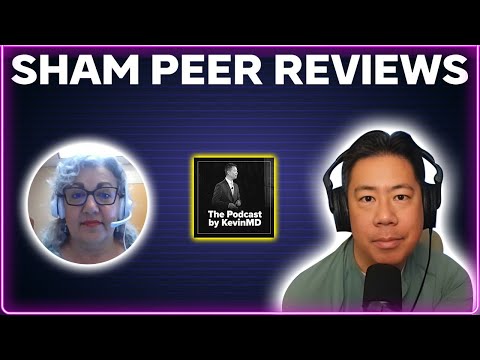
Join Aysun Alagoz, an associate chief medical officer, to unravel the chilling reality of the medical peer review process. In a candid discussion, Aysun shares her firsthand experience of facing unjust disciplinary actions, shedding light on the pervasive issue of sham peer reviews plaguing the medical community. Delve into the complexities of hospital dynamics, the devastating consequences of lost privileges, and the urgent need for systemic change.
Aysun Alagoz is an associate chief medical officer at a large federally qualified health clinic in San Antonio, Texas, where she takes care of the underserved and low-income population of patients.
She discusses the KevinMD article, “Sham peer review epidemic: A doctor’s career destroyed.”

Our presenting sponsor is Nuance, a Microsoft company.
Together, Microsoft and Nuance are leveraging their rich digital technology and advanced AI capabilities to tackle some of health care’s biggest challenges. AI-driven technology promises to revolutionize patient and provider experiences with clinical documentation that writes itself.
The Nuance Dragon Ambient eXperience, or DAX for short, is a voice-enabled solution that automatically captures patient encounters securely and accurately at the point of care. DAX Copilot combines proven conversational and ambient AI with the most advanced generative AI in a mobile application that integrates directly with your existing workflows.
Physicians who use DAX have reported a 50 percent decrease in documentation time and a 70 percent reduction in feelings of burnout, and 85 percent of patients say their physician is more personable and conversational.
Discover AI-powered clinical documentation that writes itself. Visit https://nuance.com/daxinaction to see a 12-minute DAX Copilot demo.
VISIT SPONSOR → https://nuance.com/daxinaction
SUBSCRIBE TO THE PODCAST → https://kevinmd.com/podcast
RECOMMENDED BY KEVINMD → https://kevinmd.com/recommended

ADVERTISEMENT
GET CME FOR THIS EPISODE → https://earnc.me/7l40Tj
Powered by CMEfy.
Transcript
Kevin Pho: Hi, and welcome to the show. Subscribe at KevinMD.com/podcast, and get CME for this episode by clicking on the CME link in the show notes. Today we welcome Aysun Alagoz. She is an associate chief medical officer at a large federally qualified health clinic in San Antonio, Texas. Today’s KevinMD article is “Sham peer review epidemic: A doctor’s career destroyed.” Aysun, welcome to the show.
Aysun Alagoz: Thank you so much for having me, I’m very excited.
Kevin Pho: So let’s start by briefly sharing your story and journey.
Aysun Alagoz: Yes. So in 2011 I was in a town about 40 miles outside of San Antonio, in a solo practice as an OB/GYN. At that point I had been there approximately nine years, and my solo practice I had had for six years at that point.
And on just basically a regular day, I got a phone call from the vice CEO saying that I have to be at an urgent meeting. And I wasn’t told what it was about until I got there, they just said, you need to show up, and this is the time.
And so basically it was for the peer review committee, and I was placed under peer review, and I was accused of mismanaging a patient of one of my colleagues when I had been on call. So it was very dramatic, and basically I was told that I needed to leave the hospital and I was being given what’s called a summary suspension.
And summary suspension typically is given to physicians that are considered a danger to the public. Historically it used to be doctors that would come to the operating room either drunk or impaired somehow, and so they received a summary suspension and basically were told they can’t work at the hospital, and literally are walked off the premises of the hospital, which is what happened to me.
And this was in the middle of the week, and I was given until the following Monday to resign my hospital privileges. And since it was a small town, the next nearest hospital was like 30 minutes away, so basically I had no other option, that’s where I had to deliver the babies. And if I didn’t resign, they were going to report me to the National Practitioner Data Bank.
So fortunately, I guess, for me, I was kind of aware of the politics surrounding summary suspension. I had been to several meetings of the College of Legal Medicine after a lawsuit in California years before, and so I had heard of sham peer review and I had heard of summary suspension. And by definition, if you’re given a summary suspension, that’s an automatic referral to the data bank. So even though they said they weren’t going to report me, I knew they would, and so I didn’t resign, because I wanted to fight it and have a paper trail of my side of the story.
So their process then involves, if you don’t resign, then you can go to what’s called the ad hoc committee. So the hospital picks two physicians and you get to pick one physician, and it’s basically a little mini trial. At that point I had two lawyers representing me.
And so basically they reviewed any little complaint or any little infraction in the period of nine years that I had sustained. And interestingly enough, the first two and a half years I had worked with another doctor, and there wasn’t a single complaint on file during that time. And when I opened my own office, then all of a sudden the nurse complaints started showing up. And so the little mini trial actually went over that period of time and didn’t really even talk about the case in question.
Which was a patient who had elevated blood pressure, and she was pregnant, and she had impending preeclampsia. And the other physician had claimed I should have done a CT scan. But interestingly enough, she didn’t call me, she didn’t ask questions, and she just filed a complaint. And according to their own bylaws, I’m allowed an outside review. There was no outside review allowed. A perinatologist didn’t review the case, nobody reviewed the case. Basically they went with her word.
So I appealed to the ad hoc committee. The ad hoc committee actually wrote a letter saying that her methods we might not agree with, because she’s outspoken and such, but you should let her resign, because if she’s reported to the data bank it would really adversely affect her career. And so I said, great, wonderful, the ad hoc committee supported me. And then it went subsequently to the executive committee, and they said, no, we’re still going to report it to the data bank. I appealed it to the board of directors, and it was the same response but with no explanation. And that was that.
Kevin Pho: So a lot to unpack there. So let me ask, when you got called to that meeting, you had really no idea that this was coming?
Aysun Alagoz: No, not at all. I was just given a call, and she didn’t even tell me what it was about. She said it could adversely affect your career.
In fact they wanted it that night, and my son had a game, and I said I can’t come tonight, we have to wait, I have to come tomorrow. And then she got really upset, and she said, well, this is really important, you have to come. And it was called really urgently, all the committee members were there.
In fact during the meeting I said, what is this about? And he said, well, there was a complaint by the physician, and also there was another complaint from the emergency room, they said that you told a patient that they should sue the emergency room doctor. And that was it. And I wasn’t allowed to see the written complaint, none of it. And apparently that’s actually fairly typical, you’re not even allowed to know what it’s about, and at that point I was certainly not allowed to bring a lawyer to the meeting. Of course, I mean, it happened within two days, there’s no way I could even get a hold of a lawyer. I just had to show up.
Kevin Pho: And in terms of the clinical case in question, before that meeting, did that clinical case stand out to you as something that would worry you?
Aysun Alagoz: Oh no, not at all. I mean, at that point I’ve been in practice since 1996, I’ve taken care of literally hundreds of preeclamptic patients, and no, there’s nothing. And subsequently actually the diagnosis ended up being a migraine headache, and my assessment was correct in the long run. But no, it didn’t stand out.
And what did stand out is that if she had a question and a concern, she could have easily called me on Monday and said, hey, what was your thinking about this case, what was going on? Nothing.
Kevin Pho: What was your relationship like with that hospital in the preceding months to years?
Aysun Alagoz: Well, it’s a very small hospital and a very small OB department. When I got there, there were two older gentlemen that had been there for like 20 years, and they needed a female in town. This was in 2002, and so I was recruited to join the younger one, and we had good relations. He was an excellent physician, we worked together well, I had no issues with him in that respect. I didn’t particularly like how he ran his office, and I voiced some concerns which weren’t addressed.
And so my husband at the time and I decided, well, we’re going to open our own office, we’re going to be kind of like the boutique office, all female, and this type of stuff. So the issues started after that. Basically I ended up with a target on my back, and the physician I left literally didn’t speak to me for a year, never called me to assist in any surgeries. And then I started hearing little complaints. At one point he actually wrote something negative about me in a patient chart, and he actually got called out for that.
But I did notice it was being watched. Basically everything was being scrutinized, and nurses’ reports were happening, whereas not a single report happened in the two years that I was with the other provider.
But I had been sued before, but prior to coming to Texas. So during this time, the nine years, I had, luckily, no bad outcomes, no lawsuits. And I was very careful to practice within my safety net of what I was comfortable doing. I didn’t do any experimental, any risky surgeries, none of that.
Kevin Pho: So you told your story in the KevinMD article “Sham peer review epidemic: A doctor’s career destroyed.” So is it conceivable that the medical administration for the hospital brought these allegations against you because you were a competing clinic?
Aysun Alagoz: I thought of that for the longest time, that maybe it was political, because the head of the executive committee right around that time had actually started his own group practice, and this particular female had joined him in his group practice. And the practice had a urologist, I think a neurologist, and she would be the OB. And so I thought, at that point, it was competition.
To this day I don’t really know, but there was a little bit of a personal interaction with the vice CEO, let’s just put it that way. I have a theory of what could have potentially happened in relation to the vice CEO, and potentially a personal vendetta against me, is the only other thing I could come up with, because it’s a very small town and the rumor mill is rampant basically. So either reason actually is terrible, especially if it was a vendetta, because she killed my career, if that was the case.
Kevin Pho: So what does it say about the peer review system, because of the fact that they could bring up these allegations against you and essentially force you to resign, perhaps because of a political reason? What does it say about the peer review system?
Aysun Alagoz: The peer review system, I mean, it’s written in several places, they call it a kangaroo court. Basically it’s not a peer review, it’s a weapon, and it’s been used as a weapon, and it’s being used more and more as a weapon for whistleblowers essentially. Because if you bring up, and it’s not just in my case but in other hospitals, if you bring up quality care issues and you’re vocal about it, you basically become a target. And it’s becoming more and more common, not only as a whistleblower, but if you’re considered what’s labeled a disruptive physician, that’s a pretty common label also.
And that can be anything. If you raise your voice. Years ago, I remember when we were training, we would have surgeons throw instruments in the OR and stuff. I mean, those days are long gone. Literally if you look at someone funny they could say, oh well, they’re being disruptive, I was being mistreated. They could claim anything at all, and it’s been done. And then some of these committees will force a psychiatric evaluation, they’ll use that as a weapon.
Kevin Pho: So tell us what happened eventually with your interactions with this hospital. Did you resign?
Aysun Alagoz: Well, I wasn’t allowed to resign, I was summarily suspended. So that was reported to the data bank, and then I couldn’t find a job for a good two years. I lost several jobs once they queried the data bank.
Anyway, backing up, once you get reported to the data bank, then the medical board investigates, so that takes a while, and it took about a year. And the Medical Board of Texas reviewed it and said, we don’t find anything wrong, the case is closed. And I was like, fabulous, take my name off the data bank. And they said, oh no, we can’t, once it’s on the data bank it stays on the data bank, but you can add your own comments about what happened. But honestly, nobody reads those. If your name is on there, just by the definition that you’re on there, that’s it.
And my kids were young at the time, I had joint custody at that point, we were divorced, and I can’t go anywhere, if I do I won’t see my children. In other words, I can’t go to another state, or go someplace maybe remote where they need help and they overlook that. But yeah, it was a very difficult time, to say the least.
Kevin Pho: Now, for those physicians who get called for these emergent peer review meetings, having gone through the process yourself, what kind of advice would you share with them?
Aysun Alagoz: I would say, in retrospect, if possible delay the meeting and go with a lawyer. I did not know to do that, because basically I knew it was going to happen, so I knew it wouldn’t help me. But yes, go with a lawyer. The hospitals might fight you on that though, they might say a lawyer is not allowed, I’ve heard that as well, but definitely go with a lawyer.
Don’t agree to anything. And above all, most importantly, don’t be afraid. I think it’s such a scary situation, a lot of doctors kind of panic. Take a deep breath, and if possible delay the meeting, just give yourself some time. Say, hey, can you give me a week, or I can’t come, or what have you.
Kevin Pho: And when a hospital says that you’re not allowed a lawyer, is that really true?
Aysun Alagoz: I have heard that. Now, this was years ago, I haven’t investigated that aspect of it as thoroughly, but yeah, they could very well say, no, you can’t have a lawyer attend the meeting itself. But I would definitely, if the lawyer can’t physically attend, I would definitely consult a lawyer. And there are lawyers that specialize in representing doctors and nurses in peer reviews, and that’s basically who I got, a lawyer out of Austin.
Kevin Pho: What kind of changes do you think are necessary within the medical culture to prevent these abuses of power, like the story you told?
Aysun Alagoz: Well, specifically for peer review, it has to do with the law, the HCQIA, the Health Care Quality Improvement Act, that was passed in 1986. That law specifically says that those that sit on the peer review committees are immune to lawsuits. That law needs to change. Until that law changes, nothing’s going to happen that’s going to benefit the physicians.
Because doctors, I’ve heard of several over the years that have attempted to sue the hospital, to sue for bad faith, and they’ve lost, and they’ve spent literally hundreds of thousands of dollars. I mean, some are a million dollars in debt because of this law. They’ll take it and they’ll pursue it and then it gets overturned.
So my purpose for writing the book, one, was to increase awareness, because a lot of doctors, some of the things I’ve posted, a few queries on Facebook, and there’s a lot of doctors saying, what’s sham peer review? People don’t know until they’re in the throes of it. So my purpose is, one, to get people to know, and two, if enough people come forward, because I know that there are at least thousands of doctors that this is happening to across the country, but people are afraid to speak up. And it’s a shaming process. When you go through it you feel like less than a doctor. It’s emotionally very traumatic, to say the least.
Kevin Pho: Now, if you were to go through this again, and God forbid, not that I would want you to of course go through this again, but what would you do differently?
Aysun Alagoz: I would definitely have spoken to a lawyer before I went, for sure. But honestly, not a lot. I don’t think it could have played any other way, because I fought my way up to the board of managers, I didn’t basically resign.
The only other thing I would think of, if I could have maybe gotten them to change the language, if they had dropped the summary suspension specifically, it wouldn’t have been as damaging. Because certain things are much more damaging, like a summary suspension, or also if you resign during, under investigation, that looks very bad.
In fact, I guess that is now one of the statements, I heard one of the doctors who sits on a privileging committee saying that that’s one of the questions that is on a lot of the hospital applications. Did you ever resign while being investigated? And if you check yes, they won’t give you privileges. So I mean, this is like a permanent mark on record.
Kevin Pho: We’re talking to Aysun Alagoz. She’s an associate chief medical officer at a large federally qualified health clinic in San Antonio, Texas. Today’s KevinMD article is “Sham peer review epidemic: A doctor’s career destroyed.” Aysun, let’s end with some of your take-home messages that you want to leave with the KevinMD audience.
Aysun Alagoz: Read about sham peer review, learn about it, get comfortable, and look up Dr. Huntoon. Lawrence Huntoon is a physician, a neurologist, who does quite a bit of writing on the topic, and he has some excellent YouTube lectures. Listen to some of his lectures.
And just be careful about what’s around you in the hospital, and the hospital politics. Be a little bit more aware, maybe, than I was, in anticipation of any potential issues.
Kevin Pho: Aysun, thank you so much for sharing your perspective and insight and story, and thanks again for coming on the show.
Aysun Alagoz: Thank you so much.