














Listen and followApple PodcastsSpotifyYouTubeMore apps · Browse all episodes
Join us for a conversation with Fazlur Rahman, a hematology-oncology physician and author of Our Connected Lives. In this episode, we explore how Fazlur’s journey from physician to patient transformed his understanding of empathy. He reflects on the importance of personal connection in medicine, the impact of a lack of empathy on both doctors and patients, and the need for medical education to include the humanities to foster compassionate care. This episode dives deep into the role empathy plays in improving patient outcomes and doctor-patient relationships.
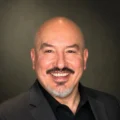
Fazlur Rahman is a hematology-oncology physician and author of Our Connected Lives.
He discusses the KevinMD article, “From doctor to patient: a life-changing lesson in empathy.”

Our presenting sponsor is DAX Copilot by Microsoft.
Do you spend more time on administrative tasks like clinical documentation than you do with patients? You’re not alone. Clinicians report spending up to two hours on administrative tasks for each hour of patient care. Microsoft is committed to helping clinicians restore the balance with DAX Copilot, an AI-powered, voice-enabled solution that automates clinical documentation and workflows.
70 percent of physicians who use DAX Copilot say it improves their work-life balance while reducing feelings of burnout and fatigue. Patients love it too! 93 percent of patients say their physician is more personable and conversational, and 75 percent of physicians say it improves patient experiences.
Help restore your work-life balance with DAX Copilot, your AI assistant for automated clinical documentation and workflows.
VISIT SPONSOR → https://aka.ms/kevinmd
SUBSCRIBE TO THE PODCAST → https://kevinmd.com/podcast
RECOMMENDED BY KEVINMD → https://kevinmd.com/recommended
GET CME FOR THIS EPISODE → https://kevinmd.com/cme
I’m partnering with Learner+ to offer clinicians access to an AI-powered reflective portfolio that rewards CME/CE credits from meaningful reflections. Find out more: https://kevinmd.com/learnerplus
Transcript
Kevin Pho: Hi, and welcome to the show. Subscribe at KevinMD.com/podcast. Today we welcome Fazlur Rahman. He’s a hematology-oncology physician. His KevinMD article is an excerpt from his book Our Connected Lives. The excerpt’s titled “From doctor to patient: a life-changing lesson in empathy.” Fazlur, welcome to the show.
Fazlur Rahman: Thank you. Thank you for having me, Kevin.
Kevin Pho: So before we talk about your book and article, just briefly share your story and journey.
Fazlur Rahman: Well, I was born in what is now Bangladesh, and, you know, I had all kinds of trouble, like so many other people at the time. And then I was trained in Dhaka, and after that, I came to New York fifty-five years ago as a young man and trained in Long Island Jewish Hospital and Queens General Hospital. That’s where I did my internship. We did internship in those days, internship and junior residency. After that, I came to Baylor College of Medicine in Houston, and that’s where I did my senior residency and also did my fellowship.
After the fellowship, I had to decide, you know, what to do with my life. I wanted to be in academics, but because of circumstances, I came to West Texas. You could say that a choice or a choir cafe, and it worked out well with the help of my wife, Ara. So that’s where, over the years, I practiced cancer medicine, hematology-oncology, for thirty-five years.
In between, I wrote my views, what I saw as a physician and what I observed, you know, on medical ethics and bedside medicine, on IVF, on CPR, in some of the biggest papers in the world, you could say: Guardian Weekly, the New York Times, the Wall Street Journal, the Christian Science Monitor, and Newsweek, among others, you know. And personal essays, like in Harvard Review. Those were to express my own feelings, plus what I saw as a physician and what I learned from my patients, along with my own experience. So I did all those things in between my practice.
And then I wrote two books. You know, this is the second one. The first one is The Temple Road: A Doctor’s Journey. That’s about my growing up. The second one is the stories of my patients and what I learned from them, how they, you know, dealt with me and how I dealt with them, and all those things and experiences. I put it together: five patients in detail. Each patient makes a point, you know. So that’s what summarizes my life.
Real physician voices, twice a week
Free, and one click to unsubscribe.
Kevin Pho: Sure. So your latest book is titled Our Connected Lives, and you shared an excerpt from that. It’s titled “From doctor to patient: a life-changing lesson in empathy.” So for those who didn’t get a chance to read your excerpt, just tell us what this particular story is about.
Fazlur Rahman: This story is about, you know, when you practice. You are an internist, so you understand, and you take care of patients. That’s one thing I like about the podcast, because, and I have due respect, a lot of policymakers, they’re not really patient-oriented as such, more business-oriented. So you would understand this. So you see all those things that I learned from my patients, how I dealt with them, how I affected them. So that’s one.
And then, after practicing thirty-five years, I had a hiking accident, and I fractured my right ankle badly, actually, and I required detailed surgery. So here I remember Susan Sontag’s quote. I mean, I paraphrase it. That is, when you are born, you are born with two citizenships: the citizenship of the well and the citizenship of the sick. So all of a sudden, from the citizenship of the well to the citizenship of the sick. I thought that I knew quite a bit about empathy, since I have practiced all these years and I read about it. But until I became a patient, I probably did not understand the depth of it, how important it is to be empathetic, to understand patients’ anguish and difficulties, inner struggle, and all that, the best you can. So that was the basis for writing that article, and it is a chapter of my book called “Empathy matters in medicine,” extracted from there.
Kevin Pho: So you mentioned that when you were a patient and you had to undergo a procedure to fix your ankle, you were surprised how important empathy was, even though you’re a cancer physician yourself. Tell me what exactly surprised you.
Fazlur Rahman: I think that, remember, the science is the basis of medicine, but science alone cannot solve everything. Like I just told you, you can’t feel people’s anguish and their difficulties in a way. So later he became very nice, but the point is that to him, it looked like I was a technical challenge, you know. It’s a difficult fracture, and he can fix it, which he did, you know. So is that enough? The point, you know, is that it’s a little bit impersonal: “I’m just going to take care of the fracture.” And what happens to the human being, you know? The ankle is attached to an individual, as you know. So that was the thing that probably sort of instigated me to write this piece, you know. That was the surprise: It’s a technical challenge, and he did take care of it. But beyond that, it seems like being interested in the human being and in his fracture are kind of a little bit different. You know what I’m trying to say? Go ahead.
Kevin Pho: So what would you have liked to see more of from the patient standpoint? In an ideal world, you would want an orthopedic surgeon to see your ankle fracture as more than an ankle fracture. What would you have liked to see from that doctor?
Fazlur Rahman: I think I would have liked the doctor to touch me, you know, touch me, and at least touch my ankle, and see me and listen to my concerns a little bit in detail. And then after surgery too, to look a little bit in detail. I know nobody has an endless amount of time. I was a busy physician too, and it doesn’t take a whole lot of time to listen. So I would have liked the doctor to take a little bit more time with me and listen to my concerns.
I know the word empathy is thrown around all the time now. I’ve been writing about it for a long time, before it was so much in fashion, but it is real, you know. And that’s why, when I was teaching medical humanities, I started with Chekhov’s “Ward No. 6,” which, you can read it, is one of the best short stories I’ve read, about how a doctor who was basically insensitive to the patients all of a sudden ends up being a patient in the same ward. So that’s “Ward No. 6.” And then he was kind of punished, and the thoughts are the same way, like his patients were. And then, while he was basically dying, he says, “How could I ignore it for twenty years, and why didn’t I know that?” You know, so that’s really the, I know it’s getting philosophical, but basically, yes: taking a little time and showing a little more interest as a human being, besides the disease itself, you know.
Kevin Pho: Why do you think doctors today are less empathetic than they were previously? You’re a practicing physician. You said you’ve been doing this for decades now. Do you think that it’s more difficult for doctors today to show that empathy to patients?
Fazlur Rahman: Yes. Let me, I’m retired now for quite a few years. So the point is this, though: You’re a lot younger than me. Bedside medicine mattered a lot to us. And I think that technology has improved and improved the patient care and quality of life; all these things have improved. But at the same time, if you take a survey, patients are dissatisfied. Why? Seventy percent or so of patients, their doctors don’t do personal touch anymore.
Why it happened? First, I think that it’s partly our fault, you know, doctors’ fault, because we kind of gave in to everything that was thrown at us. That’s one. And then the second: In my time, I’ll give you my experience, the hospital administrators or clinic administrators, they worked with us to help us, correct? And sometimes they did what you required them to do because of patient care. Now, and I see these younger doctors, and I have friends and others, and I go to doctors too, it’s like administrators run the show. In other words, you have to see this many patients. I’m not saying all places, many places. And you have to have this much production, and you have to have this much, you know, “If you do, I’ll do an incentive.”
I know one of your guests, and I do respect, was talking the other day about, well, a doctor who does save money and good care, then that doctor should be rewarded. I understand that, but it’s not that simple, because the criteria that you set up for quality care can be manipulated, you know. You just put certain criteria, and it looks like I did great, you know. So one is that they become very, very bureaucratic, administration-heavy, and it doesn’t matter, for-profit or nonprofit hospital. Nonprofit hospitals are just as cutthroat.
There was an article in the New York Times last year. There’s a hospital in a big chain where the CEO is getting one or $2 million salary, and at the same time, they’re cutting off patients’ appointments or treatment because they owe a little bit of money or whatever, little or big. So one is that, absolutely, the profit motive has become a big issue. And it’s hard to, it’s not, you know, health care is not Walmart. It’s hard to make, you know, too much. You have to make profit to survive and to grow, but you cannot make too much profit. So that’s one, the profit motive, I say excess profit, you know. So that’s one.
And secondly, it has become the policymakers. For example, you are an internist taking my interview. You understand the patients’ difficulties, your difficulties, and all that. And I write in my book about my own failures and difficulties, how I dealt with my own weaknesses and doubts and all that. So you understand that. But the people making policies nowadays, most of them have no, they may have MD in their name, correct, but they may not have anything to do with patient care. So they are the ones making policies and throwing them at us.
And then computerization is supposed to help, but I often wonder: Does it help the patient as such? You’re taking care of patients. The whole thing we are doing, all this big enterprise, is for only one person, and that is to take care of patients and to prevent diseases. Or are you just adding more patients to the doctor?
And then, as a society, you know, again, this is getting philosophical, probably, ask me, we have to decide. We cannot have it both ways. Either we accept impersonal medicine and not complain, or we just let them make as much profit as they want to, you know, because you’re a shareholder or you own the hospital or you own the company and all that. I personally know that there’s a big takeover of all these urgent care centers, sixty, seventy of them, and they have insurance companies, they have pharmacies, they have what is called the middleman, pharmacy chains. They have hospitals. So they pretty much control everything.
So because of the business matter, I wrote, probably twenty, twenty-five years ago, an article for the New York Times called “Take the money out of medicine,” because I was, I’m not a preent or anything, because I was seeing that these things were coming. You know, you cannot take the money completely out of medicine.
You know, there is a hospital, one of the biggest hospital chains, I’ll give an example. There was an article in the New York Times that big hospital chains can make it more efficient, this and that. There was an article written by Robert Kashner. That’s at least thirty years ago, probably. He was supposed to be an expert. And so I wrote a small reply in the New England Journal of Medicine. I said that, whatever, I don’t remember, they want to make 20 percent profit on the revenue. And if, say, 10 percent is average and good, 15 percent is very good, then you can only do it two ways, OK? Either you cut the service, or you do something else. And something else, I meant, is cheating, you know. And what do you think happened? The company got heavily fined, and the federal government, Medicare, forced them to break into pieces, three companies.
So these are the things. I think that the excess profit motive, again, I’m not against profit, you know, but the excess profit motive, I think that is causing a lot of these problems. And then it’s pretty much run by the people, the policymakers; they have no connection with the patients, you know.
Kevin Pho: You wrote in your excerpt that the inclusion of humanities in medical education can sometimes nurture empathy. So talk more about that. How can you believe that the humanities in medical education can foster compassionate care?
Fazlur Rahman: I think that, like I told you in the beginning, science is definitely necessary. You know, you need a CT scan, an MRI scan, and all that, and now AI is coming. But all those things, again, are for patient care. But science cannot make you feel the patient’s anguish. Science cannot make you feel the patient’s inner, you know, struggle. But if you read, like, the stories I told you, read stories like “Ward No. 6” or a poem like Raymond Carver’s “What the Doctor Said,” believe me, it will open your eyes. And then those things make you look, like, what happens: You are that patient. You’re a doctor, but you could be that patient too.
And then sometimes you see things in the humanities, in arts, literature, even painting too, that you don’t see in physiology or pharmacology. So those things open your eyes. I know that with all the demands we have now in medical school, to learn science and everything, that’s why it’s more important that we need to do medical humanities. Because I’m afraid that when this AI, all these things, take over, you know, we’ll forget that, again, we’re taking care of human beings, and get carried away with the technology. So I feel like the humanities will still keep the connection with the human part, the humanity part, for us. So that’s why I strongly believe in humanities education. And one of the schools where I work on the advisory council, you know, is the University of Texas San Antonio medical school, and they are very good at it. Most medical schools are doing it now, but I feel like it should be part of the curriculum.
Kevin Pho: Sure, sure. So with all the advent of technology and AI and things that could potentially take away from empathy, how can doctors maintain that going forward? With all the pressures, the time pressures, the money, the bureaucracy, it’s becoming more and more difficult for doctors to be empathetic. So what are some specific ways that they can maintain their empathy going forward in this world?
Fazlur Rahman: That’s a very good question, actually. I’m not sure there is an easy answer. One, you cannot avoid the current bureaucracy, this and that. I think that first, to begin with, we have to ask our legislators and others that maybe you need to change the system of medicine, you know, to solve the problem. So that’s to begin with, so doctors have a little bit more time, a little bit more, to take time with the patients. So that’s one. That is, the hospitals and companies and all that, they need to understand that. I know it sounds idealistic.
And then the second is that, even with all this, medicine is still, you know, a very good profession, and you know that you can make a good living. Work hard, but at the same time, you can help people. There are not too many things you can do day in and day out like that. And I think the right kind of students, I don’t, it’s hard to select students who have to go into medicine. Because when you’re a young student and go to medical school and you see all these things, you know, and then hospitals are talking about profit, hospitals are talking about incentives, then your mindset kind of changes, you know: “I have to make money too, like they’re asking to make money.” I’m not against income, you know. So we have to select the right kind of medical students, that they’re going into it not because of prestige or money alone. I genuinely believe that medicine was more a calling than a profession. I say it in my book too, Our Connected Lives: Caring for Cancer Patients in Rural Texas. By the way, even though it says rural Texas, cancer patients suffer the same way, a similar way, the same way, only some more, some less, depending on their disease and what kind of support they have.
So two, one, the administrators and hospitals, they need to change their philosophy and policy some, and legislators also look into it. Too many laws alone will not solve the problem. We have to send our mindset as a society. And the third is the doctors. We have to select the right kind of doctors, I mean medical students, the best we can. And then the fourth is in the training. That’s very important. The teachers have as much part, you know. A lot of mentors, I was influenced by the mentors. My mentor at Dhaka Medical College was Professor SMM Rob, a brilliant clinician. It’s a British system, and that’s how we operated. But anyway, he said that the healing begins with your reassuring presence at the bedside and your empathy for the patient. And I try to remember that. But did I succeed all the time? No. I failed many times on my own, you know. But we have to remember the one, why we are there in medicine. Are we there just to make excess money, or are we there to also help people?
And the teachers have to give that impression too, because sometimes teachers and mentors can influence a student or a beginning doctor quite a bit. So those are the things, you know: changing the policy as a whole, and hospital administration, doctors, companies, they need to look into it, and so does the insurance company. There was an article I wrote for the Houston Chronicle, called, anyway, I addressed those issues quite a few years ago when the ACA debate was coming on. And then training the doctors the right way, and including humanities into it.
Kevin Pho: Sure. We’re talking to Fazlur Rahman. He’s a hematology-oncology physician. He’s the author of the book Our Connected Lives. We’re talking about an excerpt from that book titled “From doctor to patient: a life-changing lesson in empathy.” Fazlur, we’ll end with some take-home messages for the KevinMD audience.
Fazlur Rahman: Oh, thank you very much. I think that’s one thing I like about it. If you are a doctor, especially a beginning doctor, a medical student, or a trainee, I just told you: Remember, try to read this “Ward No. 6,” Carver’s poem “What the Doctor Said.” It will give you some understanding about the patients. And remember, all the technology, AI, whatever is coming, it’s only for one reason: to take care of patients. So if you’re a doctor, especially a beginning doctor, and older doctors, we are set in our own ways, they need to understand that.
And if you’re a patient, and especially cancer patients, if you go to the doctor, try to understand the doctor, plus write down three of your most important questions, why, what’s bothering you. Otherwise, you can go in all directions, you know, especially nowadays; doctors don’t give time. And so write down what is bothering you most, three questions, and then, if you have time, you can branch out from that.
And then, I know you have a diverse audience, I believe. And if you’re a caregiver, that’s another thing: We never talked about caregivers, only patients. So if you’re a caregiver of your loved one, make sure you take care of yourself. And if you don’t stay healthy, you cannot help your loved ones.
And then the last point is that if you are a doctor, whatever kind of doctor you are, try to learn something about end-of-life care. Eighty-five-plus years are the fastest-growing population in the country. So we’re going to have more and more end-of-life care. Everybody is going to have an end of life, but we’re going to need more and more end-of-life care. So these are my take, a doctor, and if you are a patient, if you’re a caregiver. Some of those points are very important to have a career in medicine and to take care of patients.
Kevin Pho: Thank you so much for sharing your insight and perspective. Thanks again for coming on the show.
Listen and followApple PodcastsSpotifyYouTubeMore apps · Browse all episodes