











Listen and followApple PodcastsSpotifyYouTubeMore apps · Browse all episodes
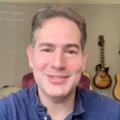
In this episode, we speak with family and long-term care physician Sid Feldman about the KevinMD article “Antipsychotic use has been rising in long-term care homes, but we can do something about it.” Sid shares how prescribing rates have surged to 24 percent in Canada, highlights the serious risks of antipsychotic medications, and emphasizes the importance of person-centered strategies. He also provides actionable ideas for addressing pain, encouraging staff education, and refocusing on holistic approaches that promote well-being for older adults living in long-term care.

Our presenting sponsor is DAX Copilot by Microsoft.
DAX Copilot, by Microsoft, is your AI assistant for automated clinical documentation and workflows. DAX Copilot allows physicians to do more with less and turn their words into a powerful productivity tool. DAX Copilot automates clinical documentation—making it available in the EHR within minutes—and clinical workflows, including referral letters, after-visit summaries, style and formatting customizations, and more.
70 percent of physicians who use DAX Copilot say it improves their work-life balance while reducing feelings of burnout and fatigue. Patients love it too! 93 percent of patients say their physician is more personable and conversational, and 75 percent of physicians say it improves patient experiences.
Discover AI-powered solutions for clinical documentation and workflows. Click here to see a 12-minute DAX Copilot demo.
VISIT SPONSOR → https://aka.ms/kevinmd
SUBSCRIBE TO THE PODCAST → https://www.kevinmd.com/podcast
RECOMMENDED BY KEVINMD → https://www.kevinmd.com/recommended
GET CME FOR THIS EPISODE → https://www.kevinmd.com/cme
I’m partnering with Learner+ to offer clinicians access to an AI-powered reflective portfolio that rewards CME/CE credits from meaningful reflections. Find out more: https://www.kevinmd.com/learnerplus
This episode is cited in the KevinMD record on aging and dementia.
Transcript
Kevin Pho: Hi, and welcome to the show. Subscribe at kevinmd.com/podcast. Today we welcome Sid Feldman. He’s a family and long-term care physician, and he co-wrote the KevinMD article, “Antipsychotic use has been rising in long-term care homes, but we can do something about it.” Sid, welcome to the show.
Sid Feldman: Thanks so much, Kevin. Great to be here.
Kevin Pho: All right. So tell us what this particular article is about.
Sid Feldman: So we’ve noticed a trend in Canada that, in long-term care before the COVID-19 pandemic, we had been doing a really good job at getting our rates down. We were down to about 20 percent or so. And then, through the course of the pandemic in long-term care, it was really all hands on deck to try and deal with the crisis of the pandemic in the nursing home environment.
What we found, unfortunately, is that the rate of antipsychotic use in our long-term care homes has crept up to around 24 percent. And we just wanted to call attention to that so that we can all collectively make an effort to get back on track with this particular measure.
Real physician voices, twice a week
Free, and one click to unsubscribe.
Kevin Pho: All right. So for those who aren’t versed with antipsychotics in the long-term care facility, just give us a little bit of context in terms of typically when they’re used, what medicines are typically used. Just give us some context before we explore further.
Sid Feldman: For sure. So first of all, I would say that these are incredibly useful medications, especially for our residents or patients who have serious mental illness. So for those with schizophrenia who have psychosis, for people with severe depression that require augmentation, for example, for people who have Huntington’s disease, these medications can make the difference between a life where they can have purpose and meaning and joy and a life which is really quite despairing. So I want to start by saying these are important drugs for us to have in our armamentarium for the right patient.
Where we get more concerned, though, is the application of antipsychotic medications for those of our patients who have dementia and behavioral symptoms of dementia. So behavioral symptoms of dementia go by a number of names, as you know: neuropsychiatric symptoms, behavioral and psychological symptoms of dementia. Some people call them responsive behaviors because it can be responsive to stimuli. But in any case, there’s a trend towards the use of antipsychotic medications to treat people with these conditions, and probably overusing compared to the number of folks who really need them.
There are absolutely good randomized controlled trials showing that the drugs are effective for this condition, so severe aggression. But they’ve also been used for people who may have more moderate aggression, or they’re being used for too long a period of time, or perhaps there are other nonpharmacological strategies we can be using that would manage the behaviors without the need for these very powerful medications.
Kevin Pho: And in particular, examples of these medicines, are they talking about things like haloperidol and Zyprexa, perhaps?
Sid Feldman: Yeah, exactly. So most commonly, we’d be using some of the atypicals. So risperidone, olanzapine, aripiprazole, brexpiprazole, quetiapine, those would be the ones that probably would be commonly used. Here in Canada, we have an indication for risperidone and for brexpiprazole. There are others in the literature that have some evidence behind them as well.
Kevin Pho: And tell us about some of the concerns. Why are we concerned about the overuse of these medications in borderline cases?
Sid Feldman: Because they are harmful. So although they may have benefit, they also have significant harms. There was a good, large case-control matched study in BMJ published early in 2024 that looked at a large cohort, thirty-five thousand or so, and matched them to, I think, fifteen different individuals each. And it confirms some of the old harms that we knew about, like an increased risk of falls and fracture, increased risk of stroke, increased risk of pneumonia particularly, but then also some newer ones, like acute kidney injury was much more common in folks who were on antipsychotic medications.
So as you know, as we age, as we get more frail, particularly with dementia, the risk-benefit ratio of many medications changes. And so the benefits are probably less than we think. The harms are probably more than we think. And that’s why the risk-benefit ratio may not make sense to use these drugs for this purpose in residents in long-term care.
Kevin Pho: So you obviously practice in a long-term care facility, are familiar with the data. Just give us a sense of how much more frequently they’re being used today as opposed to years back. You don’t have to cite specific numbers, but just in general, how much more frequently do you use today?
Sid Feldman: So the rate across Canada was down to about 19, 20 percent back in 2019, 2020, back up to 24 percent now. But in the best-performing homes, in the U.S., for example, they’d be well down in the single digits, perhaps down in the 5 percent range, maybe even a little bit lower.
Now, there are absolutely people who should be on them, as we said. So I don’t think the rate should ever be zero. If there’s a long-term care home where the rate is zero, I would wonder what else they’re using to keep folks calm. But I think we have a lot of opportunity to make a difference here.
And one of the things we’ve noticed is that there’s a big difference between the different provinces in Canada, which always speaks to a quality improvement opportunity, right? So if one province is doing really well, another one isn’t, it makes you wonder: How are things being done differently? And is there something that one province could learn from another, that one nursing home can learn from another, so that we can all do better?
Kevin Pho: So when it comes to agitation that may be related to dementia, what other choices are available to prescribing physicians?
Sid Feldman: For sure. So you want to think about pharmacological strategies and nonpharm strategies. So in terms of the pharmacology, there is evidence, as I said, for the antipsychotics. There’s also good evidence for citalopram, for example. Carbamazepine has evidence. Nabilone, interestingly, has good RCTs now showing some benefit as well. And others are using medications like gabapentin, for example. There’s some studies with prazosin. So there’s a wide range of other alternatives that we might want to be trying as well, I think.
So the key when it comes to pharmacotherapy is to remember that the agitation of dementia doesn’t last forever. And so while we’re prescribing for some period of time, the critical thing is to think about that gradual dose reduction. So once symptoms are under control, then to be tapering down the medication, see how somebody might be doing without it. And often what we find is that there may not be a hallelujah response, “I’m playing piano again,” but the person is at least no worse than they were when they were on the medication. Often, we find that they’re more alert and can cooperate more with care and can enjoy programs more. So that would be the first piece, is to look at some of the other drugs that we can use.
But even more important, there’s good evidence that an individualized, patient-centered approach of nonpharm strategies can be highly effective for the treatment of behavioral symptoms of dementia. So that might include music. Probably the standard mean difference for music is actually better than the antipsychotics. So personalized music. Now, you may like country; I may like jazz. We mix it up, we’re going to get worse, but personalized music can make a very big difference.
Physical exercise can make a huge difference. So all of us need to be able to move. Exposure to the outdoors, we are human beings, and we seem to do better when we’re in the outdoor environment. Animal or pet therapy has good evidence behind it, even robotic pets. There’s some evidence for that. Aromatherapy. So in other words, there’s a whole list of non-drug strategies that can be applied and might very well be helpful.
The knowledge and education of the folks who are taking care of our residents with dementia makes a huge difference as well. So training people to go slowly, to smile, to explain what they’re doing before they’re going to do it with a particular resident, to understand for each individual what their nonpharm magic bullets are, can make a really big difference as well. So the knowledge and training of staff, the environment can make a big difference, and then the application of some of these sort of nonpharm strategies.
Kevin Pho: So a couple questions regarding what you said. So regarding the alternative classes that you mentioned, like the citalopram and the gabapentin, are they used more on a preventative basis, or are they used on more acute episodes, similar to how we use some as-needed antipsychotics?
Sid Feldman: Yeah. So if somebody is in the midst of a really aggressive, physical, hitting-everybody kind of a thing, you may need to use a short-term antipsychotic, for sure. But then, to manage behavioral symptoms in a longer term, some of these other drugs may be appropriate. We don’t tend to use them in anticipation of behavioral symptoms because the behavioral symptoms of dementia are so highly variable. And so not everybody is going to develop something that requires the use of medication. The majority of people don’t.
Kevin Pho: So in terms of the nonpharmacological strategies that you mentioned, what are some of the reasons why they’re not being used more frequently? Is it an education issue? Is it a staffing issue? Because a lot of the strategies sound like it requires more labor, and I know that a lot of the long-term care facilities here in the United States, they are barely surviving when it comes to staffing. But what are some of the underlying causes why some of those nonpharmacological strategies aren’t being used more frequently?
Sid Feldman: One hundred percent, Kevin. I think you’re absolutely right that the staffing issues in long-term care, particularly since the COVID-19 pandemic, have been extreme in Canada, United States, I think probably worldwide. And so not having a sufficient number of staff available to implement strategies in a consistent way is probably a big issue, for sure.
And then having the ability to train staff so they can do things in a consistent way also is critically important. Because if the day shift is doing things well, and the evening shift are doing things well, but the night shift isn’t, then you’re not that much further ahead, right? So it’s a matter of getting that consistency as well, for sure.
What we found, though, in long-term care homes that have been able to implement this is that, in fact, they have more time because residents are not falling. Residents don’t have pneumonia. Residents are not needing two people and a Hoyer lift to move them in and out of bed because they’re off of the medications causing the extrapyramidal symptoms that are stiffening them up. So in fact, what homes find is that they have more time available once you take the plunge and implement some of these things.
Kevin Pho: Now, some of the physicians who may be listening to today’s podcast may be medical directors at such long-term care facilities. What are some strategies that you could suggest to implement some of these nonpharmacological approaches?
Sid Feldman: Yeah. So this is very much a team effort, a team sport. So having a group of individuals within the home to work with the medical director to implement some sort of a more formal evaluation process to target the people who may be amenable to deprescribing, and then to use one of the evidence-based approaches. Like, for example, the one that many family physicians would be familiar with, the DICE approach that Helen Kales and her group developed, where you describe the behaviors, you investigate the causes of what that behavior might be, you create a plan for how you’re going to approach that particular person, an individualized care plan, patient-centered, and then you use validated tools to evaluate whether you’ve been effective or not.
And then you’ve made, hopefully, some headway. Then you go back again, and you describe what you’re now seeing, and you investigate, you create, you evaluate. So you go in an iterative kind of a process, in an interdisciplinary way, to make changes.
The other thing that we’ve found is that there are some opportunities when our residents come in from acute care hospital. Often, in acute care, people have a delirium. They may have been treated appropriately or inappropriately with an antipsychotic. So once somebody’s transferred into the nursing home, that may be a real opportunity to take away the antipsychotic medication and see whether they’re getting better or not. So that’s one sort of window of opportunity, is right at the time of admission.
The other is the folks who are on low-dose or just PRN medications. So we often find that low-dose medication, that tiny little dose of risperidone that somebody’s on, 0.25 milligram, 0.5 milligrams, maybe they don’t need it. And so those would be also a group that there might be opportunity.
We found that the personal support workers, I know there’s another term in the U.S. for that. I’m sorry, I don’t remember. But the actual folks who are doing the care at the bedside, the health care aides, they’re often really good at identifying which of the people they’re caring for there may be an opportunity or a window for deprescribing as well. So those would be some of the targets that we would have and the approach that we take.
Kevin Pho: We’re talking to Sid Feldman. He’s a family and long-term care physician. He co-wrote the KevinMD article, “Antipsychotic use has been rising in long-term care homes, but we can do something about it.” Sid, let’s end with some take-home messages that you want to leave with the KevinMD audience.
Sid Feldman: Sure. So antipsychotics are incredibly useful medications for some of our residents in long-term care. There are many people, though, where we would have an opportunity to deprescribe. The use of nonpharm strategies can be incredibly helpful and can often take the place of an antipsychotic medication.
For those who are on an antipsychotic, after behavioral stability has been achieved, a gradual dose reduction process is well worth a try because you may be successful more often than you think. And that there are other medications that have some evidence behind them that can also be useful in treating this condition.
Kevin Pho: Sid, thank you so much for sharing our perspective and insight, and thanks again for coming on the show.
Sid Feldman: My pleasure, Kevin. Thanks so much for your.
Listen and followApple PodcastsSpotifyYouTubeMore apps · Browse all episodes