Ask any clinician about the drive home after a case goes bad and the patient outcome is tragic. It is a specific kind of heavy silence. We have all had the experience. You do not forget it. You replay the tape in your head dissecting every move, carrying a stain that does not wash off or show mercy. It owns you.
We have had a name for this for 20 years: It is referred to as the “second victim” phenomenon. Albert Wu coined it to break the silence, and at the time was a massive step forward. It acknowledged that when a patient is hurt, the clinician carries a psychological scar as well. But now, I believe it has become a trap.
The danger of managing feelings over systems
The problem today is that the “second victim” label is distracting us from the systems that make the distress. We have fallen into a predictable loop. We name the experience and validate it. Then, we build a support system around it such as peer programs, counseling referrals, or the dreaded “resilience training.”
Real physician voices, twice a week
Free, and one click to unsubscribe.
Do not get me wrong. I know that support is important. No one should have to suffer in isolation. But stabilization is not the same thing as an insight. If we do not fix the conditions that made the harm, we are practicing emotional triage. A lot of what we call “second victim” trauma is actually system-induced moral injury. It is the crushing weight of knowing a patient was harmed because you were working in a system where safe care was impossible to provide. When we recognize it that way, the distress is a predictable response to an organizational failure rather than a personal one.
Reframing the narrative for patient safety
Take a night shift where a nurse is assigned double the safe patient load. If a medication error happens, sure, that nurse needs support. But the real, urgent question is why that staffing ratio was allowed in the first place. This is where the “second victim” framework fails us. It aligns too conveniently with institutional incentives to manage our feelings instead of fixing the root causes. It is easier to hand out a counseling brochure than it is to fix a broken workflow or hire more staff.
And here might yet be the most significant consequence. When we call ourselves “victims,” the moral landscape gets hazy. To a family that has just lost a loved one, hearing the clinician called a “victim” can feel offensive. It removes focus from the accountability we need to actually improve.
Building systems that prevent medical harm
If we are going to be serious about safety, we have to stop pretending that clinician well-being and patient safety are separate things. They are the same problem. Systems that burn out doctors and nurses are the same systems that produce errors. We need staffing that reflects how sick patients actually are, not what the budget looks like. We need decision-making time that is not squeezed by productivity quotas. We need root cause analyses that lead to actual changes.
We do not need clever language to help survive broken systems. We need systems that make harm less likely. Until we stop labeling the aftermath and we begin redesigning the conditions, we are just confusing compassion with progress.
This essay is cited in the KevinMD record on medical errors.
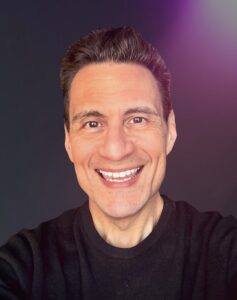
Timothy Lesaca is a psychiatrist in private practice at New Directions Mental Health in Pittsburgh, Pennsylvania, with more than forty years of experience treating children, adolescents, and adults across outpatient, inpatient, and community mental health settings. He has published in peer-reviewed and professional venues including the Patient Experience Journal, Psychiatric Times, the Allegheny County Medical Society Bulletin, and other clinical journals, with work addressing topics such as open-access scheduling, Landau-Kleffner syndrome, physician suicide, and the dynamics of contemporary medical practice. His recent writing examines issues of identity, ethical complexity, and patient–clinician relationships in modern health care. Additional information about his clinical practice and professional work is available on his website, timothylesacamd.com. His professional profile also appears on his ResearchGate profile, where further publications and details may be found.