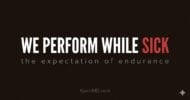
An excerpt from The Hidden War in Medicine: The Fight No One Warned Us About.
We entered medicine believing something many young doctors believe. That medicine was a noble profession built on collaboration, compassion, and a shared mission: fighting disease! We had many glorious moments that make you cry tears of joy when a patient had been finally healed. From the outside, that is the image everyone sees. Doctors working together. Hospitals functioning like coordinated teams. A profession united by a commitment to healing. For years, we held on to that image. Medical school reinforces it. We learn about teamwork, multidisciplinary care, and the shared responsibility of physicians, nurses, and other health professionals working together to serve patients. We are taught that medicine is a calling, a profession defined by service and dedication.
But medicine has another side that few people speak about openly: Behind the white coats and professional smiles, there is another reality, one that young doctors often discover slowly and painfully. Medicine is not only a battle against disease. Sometimes, it becomes a battlefield among doctors themselves. This realization rarely arrives in a single dramatic moment. Instead, it unfolds gradually. At first, it appears as quiet tension during training, a quiet competition for recognition, opportunities, and approval from senior physicians.
When we were medical students, we competed for grades. While, when we were residents, we competed for fellowships. Moreover, young physicians compete for positions, publications, and prestige. Individually, each of these competitions seems understandable. Medicine is demanding, and excellence matters. Patients deserve competent and highly trained physicians. But over time, the accumulation of these pressures begins to shape the culture of the profession itself. Two or more doctors competing for the same fellowship position. Residents competing for the attention of attending physicians. Colleagues measuring themselves constantly against one another. Medicine teaches collaboration. But the system often rewards competition. This creates a quiet contradiction at the heart of the profession. Doctors are trained to care for patients with empathy and teamwork. Yet many doctors navigate careers shaped by comparison, hierarchy, and silent rivalry.
Real physician voices, twice a week
Free, and one click to unsubscribe.
Young physicians quickly learn an unspoken rule: Success in medicine is not only about knowledge or dedication. It is also about surviving the pressures of a system that constantly evaluates and ranks its own members. A system that you must follow to survive, otherwise you are writing the end of your story by yourself.
- Grades.
- Board scores.
- Residency placements.
- Publications.
- Academic titles.
Each milestone becomes another measurement of worth. One slight failure within these milestones, and your career could be destroyed or undermined. For many doctors, this pressure becomes internalized. We begin to measure ourselves the same way the system measures us. We compare our achievements to colleagues who appear more productive, more accomplished, more recognized, and happier. We wonder whether we are moving fast enough, publishing enough, and advancing enough, despite the fact that our circumstances are different, leading to different paths from one to another.
Over time, the mission that brought many of us to medicine can become overshadowed by other goals: survival and competition. This is the hidden war in medicine! You do not hear that in medical school or during your training. No one would give you a manual about this war. However, you find yourself in the war zone suddenly, and you are obligated to survive in a maze of different milestones. Medical culture encourages resilience and strength. Admitting struggle is often interpreted as weakness. So, the war continues quietly.
Doctors continue working long hours, navigating complex hierarchies, and carrying emotional burdens that few people outside the profession fully understand. Sometimes, we can withstand it, and sometimes we are broken, burned out, or even feeling the sensation of a lost man in the desert. To patients, doctors appear confident and composed. They see a physician who seems calm in the face of crisis, capable of making difficult decisions under pressure. But behind that image, many physicians are fighting their own battles, battles against exhaustion, self-doubt, and the constant pressure to prove themselves.
These pressures do not affect every doctor in the same way. Some thrive within the competitive structure of medicine. Some find mentors and environments that support collaboration rather than rivalry. But many physicians encounter moments when the profession feels less like a calling and more like a battlefield. In fact, some doctors reach the war fully weaponized with swords and shields, while others find themselves naked against tough, well-trained enemies.
The tragedy is that this culture is often invisible to those entering medicine. Medical students begin their journey with idealism. They imagine a profession united by purpose and guided by shared values. They imagine a community of physicians working together against a common enemy: disease. And in many ways, that ideal still exists. Doctors do extraordinary work every day. They save lives, comfort families, and dedicate themselves to helping others in moments of profound vulnerability.
But the system they work within is far from perfect. It does not worship only effort, but also how to survive. It is shaped by competition, hierarchy, and expectations that can leave deep psychological scars. Over time, many physicians learn to adapt. Some become stronger. Some become quieter. Some simply learn how to survive. Others carry the emotional weight of the profession long after the battles are over.
When I wrote The Hidden War in Medicine book, my intention was not to criticize medicine itself. Medicine remains one of the most meaningful professions a person can pursue. But every profession has truths that are difficult to discuss. The hidden pressures within medicine are one of those truths. Silence about these realities does not make them disappear. It only allows them to persist unnoticed. Young doctors deserve to understand the environment they are entering. They deserve to know that the challenges they face are not personal failures, but often reflections of a larger system. When you sit in your office thinking of past years, you wish that you had known the war before being thrown into the battlefield.
Acknowledging this reality does not weaken medicine. On the contrary, it may be one of the first steps toward strengthening it. Because a profession that openly recognizes its flaws is better positioned to improve them. Furthermore, it grabs your attention that there is a war, and you should prepare yourself for it or choose another career if you are not prepared for such tough competition.
If we want medicine to evolve, we must be willing to speak honestly about its culture. We must create spaces where physicians can discuss their experiences without fear of judgment or professional consequences. We must recognize that caring for doctors themselves is not a distraction from patient care; it is an essential part of it. After all, physicians who feel supported and valued are better able to support the patients who rely on them.
Medicine will always involve difficult decisions, intense training, and immense responsibility. Those challenges are inherent to the profession. But the unnecessary battles, those created by silent competition and unspoken expectations, do not have to remain permanent features of medical culture. Perhaps by speaking openly about these experiences, we can begin to reshape the profession. So that future physicians spend less time fighting silent battles among themselves and more time focusing on the mission that brought them to medicine in the first place. Because medicine should not feel like a war. And the doctors who dedicate their lives to healing others should not have to fight it alone.
Amr Ehab is a physician and academic researcher.