A high school basketball player lands awkwardly after a fast break. For one second, the gym goes silent. He grabs his ankle. His coach runs toward him. His teammates stop moving. His parents, sitting near the sideline, do not know whether to hope he can stand up or pray that he will not try.
In that first minute, no one is thinking about professional titles. The question is painfully simple: Who knows what to do? Who can decide whether he should stop playing? Who can check for red flags? Who can stabilize the ankle, calm the athlete, speak to the coach, update the family, and know when this is no longer just a sports injury but a medical problem?
That first minute is where policy becomes real.
I write from Taiwan, where a debate is now taking place over whether the country should establish a clearer national examination and legal framework for sports injury protection professionals, a role somewhat comparable to athletic trainers in the United States. Taiwan already has a certification system for sports protection personnel under sports regulations. But recent legislative discussions have raised a larger question: Should this profession have a clearer legal status, scope of practice, and accountability system?
Real physician voices, twice a week
Free, and one click to unsubscribe.
The debate has been linked to Taiwan’s preparation for the 2028 Los Angeles Olympics and the 2032 Brisbane Olympics. But this is not only about elite athletes or Olympic medals. It is about what happens in school gyms, local competitions, training rooms, and community sports programs when someone gets hurt.
Some public discussion has framed the issue as a conflict between physical therapists and sports injury protection professionals. That framing is tempting, but it is wrong.
Physical therapists are not the enemy. They are licensed medical professionals with formal training, national examinations, and clinical responsibility. Their work in rehabilitation, functional recovery, movement correction, and treatment deserves respect.
Sports injury protection professionals are not the enemy either. They are often the people closest to the moment of injury. They stand on the sideline. They see the athlete who tapes the same ankle before every practice. They notice the limp after training. They hear the player say, “I’m fine,” when the body is clearly saying otherwise.
The real problem is not that both professions exist. The real problem is that the system has not clearly designed how they should work together.
Scope-of-practice battles happen in every health care system. We argue over titles, legal language, responsibility, and professional boundaries. These debates matter. Boundaries protect patients. Licensure protects quality. Clear laws protect professionals.
But when professionals only draw lines around themselves, patients can fall between those lines. An injured athlete does not need a turf war. An injured athlete needs a transition of care.
That transition begins at the moment of injury. First, the sports injury protection professional provides on-site care and risk judgment. This is not the same as making a medical diagnosis. It is an urgent practical decision: Should the athlete stop? Are there signs of a serious injury? Is immediate referral needed? Can the athlete be safely moved? What should the school and family be told?
Next, if needed, the athlete is referred to a physician. The physician determines the diagnosis, whether imaging or further testing is needed, and what medical restrictions should be followed.
Then, the athlete may enter physical therapy. The physical therapist helps restore strength, range of motion, balance, movement quality, and safe loading. This is where rehabilitation becomes structured, clinical, and measurable.
After that comes one of the hardest steps: returning to training and competition. The body may be “better,” but better is not always ready. The athlete must rebuild confidence, sport-specific movement, workload tolerance, and safe performance.
Finally, the story should not end with return to play. Athletes retire. They age. They carry old injuries into adulthood. Some face chronic pain, identity loss, emotional stress, weight change, or difficulty building a life outside competition. A complete sports medicine system should not only ask whether an athlete can play again. It should also ask whether that athlete can live well after sport.
This entire pathway, from injury, to on-site response, to medical diagnosis, to rehabilitation, to return to play, to life after sport, is what transition should mean.
Transition is more than referral. Referral means sending someone to the next professional. Transition means making sure the next step is connected to the last one.
Without that connection, care becomes fragmented. The sports injury professional may not know what the physician advised. The physical therapist may not know what actually happens at practice. The coach may push too soon. The family may be confused. The athlete may return before he is ready, not because anyone intended harm, but because no one was responsible for the whole journey.
This is why Taiwan’s debate should not be reduced to professional rivalry. It should be an opportunity to design continuity of care.
Clear boundaries are necessary. Medical diagnosis and clinical treatment belong to medical professionals. On-site prevention, acute stabilization, risk communication, training safety, and return-to-sport coordination require their own professional preparation. These roles should not be blurred.
But clear boundaries should not create professional isolation. The goal is not to make physical therapists smaller. The goal is not to make sports injury protection professionals larger. The goal is to make the athlete safer.
A mature system should be able to say: Physicians diagnose. Physical therapists rehabilitate. Sports injury protection professionals manage on-site risk and help coordinate safe return to sport. Nutritionists, psychologists, coaches, schools, and families also have roles in recovery and long-term adjustment.
No one owns the athlete. Everyone is responsible for the athlete’s safety.
The same problem exists beyond sports. The fragmented care that fails an injured teenager is often the same fragmented care that fails older adults.
In an aging society, many older people face their own version of “return to play.” After a fall, hospitalization, or decline in strength, the goal is not to return to competition. The goal is to return to life: walking to the market, climbing stairs, bathing independently, taking the bus, joining a community activity, or simply standing up with confidence.
Medicine, exercise, nutrition, rehabilitation, and daily care are often separated into different systems. But people do not live in separate systems. A frail older adult may need medical evaluation, exercise guidance, nutrition support, home safety, emotional encouragement, and social connection at the same time.
This is why a medicine-exercise-nutrition perspective matters. Medicine protects safety. Exercise preserves function. Nutrition and daily care provide the fuel and support for recovery. The same logic that helps an injured athlete move from the court to the clinic and back to life can also help an older adult move from decline back to daily living.
Return to play is important. Return to life is bigger.
If Taiwan wants to prepare for future Olympics, it should not only invest in medals. It should invest in the people behind the medals: young athletes, school teams, community sports programs, retired athletes, and the professionals who help them stay safe.
An athlete lying on the gym floor does not care about our turf wars. He needs someone to guide him through the first minute. Then, the first accurate diagnosis. Then, the first painful step in rehabilitation. Then, the first practice back on the court. And eventually, the first chapter of life after sport.
That is the real work of a health care system. Not a turf war. A continuous transition of care.
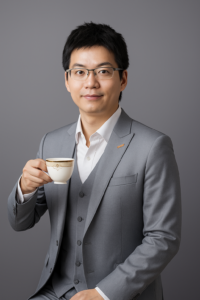
Gerald Kuo, a doctoral student in the Graduate Institute of Business Administration at Fu Jen Catholic University in Taiwan, specializes in health care management, long-term care systems, AI governance in clinical and social care settings, and elder care policy. He is affiliated with the Home Health Care Charity Association and maintains a professional presence on Facebook, where he shares updates on research and community work. Kuo helps operate a day-care center for older adults, working closely with families, nurses, and community physicians. His research and practical efforts focus on reducing administrative strain on clinicians, strengthening continuity and quality of elder care, and developing sustainable service models through data, technology, and cross-disciplinary collaboration. He is particularly interested in how emerging AI tools can support aging clinical workforces, enhance care delivery, and build greater trust between health systems and the public.