As a pediatric endocrinologist, I often meet families on one of the hardest days of their lives: a T1D diagnosis. I watch as the shock sets in. I hear their worries, their concern for the future, and the questions that arise when I mention that family history can increase the risk of developing the disease by up to 15-fold. “What does this mean for our family? Could this happen to my other children? What should we do next?”
During each of these conversations, I have started to notice a troubling pattern in how T1D families perceive their risk. Namely, even among parents and siblings with firsthand experience with the disease, many still don’t understand how family history contributes to their risk and moreover, what to do about it.
These observations have been strictly anecdotal until now. A new survey provides fascinating new insights that help quantify these awareness gaps among adults and caregivers with a first-degree relative with T1D. Here are three key takeaways from this data and how we as HCPs can leverage it to bridge the educational divide.
1. Proximity to disease doesn’t always equal understanding
When discussing family history risk, there’s a common misconception that proximity equals understanding, that if T1D is already part of your family’s story, you must already grasp the disease and its risks. The survey shows us that this may not be the case.
Real physician voices, twice a week
Free, and one click to unsubscribe.
When it comes to T1D risk, 63 percent of those surveyed incorrectly believe T1D is primarily diagnosed in children, when in fact, adults represent more than half (roughly 60 percent) of those newly diagnosed with T1D each year. Thirty-eight percent of those surveyed mistakenly cited lack of physical activity as a risk factor for T1D, when, in fact, T1D is an autoimmune disease not caused by lifestyle factors. But what’s most concerning: more than 1 in 4 (26 percent) of respondents don’t even believe they or their child is even at risk of developing the disease.
As clinicians, we shouldn’t assume that T1D families with a lived history of the disease automatically understand everything about it. Every conversation should begin by assessing what a family already knows and then, as appropriate, addressing misconceptions that may exist under the surface.
2. Emotional barriers may be driving screening hesitancy
Encouragingly, the survey found that 82 percent of respondents with a family history of T1D are concerned about their own or their child’s risk of developing T1D. Yet this concern doesn’t always translate to action. In fact, nearly half (46 percent) said they either were not considering autoantibody screening or had not decided whether they would pursue screening within the next six months.
Among those hesitant to screen, emotional barriers may be standing in the way. Twenty-one percent said a positive result would cause significant anxiety for them or their child, and nearly one in five caregivers (19 percent) said they would feel guilty if their child developed T1D, as if it were somehow their fault.
As a mother living with T1D, I too hesitated before having my own children screened for similar reasons. These responses were an important reminder that knowledge can be as scary as it is empowering. As doctors, it’s critical that we take the time to understand each family’s concerns first, without judgment, so we can help them make informed decisions with confidence.
3. A doctor’s recommendation can be table stakes to action
Even when families don’t fully understand their risk, they are still turning to their doctor for guidance. In fact, according to the survey, a physician’s recommendation remains one of the strongest motivators for screening, with 56 percent of respondents citing it as a top reason to take the next step.
Interestingly, when risk education occurs, something exciting happens: urgency shifts. After learning more about their or their child’s risk of developing T1D, 85 percent of respondents said they were more likely to screen as a result.
These statistics paint a clear picture of the path forward for HCPs. T1D families are eager to learn, they just need support and guidance on how to move from awareness to action. If we can play even a small role in that effort, we’ve succeeded.
Final thoughts
The survey supports a theory that I’ve long suspected: despite living in the shadow of this disease, day in and day out, T1D families still face longstanding barriers to understanding and acting on their heightened risk.
Thankfully, the more comfortable HCPs become discussing it, the more empowered families will be to respond in kind. We may not be able to change whether T1D is part of a family’s story. But we can help them face it prepared at every step of the way.
Background and methodology
This survey was fielded by Ipsos (www.ipsos.com) as an online, 15-minute, self-administered survey among U.S. adults who are at risk of developing type 1 diabetes and caregivers to children under age 18 who are at risk of developing type 1 diabetes between April 1 and May 1, 2026. The national sample included 1,000 U.S. adults and caregivers who met survey qualification criteria. Additional augmented interviews were conducted in six key markets, TX, GA, CA, FL, MA, and NY, to achieve a base size of n=150 each, including a mix of at-risk adults and caregivers. Respondents were recruited from opt-in panels of general population respondents across the country.
To participate as an at-risk adult, respondents had to be ages 18-45 and have a first-degree family member (e.g., a parent, child, or sibling) diagnosed with T1D. To participate as a caregiver, respondents had to be ages 18-60 and be the parent or caregiver of a child who has a first-degree family member diagnosed with T1D. Potential respondents were excluded if they were unwilling to provide informed consent, were not the primary decision maker for their health care decisions or if they or their child had previously taken an autoantibody blood test for T1D. The final sample size for the survey is 1,511, including 511 respondents for the state-level augments, which are not included in the national findings. No weights were applied to either sample, and findings reflect the opinions of these respondents only.
Beyond Type 1 and Sanofi do not provide medical advice, diagnosis, or treatment. Information is provided for educational purposes only. Your doctor is the best source of health information. Talk to your doctor if you have any questions about your health or treatment. The survey was conducted anonymously. Respondents were not made aware of the survey sponsor, and no personally identifiable information (PII) about the respondents was shared with the survey sponsor. Respondents were incentivized for their participation, in keeping with best practice for opinion research.
Shara Bialo is a board-certified practicing pediatric endocrinologist who completed medical school and pediatric residency at the University of Miami and a pediatric endocrinology fellowship at Brown University. She also serves as senior medical director at Sanofi.
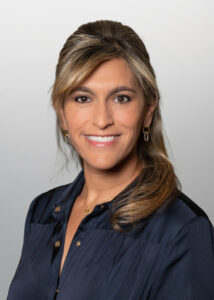
In her role at Sanofi, Shara helps educate health care professionals and hospital systems about the importance of screening and early detection of autoimmune type 1 diabetes (T1D). She draws on her own experience of being diagnosed with T1D at the age of nine to empower families and clinicians to take control of their health.