Because medicine excludes psychological and social issues in training and health care, we have a crisis in physical disease care (as well as the mental health crisis). You read correctly: a crisis in medicine’s ostensible forte, physical diseases. It occurs in two situations: when there is mental illness comorbid with a chronic physical disease and when psychosocial factors unrelated to a mental health issue lead to adverse physical disease consequences.
Comorbid mental illness
You heard in my last post about comorbid mental illness, and I want to summarize and expand on it briefly. The greater the disability from a physical disease, the greater the likelihood of a co-occurring mental disorder. Therefore, to identify the mental disorder, focus on patients whose lives are disrupted by their disease. Importantly, though, clinicians must ask directly about a mental illness. Patients typically do not volunteer its psychological symptoms, for example, that they feel depressed. Rather, they focus on their physical symptoms and disability.
Failure to diagnose the mental illness means the 30 million patients with comorbid disorders do not receive treatment. And the mental disorder requires treatment for the physical disease to improve. For example, treating the co-occurring depression in patients with difficult-to-control diabetes or heart failure can bring them under control and prevent much of the modern epidemic of multiple rehospitalizations. But treatment occurs in only 12 percent of patients. Careful actuarial analysis finds that implementing effective treatment for the co-occurring mental disorder would save from $26 to $48 billion per year. And that’s the least expensive example of the physical disease crisis. Let’s focus in greater detail now on other physical disease problems related to medicine’s exclusion of psychosocial issues unrelated to a mental health problem.
Psychosocial factors unrelated to mental illness
Even when patients do not have a mental disorder, they have psychosocial factors relevant to chronic disease care. And you’ll find that they have an impact as great or greater than comorbid disease problems. We’ll focus on two major areas: nonadherence to medications and lifestyle issues.
Real physician voices, twice a week
Free, and one click to unsubscribe.
Nonadherence
Treatment of chronic disease is long term and often complicated. While even short-term medication adherence is fraught with missed doses of just one medication, patients with chronic diseases often take 6-10 medications or more on an indefinite basis. But 30 to 50 percent of patients fail to comply with instructions, with the myriad severe health consequences you can imagine, such as poor control of diabetes or heart failure. Unhappily, clinicians untrained in addressing psychosocial issues in a patient-centered way seldom recognize or address the problems that lead a patient to medication nonadherence: cost, confusion around what they need to do, complicated schedules, poor attention to instructions, and beliefs that the medications don’t work or even cause harm. While many blame the patient for nonadherence, it doesn’t help.
Physicians with expertise in psychosocial medicine also realize that “Be sure to take your medicines like I told you to” does not work. Rather, they engage patients in a patient-centered way at the personal and social levels and seek to understand patients’ emotions, unique social circumstances, motivations, and beliefs related to medication nonadherence. This establishes the relationship that undergirds success. Critically, the doctor with patient-centered skills also knows how to inform and motivate patients to adhere to medications. Unfortunately, medical education seldom considers this. Experts estimate that correcting nonadherence to medications would save approximately $100 billion per year. But this cost pales before the next psychosocially based physical health crisis.
Lifestyle problems
Psychosocial lifestyle issues unrelated to a mental disorder cause most chronic physical diseases, for example, overeating, not exercising, smoking cigarettes, “stress,” and using alcohol or other substances. This leads to our well-known patient populations with heart attacks, strokes, cancer, obesity, diabetes, liver disease, drug dependence, emphysema, and many other problems. We must address the psychosocial factors for effective treatment of the diseases. But this is difficult. It requires that we convince patients to make changes they probably don’t want to make. Who really wants to eat less, exercise, quit smoking, and stop using harmful substances?
The standard admonition, “You need to stop smoking (drinking, eating too much, etc.),” does not help. Rather, clinicians require the same informing and motivating patient-centered skills mentioned earlier to redirect patients to the typically very difficult task of changing ingrained habits. This does not occur in one visit, often taking many before patients agree to even try. And it then necessitates close follow-up over months to years. That is, deploying these motivational principles takes lots of time and patience in addition to a unique skill set. And teaching them to learners during training also is time- and labor-intensive, which makes it even less likely that training programs will meaningfully engage in the teaching.
There’s another dimension to lifestyle issues. Prevention. We can prevent most chronic diseases by discontinuing adverse lifestyle habits while patients are young or even preventing their uptake altogether. The Partnership to Fight Chronic Disease cites a World Health Organization estimate that we can prevent as much as 80 percent of premature heart disease, stroke, and type 2 diabetes, and 40 percent of cancers via the early adoption of healthy lifestyles. But medicine waits until diseases take hold and then treats what could have been prevented. Imagine the potential dollar savings for the patient if they hadn’t adopted the adverse habit(s). Then imagine their living what Don Berwick calls a “happy, healthy retirement” rather than, for example, spending it visiting doctors and hospitals, taking chemotherapy, breathing oxygen, or undergoing surgery before they die prematurely.
Yet, of our health care expenditures now at $5.6 trillion per year, less than 5 percent goes to prevention and public health. Now, recall from above that we can prevent from 40 to 80 percent of chronic diseases. Preventing even 50 percent of all lifestyle health problems would save from $2 to $3 trillion per year; that’s $20 to $30 trillion over ten years. Whatever one’s politics, we could pay for now prohibitively expensive projects, for example, reducing the budget deficit, expanding the defense budget, health care for all, free college education, and protecting Social Security.
And all we’d have to do is implement some very inexpensive changes in medical education and public health care.
Summary
Medicine’s forte is physical diseases. Yet, it excludes from its teaching and, therefore, clinical practices the very psychosocial factors we need to address to improve the care of those with chronic physical diseases. Patients and the tax-paying public that support medicine deserve better and must demand correction.
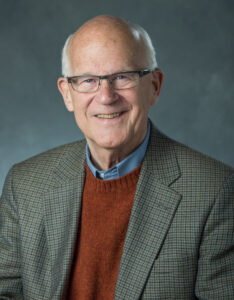
Robert C. Smith is a University Distinguished Professor of Medicine and Psychiatry Emeritus at Michigan State University. His group defined the first evidence-based patient-centered interview, published as Smith’s Patient-Centered Interviewing: An Evidence-Based Method (McGraw Hill, 4th edition, 2018). They also identified the first evidence-based primary care mental health model, published as Essentials of Psychiatry in Primary Care: Behavioral Health in the Medical Setting (McGraw Hill, 2019). Educators use both books to teach medical, nursing, and other health care learners in the U.S. and abroad.
Fed up with medicine’s resistance to improving training in mental health care, Smith decided to take the problem to the public and wrote Has Medicine Lost Its Mind? (Prometheus Books, 2025). It describes the poor state of mental health care in the U.S., why medicine ignores it, what needs to be done, and how the public can accomplish this politically.
His scholarship spans patient-centered interviewing, medically unexplained symptoms, the biopsychosocial model, and mental health training in primary care, with work appearing in Annals of Internal Medicine, the Journal of General Internal Medicine, Patient Education and Counseling, and Social Science & Medicine. It includes the invited opinion piece “The mental health crisis: Only top down regulation will cure medicine’s folly” in PLOS Mental Health. He writes at robertcsmithmd.com and shares updates on Facebook, LinkedIn, and X.