I did not encounter Norman Schwarzkopf’s leadership doctrine until long after I had already been living it. When I finally read his words about sweat, preparation, and the courage to act despite uncertainty, I felt an immediate jolt of recognition. It wasn’t admiration. It was recognition. I realized I had been following the same principles instinctively throughout my medical and institutional life, especially in the moments when leadership and command were not optional, but required.
Many of my colleagues never learned command. They learned administration, or management, or how to run a meeting. But command, the responsibility to take a dispirited unit, rebuild morale, restore clarity, and move people toward a mission they no longer believed in, is something different. It is something you only learn by living it.
I learned it twice: once at Minot Air Force Base, and again at Ohio State. In both places, I inherited clinics with zero morale, fractured communication, and staff who had forgotten what excellence looked like. I did not roar like Schwarzkopf. I led quietly, steadily, and without theatrics. But like him in Vietnam, I walked into commands where people were exhausted, cynical, and waiting for someone to show them that the mission still mattered.
Quiet leadership is not passive. It is disciplined. It is deliberate. It is command without noise.
Real physician voices, twice a week
Free, and one click to unsubscribe.
One moment from my career captures this doctrine more clearly than anything else.
Years ago, I traveled to Bethesda for a federal meeting that was supposed to clarify the new Leadership Education in Neurodevelopmental Disabilities (LEND) guidance. I arrived prepared, disciplined, and ready to build a program that could serve families with the rigor they deserved. But when I checked in, I was told the LEND guidance would not be released for another four weeks.
Most people in that room accepted the delay with a shrug. I didn’t. I had not traveled to Bethesda to wait. I had come to work.
What I did have in my hand was the officially released training program guidance for PT and Nursing. It was real, published, and binding. So I pivoted. I changed my presentation on the spot from “How to implement LEND” to “How to properly follow the official guidance for PT and Nursing.” If HRSA wasn’t ready to give me the rules, I would use the rules they had already published, and force them to reveal the rest.
That pivot changed everything.
By walking through the PT and Nursing guidance line by line, I cornered the HRSA officer into giving me the intelligence I needed. I asked the questions that exposed the structure underneath the program. I pressed until he finally revealed the Maternal and Child Health (MCH) pyramid of services, the conceptual backbone of the entire system. Once I had that, the architecture became obvious. I understood the logic better than the people who wrote it.
And here is the part that still astonishes me: when the LEND guidance finally came out, it was identical. HRSA had simply copied the same language word for word across disciplines. PT, Nursing, LEND, no adaptation, no nuance, no discipline-specific detail. It was boilerplate. The only reason I saw it was because I had prepared more deeply than they had.
That moment in Bethesda was not luck. It was command. It was the same instinct I used at Minot when I rebuilt a clinic that had forgotten how to function. It was the same instinct I used at OSU when I inherited a program with no morale and no direction. Quiet leadership is not about volume. It is about clarity, discipline, and the refusal to let a broken system dictate the outcome.
Schwarzkopf learned his hardest lessons in Grenada, a mission marked by communication failures, interservice friction, and a lack of unified command. He never hid from those failures. He studied them. He carried them. And he refused to repeat them. He understood that leadership is not about avoiding mistakes; it is about refusing to let early failures become permanent habits.
I realized I had done the same thing. Every institutional setback, every bureaucratic barrier, every moment of silence from a system that should have been listening, I treated them as reconnaissance, not defeat. I learned the terrain. I adapted. I moved.
Schwarzkopf wrote that if you must be without one thing, be without the strategy. At first glance, that sounds reckless. But he wasn’t dismissing strategy. He was warning against the illusion of control. A brilliant plan without communication, coordination, and execution is just a theory. In medicine, we see this every day. A perfect care plan collapses if the team isn’t aligned, if the family isn’t supported, or if the system can’t deliver what the patient needs.
Then there is the line that defines courage more honestly than any leadership textbook: true courage is being afraid and going ahead and doing your job anyhow. That is the daily reality of medical leadership. We do not get to wait until we feel brave. We act because the work demands it.
Looking back, I realize I had been living Schwarzkopf’s doctrine long before I ever read it. The sweat, the preparation, the humility, the willingness to rebuild broken commands, these are not military principles or medical principles. They are human principles. They are the foundation of any leadership worth trusting.
And they are as relevant in a pediatric clinic as they were on a battlefield.
Ronald L. Lindsay is a retired developmental-behavioral pediatrician whose career spanned military medicine, academic leadership, and national advocacy for dignity-centered neurodevelopmental care. His NIH-funded work with the RUPP Autism Network helped define evidence-based approaches to autism and related developmental disorders.
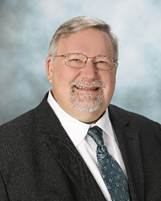
He directed the LEND Program at The Ohio State University and founded JBLM CARES, a $10 million autism resource center for military families. His writing spans clinical scholarship and long-form fiction. He is the author of The Mercy Directive and the six-novel Cassandra series, a completed political and medical fiction saga tracing the rise of the Cassandra system from its origins to its national and international legacy. His forthcoming memoir, The Quiet Architect, examines how conscience and structure collide in modern medicine.
He shares updates on LinkedIn.