


















More than 20 years ago, I began performing robotic surgery when the technology was still unfamiliar to many surgeons and operating room teams. I started my career as an engineer before becoming a physician, so I was naturally drawn to the possibilities. Robotic instruments offered capabilities that conventional laparoscopic surgery could not easily reproduce. I saw an opportunity to perform complex operations with greater precision through smaller incisions.
But I learned something important during those early years: Introducing sophisticated technology is not the same as improving the system in which it operates.
The robot was only one part of the equation. We had to rethink how the operating room team worked, how instruments were positioned, how assistants participated, and how anesthesia managed patients during procedures. Everyone had to adapt. And the surgeon still had to know how to operate.
Today, I see a similar challenge with artificial intelligence. We have extraordinary new tools, but I worry that we are asking the wrong question. Instead of asking where we can introduce AI into health care, we should be asking where health care is failing the people it is supposed to serve.
Real physician voices, twice a week
Free, and one click to unsubscribe.
We have organized health care around institutions, not patients
Consider what happens when someone develops a medical problem. They search online, try to determine which information is trustworthy, find a physician, schedule an appointment, complete forms, and enter information into a patient portal. When they arrive, they are often asked to repeat much of the same information.
The physician then has a limited amount of time to understand months or years of symptoms, medications, previous treatments, test results, and concerns. This is not an efficient system for either person. We have become so accustomed to this process that we rarely question its design.
Some physicians doubt that patients will provide detailed medical histories before their appointments. My response is simple: We need to collect that information sooner or later. Why not collect it when patients have the time and resources to provide it accurately?
At home, patients can review medication bottles, find previous test results, ask family members for help, and think carefully about their symptoms. AI can then help organize that information, identify missing details, and prepare a structured summary for the clinician to review and verify.
The goal is not to reduce the time physicians spend with patients. It is to reduce the time spent reconstructing their histories so we can spend more time understanding them.
The complexity belongs behind the screen
One principle from engineering has guided much of my thinking about health care technology: The complexity should live behind the screen, not in front of the patient.
Consider a patient who receives a CT scan result through an electronic portal. The report may contain unfamiliar terminology, incidental findings, and recommendations written for another physician. The patient may read it before anyone has explained its significance. They search the internet, encounter frightening possibilities, and begin imagining the worst.
This is not necessarily a failure of the radiologist or the physician. It is a failure of how we deliver information.
With appropriate clinical safeguards, AI could help patients understand what a report says in plain language, distinguish confirmed findings from possibilities, and identify questions to discuss with their physicians. It should not independently diagnose the patient or offer false reassurance. It should make the information more understandable while preserving the physician’s responsibility for interpretation and medical decisions.
The underlying technology may be extraordinarily complicated. The patient’s experience should not be.
Health care does not end when the appointment does
One of the greatest limitations of our current health care infrastructure is that information is organized around institutions. The hospital has its records. The specialist has another system. The primary care physician may use a different electronic health record. Patients receive messages through multiple portals, emails, telephone calls, and text messages.
Yet patients do not experience health care as a collection of institutions. They experience events. A new symptom. An abnormal test result. A cancer diagnosis. An operation. A complication. A decision about treatment.
As a urologic oncologist, I have seen how these events can involve entire families and multiple specialists. A patient with prostate cancer may need input from a urologist, radiation oncologist, medical oncologist, primary care physician, and family members. Each person has a role, but the patient is frequently left responsible for connecting everyone.
We have given patients access to more information without necessarily giving them a better way to coordinate their care. The patient does not experience the organizational chart. The patient experiences the handoff.
What if everyone involved in a patient’s care could communicate in one place? The idea was straightforward: Instead of organizing communication around a physician’s office or hospital, why not organize it around the patient and the medical event they are experiencing?
The physician can bring the patient into the clinical conversation, and the patient can bring the people who matter most into their health care. Naturally, this approach requires appropriate privacy protections, patient authorization, clearly defined permissions, and an understanding that not every participant needs access to every piece of medical information. It also does not eliminate the need for direct physician communication, formal medical documentation, or clear responsibility for clinical decisions.
But it offers a different starting point. Rather than asking patients to navigate the communication systems of multiple institutions, we can begin creating communication systems that organize themselves around patients.
The technology is not the point. The relationship is.
Why simplicity matters more than sophistication
One of the lessons I learned from robotic surgery is that sophisticated technology becomes valuable only when people can use it effectively. The same applies to health care applications. Patients should not need technical expertise to communicate with their physicians or family members.
A health care application should feel as intuitive as the messaging tools people already use, even when sophisticated security, data management, and clinical workflows are operating behind the scenes. This is especially important when patients are frightened, sick, recovering from surgery, or facing difficult decisions. The last thing they need is another complicated system to learn.
I believe the most successful health care technologies will not necessarily be the ones with the most features. They will be the ones that make complicated processes feel simple.
A poorly designed process does not become a good process simply because AI is added. In fact, automation can make a bad process operate faster and at a greater scale.
The workflow must come before the algorithm
For health care innovators, I believe the starting point should be simple. Stop beginning with the question, “Where can we use AI?” Instead, ask, “Where are patients and clinicians experiencing unnecessary friction?”
Map the patient’s journey. Determine what information is needed, who needs it, and when it should be available. Identify what can safely be automated and where human judgment remains essential. Then determine where AI belongs.
AI may help organize medical histories, explain complicated information, identify unanswered questions, and support coordination among health care professionals. But those capabilities should serve a larger purpose.
We should measure success by more than the number of tasks automated or minutes saved. Are patients better informed? Is communication clearer? Are important handoffs completed? Do physicians have more time for meaningful conversations? Are patients and families better supported during difficult medical events?
Those are the outcomes that matter. And we need to evaluate them carefully rather than assuming that introducing AI will automatically produce better care.
Physicians must help design the future
I believe physicians need to become more involved in designing health care technology. We understand where communication breaks down, where patients become confused, and where administrative requirements interfere with clinical care.
But we also need to be willing to question workflows we have accepted for decades. We cannot simply automate the health care system we inherited and expect it to become patient-centered. We have to redesign it.
Robotic surgery taught me that technology can dramatically extend human capability, but it does not replace experience, judgment, or responsibility. AI will be no different.
For decades, we have asked patients and families to navigate health care’s architecture. We now have the opportunity to begin designing that architecture around them.
The most important contribution of AI may not be making physicians faster. It may be helping us become more effective physicians by giving us more time to do what technology cannot replace: listen, explain, exercise judgment, and earn our patients’ trust.
And perhaps the most meaningful innovation will be something remarkably simple: making sure the patient, their physicians, and the people who care about them can finally be part of the same conversation.
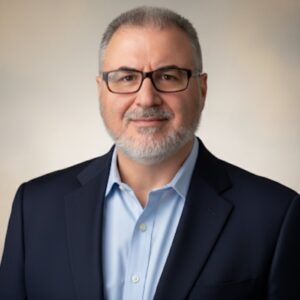
Domenico Savatta is a board-certified urologist, robotic surgery pioneer, engineer, and health care technology entrepreneur with more than two decades of experience in urologic surgery and oncology. His career has been defined by a commitment to advancing medical technology while preserving the personal relationships that are essential to effective patient care.
A graduate of The Cooper Union, where he earned his engineering degree summa cum laude, Savatta went on to earn his medical degree from Stony Brook University School of Medicine, where he was elected to Alpha Omega Alpha. He completed his surgical internship and urology residency at Indiana University.
Savatta was among the early adopters of robotic urologic surgery, helping introduce and develop robotic surgical programs in New Jersey beginning in 2004. Over his career, he has performed thousands of robotic procedures, with particular expertise in prostate cancer, kidney cancer, and complex minimally invasive urologic surgery. He has also served as a robotic surgery proctor, helping other surgeons adopt advanced surgical techniques.
His engineering background has strongly influenced his approach to medicine. He believes technology should simplify complex processes, improve clinical decision-making, and allow physicians to spend more time understanding and caring for their patients.
After more than 20 years in practice, Savatta founded Innovative Urology and the Men’s Wellness Institute of New Jersey, independent practices built around personalized, technology-enabled health care. His vision is to create a more accessible and coordinated patient experience, combining traditional physician-patient relationships with modern digital tools, education, and communication.
Recognizing the limitations of existing health care technology, he also founded LA Digital Systems, a software company focused on developing patient-centered health care applications, educational platforms, and communication systems.
Among these initiatives is LA Love, a health care communication application designed to bring patients, physicians, health care teams, family members, and caregivers together in secure, event-based care rooms. Rather than organizing communication around individual health care institutions, the platform is designed to coordinate the people involved in a patient’s care around specific medical events, with the patient participating in decisions about who is included.
Savatta is also developing digital patient education and engagement platforms, including FindAUrologist.com, to help patients better understand their medical conditions and treatment options before meeting with their physicians.
His broader mission is to apply engineering principles, artificial intelligence, and thoughtful software design to make health care easier to navigate without sacrificing the judgment, compassion, and personal connection that define good medicine. He believes the future of health care is not simply more technology, but better-designed systems that give patients greater understanding, improve communication, and allow physicians to focus on what matters most: caring for people.