











The consult
Every hospitalist knows how a hard case actually gets solved. It is rarely one brilliant physician.
The first clinician to see the patient handles most problems quickly, because most problems are common. When the usual approach fails, that same clinician slows down. The chart gets reread. The differential gets written out. The assumptions get checked one at a time. If the answer still will not come, a consult is called, and someone trained differently looks at the same facts with fresh eyes.
We do not regard this as a weakness of medicine. It is the design. Speed where speed is safe, deliberation where it is needed, and a second mind when the first is stuck.
Artificial intelligence is being built on the opposite instinct. The race is to produce one enormous model that knows everything, housed in a data center, rented by the month. Each new release is larger than the last, and public rankings score one model at a time. The working assumption is that bigger is the only road to better.
Real physician voices, twice a week
Free, and one click to unsubscribe.
I am a gastroenterologist who also builds medical software, and I had reasons to doubt that assumption. So I tested it.
What I tested
I put two freely downloadable AI models on a single workstation in my shop. Neither is large by current standards. Nothing in the experiment touched the internet.
I gave them a standard test used to grade AI on software problems: 225 exercises, each with a built-in check, so an answer is either right or wrong. Then I arranged the two models the way a hospital arranges its clinicians.
The faster model goes first and gets four quick attempts. If it is still wrong, the same model is told to stop and reason through the problem step by step, twice. If that fails, the second model, built by a different team with different habits, takes two attempts of its own. The work stops the moment an answer is correct.
Working alone with ten attempts each, the fast model solved 90.7 percent of the exercises and the second model solved 92.0 percent. Working as a team with only eight attempts, they solved 97.3 percent: 219 of 225. The typical wait for a correct answer was 11.5 seconds.
The detail I find most telling is where the gain came from. The quick attempts solved 197 problems. By the fourth quick attempt, only one try in five was succeeding. More of the same was no longer working. When that same model was asked to slow down and think, it solved 20 of the 28 problems it had been failing. The second opinion added 2 more.
Any attending who has watched a tired resident order the same test a third time will recognize the pattern. Repeating a failed approach is not persistence. Changing the approach is what works.
Why physicians should care
I did not run this experiment because I care about coding contests. I ran it because of what it means for where medical AI can live.
It can live in your building. A model small enough to run on a machine you own never sends anything to a vendor. For practices and hospitals handling protected information, that changes the conversation with compliance from “how do we contract for this safely” to “it never leaves the room.”
It can be owned, not rented. The hardware is a purchase, not a subscription. No one can raise the price, retire the model you validated, or quietly change how it behaves between Tuesday and Wednesday. Anyone who has lived through an electronic health record vendor’s “upgrade” understands the value of that.
It can be built like a care team. If modest models with good escalation rules can match results that were assumed to need the largest systems, then the design of the team matters as much as the size of any member. Physicians are well placed to contribute here. We have spent our careers inside systems of triage, escalation, and consultation, and we know where they succeed and where they fail.
What I do not know yet
We teach residents to distrust a single dramatic result, and I hold myself to that. This was one run. A repeat is under way as I write, and I will publish it whichever way it goes. The test is made of small, tidy software exercises, not the sprawling systems hospitals actually run, and certainly not clinical decisions. The 97.3 percent is a work-until-correct figure. On the stricter two-attempt rule that public rankings use, the team scores 75.1 percent, well short of the largest commercial models. And the second model contributed only two of the answers, so I cannot yet say how much a second opinion adds beyond simply asking the first model to think harder.
None of that changes the direction of the finding. Two modest models, arranged with the same logic we use on the wards, solved more than either could alone and did it without slowing down.
The lesson
The technology industry frames the future of AI as a contest to build the biggest brain. Medicine learned long ago that outcomes come from how a team is organized: who sees the patient first, when to slow down, and when to pick up the phone.
That knowledge is ours. As AI moves into our clinics and hospitals, physicians should not assume the people building it have already thought of it. We should be in the room saying so.
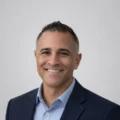
Brian Hudes is a board-certified gastroenterologist and hepatologist with more than thirty years of clinical experience and a recipient of his specialty board’s thirty-year certification award. He built and ran a private gastroenterology practice for twenty years, then spent more than a decade in hospital-based gastroenterology, most recently as chief of gastroenterology and medical director of GI and endoscopy at a 550-bed Level I trauma center in Pensacola, Florida. He is an assistant professor of medicine at Florida State University College of Medicine.
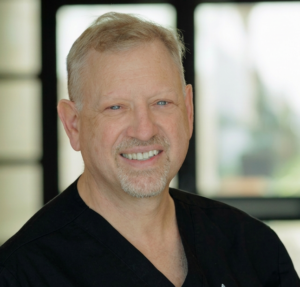
Those two halves of a career shape the way he writes about medicine and clinical technology. Outpatient practice and hospital-based care fail their clinicians differently, and many systems are designed without a meaningful understanding of both environments.
Dr. Hudes has been building clinical software alongside his medical practice for decades. In 1995, during his gastroenterology fellowship, he co-developed one of the first Windows-based endoscopy reporting systems in the United States. He is now founder and chief executive officer of AiMOS Systems Corporation, where he is developing an AI-native clinical platform for outpatient and hospital-based care. AiMOS has been accepted into NVIDIA’s Inception program.
He writes about the architecture of clinical information, administrative cost growth, physician workforce shortages, board certification policy, and the widening gap between what clinicians need and what the health care technology industry builds. He also publishes The Renaissance Physician, an independent publication examining medicine, technology, physician workforce, and the structure of modern clinical practice.
Your KevinMD author page is one of the top results for your name. Turn it into a premium profile, publish in 1 to 3 days, and get a guaranteed podcast slot.