













The offer usually arrives by LinkedIn message. A med spa or telehealth start-up needs a medical director, or a collaborating physician for its nurse practitioners. The hours are light, the fee is steady, and the menu is fashionable: compounded glucagon-like peptide-1 receptor agonists (GLP-1s), “longevity” peptides, IV drips. All they need is your signature and license number.
I’m an endocrinologist, and I review hormone and peptide cases as an expert witness. My advice to colleagues weighing these offers is simple: Read the protocol the way a medical board will read it after something goes wrong. To the business, your license is the product. To the board, it is the thing it can take away.
Boards are watching medical directors
The North Carolina Medical Board has published a cautionary case study that will sound familiar to anyone who has been recruited. An internist takes a $2,000-a-month med spa directorship that requires no hours on site. Months later, a patient is burned during a laser facial performed by a PA. The board finds he is listed as supervising physician for every advanced practice provider at the spa, an arrangement he says he never agreed to. Asked what he did to earn his fee, he answers, “I’m not really sure.” The board’s warning: A role with no real duties may amount to aiding and abetting the unlicensed practice of medicine.
Real physician voices, twice a week
Free, and one click to unsubscribe.
That case is hypothetical. Real ones exist. In October 2024, the Texas Medical Board barred a San Antonio physician from serving as medical director of any cosmetic or aesthetic practice after finding he failed to evaluate patients, supervise delegates, or document care for six patients at the spa he directed. In December 2025, Iowa’s board fined a med spa medical director $10,000 in a settlement; state standards required at least four hours of in-person supervision a week, and the board alleged he was on site roughly two to three hours a month.
The worst outcome so far is in Texas. After Jenifer Cleveland died following IV therapy at a med spa in Wortham in 2023, the Texas Medical Board temporarily suspended the license of its medical director, alleging he failed to supervise an unlicensed person giving IV treatments while he was more than 100 miles away. In April 2026, he was charged with murder, manslaughter, and criminally negligent homicide. These are allegations, and the autopsy could not rule the IV therapy in or out as a contributor. But the case shows how far a supervision failure can travel. Texas responded with Jenifer’s Law, which since September 2025 has limited who may order and administer elective IV therapy outside physician offices and licensed facilities.
Peptides raise the stakes
Peptide protocols add a problem IV vitamins don’t: Many products have no approved human use at all. Alabama’s medical board told physicians in May 2026 that “under no circumstances” may they compound, administer, or dispense a non-FDA-approved or “research grade” peptide. The ban covers advising and recommending them, cannot be sidestepped by delegating to NPs or PAs, and is not cured by a consent form, which does “not mitigate or eliminate” the provider’s liability. Mississippi’s medical, nursing, and pharmacy boards issued nearly identical language in August 2026, and South Carolina’s board went further, warning that buying from an unpermitted supplier is itself aiding and abetting unlicensed practice.
Nor is the interim federal enforcement-discretion policy that the Department of Health and Human Services (HHS) released in October 2026 for six peptides, BPC-157 among them, any cover. The Federation of State Medical Boards (FSMB) says the policy does not amend state law or board authority, and that federal non-enforcement “does not establish that treatment meets the standard of care.”
The FSMB’s May 2026 guidance on med spas and wellness clinics is the document your board will reach for. It says the supervising physician or medical director “is ultimately responsible for ensuring the safety of the patient,” whoever owns the business. Owners may not interfere with medical judgment. It also warns that standing orders issued by clinic medical directors without a physician-patient relationship “are not valid prescriptions.” That describes many protocol-driven peptide clinics.
Your insurance may not follow you
As one health-law firm has warned, many professional liability policies cover patient care but exclude medical director services. Telehealth adds another gap. Licensure generally follows the patient’s location, and one carrier’s policy, quoted in its telehealth guide, excludes any act “when the provider is not properly licensed, certified or registered to provide the medical services.” A collaborating role that quietly expands into states where you hold no license can leave you uninsured when you most need coverage.
What I would check before signing
- Who you will supervise: Get the name, license, and state of every NP, PA, and RN tied to your license, and agree to each in writing.
- Your state’s supervision rules: On-site hours, distance limits, chart review, delegate caps. Put them in the contract and budget the time.
- Who writes the protocols: If the owner or the platform decides what gets prescribed, walk away.
- The product list: Get every peptide and compound on the menu, with its source. Strike anything research grade; check the rest against your state board’s notices, not just federal policy.
- How a patient becomes a patient: Questionnaire-only intake and standing orders are the arrangements boards are scrutinizing.
- States and coverage: List every state where patients will be treated, and get your carrier’s written confirmation that medical director and supervisory duties are covered in each.
- Records and an exit: Real-time access to charts and adverse events, and the right to leave quickly.
None of this means physicians should shun these businesses. Patients will use them anyway, and real clinical leadership makes them safer. But a medical director who supervises in name only protects no one. If the job requires little more than your signature, assume the board will one day ask what the signature was for. Make sure you can answer.
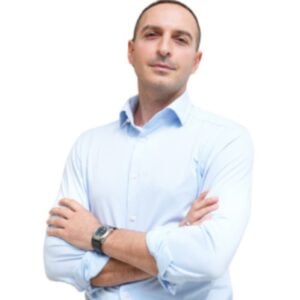
Fady Hannah-Shmouni is a physician-scientist, AI founder, investor, and educator. He is a board-certified endocrinologist, internist, and biochemical geneticist with research funded by the National Institutes of Health, more than 100 peer-reviewed publications, and an h-index of 28. As an assistant clinical professor at the University of British Columbia, he supervises trainees at the intersection of clinical medicine and emerging science.
In 2025, he founded Hormonaly.ai, a clinical AI platform purpose-built for peptide therapy and longevity medicine. Hormonaly’s multi-agent, agentic clinical decision support system has opened its API to enterprise buyers, enabling health systems, digital health companies, and compounding pharmacies to integrate evidence-based AI into their workflows. The platform is live in Canada and the U.S., with bilingual (English and Arabic) infrastructure and active academic research partnerships in precision medicine.
He also founded DrVibe.ai and Healthspan Digital and serves as director of the GCLS AI Academy in Geneva. Through FHS Capital, he has invested in and advised more than 40 early-stage companies, including Eli Health, Science&Humans, Exerkine Biotech, Supernatural, and Neurable, at the intersection of health tech, AI, and biotech.
His mission is to build the infrastructure that empowers health care providers to become AI innovators and to ensure clinical intelligence reaches patients at scale. More about his work is on his website.
Your KevinMD author page is one of the top results for your name. Turn it into a premium profile, publish in 1 to 3 days, and get a guaranteed podcast slot.