





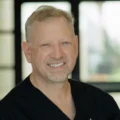





In the sterile, highly controlled environment of the operating room, we are trained to value precision above all else. As a reconstructive surgeon, my career has been defined by the exacting science of restoring form and function. We rely on data, protocols, and technical mastery. But after decades in academic medicine, I have learned that while a scalpel can repair a physical wound, it is often a story that heals the human spirit.
I learned this most profoundly not in a state-of-the-art hospital in California, but in Cuba during the 1990s. In 1995, I volunteered for a medical mission in Cuba during what is known as the “Special Period,” a time of severe economic crisis following the collapse of the Soviet Union. The environment was one of profound scarcity. We lacked basic supplies, medications, and reliable infrastructure. Yet, the resilience of the Cuban people was staggering.
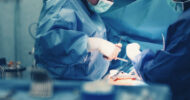
I spent my days performing reconstructive surgery on children. In the operating room, I was forced to rely on the fundamental tenets of my surgical training, improvising with limited resources to achieve the best possible outcomes. But it was outside the operating room where the most important lessons of that mission took root.
It was there that I had the privilege of meeting Gregorio Fuentes, Ernest Hemingway’s real-life boat captain aboard the Pilar, and the widely acknowledged inspiration for Santiago in The Old Man and the Sea. Sitting with Gregorio, listening to him speak about “Ernesto,” was a masterclass in the power of narrative. He didn’t speak of Hemingway as a literary titan; he spoke of a friend. Through Gregorio’s stories, I began to understand a different side of Cuba: one of deep friendships, shared risks on the open water, and a connection to the island that went far beyond the pages of a book.
Real physician voices, twice a week
Free, and one click to unsubscribe.
This experience fundamentally shifted my understanding of what it means to be a physician. In modern medicine, we often talk about “cultural competency” and “bedside manner.” But those terms can sometimes feel like checkboxes on a curriculum. What Gregorio taught me, and what my patients in Cuba showed me, is that medicine is fundamentally a narrative practice. Every patient who enters our clinics is carrying a story (of their family, their history, their fears, and their hopes). If we only treat the biology, we miss the person.
Furthermore, I believe the visual arts are just as crucial to this understanding. As a surgeon, I have always been drawn to the visual, not just in the precision of reconstructive surgery, but as a painter. In 2025, Alice Walton announced the opening of the Alice L. Walton School of Medicine in Arkansas, which explicitly integrates the arts and humanities into its curriculum. This is a profound step forward. The visual arts teach us to see, to notice subtle details, and to understand the human condition in ways that pure science cannot. When we study a painting, we learn to understand emotion, light, and shadow, tools that are equally vital when looking at a patient.
When I transitioned from writing medical textbooks to writing fiction, I did so because I realized that stories possess a unique power to convey the emotional complexity of medicine. My debut novel, Hemingway, A Car and Cuba, is a historical thriller, but at its core, it is a meditation on family, identity, and the search for what we leave behind. It is a narrative born from my time in Cuba, filtered through the lens of historical fiction.
I believe that the humanities (literature, history, and the arts) are not extracurricular pursuits for physicians. They are essential tools for understanding human suffering and resilience. Medical schools across the country are beginning to recognize this. Programs in narrative medicine and medical humanities are on the rise because educators realize that a physician who reads Tolstoy or Hemingway, or who studies art, may be better equipped to understand the complex emotional terrain of a patient facing a terminal diagnosis.
To the next generation of physicians, I offer this: Do not abandon your love for the humanities in pursuit of scientific rigor. The two are not mutually exclusive; they are deeply intertwined. Read widely. Listen deeply. Look closely. Understand that every patient is a story waiting to be heard, and every diagnosis is a chapter in a much larger human narrative.
In the end, the greatest tool we possess as healers is not the scalpel, but the empathy we bring to the stories we are privileged to encounter.
Stephen A. Schendel is a professor emeritus of surgery at Stanford University, an internationally recognized craniofacial surgeon, a Fulbright Fellow, and an award-winning researcher.
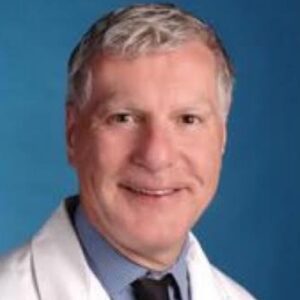
Beginning in 1995, Dr. Schendel volunteered extensively in Cuba during the country’s “Special Period,” providing reconstructive surgery for children. His lifelong connection to the island, his deep admiration for Ernest Hemingway’s life in Cuba, and his firsthand conversations with Gregorio Fuentes, captain of Hemingway’s boat, the Pilar, inspired his debut literary thriller, Hemingway, A Car and Cuba.
He is also the coproducer of the documentary Yank Tanks, which explores Cuba’s iconic vintage American cars.
Your KevinMD author page is one of the top results for your name. Turn it into a premium profile, publish in 1 to 3 days, and get a guaranteed podcast slot.