The following op-ed was published on August 6th, 2007 in the New Hampshire Union Leader.
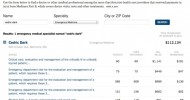
Medicare is planning to cut physician payment rates by 10 percent in 2008. These reductions will continue annually, and it is predicted that the total cuts will be about 40 percent by 2016.
The topic of physician compensation generally elicits little public sympathy. After all, the average primary care physician salary in 2006 was about $150,000. Who are we to complain about reimbursement? As you will see, however, cuts in physician Medicare payments affect everyone.
Medical practices today essentially function as small businesses. Physicians are responsible for expenses like rent, payroll, employee health insurance and malpractice insurance. These costs are expected to increase 20 percent in the next nine years. During this same time, physician Medicare payments are faced with cuts of 40 percent. Already, some practices lose money every time a Medicare patient is seen. Some may find the link between medicine and money distasteful, but the hard truth is that it is impossible to practice medicine in a business model that is headed for financial disaster.
Real physician voices, twice a week
Free, and one click to unsubscribe.
At a time when baby boomers are approaching the age of 65, some physicians attuned to this economic reality have simply stopped accepting Medicare patients. According to a recent survey by the American Medical Association, 60 percent reported that they would have to limit the number of new Medicare patients they treat due to next year’s cut. Half would reduce their staff. Fourteen percent would “completely get out of patient care.” Some seniors are already faced with calling 20 to 30 providers in the desperate hope that someone will accept Medicare.
It is unlikely that the primary care shortage will improve in the near future, as Medicare reimbursement rates continue to be a primary driver of physician salary. In a report by the Center for Studying Health System Change, incomes of primary care physicians fared amongst the worst in keeping pace with inflation between 1995 and 2003, while medical specialists fared the best.
Medical students, already burdened with an average debt in excess of $100,000, are clearly gravitating towards specialties where salaries have better kept pace with inflation. The report concludes that with “the diverging income trends between these specialties and primary care, the result is likely to be an imbalance in the physician workforce and perhaps a future shortage of primary care physicians.”
Some may be wondering if this is just a “Medicare problem.” Should you care if you have private insurance?
Absolutely. With primary care being the backbone of every health system, patients cannot have their chronic medical issues addressed in a timely fashion with a lack of primary care access. In delaying care, chronic diseases blossom into more serious conditions that are forced to be seen in already overcrowded emergency rooms.
Hospital-based care is often the most expensive and the corresponding rise in health care costs plays a major role in the increase of health insurance premiums. Unfortunately, the government responds to rising health care costs by further reducing physician payments and the cycle continues to spiral out of control.
You will hear physicians rallying against the Medicare fee reductions in the coming year. Think about how this affects you. Contact your government representative and do your part to break this vicious cycle.
Kevin Pho, MD, is a practicing, board-certified internal medicine physician and the founder and editor of KevinMD, which he built from scratch in 2004 to give clinicians and patients a place to be heard. Over two decades, it has become one of the most recognizable physician-led publications in health care, drawing more than 7 million annual page views and over 500,000 followers across social media. He still sees patients in primary care in Nashua, New Hampshire, the practice he says keeps the platform honest.
He is the host of The Podcast by KevinMD, a daily, 15-minute show that has surpassed 2,000 episodes and 2.6 million IAB-certified downloads, featuring physicians, patients, caregivers, founders, and health care leaders in conversation about what they actually see and do. He is also a national media commentator and the coauthor of Establishing, Managing, and Protecting Your Online Reputation: A Social Media Guide for Physicians and Medical Practices.
An acclaimed keynote speaker, Kevin speaks nationwide to clinicians and non-clinicians on health care, digital media, physician leadership, and burnout. His signature keynote, “Connect and be heard: Make a difference in health care with social media,” traces his social media journey since 2004 and inspires audiences to strengthen the doctor-patient relationship, make their voices heard in health reform, and turn the tide against clinician burnout. He is the founder of Physician Speaking by KevinMD, a physician-run speakers bureau, and is available for speaking opportunities.
Kevin earned his medical degree from Boston University School of Medicine and completed his internal medicine residency at Boston University Medical Center. The New York Times called KevinMD “a highly-coveted publishing place for doctors and patients,” and Forbes called it a “must-read health blog.” He is an inductee of the Healthcare Internet Hall of Fame, a recipient of the American Medical Writers Association McGovern Award, and a New Hampshire Magazine Top Doctor.