
















Listen and followApple PodcastsSpotifyYouTubeMore apps · Browse all episodes
“The donation of hydroxychloroquine, in contrast to the accompanying donation of 1,000 ventilators, is unethical as either humanitarian aid or as a ‘research study.’ The United States has a moral responsibility for any human harm that results. We cannot simply send medications off to potentially vulnerable populations without regard for the lives that could be negatively affected. It is not enough to intend to do good and avoid harm; we must ensure it.”
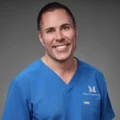
Charles E. Binkley is a bioethicist and general surgeon.
He shares his story and discusses his KevinMD articles, “It is unethical for the United States to send hydroxychloroquine to Brazil” and “Mike Pence and the Mayo Clinic’s moral failure.”

Hosted by Kevin Pho, MD, The Podcast by KevinMD shares the stories of the many who intersect with our health care system but are rarely heard from.


Transcript
Kevin Pho: All right, welcome to the show, where we share the stories of the many who intersect with our health care system but are rarely heard from. My name is Kevin Pho, founder and editor of KevinMD. Today on the show we have Charles Binkley, who is a liver and pancreas surgeon. He’s also a bioethicist and a KevinMD contributor. His most recent article is “It is unethical for the United States to send hydroxychloroquine to Brazil,” and we’re going to get into that and his other articles. But first, Charles, welcome to the show.
Charles E. Binkley: Thank you, Kevin. It’s good to be here.
Kevin Pho: So tell me your story and your journey to where you are today.
Charles E. Binkley: Thank you. My interest in medicine has always paralleled my interest in the humanistic qualities of taking care of people and healing people. I actually started out in a seminary, a Catholic seminary, right out of high school, and went to college there before I decided to go on to medical school, sort of a different way of healing. So I went to Georgetown. While I was at Georgetown, my interest in bioethics increased. I did some work with the kidney institute and did some additional courses in bioethics.
Now, when I went to the University of Michigan to do my surgery training, my interest in ethics continued. I helped develop a curriculum to teach surgery residents bioethics, really asking the question about how does one form one’s conscience as a surgeon, as a physician, as a clinician, and really looking at the fact that the tools that we have can be used for good or for harm, and how do we know how to do that based on our individual conscience.
I trained with Sanjay Gupta. He was just a couple of years ahead of me in the neurosurgery program, and my claim to fame during my residency is that he interviewed me for Time magazine when there was controversy about how we were going to delegate resident work hours, and there was a move to have legislative oversight for resident work hours. So he interviewed me as the ethical voice, or the moral voice, for residents, and I said it was really up to one’s conscience to decide if one should work after being up all night, or after being on duty or on call. So that was my claim to fame as a resident.
Then I came here to San Francisco and worked for the Permanente Medical Group as a liver and pancreas surgeon, taking care of lots of patients in Northern California, Hawaii, and Southern California with liver and pancreas cancer. I took a break from clinical practice a few months ago to dig deeper into my interest in bioethics. I’ve been at the Graduate Theological Union in Berkeley, and I also launched my own website, Pro Nobis Health, looking at value-driven health care for patients and really giving physicians and other clinicians an opportunity to return to the ethical basis of practice. There’s lots of moral distress, lots of moral injury out there, and I’m really interested in entering into that conversation.
Real physician voices, twice a week
Free, and one click to unsubscribe.
Kevin Pho: All right, that’s a wonderful story. Though we are currently in the midst of a pandemic, and it’s brought about a number of ethical issues, which you’ve highlighted in your contributions to KevinMD. Let’s talk about your most recent one, “It is unethical for the United States to send hydroxychloroquine to Brazil.” Can you tell me the story behind the article and why you decided to write it?
Charles E. Binkley: Yeah. My mornings usually start by asking Google to read the news to me, and on NPR a couple of mornings ago, I think it was Monday morning, one of the headlines was that the United States has sent two million doses of hydroxychloroquine to Brazil. I was a little outraged by that, particularly since this is not a proven therapy and may well be harmful, and to do that seemed to really fly in the face of what humanitarian medication should be used for.
So I did a little digging to see if there were rules or regulations. I was sure that there must be. I looked at the WHO and also the FDA itself to see what regulations they provided, but guidance they provided, for the ethical contributions of medicines to places of need on humanitarian grounds. I’ve done surgery in Kenya, in Africa, and then also in Cambodia, and as part of those humanitarian efforts, we really tried to take with us the principles of medicine, of doing good and avoiding harm. In all that we do, the potential to do harm is really quite great. You may be well intended, but you have to be very sure that you’re doing the right thing.
When I started to dig a little bit deeper into the joint statement from the White House and from the Brazilian government, there was this sense that they were going to give it to frontline workers for potential prophylaxis. They were also going to use it for potential treatment, and then they announced this joint effort for research. So it was a little bit vague whether this was truly humanitarian or whether it was a research effort, and on either ground, it’s really very, very morally objectionable.
First of all, you don’t know how it’s going to be distributed. There’s no real route for monitoring it. It also flies in the face of the FDA’s regulation for how hydroxychloroquine should be used in the United States: It should be in a monitored environment and as part of a clinical trial. If the United States and Brazil are starting a clinical trial, there’s no sense of what the institutional review board oversight will be. There’s no sense of what the criteria are.
A much more ethical avenue, if this is truly for research, would have been in having international contributions to clinical trials. That is a hugely important piece, but if that were the case, it should have been done as part of an existing trial rather than just sending two million doses of hydroxychloroquine. So I saw this as very irresponsible, and I also think the United States bears some of the moral responsibility for any harm that might come to people from the use of the hydroxychloroquine that we donated.
Kevin Pho: Absolutely. And there was a study that just came out recently that highlighted what you said about how ineffective hydroxychloroquine really is when it comes to COVID-19.
Charles E. Binkley: Right. The other piece of that is that by sending that many doses of something that’s not effective, or that may not be effective and may be harmful, you’re also reducing the amount of drug that’s available for people who really need it for treating conditions like rheumatoid arthritis and malarial prevention, where we know it is useful in those settings. So it has a number of avenues where it’s problematic.
Kevin Pho: Back in mid-May, you also wrote a provocative article, “Mike Pence and the Mayo Clinic’s moral failure.” The vice president came under a lot of criticism for not wearing a mask at the Mayo Clinic, but you also lay some blame at the Mayo Clinic itself. Can you share the ethical quandary that this story brings up?
Charles E. Binkley: Absolutely. I think that the Mayo Clinic actually has a huge responsibility in this, on two levels. First, I have a real interest in the intersection between ethics and hospital quality, and in hospital quality, there has to be one standard applied to everyone. So if everyone has to practice hand hygiene, there can be no exceptions. If everyone has to wear masks, there can be no exceptions, because when you start to make those exceptions, you erode the very foundation on which compliance is built. We also know, particularly for hand hygiene and for other important practices, that you model that from the top down. So to allow someone as powerful as Mr. Pence to come in and not comply with their own standards that they had set really sends a very dangerous message to everyone in that community of the Mayo Clinic, to say, “Well, we don’t really have to do this. This is optional.”
The other piece of it is an interest that I have, and that’s VIPs, apparent VIPs. I’m sure anyone who’s ever been in hospital practice could get, “There’s a VIP waiting to see you,” or, “There’s a VIP coming in.” There’s always the sense that they should somehow be treated differently or specially, or that there should be amenities for them. And whenever we’ve done that, whenever we’ve made exceptions to these basic principles, to the standard of care, bad things potentially happen.
I always think about the story of Eleanor Roosevelt, who came in to one of the hospitals in New York with anemia. Instead of doing a bone marrow biopsy, which would have been the standard, the physicians made a presumptive diagnosis of aplastic anemia and treated her with high-dose steroids, and she died a few days later of overwhelming tubercular sepsis, because they’d misdiagnosed aplastic anemia. It was actually miliary tuberculosis that replaced her bone marrow, and had they done a bone marrow biopsy, they could have differentiated it. By treating her with steroids, they actually probably killed her. They wanted to spare her the pain of a bone marrow biopsy because she was the first lady.
History is replete with these instances in which we’ve intended to do a good thing, but we’ve treated the VIPs in a special way, we try to secure them something, and bad things have happened. So I take that idea that there’s one standard of care for all. Just like justice is blind, medicine should also be blind.
I think we’re also seeing that in the racial disparities in terms of outcomes of COVID. We are likely not treating people the same way because of either implicit bias or inherent discriminatory practices. If you look at the literature for almost any condition that you Google, you’re going to see studies looking at health disparities, be it access or ways of treating people. So I think we have this huge history in medicine of not treating everyone the same way, and that has to stop. So that’s the piece about the masking: You have to have one standard of care that you apply to everyone, and when you don’t, it really erodes the moral fiber of those people who are trying to do the right thing.
Kevin Pho: Sure. So we are talking now in the first week of June, and the pandemic is several months in. As the summer progresses, what are some of the ethical dilemmas or the ethical situations that you anticipate arising in the foreseeable future?
Charles E. Binkley: Certainly, if there’s a second wave, if people start to let down their guard and we see a second wave, we’ll have to return to this idea of how do you allocate resources. I don’t get the sense that PPE has been really adequately restocked and in abundant supply. I wrote a paper, along with David Kemp, who’s a law professor at Berkeley, that we published in the Journal of the American College of Surgeons, looking at novel ways of allocating PPE.
We’ve never had to actually allocate resources by providers, to providers. It’s really a novel idea. Typically, as providers, we’re used to allocating resources to patients. But imagine a hospital with not enough N95 masks or not enough rebreathers, and figuring out how you’re going to distribute those among the clinicians, among the providers. It’s a very novel idea. So those are the sorts of things that I’m afraid will come back up. It will haunt us until we have a vaccine or an effective treatment, and that is how are we going to allocate resources, particularly in areas. I live in San Francisco, and we’ve been relatively spared here, but as things start to open up, there are lots of concerns about a resurgence, and are we really well prepared for that, although we avoided it the first time?
Kevin Pho: And my final question: What is your take-home message for the KevinMD audience?
Charles E. Binkley: Yeah. So you have this rich audience of really engaged people who want to do the right thing, and I think I get back to this idea of moral distress that everybody faces, in which you have no good outcome. And I say, when you’re in those situations, just pause and really think about what your values are and what the patient’s values are. Get back to this very basic principle of do good and avoid harm, and I think you’ll always find yourself on the right side of things.
Kevin Pho: Well, thank you so much for sharing such powerful advice, wisdom, and insight. On the show we have Charles Binkley, who is a liver and pancreas surgeon. He’s a bioethicist and a KevinMD contributor. Charles, thank you so much for being on the show.
Charles E. Binkley: You’re very welcome, Kevin. Thank you.
Listen and followApple PodcastsSpotifyYouTubeMore apps · Browse all episodes