













Listen and followApple PodcastsSpotifyYouTubeMore apps · Browse all episodes
Join us as we chat with medical writer Steven Marshall about the evolving health care landscape during the COVID-19 pandemic. We discuss the transformative effects on health care delivery, the availability of testing, vaccination, and therapies, and the upcoming changes as the public health emergency ends. Gain valuable insights into the lasting impacts of the pandemic and the necessary adaptations for continued well-being.
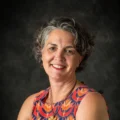
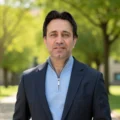
Steven Marshall is a medical writer.
He shares his story and discusses his KevinMD article, “Understanding the end of the COVID public health emergency.”

The Podcast by KevinMD is brought to you by the Nuance Dragon Ambient eXperience.
Ambient intelligence augments human capabilities to make our lives easier. The applications are many, especially in health care. Ambient clinical intelligence is offsetting the most pressing challenges in health care today, such as burnout, physician shortages, physician and patient dissatisfaction, and underperforming financial outcomes, by applying the technology to clinical documentation.
The Nuance Dragon Ambient eXperience, or DAX for short, utilizes artificial intelligence and natural language processing to automatically document care. It securely listens to and captures the natural, clinician-patient encounter conversation unobtrusively, and turns that conversation into a clinical note for the clinician’s review and signature directly in the electronic health record. You just talk naturally, and DAX does the rest.
DAX is being used by thousands of physicians across 30 different specialties nationwide. It has already won the Silver Stevie award in the health care technology category and was ranked #1 for improving clinician experience in KLAS’s top 20 emerging solutions.
VISIT SPONSOR → https://nuance.com/daxinaction
SUBSCRIBE TO THE PODCAST → https://kevinmd.com/podcast
RECOMMENDED BY KEVINMD → https://kevinmd.com/recommended
GET CME FOR THIS EPISODE → https://earnc.me/2xqAb6
Powered by CMEfy.
Transcript
Kevin Pho: Hi, and welcome to the show. Subscribe at KevinMD.com/podcast. Get CME for this episode by clicking on the CME link in the show notes. Today we welcome Steven Marshall. He is a medical writer. His KevinMD article is titled “Understanding the end of the COVID public health emergency.” Steven, welcome to the show.
Steven Marshall: Thank you, Kevin. I’m glad to be here.
Kevin Pho: We’ll get to the article in a little bit. First off, briefly share your story and journey to where you are today.
Steven Marshall: OK. I started as a volunteer fireman back in the ’80s and proceeded to nursing school right after high school. I worked in critical care and emergency rooms, did flight nursing, and also did some ground transport. I was at the bedside, primarily at the critical care level, and went into leadership about 10 years ago. I became involved in the COVID response for the local organization, and we wound up starting multiple mass vaccine sites and mass testing sites. Then ultimately we started a large infusion center when the monoclonal antibodies were approved. Currently I help oversee the infectious disease clinics for our organization, and I started a medical writing company a few months ago, just as something on the side and hopefully a bridge to retirement for me.
Real physician voices, twice a week
Free, and one click to unsubscribe.
Kevin Pho: All right, so you have worn many hats: clinically, in leadership, and especially during the pandemic. Just from your perspective, what are some of the biggest changes post-pandemic that you saw in our health care system?
Steven Marshall: A lot of mobile medicine, telemedicine. We have increased percentages of patients that do virtual appointments, and there’s less traffic in the offices now. We’ve seen much less flu and other infections during the time period when we were requiring masks, which was a mandate that was recently stopped. But as far as the flu seasons, they’ve been much less prominent. I think it’s important to remember that with that, we do still have COVID, and we want to maintain that awareness. That’s something that has opened our eyes to infectious disease, for a lot of people that hadn’t really had much exposure to it.
Kevin Pho: So I’m interested in diving more into that as we transition from the pandemic phase to the endemic phase. You wrote a little bit about that in your KevinMD article, “Understanding the end of the COVID public health emergency.” So tell us, how did your article come together?
Steven Marshall: I wanted to share with the public what changes were going to come about when the public health emergency ended. We’ve been in an unprecedented time where we were in a pandemic state for over three years, to the point that it became our norm. I wanted to make sure that even though we’re saying that the public health emergency is ending, we’re still very much in the throes of the COVID virus. It’s still mutating, and we still have instances of it. Fortunately, the death rates aren’t nearly as high as they were just a couple of short years ago, but we still do have issues with it. I wanted to share that we still have the available treatments, and we still need to take some precautions when necessary, even though it’s not mandated where we go.
Kevin Pho: So when it says that the public health emergency has ended, what exactly does that mean?
Steven Marshall: When the COVID crisis began in 2020, the government put forth the public health emergency to put into place a lot of different things, and it alleviated some regulations as well. It actually alleviated some of the restrictions on doing telehealth visits, which has continued on through the post-pandemic state. Then also, at one point we had mandatory lockdowns, and we had mask mandates and the encouragement of the vaccine, and also the very quick distribution and approval of the vaccine under the emergency use authorizations, as well as the monoclonal antibody treatments. Even though we’re past the emergency state, we still do have, of course, the vaccines available. They’re working on developing a monoclonal for the current variants, but we currently don’t have one.
Kevin Pho: And you said that COVID is still, of course, present. So give us some context in terms of the lingering effects of COVID that you’re seeing.
Steven Marshall: We have a lot of patients that have what they call long-haul COVID, and they experience continued respiratory symptoms from the disease process. This tends to affect a younger population, which is not typical for a lot of the continuous diseases, the chronic diseases, that we see. So it’s about increasing that awareness.
Kevin Pho: So in terms of some of the things that will stay the same and some of the things that will be changing, tell me some of those changes that would persist past COVID. What are some of those?
Steven Marshall: The approval for telehealth, the regulations for telehealth, those will be staying the same. The availability of the vaccine and other testing kits through the government, those will continue on. The emergency use authorizations for the medications that are still approved, some of the oral antiviral agents, those will continue to be available as well.
Kevin Pho: Now, when you talk about the telehealth regulations that will stay the same, go into more detail about that.
Steven Marshall: Prior to COVID, there were a lot of restrictions in the regulations, and it made it difficult for providers and clinicians to conduct a routine health visit over the telehealth platforms. Extending this allows more patients to have access where they would have otherwise had challenges with transportation and such. So visits that could primarily be done through a telehealth visit, that before may not have been covered by Medicare, Medicaid, or private insurance, will continue to be covered by these after the public health emergency ended on the 11th.
Kevin Pho: Now tell us some of the things that will be changing because of the end of the public health emergency.
Steven Marshall: Some of the things that will be changing are the requirements for private insurers, Medicare, and Medicaid to pay for COVID treatments and testing; those were coming to an end. Requiring testing for various institutions or organizations and for entry into the country, those will be ending. Also, we ran into a large PPE shortage during the COVID pandemic, and that resulted in manufacturers of PPE having to report their equipment levels, or their stock levels, on a continuous basis, and they will no longer be required to report that information.
Kevin Pho: Now, of course, we’ve learned a tremendous amount during this pandemic, for good and bad. What would you say are the biggest lessons that you have learned from the pandemic?
Steven Marshall: Some of the biggest lessons that I’ve learned are just being able to adapt quickly to a growing situation. It was something that was unprecedented for us. We were putting together testing sites and vaccine sites on short notice. We completely renovated our mobile program, so we had mobile sites that went out to churches, fire departments, and schools. At one point, at the peak, we were doing thousands of tests a day at five to six different locations across multiple counties. We had to come up with a lot of our own ideas and ways to do things, because this had never been done before.
Kevin Pho: Give us an example of that. What’s a story where you just had to come up with something on the fly that wasn’t in some type of guidebook, rulebook, or textbook?
Steven Marshall: With the mass vaccine sites or the mass testing sites, we put together a tent setup with a drive-through for the cars. We were printing off the requisitions, and then somebody would pack the requisitions into the bag. In one particular instance, our printers went down. We actually ran out of toner, so we were unable to print anything, and we had to switch over quickly to a manual process to get all the information in and move the testing patients through. At that particular site, I think we did a little over 500 tests in four hours, and for the majority of that time, we were unable to print electronically, so we had to go back to the old paper and pen.
Kevin Pho: I think another lasting effect, of course, is the clinician and nurse shortage, right? There’s a lot of attrition due to burnout that stems directly from the pandemic. So tell me, what are you seeing in your health care system?
Steven Marshall: We have a lot of travel nurses throughout the area. During the pandemic, because of some of the assignments the nurses went to, the pay increased exponentially for some of those travel jobs, and we had a lot of our bedside staff that went to travel to make the money, and also to make a difference in some of the areas that were hit worse than we were with the pandemic. That has created a lot of nurses that have taken early retirement. We’ve had a lot of nurses that have retired through the pandemic just from the stresses, like you say, burnout, and they may have retired early and gone on to another career or another journey.
So we don’t have the stability in our workforce. We see a lot of new nurses coming in, and nurses are moving up the career ladder into leadership positions much younger than they used to, because the pool of nurses that have been in a position for more than, say, five or 10 years is very shallow right now.
Kevin Pho: And as it relates to that attrition and new nurses coming into the workforce, what do you see as a path forward over the next year or so?
Steven Marshall: I think we’ll continue where we are. A lot of the nurses that are coming into the profession have their sights set on becoming either nurse practitioners or CRNAs, and there’s not a lot of drive for nurses to stay at the bedside. So I think we may continue to see growth in the specialties with the nurse practitioners. I think that’s expected to be something that will actually grow over the next few years, but I think the bedside nursing staff is going to remain in a critical state.
Kevin Pho: So what are some solutions to shore up those bedside nurse numbers?
Steven Marshall: Sign-on bonuses have been beneficial in the area, as well as retention bonuses and contracts. With the pay rates being significantly higher with travel nursing, several organizations have had to adjust their pay scale for nurses and raise the starting pay for RNs. Unfortunately, we’ve gotten to where the pay is a major driving factor in getting nurses in and keeping nurses.
Kevin Pho: We’re talking to Steven Marshall. He’s a medical writer. His KevinMD article is titled “Understanding the end of the COVID public health emergency.” Steven, tell us some of the take-home messages that you want to leave with the KevinMD audience.
Steven Marshall: All right, thank you, Kevin. I would like to say that we are still in the midst of the endemic with COVID, and it’s something that shouldn’t be taken lightly. Fortunately, we’re in a much better place with treatment options, and the loss of human life has decreased tremendously, but we’re still very much in the throes of this outbreak. It’s been something that we clinicians and providers have never seen in our careers. So I think it’s important to stay vigilant with hand hygiene, make sure that you’re taking care of yourself, and if you are sick, self-isolate and make sure that you’re getting the proper treatment when needed.
Kevin Pho: Steven, thank you so much for sharing your time and insight, and thanks again for being on the show.
Steven Marshall: All right, thank you, Kevin. I appreciate it.
Listen and followApple PodcastsSpotifyYouTubeMore apps · Browse all episodes