







Listen and followApple PodcastsSpotifyYouTubeMore apps · Browse all episodes
“If any of those people get infected, their illness will potentially impact dozens more. COVID infection may now be ‘just a cold,’ at least for the vaccinated. But no one should think this ‘you do you, I’ll do me’ approach to the pandemic affects only them. Not by a long shot.”
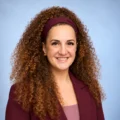
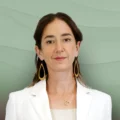
Diane Birnbaumer is an emergency physician.
She shares her story and discusses her KevinMD article, “The impact of a single COVID infection.”

The Podcast by KevinMD is brought to you by the Nuance Dragon Ambient eXperience.
With so many demands on their time, physicians today report record levels of burnout. Burnout is caused by many factors, one of which is clinical documentation. Studies indicate physicians spend two hours documenting care for every hour spent with patients.
At Nuance, we are committed to helping physicians do what you love – care for patients – and spend less time on clinical documentation. The Nuance Dragon Ambient eXperience, or DAX for short, is an AI-powered, ambient clinical intelligence solution that automatically captures patient encounters securely and accurately at the point of care. Physicians who use DAX have reported a 50 percent decrease in documentation time and a 70 percent reduction in feelings of burnout, and 83 percent of patients say their physician is more personable and conversational.
Rediscover the joy of medicine with clinical documentation that writes itself, all within the EHR.
VISIT SPONSOR → https://nuance.com/daxinaction
SUBSCRIBE TO THE PODCAST → https://kevinmd.com/podcast
RATE AND REVIEW → https://kevinmd.com/rate
FOLLOW ON INSTAGRAM → https://www.instagram.com/kevinphomd
FOLLOW ON TIKTOK → https://www.tiktok.com/@kevinphomd
GET CME FOR THIS EPISODE → https://earnc.me/7jmmLk
Powered by CMEfy.
Transcript
Kevin Pho: Hi, and welcome to the show, where we share the stories of the many who intersect with our health care system but are rarely heard from. My name is Kevin Pho, founder and editor of KevinMD. Rate and review the show at KevinMD.com/rate. Subscribe at KevinMD.com/podcast. Today on the show, we have Diane Birnbaumer. She is an emergency physician. Her KevinMD article is titled “The impact of a single COVID infection.” Diane, welcome to the show.
Diane Birnbaumer: Well, thank you so much, Dr. Pho. This is just a delight. I’ve been reading KevinMD, I think, since you started. It’s been a long time, and I appreciate what you’ve contributed to our world in medicine. It’s wonderful.
Kevin Pho: Thank you so much for reading and for appearing on the podcast today. We’ll get into your article in a little bit, but first off, just briefly share your story and journey to where you are.
Diane Birnbaumer: I’m a native Southern Californian, the only physician in my family. I’m not sure exactly where this idea of being a doctor came from, but it was quite some time back. I’m board-certified and residency-trained in both internal medicine and emergency medicine, but EM is really where my heart is.
So I’ve been practicing emergency medicine in L.A., at a level one trauma center in the county system, for 30 years, and watched lots of residents go through, taking care of a gajillion patients, and watched the health care system from that vantage point, which is kind of a raw vantage point on the health care system in general. I love my job, love the teaching, love the residents, and it’s just been quite a journey. I’m delighted to have the opportunity to be able to do this.
Real physician voices, twice a week
Free, and one click to unsubscribe.
Kevin Pho: So tell me about the evolution of emergency medicine. What’s the state of emergency medicine today, in October 2022?
Diane Birnbaumer: Oh my gosh, it’s really changed a lot in my 30 years. It defined itself 50 years ago as a specialty, and it decided what it was going to be: the 24/7/365, white hat, everything comes through the door. But what’s changed is extraordinary. Like everything in medicine, right, there are the external pressures, all the sort of hoops we have to jump through, and all the insurance issues and all of that.
But it’s been just watching the breakdown of the health care system happen from our viewpoint, because we are where everything can end up. If people can’t get access to care, or doctor’s offices are full, we see it all. We see where the opiate problems are, we see where the alcoholism problems are, and teenage suicide issues and mental health issues are all in our face every day. So it’s an interesting vantage point to watch what’s happening in society and in health care from the emergency department. It is the place that everything ends up at some point in time. So it has changed a lot, and I think emergency people who work in ERs really see the problems in the health care system.
Kevin Pho: And right now, what are some of the biggest challenges facing emergency medicine?
Diane Birnbaumer: So yeah, staffing is a huge one right now. It’s always been busy. That’s why most of us go into it, right? We kind of like that crazy atmosphere. But right now staffing is making things, I think, frankly dangerous in some places in the country, where people are just getting seen in the waiting room because there’s no room in the back, because there’s no room upstairs, because there’s no staff.
Kevin Pho: Are you talking about, specifically, nurses, support staff, physicians?
Diane Birnbaumer: Yeah, it’s nurses, I think, in particular. But I do know that there’s been a pretty significant exodus of emergency physicians over the last couple of years, with a lot of people thinking of leaving, and that’s impacted staffing, there’s just no question. Nurses in particular, and I will tell you, we all know, anybody in medicine knows, the nurses are the backbone of health care, without question, the unsung heroes 12 ways from Sunday. And I don’t blame them for leaving, but boy, it leaves us really thin.
Kevin Pho: Why are a lot of emergency physicians, just in your opinion, why are they leaving the practice?
Diane Birnbaumer: It’s always been a hard job. I think what’s happened during the pandemic has really undermined how people feel valued. The idea that why they’re there could even be questioned, when they’re there because they want to be there to take care of people. And to watch people die who they don’t feel need to die, and to really be on the front line during a pandemic, which is not something anybody signed up for, has been really hard on people. Initially there was no PPE, and all the things that you read about in the paper, they lived it. They lived it, as did our critical care colleagues, and then there’s the people who were in the hospital.
I think it has just taken people to a brink where, if they don’t feel valued, what’s the point? And so I think there’s at least a lot of people considering it, and I’ve had colleagues leave who had 10 or 20 years left in their practice, and they just hung it up and are just going to go do something else, which is heartbreaking.
Kevin Pho: All right, so speaking of the pandemic, you wrote a KevinMD article back in September titled “The impact of a single COVID infection.” Now, for those who get a chance to read your article, just walk my audience through it. Share the story of why you decided to write it.
Diane Birnbaumer: Sure. So I had been lecturing on COVID virtually. I’ve done 40 or 50 lectures to keep people up to date on COVID, as it changed so fast, and part of that was being on top of the vaccines and what the virus was doing. And so my husband, who’s also a physician, and I, we’re all in on the vaccines, maxed out on the vaccines, and we really tried to live our lives as safely as possible. Not crazy safe, but just keeping track of where infections were, were the hospital beds open if we were going to be traveling and we got sick, were the medications available, etc. And we decided, like a lot of people, to take measured risks as things got more reasonable, or at least more predictable. And then, taking the measured risk, we went out and took a trip, and I got COVID.
This was just in August, just a couple of months ago, but what amazed me is how this “you do you, I’ll do me” approach that we seem to have settled into isn’t just you. One person’s infection trickle-down was amazing to me. Besides the fact that I had to quarantine and all that, or isolate, from my husband, whatever, and he never got it, by the way, I just was flabbergasted by how many people I might have exposed, which has always been my nightmare. The last thing in the world I want to do is get somebody else sick, and I had just exposed people, and I felt terrible. Fortunately, nobody did get sick, but I would have felt awful if they did.
And then the thing that struck me the most was one person’s interaction with the world, mine. I was supposed to lecture at a conference, and I couldn’t go. I was supposed to help with child care for our grandkids, and I couldn’t do that. The one person’s illness trickled down to probably, I don’t know, dozens of lives, at least. And multiply that times how many infections a day. The impact of this “you do you, I’ll do me” thing just struck me as vast and unmeasured and unaccounted for in all of our measuring of deaths and hospitalizations. And this is something that I don’t think has been factored in. I think it’s part of the staffing shortages that we’re seeing and all the other sort of stress that we’re seeing out there with people’s incomes, etc. So it just struck me as a remarkable thing, what one infection can do.
Kevin Pho: So give me a sense. You mentioned a few examples, not being able to care for grandkids and not being able to go to this conference. So if I were to ask you, how many people did you affect from your single infection?
Diane Birnbaumer: Oh my gosh. Probably, in terms of exposing people, it was probably two dozen. If you go to the registrants at this conference, there were over 100 people who came to this conference expecting a certain panel of lecturers, didn’t get that panel of lecturers, and got things scrambled at the end. Probably, in my work and personal life, that was probably 100 people overall. At least 100 people got impacted.
Kevin Pho: So what would you do differently? Because we’re not talking in October 2022, and the world that we have now is certainly different from what it was last year, or the year before. So what would you do differently?
Diane Birnbaumer: You know, I’m not sure there’s any way to rein this in, which makes me really sad. I just got back from our national meeting, where, at least for the meeting, we had to attest to being vaccinated and to having gotten tested, antigen testing, the day that we all showed up for the meeting. But there weren’t a ton of masks being worn, with thousands of people at a meeting.
I just think people, for whatever reason, and many are legit, some are questionable, whatever, it doesn’t really matter anymore. I think this horse is way out of the barn. I do wish people were a little more nuanced and could ramp up if things got worse, which I suspect they will in the next couple of months, do some things like masking, and then back down a little. But it’s just gotten incredibly polarized, and people are dug in. For whatever reason, I think they’re dug in. So I don’t know if anyone can influence this now.
I would love everyone who can to get vaccinated. I know people won’t, or whatever. And anyone who is at risk, to mask and take care of people around them who are at risk. I wish we could step back into being a little more compassionate and caring of each other instead of digging in, but that doesn’t seem to be what we’re doing right now.
Kevin Pho: How much of that is just American society and our kind of divisive, polarized political environment? How much is it?
Diane Birnbaumer: I suspect there’s a big impact factor of that. It is a shame to me. I don’t think of Americans as being so dug in and self-oriented, and maybe I’m naive. I just thought of when 9/11 happened. We were the most united I’ve ever seen us as a country, maybe because it was an external sort of threat. But COVID is an external threat, and I’m just sad that we can’t get together.
And so I suspect this is threaded through everything that’s around us, politically, personally. Some people don’t even talk to people in their family anymore because of all of this. I just think it’s emblematic. It just happens to affect those of us in medicine, and anyone who doesn’t want to get sick, it impacts that dramatically.
Kevin Pho: So have you ever encountered this in the emergency department? Someone has COVID, and perhaps they’re resistant to vaccination. Do you address this when you see them in the emergency department?
Diane Birnbaumer: Yeah, it’s interesting. So this is something that I think most practitioners do. I think most people who practice medicine, if they haven’t given up, do at least mention, especially in the high-risk population, that vaccinations are available. It is a hot button, though, and I think that it’s like touching a hot iron. Most people, I think, and I know I do this as well with friends and family, if the subject is brought up and it is clear the wall comes down, I honestly don’t see the point anymore.
It saves lives, there’s no question. It stops hospitalizations, there’s no question. But there are just people who believe what they believe, and they just will not talk about it. I just don’t want it to trickle out into all the other vaccines, because that would be just tragic to see measles back, and we’ve already seen polio back. To me, to have that expand to those other illnesses would be absolutely tragic.
Kevin Pho: So tell us a success story. Give us some hope. Tell us about a positive interaction that you’ve had, either in the emergency department or with friends, where you talked about the vaccine and you changed their minds.
Diane Birnbaumer: Actually, the funnest thing: My husband is adopted. We found his family through 23andMe, randomly. It was just one of these crazy things that happened. And there are family members that are not anti-whatever, but they just have a little more conservative approach to everything. It’s been really fun to talk to them and watch, over a year of having now this new family member, their new brother and nephew who is a physician. Watching them listen to two physicians talk to them every Monday, and watching their evolution in how they think about medicine and how they question everything, in a way that’s actually really positive. It’s educational, and their minds are changed logically and thoughtfully instead of reactively. It’s a response, not a reaction.
It’s been extraordinary to watch this happen, and they talk to their family members there. And I think that’s the thread of this that is so potentially positive. Man, that’s been a great success story, to watch this interaction change over time. They’re wonderful people, and it’s just been extraordinary.
Kevin Pho: So you mentioned some of those people who are dug in, right, where you feel the walls come down. Do you just leave it alone? What do you do in that situation?
Diane Birnbaumer: You know, I really think it depends on the situation. With a high-risk person, I really think it’s worth the effort to find the ways to convince people. If you read the literature on how to convince, don’t talk numbers. They don’t want to hear numbers; they want to hear stories. So they want to hear, “I knew someone just like you who had multiple myeloma, and the vaccine really helped keep them from being in the hospital,” or, “It took multiple vaccines, but they were able to get immune.” To tell stories to people is really what convinces them, making it personal.
I think telling stories is what physicians do best, because we know them. We can relate something in what we do in our practice to that individual patient. So those are the things that seem to be the most convincing, I think: to really take the extra effort with the high-risk people to really make sure, or people who have high-risk people in their lives, to make sure that they don’t, God forbid, infect someone, and that they have their loved one be the most protected possible.
Kevin Pho: We’re talking to Diane Birnbaumer. She is an emergency physician, and her KevinMD article is titled “The impact of a single COVID infection.” Diane, if you were solely in charge of public health right now, and this podcast is going to come out probably at the end of October, beginning of November, what exactly would you do right now?
Diane Birnbaumer: My heart goes out to public health officials. Just having a public health degree now seems to be painting a target on people, which is really tragic to me. But to be a pure public health person: The variants are changing. We now have a variant soup out there. We don’t have just one to the next; we now have all these little offspring of the variants that are out there now, and we have a variant soup that is definitely out there.
And if people really want, we’re going to be close together, we’re going to be enjoying our holidays. If people could just take a deep breath and realize they can still enjoy things and do the things they want to do, but do it in a safer manner. Please get vaccinated. Wear your masks when you’re in crowded spaces. That’s not fun, but it’s safer, and that way people don’t get sick.
If I were a public health official, I would really urge people to make sure they get that vaccine, which is not getting taken up at all. Please go get vaccinated, and please do your best to not infect others or get infected yourself, and masks really help with that. And they do. You’re going to find somebody to say anything, anywhere, right now out there. You could find anybody to support what you want, but the reality is masking done right works.
Kevin Pho: And my final question: What are some of your take-home messages that you want to leave with the KevinMD audience?
Diane Birnbaumer: You know, one thing I really want the KevinMD audience to know is I never in a million years thought that I could send something to you for other people to read. And I find reading what you put on your site very eye-opening and heartbreaking and joyful. And so if you have a story to tell, tell it. Tell it to your family, tell it to your friends, write it down, send it somewhere, maybe even KevinMD. But the stories are so important, and you have so many. Your listeners have thousands and hundreds of thousands of them. Share them. That’s our humanity, right? That’s what we can share.
Kevin Pho: Oh, thank you so much for those kind words. Thanks again for sharing your story, time, and insight, and for being on the show.
Diane Birnbaumer: Thank you very much.
Listen and followApple PodcastsSpotifyYouTubeMore apps · Browse all episodes