













Listen and followApple PodcastsSpotifyYouTubeMore apps · Browse all episodes
“We know that the past two months haven’t been easy. We know about the sleepless nights, anger, tears, depression, and anxiety. We know all of this because we know what trauma does to a person, and you are in the middle of experiencing a repeated trauma. The trauma of watching patients die in ways you’ve never seen, the trauma of watching colleagues die, the trauma of knowing what exactly this virus could do to you if you were to become infected.
We know that some of you feel helpless in your role as a physician, and that inability to control things that you are used to controlling is disrupting your confidence. For some of you, the frustration with your institutions is making it difficult to make through each shift.”
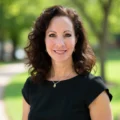
Nicole B. Washington is a psychiatrist and can be reached at her self-titled site, drnicolepsych.com.
She shares her story and discusses her KevinMD article, “To every physician from the psychiatrists who are here to support you.”
Did you enjoy today’s episode?
Please click here to leave a review for The Podcast by KevinMD. Subscribe on your favorite podcast app to get notified when a new episode comes out!
Do you know someone who might enjoy this episode? Share this episode to anyone who wants to hear health care stories filled with information, insight, and inspiration.

Hosted by Kevin Pho, MD, The Podcast by KevinMD shares the stories of the many who intersect with our health care system but are rarely heard from.


Transcript
Kevin Pho: Hi, and welcome to the show, where we share the stories of the many who intersect with our health care system but are rarely heard from. My name is Kevin Pho, founder and editor of KevinMD. Today on the show we have Nicole Washington. She’s a psychiatrist, and she wrote the KevinMD article “To every physician from the psychiatrists who are here to support you.” Nicole, welcome to the show.
Nicole B. Washington: Thank you for having me.
Kevin Pho: So we’ll get into your article in a little bit, but first off, tell us a little about your story and your journey to where you are today.
Nicole B. Washington: I was born and raised in Louisiana and moved to Oklahoma for med school. I don’t really have any family here; I didn’t have any when I moved. I had my kids here while I was a trainee, and I had a big pregnancy complication. I ended up a week postpartum with a pacemaker in after my second kiddo, and I was a resident, and I was anxious and having major panic attacks and all these things.
Being a psychiatrist functioning in this community, and that was before telemedicine was a thing, trying to function in this community, it was hard for me to find somebody that I could talk to, to help me through all of that, because I worked with them, and they were potentially colleagues or future colleagues. And it stopped me from getting help. I was able to figure it out and work through it, but it made me think: I’m sure there are a lot of docs out there who don’t work through it, or who just don’t deal with it, because it’s difficult to figure out how when you work in the same community in which you’re trying to receive services.
Real physician voices, twice a week
Free, and one click to unsubscribe.
Kevin Pho: So tell us a little about your practice and what you do now.
Nicole B. Washington: So I have a practice. I focus mostly on professionals, so recognizable professionals, right? Attorneys, physicians, media people. If you’re a physician and you have some depression or anxiety and you need to go see a psychiatrist, there is the concern that people are going to see you in a lobby. Patients: “Oh, look, my kid’s pediatrician’s in here.” They wonder what they’re here for. People talk, and so it’s a deterrent.
I also offer flexible schedules, right? So for the professional who can’t really figure out how to get to an appointment between 8:00 and 5:00, we can work out alternate arrangements. The telemedicine piece really adds a level of convenience, especially for my docs and attorneys, because a lot of times they don’t have the margin in their day-to-day schedules to drive 30 minutes to an appointment, sit there for the appointment, and go back. It just doesn’t happen, because physicians are notorious for putting everybody else before themselves.
Kevin Pho: So for physicians specifically, what kind of behavioral health issues are you seeing in your practice?
Nicole B. Washington: Anxiety is the most common mental health disorder, period, and so I do see a lot of anxiety. I’m seeing an increase in anxiety. The pandemic is doing strange things to us all mentally, and I’ve seen people with no history of anxiety having significant anxiety during this time, and definitely people having a worsening. And a lot of it is the uncertainty, and I think that’s the difficult part. People are really struggling.
So I’m seeing a lot of mood reports and anxiety reports, and when you ask them what’s going on, it’s the thoughts about what’s going to happen, because we don’t know. We all thought we would get out of this first wave and then we’d have a break, and then there’d be the fall and winter we’d have to deal with. But people are not seeing the break, and people are seeing the first wave get bigger in places where it wasn’t as large before. People are just really having a hard time with all the uncertainty right now.
Kevin Pho: So I think that segues nicely to the article you wrote on KevinMD, “To every physician from the psychiatrists who are here to support you.” I want to start by reading you a short excerpt from your article. You write, “We know that some of you feel helpless in your role as a physician, and that inability to control things that you are used to controlling is disrupting your confidence. For some of you, the frustration with your institutions is making it difficult to make it through each shift.” Now tell me the story behind that article and the point you are trying to bring across.
Nicole B. Washington: I know that for every physician I see, or for every one that reaches out to me, there’s a handful more who are not. I’ve had physicians reach out and then change their mind about scheduling. They’ve done the first call, they’ve admitted, “Yeah, I could probably benefit from seeing you, but not right now. I’m going to put it off till later.” But I’m hearing the same stories over and over again. I’m hearing the ones who are seeing me tell me about their peers who are struggling, who they doubt are seeing anybody.
We know it’s happening, and I just wanted somebody to see that and say, “You know what? Maybe this hits home. This hits me somewhere. This is talking to me.” And sometimes just realizing that you’re not the only one who needs help, or who’s going through it, makes it just a little bit easier to go ahead and take the first leap in scheduling and accessing.
Kevin Pho: Now what are some of the symptoms or signs that physicians may show that may point to a need to see someone like you, or to have some behavioral health support?
Nicole B. Washington: Right. So everybody won’t need to see a psychiatrist. I don’t believe that everybody needs to see a psychiatrist. I don’t believe that everybody needs medication. But if things are getting to the point where they’re impairing your functioning, if you’re at the point where you are having difficulty enjoying your time off, you’re having difficulty engaging with your family when you are off, you’re having a hard time enjoying the kids or enjoying the husband or wife, those are signs that maybe there’s something a little bit more severe going on.
Certainly if you start to feel hopeless, like there is no hope, if you start to feel that ending your life is an option, that things would be better off if you weren’t around, that you’d rather not deal with any of this, if you’re having a hard time getting out of it on your days off and functioning and bathing and taking care of those hygiene things, I would definitely recommend considering some form of mental health evaluation, whether that is a therapist or a psychiatrist. I definitely think take the first step. Take the first step once your functioning starts to get impaired.
Kevin Pho: I think what you’re describing is certainly prevalent across the country, the stress that you’re describing among clinicians, whether they’re inpatient or outpatient. Now what is your number-one tip for these clinicians on how to take care of themselves? You mentioned not all of them have to see psychiatrists, but what are some things that they could do, perhaps on a day-to-day basis, that can help their mental health?
Nicole B. Washington: One of the things that I’ve been working on with a lot of the physicians I see who are having directly COVID-related anxiety and mood changes is we work on acceptance. We work on the acceptance of what we’re dealing with, because some of what I see is a lot of us are having a hard time accepting that this is where we are, right? We have a hard time accepting that we’re in the middle of this pandemic, and we only have control over certain parts, and we’re used to, as docs, having more control over things in our environments and our settings.
I mean, for most of us, it’s rare that we see something come across that we have never seen before. And so there’s a level of confidence and familiarity that we know: “Yeah, I’ve seen that. I’ve treated that about a million times.” This is different. And so I have been working with a lot of docs on the acceptance of, one, you haven’t seen this before, and it’s evolving and changing. The lack of knowledge about what this is, is why we’re having a hard time. Not you personally; this is not a your-ability thing. This is: We’re in the middle of this pandemic, and none of us know what we’re doing.
And so if we can accept the fact that none of us know what we’re doing. And then the second thing is to control what we can control. There’s a lot of us trying to control things that we have zero control over, which just makes it worse. When you put a lot of effort into something that you have no direct control over, it’s exhausting. I mean, it is exhausting.
So the doctor who’s out there on Facebook trying to convince their whole neighborhood that masks are important, that can be exhausting, to try to force what you see are reasonable guidelines as far as wearing a mask. It’s hard for you to go to work all day, deal with your patients, and then go home all evening and feel like you have to be the advocate for the neighborhood and convince everybody to wear a mask. You’re going to wear yourself out. So finding a balance in that, I get the need to want to educate, but finding a balance in that is going to be key.
Kevin Pho: Now for physicians who want to take the next step, what are some resources, either online or any local resources, that you could point them to?
Nicole B. Washington: So definitely the Physician Support Line, if it’s just a “I need to talk to somebody right now.” Maybe you had a bad shift, maybe you had a really, really bad outcome, and you just need to talk to somebody about it. Physician Support Line is a fantastic resource. I think they have a website now where you can go and get the number, but they are functioning almost 24 hours a day. Project Parachute has therapists around the country available for health care workers.
And then I have a website that, it’s just in infancy stages, physicianmentalhealth.com. I have a listing right now of psychiatrists across the country who are available for telemedicine services for our peers. So these are people who said, “Yes, I can try to work physicians in as quickly as I can and help them get better.” But in time, I hope that website will grow into advocacy and resources and education, and a space where other physician colleagues who have dealt with their own mental health journey feel free to talk about that in that space.
Kevin Pho: Now what if a physician sees one of his or her colleagues who may benefit from behavioral health or mental health support? Can you suggest an approach on how physicians can handle that scenario?
Nicole B. Washington: One thing we don’t do is truly ask each other how we’re doing. I mean, I hear repeatedly from my docs who are not in psychiatry, but I can remember being a student and resident, and peers in other specialties would have bad outcomes, or just having a bad day, and it was clear to everybody, but nobody would just say, “Hey, are you OK? I know that was really terrible. How are you handling that? The other day you had a weird outcome. How are you doing with that?” We don’t tend to do a lot of that, and I think it’s because we don’t want to open that door. But I think now it’s the time to open the door.
I think simply asking someone, “Hey, I noticed that you’ve been a little edgier lately. I noticed that you seemed irritable. Are you good? Are you OK?” I think coming from you, in that way of just concern, will go a long way with someone opening up to you and feeling a little more comfortable talking about what’s going on.
Kevin Pho: Well, thank you so much for sharing that insight, and I think those words would resonate with a lot of clinicians, especially during the pandemic. We’re talking to Nicole Washington. She’s a psychiatrist, and she wrote the KevinMD article “To every physician from the psychiatrists who are here to support you.” Nicole, what’s your take-home message for the KevinMD audience?
Nicole B. Washington: My take-home message is don’t wait to do what needs to be done for you. You are no good to anybody. You can’t pour from an empty cup. You’re no good to anybody if you’re worn out from this thing. And if that means getting some support, do it. Don’t wait.
I think what we’ve learned over the past four months is that we have no clue when this thing is going to end, or when you’re going to get to that point where things lighten up enough for you to deal with these things. So let’s deal with them now.
Kevin Pho: And how can people find you?
Nicole B. Washington: You can find me on any social media platform at drnicolepsych, D-R-N-I-C-O-L-E-P-S-Y-C-H, or at my website, drnicolepsych.com.
Kevin Pho: Fantastic. Thank you so much for joining me on the show.
Nicole B. Washington: Thank you.
Listen and followApple PodcastsSpotifyYouTubeMore apps · Browse all episodes