














Listen and followApple PodcastsSpotifyYouTubeMore apps · Browse all episodes
“Death is not meant to be rushed. Saying goodbye shouldn’t be rushed. Celebrating a life once lived cannot be rushed. And yet, we must. Taking a moment, a minute, an hour, maybe a day to feel something that normally takes far longer. Because we must. And in our hearts, the grief remains. Frozen in time in this state of mourning that we are all experiencing. We say the same words to our friends, to the families of patients that we ourselves have been the recipient of. The awkward moment when we realize that offering our condolences, again and again, has begun to lose meaning. There is a certain degree of numbing that occurs, perhaps protective, when faced with traumatic situations day in and day out. What do you when the tears no longer fall?”
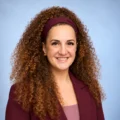
Julie B. Trivedi is an infectious disease physician.
She shares her story, explores the pandemic from the perspective of a Texas-based infectious disease physician, and discusses the KevinMD article, “How do you grieve when you are still mourning?”
Did you enjoy today’s episode?
Please click here to leave a review for The Podcast by KevinMD. Subscribe on your favorite podcast app to get notified when a new episode comes out!
Do you know someone who might enjoy this episode? Share this episode to anyone who wants to hear health care stories filled with information, insight, and inspiration.

Hosted by Kevin Pho, MD, The Podcast by KevinMD shares the stories of the many who intersect with our health care system but are rarely heard from.


Transcript
Kevin Pho: Hi, and welcome to the show, where we share the stories of the many who intersect with our health care system but are rarely heard from. My name is Kevin Pho, founder and editor of KevinMD. Today on the show we have Julie Trivedi. She’s an infectious disease physician in Texas, and she wrote the KevinMD article “How do you grieve when you are still mourning?” Julie, welcome to the show.
Julie B. Trivedi: Thank you, Kevin. It’s a pleasure to be able to be here.
Kevin Pho: So we’ll get into the article in a bit, but first off, tell me your story and your journey to where you are today.
Julie B. Trivedi: Sure. It’s been a long one, not necessarily the straightest path forward, but it shows that you can still be where you want to be, even when you’ve had a nice journey along the way.
So I grew up in New Jersey. I’m a middle child. I did my undergraduate at the University of Pennsylvania, finished, and went to medical school in Newark, New Jersey. And then after that, I moved to Massachusetts to do my internship and residency. And then I took off two years, actually, after residency, and then I started my infectious disease fellowship at Boston University. I finished that in 2010, and then I was an attending at Johns Hopkins in Baltimore. So I worked there for about seven years prior to moving here to Dallas, to UT Southwestern, in 2017.
Real physician voices, twice a week
Free, and one click to unsubscribe.
Kevin Pho: Wonderful. Fellow Boston University alum: I did my residency at Boston University as well. So you are in the thick of it in Texas. We are talking in the last week of June, and it’s now a hot spot when it comes to the pandemic. How is it affecting you and your practice?
Julie B. Trivedi: It’s been interesting. So I predominantly see patients in the hospital when I’m on clinical service. I just came off the general infectious disease and COVID service this past weekend. We’ve been seeing increasing numbers of COVID patients, as well as seeing a lot of complexity, and patients dealing with non-COVID issues, things that had been put on the back burner for several months. And then once we were able to bring these patients in and get them the surgeries that they needed, of course, they’re taking up a lot of the hospitalizations as well. So it’s been interesting, trying to make sure that we address the needs of our regular medical issues, in addition to then addressing COVID-related issues.
Kevin Pho: So one of the things I loved about your article is it really takes a look at the human side of end-of-life care, and I think that’s really an issue, especially when it comes to the pandemic, where visitors are being restricted from entering the hospital. So I want to read you a short quote from your article. You write, “Death is not meant to be rushed. Saying goodbye shouldn’t be rushed. Celebrating a life once lived cannot be rushed. And yet, we must. Taking a moment, a minute, an hour, maybe a day to feel something that normally takes far longer. Because we must. And in our hearts, the grief remains.” Now tell me the story behind the article and why you decided to write it.
Julie B. Trivedi: Yeah. So I’m the medical director of infection prevention, so a lot of the work that I had been doing was focusing on putting together policies and protocols to keep our patients safe and our faculty and employees safe. Part of it was feeling that sense of responsibility towards our own faculty, wanting to make sure that no one would become ill in the course of caring for these patients.
But what was happening is, as the pandemic was evolving and coming closer and closer, from China, then to Europe, and then in the U.S., and of course in the parts of the U.S. where I had done some of my training and where I had grown up, and then hearing about people similar to myself who had been affected and who had died, maybe another female physician, an Indian physician, somebody who has children, it started to come closer and closer to my inner circle. So the reality of death started to become much more real. And then I was hearing of friends who were losing parents, whether it was related to COVID or even non-COVID issues, and the challenges of what it was like to be able to have a funeral when you’re not allowed to have people gathering for a funeral. And so it was all of these cumulative events that were just basically weighing on me.
It brought me back to the times in residency, fellowship, and then even as an attending, how our relationship with the patients changes as we progress through our training and years of experience. We have such an intimate relationship when we are the resident taking care of that patient. And then, of course, as an attending, there might be a little bit more distance, because you have the students and residents being the primary ones involved. The intimacy of your relationship with the patient changes over time.
But having then been on the attending service here and taking care of those COVID patients, and being able to speak with them on the phone and waving to them through the window, and realizing that that’s how you would then communicate with the family members worried about their loved ones, it’s really challenging to be able to do that. And in a sense, it’s like a privilege, and a lot of responsibility comes with that, making sure that that human connection is still there.
Kevin Pho: Now what are some tips that you could share with your fellow clinicians who are in the hospital in terms of maintaining that human connection? We’re donning so much PPE, and there are restrictions in terms of how many visitors these patients can have. What are some tips that you could share?
Julie B. Trivedi: So some of our faculty or the nurses that have gone in have a picture of themselves on the front of their gown that shows what they look like without their PPE. So you’re able to actually see what that person looks like, and that, I think, provides a personal touch. Talking to the patients in the room, trying to address whatever concerns they have, and asking them if there’s any message that they want us to relay to their families. And then really communicating with the family as well, and trying to be this medium in between and addressing the concerns that they might have as well.
We have a lot of technology available, and that’s a blessing, and not many places may have that. So trying to then either get iPads or some type of technology so that those patients then can communicate with their family members.
Kevin Pho: Sure. Now is there something that you have learned now that you wish you knew back before the pandemic started?
Julie B. Trivedi: I don’t think that I realized how much of an impact this was going to be. I think that none of us predicted six months ago that we would be at this position here. Many of us, actually, in Texas were seeing what was unfolding elsewhere, and in the beginning, we were bracing for that same type of an impact, and it didn’t really come here. And I think in that, we were then feeling reassured that maybe it’ll be different in Texas. And then as things have begun to open up, we’re starting to see the number of cases rise again.
So we are kind of where other places were months ago, but I feel in a sense now we’re better prepared. We’ve had a chance to procure enough PPE, get our policies and protocols in place, and think about the planning of the hospital. And one thing that I’ve had to do was even just take off a few days as a bit of a break, to center myself again, so that we’re able to be ready for the next wave that’s going to come.
Kevin Pho: Now, recently, dexamethasone has been used for patients in critical condition who have had COVID. Now from an infectious disease standpoint, what do you see around the corner in terms of promising treatments, approaches to the disease?
Julie B. Trivedi: Yeah, I think there’s so much that is still unknown. We have the ACTT-2 trial here, which is remdesivir and then either baricitinib or a placebo. We also have EUA remdesivir available, and a few other clinical trials, in addition to convalescent plasma and then dexamethasone.
What happens is that patients, when you’ve tried all of these things and there’s not much left to offer, you want to throw the kitchen sink at them. You want to try one more thing if that might potentially give them a chance. I’ve been thinking about how that might impact the data that you receive from these clinical trials, and having been enrolled in them, how that might impact things. So I think that a lot of immunomodulatory agents are coming out. I’m hoping that that will help, but it’s really about finding something that will prevent infection. And so hopefully the focus, to me, would be more on vaccines as well.
Kevin Pho: Sure. A lot of these treatments are for critically ill patients or for patients who are already hospitalized. Do you see anything on the horizon for perhaps more mildly affected patients?
Julie B. Trivedi: We’ve been hearing about possibly using atovaquone. There is another group out of NYU that is looking at colchicine. So still some of these anti-inflammatory, immunomodulatory types of drugs that could be used in the outpatient setting, but not really a whole lot more than that.
Kevin Pho: How do you see the next few months playing out? We’re now talking in the last week of June, and some say that we have never left the first wave, and in Texas, things are getting worse. How do you see the next month or two playing out?
Julie B. Trivedi: I think we’re certainly going to see an increase in the number of people becoming hospitalized and requiring ICU-level care. I mean, just from 10 days ago, the number of patients we’ve had in the hospital has nearly doubled, and about half of them are in the ICU, and about two-thirds of those are requiring a ventilator. So, certainly starting to see that.
My hope is that at least with these new infections that have been occurring, they’ve been in this younger age group. So while we are seeing some of them requiring hospitalization, by far the majority are not. My concern is that they’re going to then bring that home to their parents and grandparents. So the people who had been able to socially stay home and not really go out as much, they’re the ones who are now going to become ill. And that’s something that we’ve been seeing: our entire family units coming down with COVID.
Kevin Pho: Now, from a public health standpoint, I just heard the Texas governor has closed bars, and he’s talking about restricting potentially elective surgeries. Now, from a public health standpoint, what needs to happen to turn this ship around?
Julie B. Trivedi: People need to mask. I mean, there’s been enough data showing that wearing a mask out in public protects yourself and protects others, and with that, you can have a pretty significant reduction in the number of cases as far as transmission is concerned. And then also, if people are going to get together, just try to minimize the number of people that are in a gathering and socially distance as much as possible, because the new cases that we have been seeing have been from these large gatherings and parties, actually. And then, of course, some of these restaurant- and bar-type settings where you’re not walking around with a mask.
Kevin Pho: Sure. Now let’s take a step back, and I was wondering if you could share with my audience something that you’ve been curious about or something that you’ve been passionate about recently.
Julie B. Trivedi: Yeah. So actually, totally not related to COVID, but when you have a pandemic, you start to see, I’m just going to say, what your role in the institution is, and you see where you have opportunities for maybe advocating for others as well. So in general, I mean, I think to be specific, what I’m interested in is empowering women, empowering girls as far as navigating some of these complex situations that we encounter in life, and especially in a society where the rules are always changing.
When you put that then into academia, and we’ve heard a lot about studies that have been done in numerous academic medical centers about the disparities in pay between women and men, and maybe some of the opportunities afforded for leadership and growth potential between women and men, this is something that I think is very important to me. I myself actually have an executive coach here that I meet with. Lately, it’s been every week, but otherwise, every month. And it’s really important to be able to have somebody like that to help you navigate some of the complexities in an academic center that you may not otherwise know how to do.
Kevin Pho: We’re talking to Julie Trivedi. She’s an infectious disease physician in Texas. She wrote the KevinMD article “How do you grieve when you are still mourning?” So my final question, Julie: What’s your take-home message for the KevinMD audience?
Julie B. Trivedi: I think it’s important to know that it’s OK to not be OK. If you’re not OK, it’s OK to reach out for help. It’s OK to take a break. It’s OK to take time for yourself. And I think that these are really trying times, and often we keep giving and giving of ourselves, but we have to remember to pause some time so that we ourselves can replenish and recharge, so we can continue to do what it is that we need to do.
Kevin Pho: Well said. Thank you so much for your time and for joining me on the show.
Julie B. Trivedi: Thank you for having me.
Listen and followApple PodcastsSpotifyYouTubeMore apps · Browse all episodes