









Listen and followApple PodcastsSpotifyYouTubeMore apps · Browse all episodes
“I wrote a 55-word story in solidarity with my medical students and colleagues I had invited to share their lived experiences during COVID-19 on our Stories in Medicine blog. I wrote out of a need to “unmask” the guilt and angst of some of my colleagues and myself who, though practicing physicians, do not find ourselves directly on the front lines during these tumultuous times. Rather, we are dismayed to alternate between waves of anguish and guilt. Anguish for the suffering of our brothers and sisters in places like New York and New Orleans. Guilt, for not being shoulder to shoulder on the front lines. Guilt, because we are able to do things to take care of ourselves and our families in ways others are not. Our hearts break for our colleagues and families, their patients, and the families of their patients. We can only try to imagine a small portion of what they have gone through and will go through in the aftermath.”
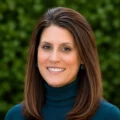
Jennifer R. Hartmark-Hill is a family physician.
She shares her story and discusses her KevinMD article, “Confessions in the time of COVID-19.”
Did you enjoy today’s episode?
Please click here to leave a review for The Podcast by KevinMD. Subscribe on your favorite podcast app to get notified when a new episode comes out!
Do you know someone who might enjoy this episode? Share this episode to anyone who wants to hear health care stories filled with information, insight, and inspiration.

Hosted by Kevin Pho, MD, The Podcast by KevinMD shares the stories of the many who intersect with our health care system but are rarely heard from.


Transcript
Kevin Pho: Hi, and welcome to the show, where we share the stories of the many who intersect with our health care system but are rarely heard from. My name is Kevin Pho, founder and editor of KevinMD. Today on the show, we have Jennifer Hartmark-Hill. She’s a family physician, and she wrote the KevinMD article “Confessions in the time of COVID-19.” Jennifer, welcome to the show.
Jennifer R. Hartmark-Hill: Thank you, Kevin. It’s a pleasure to be here.
Kevin Pho: So we’ll get into the article in a bit, but first off, can you share your story and your journey to where you are today?
Jennifer R. Hartmark-Hill: Sure, I’d be happy to. So I grew up in northern Minnesota, a very rural, medically underserved community, very close to the Boundary Waters area, the canoe area, if you know that area. You know, I grew up with the love of being out in nature and playing sports, pickup games, almost anything you can imagine, ice hockey, all that. So I had a very full childhood and am very grateful for that. But I also became aware of some of the downsides of living in a medically underserved community at a very young age, and that fueled my passion for underserved medicine, which I’ve been involved in ever since. So yeah, I think it’s so important to increase access and advocate for folks who don’t have access to care.
Real physician voices, twice a week
Free, and one click to unsubscribe.
Kevin Pho: Wonderful. And can you tell us a little about your practice and how the pandemic is affecting both you and your practice?
Jennifer R. Hartmark-Hill: So currently, I’m mostly in an academic medicine practice, and I think that, even more than what my practice is seeing, it’s what’s happening with our students. They’ve been pulled from clinical rotations. I do a lot of work with student-led teams who do street medicine, so providing care to patients experiencing homelessness. And so it’s been really heartbreaking to see that while the students are pulled from clinical practice, there are many fewer services that we’re able to provide to our patients, who are, you know, some of our most vulnerable citizens at this time.
Kevin Pho: And from a medical education standpoint, how is the pandemic affecting the education of your students?
Jennifer R. Hartmark-Hill: Yeah, I think that it’s been really amazing to see all of my colleagues pull together and convert our curriculum to the virtual environment, and there have been a number of really great things that have happened, I think, even in that stressful but innovative time. It’s, I think, played out much more challengingly for our students, who are worried about getting a very rigorous clinical education so that they can go out and be prepared to serve the patients that they’re really dedicating their lives to.
So, you know, we’re doing everything we can and really expanding as much in the realm of telemedicine, telehealth as we can for them. But, you know, I think it’s something that, as medical educators, we’re feeling nationally and internationally, and so we’re trying to learn from each other and trying to engage in best practices and really support our students during this time.
Kevin Pho: So I’ve had several medical educators on the show, so I always ask them this question: If I’m a medical student, do you have any advice you could give me and my colleagues during this stressful time?
Jennifer R. Hartmark-Hill: Absolutely. I think do follow the model of so many medical students across the nation, where it’s almost as if, with the rigors and the schedules of medical school altered and a little bit out of the way, our students have just stepped up and really been that positive change that we hope to see in the world. They’ve gotten involved in collecting supplies and donations and addressing health care shortages and really providing medical supplies and PPE to places in Arizona that have been absolutely devastated by the pandemic, like the Navajo Nation. So I see them building their professional identity formation in unique and wonderful ways that they wouldn’t have necessarily been able to do if we were in a traditional medical school academic year.
So, you know, certainly those are the ideals of the profession that we always want to foster, but they have engaged firsthand, whether it’s even been remote or directly on the front lines, graduating early, helping out. And so find a way to lean in and get involved. You’re going to continue your education in one way or another, and that ability to adapt and be resilient, I think, to build not only your emotional intelligence during crisis times but your ethical intelligence, to live according to your values, to make meaning out of these really uncharted, unprecedented times, those attributes and skills will serve you well for the rest of your career.
Kevin Pho: Wonderful to hear, and that segues nicely into your KevinMD article, “Confessions in the time of COVID-19.” Now, can you walk my audience through that article for those who haven’t read it and share a story of why you decided to write it?
Jennifer R. Hartmark-Hill: Sure. So I think it really sprung out of lived experiences and ongoing reflection on what was happening, and wanting to be a listening presence for those around me, hearing stories of anguish, things very similar to the feelings I was having. I was fortunate to be in a position as the director of the program for narrative medicine, health humanities, where I had several existing blogs or different writing forums. And so I readjusted and pivoted in a direction that created a space for people to share their stories, what they were experiencing, and, you know, put the call out to our entire campus but our larger community, and was really heartened to see the responses from a number of people.
Not everybody felt comfortable having their story posted, but I had many responses saying, “You know, I just want to share this with you. I don’t necessarily want to post it, but thank you so much for doing this, because it was painful to write this, but it was really therapeutic.” I think that was one of the main recurring themes, that people found it to be therapeutic, and it helped them make sense of things that they didn’t even know that they were processing. And so, you know, I continued doing that work with colleagues, looking for ways to promote wellness just across the spectrum, but mainly through stories and writing, you know, mainly our colleagues on the front lines, medical students, residents.
And in the process of doing that, one of the short, approachable pieces that I did a call for were 55-word stories. The premise of that is you think about something that’s been burdening you, or, you know, you’re passionate about, or has just been weighing on your mind, and you spend three to five minutes writing, just pen to paper, don’t lift the tip of the pen, or on the keyboard, and just stream-of-consciousness writing. And then you go back, and there are a number of approaches. You can circle some of the main things that pop out of you or delete some of the other things, and you really get it down to 55 words. And it’s a really amazing process, because something will emerge that you didn’t expect, that may surprise you, when you have to be that concise. And so I think reflecting on that process is a really valuable exercise for people, but 55 words seems very approachable, so we had a lot of responses to that.
And then, in promoting that for other people, I also spent some time writing and reflecting and using that exercise as well. I didn’t post my writing to the site. I really wanted it to highlight everyone else. Concurrently, I was part of a weekly writing group that has since become an international Writing Medicine group, led by Laurel Bregman out of Stanford University, and she’s been absolutely tremendous, very inspiring, very encouraging in the reflection prompts that she’s had us do, but also in encouraging us to publish. And I really think that if it hadn’t been for her encouragement, I wouldn’t have had the courage to submit my piece to KevinMD, and I’m sure glad I did.
Kevin Pho: Well, thank you. That’s wonderful to hear. Is there a particularly poignant story that you feel comfortable sharing with my audience in this podcast?
Jennifer R. Hartmark-Hill: I think the one that comes to mind is the first one that came in, and it was one of our medical students whose father had taken ill, and she went through the process of traveling during the time of the pandemic to see him for the very last time. And, you know, I think she shares about the journey traveling home, but then also that journey of saying goodbye to her father, and, you know, in the context of the pandemic, that life event. She writes about it very poignantly, heart-wrenchingly.
I was grateful that she shared that, because many medical students go through the loss of family members during medical school, and it can be a very isolating, very trying time. People just try to keep up. So for her to come out and share that experience not only allows the community around her to offer support, but I think other folks who are going through maybe analogous losses or challenges may not feel as alone and hopefully will reach out and connect and get help.
Kevin Pho: Now, for those medical students and others in the medical profession who do want to write, what are some of the outlets that you can recommend? In other words, where can they get started?
Jennifer R. Hartmark-Hill: Absolutely. You know, I would say start with local organizations. You can often find people who will be coaches and advocates for you, finding local writing groups where you have a safe space to bounce ideas off of other people, even starting something. It can be around a theme or shared values; it can be for a certain purpose, like promoting wellness or resilience. And then I would say start to look outward from there as you start to gain your voice and start to feel, I think, more confident in that process. You know, see what other people are doing. KevinMD is a fantastic example of a platform for engaging physician voices. Many of the journals, like JAMA, have reflective writing components, like “A Piece of My Mind.” So start to pay attention to who is promoting those humanities type of platforms, and just, you know, find a match.
I think it can be very daunting to share your writing, as we all have that very loud inner critic voice, but I think refocusing on what is the purpose, what is the message, what is the benefit, who can you encourage or help, what can you destigmatize or normalize. And so focusing on that benefit can help you redefine your purpose, and that purpose should really drive where you’re sharing your work.
Kevin Pho: Excellent. We’re talking to Jennifer Hartmark-Hill. She’s a family physician, and she wrote the KevinMD article “Confessions in the time of COVID-19.” Jennifer, is there something that you know now that you wish you knew back before the pandemic started?
Jennifer R. Hartmark-Hill: I think I wish I knew that it was possible to not adapt as well or as resiliently as we had. I wish I knew more glaringly the health disparities, the structural inequities that would become so heightened during a time like this. They always matter, but especially during this time. And I think, I love family medicine because I love preventive medicine, and I think in a preventive medicine manner, addressing these structural and health inequities when we could, when we weren’t stressed by the pandemic. And that’s the message I’m really taking out of this, is learning any way I can from everyone that I can. I’m thinking about systems learning, promoting cultural change, and thinking about the ways that we need to do better for, you know, really future public health crises.
If I could go back and do things differently, I think the different organized medicine advocacy organizations that I’m part of, I think more would have been better. And I think I touch on that a little bit in my essay, that perhaps it’s who we are as physicians to always feel like we could or should be doing more, but I think in this case, it really is true. It was tough. We haven’t had complete consensus among physicians or medical health experts, and so that gives me some measure of compassion, I think, for the general public, who, you know, is responding to mixed messages and a lot of misinformation being disseminated.
But I think if we could really come together and build any level of consensus, one point, two points, strong messaging, things that had evidence for them, social distancing, hand washing, wearing a mask, and just reiterate those points over and over, we could always add or addend as we learned more. But I think just going all out, going all in with messaging for public health, health literacy, education would have probably made more of a difference.
Kevin Pho: That’s well said. And my final question, Jennifer: Do you have a take-home message that you want to share with the KevinMD audience?
Jennifer R. Hartmark-Hill: Sure. I think what I’d like to encourage is the importance of building emotional and ethical intelligence, not only for individuals but for all levels of leadership, especially during times of crisis. You know, what we’re going through is a really trying time for mental health, both at the individual and population public health levels. So I think that being involved in both giving and receiving help and support is really key. Being aware of the emotions that we’re going through is important. It can be very uncomfortable, understandably, to be aware of, to sit with the so-called negative emotions, but I think it’s important to recognize those really as symptoms, perhaps even symptoms of moral distress, that maybe there are things that we need to be doing or doing differently during this time. And then, as we become more aware of those things, really leaning in to contributing to endeavors, movements that are bigger than just ourselves. And I think that those things are key to building a life of meaning, something that matters.
I think that paying attention to our emotions in an intelligent way, and the emotions of those around us in a positive, relational manner, is really important to crafting, in answering questions like “What matters to you?” and, you know, “Where do we go from here?” and “Who do we want to be as a society? How do we reimagine ourselves in a healing way?” So I think, in summary, building ethical and emotional intelligence during all times but especially for times like this, caring for ourselves, caring for each other, and continuously developing a reflective and learning practice and a gratitude practice contributes to lifelong learning.
Kevin Pho: Jennifer, thank you so much for your time and insight, and thank you for being on the show.
Jennifer R. Hartmark-Hill: It’s been a pleasure. Thank you very much.
Listen and followApple PodcastsSpotifyYouTubeMore apps · Browse all episodes