













Listen and followApple PodcastsSpotifyYouTubeMore apps · Browse all episodes
“The rapid change-over to telemedicine in March of 2020 brought predictable challenges to health care at large and substance use disorder treatment in particular: patients without the skill set to navigate HIPAA-compliant apps, phones with too little smarts to handle video conferencing, lack of connectivity in rural and economically depressed areas. But telemedicine brought unexpected benefits: the no-show rate plummeted. Patients were more empowered by their own motivation to engage in care than limited by bus schedules’ vagaries. Suboptimal face-to-face interactions among individuals in the throes of addiction (otherwise known as “mayhem in the parking lot”) ceased immediately.
Most of all, telemedicine mitigates the stigma associated with substance use treatment.”
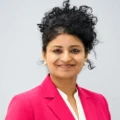
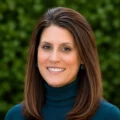
Julie Craig is an addiction medicine specialist.
She shares her story and discusses her KevinMD article, “Telemedicine reduces the stigma in substance use disorder patients.”
Did you enjoy today’s episode?
Please click here to leave a review for The Podcast by KevinMD. Subscribe on your favorite podcast app to get notified when a new episode comes out!
Do you know someone who might enjoy this episode? Share this episode to anyone who wants to hear health care stories filled with information, insight, and inspiration.

Hosted by Kevin Pho, MD, The Podcast by KevinMD shares the stories of the many who intersect with our health care system but are rarely heard from.


Transcript
Kevin Pho: Hi, and welcome to the show, where we share the stories of the many who intersect with our health care system but are rarely heard from. My name is Kevin Pho, founder and editor of KevinMD. Today on the show, we have Julie Craig. She is an addiction medicine specialist, and she wrote the KevinMD article “Telemedicine reduces the stigma in substance use disorder patients.” Julie, welcome to the show.
Julie Craig: Thank you for having me.
Kevin Pho: We’ll get into the article in a little bit, but first off, can you share your story and your journey to where you are today?
Julie Craig: I’m an addiction medicine specialist. Since 2015, I’ve been board-certified. I went to medical school in Portland, Oregon, and then was very fortunate to move to New Mexico to learn about addiction medicine: fortunate for me, unfortunate for New Mexico. There’s a very long history of opioid use here in northern New Mexico. Some of our counties have had the highest opioid use and overdose rate in the country for over 20 years. More recently, we’ve been challenged by some difficulties in places like Ohio and West Virginia, but we still maintain a very high level of abuse of those medications and three substances here.
So I was lucky to move here during residency and become acquainted with some people who had brought the service of medication-assisted treatment for substance use disorder to this area, and they brought a lot of wisdom and a lot of techniques, including harm reduction and the use of Suboxone and the use of other medications for medically assisted treatment for substance use disorder.
I think the beginning of this particular journey happened almost a year ago, in March of 2020, when the first COVID-19-related stay-home orders came down from our governor. At the time, I was working for an FQHC, and we made what I think is called a gear shift without a clutch, which was going from in-clinic services to telemedicine services until we could figure out issues with PPE and clinic flow, and how do you cope with family who wants to be with a patient but might be an infection risk, and all the other issues that came down across the country in February, March, and April of last year.
At that point, we made a rapid transition to telemedicine, largely driven by changes in CMS and HRSA, the Health Services Resources Administration, which governs community health centers. Under the guidance of those policy changes, we were able to start seeing people by phone and by Zoom and other platforms like that.
Not too long thereafter, I left the FQHC and went to work full time for Bicycle Health, which is a telemedicine medication-assisted treatment model that works essentially all through telemedicine, which has allowed us to expand into areas where typically there’s very little in the way of MAT treatment. That means getting into rural areas of states where there are resources in the urban areas. It also means being able to serve in states where there are very few resources altogether.
Real physician voices, twice a week
Free, and one click to unsubscribe.
Kevin Pho: So can you share a story or anecdote of a typical patient that you’re seeing currently via telemedicine during the pandemic?
Julie Craig: I work in two different settings. One of them is a group setting; one is an individual setting. I was quite surprised, coming from a community health center perspective, that there are so many people in the United States who are functioning in their daily lives but struggling with opioids. Coming from the federally qualified health center, my experience has been that people who are on opioids suffer from excessive amounts of trauma, chronic homelessness, food insecurity, and other issues that really drive the opioid use disorder.
Coming from a more broad perspective, as we’re able to serve more people outside of that community, I’m very surprised how many people are absolutely functional. They’re going to work every day. They’re able to maintain as long as that issue stays stable. And that’s the kind of patient that I have right now: people who are struggling with that day to day but still maintaining their daily lives at the same time. And that’s really where we want to intervene.
It’s fine to intervene when somebody has hit rock bottom, which I don’t think is a great term, but it’s better to intervene before those things start to happen, before people end up with injection site abscesses and things like that. If somebody’s struggling with opioids, we want to reach them the moment that they realize that there’s a struggle there.
Kevin Pho: So in your area, how difficult is it to have access to an addiction medicine specialist like yourself?
Julie Craig: So in northern New Mexico, because of the length of the issue that’s going on here, we actually have quite a big infrastructure for both addiction medicine and harm reduction, and we’re probably one of the few rural areas that’s had needle exchange for over 20 years. So in this area, right where I’m at, there’s actually a fairly good infrastructure, but I’m fairly close to a small urban area. Outside of that, it becomes quite difficult. So this allows us to work with people throughout the state who might be in areas where there are no services, and that certainly is more true throughout the state outside of the bigger cities like Santa Fe and Albuquerque.
Kevin Pho: All right, so let’s transition into your KevinMD article. It’s titled “Telemedicine reduces the stigma in substance use disorder patients.” Now, for those who didn’t read the article, can you just walk my audience through it and share the story of why you decided to write it?
Julie Craig: So again, starting in March of last year, we made this rapid transition. We found that there were some changes that we did expect and some changes we didn’t expect. Some of the changes that were very positive that we didn’t expect were the ability of patients to access services without having to walk into a clinic that is known to provide opioid use disorder services.
In the FQHC setting, we had tried many ways to reduce the stigma around opioid use disorder. At one time, there was an effort made to close the clinic to everything but patients with that diagnosis one day a week, so that patients didn’t have to interact in the waiting room or see people who might feel like they were not behaving optimally. What that ended up doing, of course, was letting the community know that anybody who walks in the door on that day has an opioid use disorder. So we really struggled back and forth.
But when telemedicine became available, we were able to see people at home, in their cars. I have done intakes now for patients who are literally sitting in their work truck on their lunch, and they don’t have to go to a clinic, be seen there, and kind of carry that stigma. So it’s reduced that visibility and increased the ability to access services without taking the time out of work and making a long drive.
I think when people have an appointment once a week, which is typical in early recovery, it’s hard to explain that to an employer. An employer is curious about what’s going on and wants to know, even if it’s not necessarily their business. So this allows people to step into their office, step into their car, step off a work site, get the services they need, and go back to work or go back to their lives without revealing their diagnosis.
Kevin Pho: Now, I’ve talked to a lot of physicians on this podcast, and they say they learn a lot from patients by seeing them in their home or office environment. Now, what’s something that surprised you, or what’s something that you’ve learned by talking to these patients via telemedicine, that you can see from the context of the background or from speaking to them virtually?
Julie Craig: I’ve learned how many of them vape. People are quite willing to vape in front of me on a camera who would not do that in the office. But you’re correct, you get to see a very different side of things. I think home visits have typically been the place where providers are able to interact in a home scenario, where they can see if there’s food insecurity, if there’s substandard housing, and those kinds of things. But we get a little bit of a glimpse of that through telemedicine also, in that we can see people’s homes. They don’t necessarily show us very much.
It’s also much more revealing of people’s work situations. I don’t know that I would ask in general if somebody works in an office or a construction site, but I get to see right away that that is definitely an office, or that is home, or there’s kids in the background. All those things are revealed to us.
Kevin Pho: Now, do you lose anything by seeing these patients remotely?
Julie Craig: I think one thing you lose is the vital signs, and that’s going to become acceptable under this sort of paradigm that’s come up. That is, of course, much more important in a primary care setting, where you’re dealing with hypertension and diabetes and all those kinds of things, and it’s a little bit less important for addiction medicine, which is largely, at the end of the day, all talk.
But you also miss some of the interpersonal interactions. Sometimes connections are difficult. I was just reading this morning an article about how telemedicine has affected various populations, and they mentioned that people with limited English proficiency have a difficult time. Certainly people with limited Wi-Fi access, stability of technology, those kinds of things, have much more limited access, and so sometimes we’re talking by phone rather than by visual interface, which limits the ability to communicate.
I think those same barriers, though, occur in the general medicine setting. People who don’t have a steady phone also tend to have study transportation and might miss appointments that can be handled by telemedicine now. So both those barriers exist, but they exist essentially in the same context for the same people.
Kevin Pho: Now, once the pandemic ends, what do you expect the role of telemedicine to play in addiction medicine?
Julie Craig: I think that with the COVID-19 pandemic, despite all the clear negatives that go along with it, telemedicine is one of the silver linings. Certainly Bicycle Health is planning on continuing telemedicine going forward, coast to coast, in about 25 states.
The main barrier to that is called the Ryan Haight Act, which limits the ability to prescribe controlled substances to patients that haven’t been met in person. That was waived during the early COVID days, and the hope is that that stays waived. Certainly that was meant to protect patients, to not allow, you know, pill mills and similar circumstances to prescribe oxycodone to everybody who gives us a call to the clinic. But it’s become a barrier for substance use disorder treatment, particularly because Suboxone, or buprenorphine, is a controlled substance. So the hope is that that stays waived and that we’re able to continue this kind of service long term.
Kevin Pho: We’re talking to Julie Craig. She’s an addiction medicine specialist, and she wrote the KevinMD article “Telemedicine reduces the stigma in substance use disorder patients.” Julie, when talking to these patients, do they express some appreciation that some of that stigma that you described is relieved? So in general, what is the patient response to your telemedicine visits?
Julie Craig: The very first response is almost inevitably, “Is this a scam? Is this actually legal, to provide services this way?” And it is. I think it takes a lot of caution to work the regulations right, to make sure that all the pieces are in place, especially for providers who are working in multiple states.
But I have a lot of patients who’ve actually transitioned from in-person services to telemedicine services, either because they do not want to go out during COVID, they don’t want to be exposed, or they feel like this is an easier way for them to access services. I’ve had a lot of patients say, “I have been engaged with both, and I prefer this.”
Kevin Pho: Now, one of the things you mentioned earlier is that it’s not obvious all the time that a patient may have an addiction or not. Now, in a primary care setting, what are some questions that we can ask, when it’s not apparently obvious, that may uncover a potential addiction?
Julie Craig: I think the big issue right now is the confluence, and this is a different article I wrote, the confluence of pain and addiction. I think that a lot of patients struggle with their pain medications but don’t quite understand the dynamics of them in a way that would help them to understand what’s OK and what’s not, or to set those boundaries for themselves.
So I think some things that I’ve asked in a more primary care setting, where I have both pain patients and addiction patients, are, you know, “Do you sleep OK? Are you experiencing little downs between dosing cycles that feel like more than your usual kind of pain?” Very unfortunately, whether somebody is taking opioids for recreational purposes, or to cover anxiety or depression, or as prescribed for pain, like clockwork the side effects are the same: the dependency, the cycles of withdrawal, all those kinds of things.
So I think one of the things that could help primary care providers is to really explore that with patients, if they’re experiencing things that are less obvious about opioid use side effects, such as erectile dysfunction, depression, and, in some people, mood activation, which is a big issue, and how does that relate to their long-term pain care.
Kevin Pho: And from your lens as an addiction medicine specialist, do you have any messages or tips that you could share with your primary care colleagues who may be listening to this podcast?
Julie Craig: I think, just as I said before, watching those pain patients and watching out for those early signs. We definitely want to treat opioid issues as they come up and not wait until people are moving toward fentanyl, which is much more common, or heroin, those kinds of things, and going to the more risky behaviors, such as injection and use of illicit sources.
Kevin Pho: And my final question: What is your take-home message that you want to leave with the KevinMD audience?
Julie Craig: I think despite all the downsides of COVID, we have an immense opportunity to move forward with the technology associated with telemedicine, and to approach it with caution and care and planning, but to utilize this opportunity to serve patients better.
Kevin Pho: Julie, thank you so much for sharing your time and insight, and thanks again for being on the show.
Listen and followApple PodcastsSpotifyYouTubeMore apps · Browse all episodes