















Listen and followApple PodcastsSpotifyYouTubeMore apps · Browse all episodes
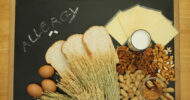
“A child is born with a food allergy. They do not choose to have their immune system compromised. Parents do not get the choice to opt-in or out of having their child’s body recognize ordinary food as a threat. Food allergies are a unique disease in that we need the help of those around us to keep our children safe. Let us remember that children, especially when they are young, often cannot protect themselves. A young child also may not truly understand the potential danger of sharing food with a friend. This is why food allergy education is critical for both teaching staff and students. But such education is often lacking.”
Lianne Mandelbaum is founder, the No Nut Traveler, and can be reached on Twitter @nonuttraveler.
She shares her story and discusses her KevinMD article, “When celebrities attack children with food allergies.”
This episode is sponsored by Tradeoffs, available on your favorite podcast platform.
Did you enjoy today’s episode?
Please click here to leave a review for The Podcast by KevinMD. Subscribe on your favorite podcast app to get notified when a new episode comes out!
Do you know someone who might enjoy this episode? Share this episode to anyone who wants to hear health care stories filled with information, insight, and inspiration.

Hosted by Kevin Pho, MD, The Podcast by KevinMD shares the stories of the many who intersect with our health care system but are rarely heard from.


Transcript
Kevin Pho: Hi, and welcome to the show, where we share the stories of the many who intersect with our health care system but are rarely heard from. My name is Kevin Pho, founder and editor of KevinMD. Today on the show we welcome back Lianne Mandelbaum. She is the founder of the No Nut Traveler, and she wrote the KevinMD article “When celebrities attack children with food allergies.” Lianne, welcome back to the show.
Lianne Mandelbaum: Thank you so much for having me again.
Kevin Pho: We’ll get into the article in a little bit, but for those who didn’t get a chance to listen to our first episode, can you just briefly share your story and journey to where you are today?
Lianne Mandelbaum: Sure. When my son was about eight years old, we were traveling home from a family vacation, and another family in the immediate lounge area was made aware of the fact that my son had a life-threatening peanut allergy. They asked us politely to move, because this family was going to be consuming peanuts in the airport lounge, and no problem. I actually really appreciated the heads-up. We moved. Only her children moved with us and started throwing peanuts up in the air, missing them on purpose when catching them in their mouths, and then crushing them and pushing the dust towards my son. I went back over to the woman and asked her if they were going to be on our flight. Sure enough, they were.
So then, I was still very calm, I went up to the airline help desk and asked them if they would just make an announcement that there was a child in row eight that had an anaphylactic peanut allergy. They said no. They said the crew didn’t want to do it. They didn’t have to tell me why. The last manager in the chain, in Denver, said, “If you think he’s going to die, just don’t get on the plane.” At which point my son, who had never worried about his food allergy, became hysterical and said, “You can’t put me on the plane. I have my whole life ahead of me. I’m not going to die.”
So we didn’t get on that plane, but I came home, and I started researching the fact that other people had gone through something similar and much more disconcerting, actually being kicked off planes, not voluntarily leaving. I began to collect stories. I founded an advocacy website. I started speaking, now all over the world, on this topic, and then I started writing for various publications, including yours, because I felt like our voices weren’t being heard. I may not be the voice of the 32 million Americans with food allergies, but I provide a perspective that I hope physicians and other people alike get, a little more of a window into the insight, into the hearts and minds of people that are living with this life-threatening condition and what we face, and, you know, create a little more empathy and compassion as people go through life with these conditions.
Real physician voices, twice a week
Free, and one click to unsubscribe.
Kevin Pho: Now, I know you’ve been an advocate on behalf of food allergy patients for a while now, and you have a wonderful platform. Have things changed since that story with your son?
Lianne Mandelbaum: Yes, because part of my website’s purpose was to collect testimonials, and one of the testimonials led to a case being taken on by a phenomenal attorney I work with named Mary Vargas, who’s a disability rights attorney. We brought this testimonial, along with Food Allergy Research and Education, to the DOT and filed a complaint, and that complaint resulted in a ruling that labeled food allergies as a disability, which had never been done under DOT bylaw. And now, if you disallow someone from pre-boarding an aircraft to clean up the mess from the passengers who sat there before, so that they’re less likely to have any sort of reaction by encountering their allergen, you are actually violating DOT bylaw. So it is now a right for food allergy passengers coming to the United States and boarding any plane in the United States, the ability to pre-board, and that mitigates a lot of the risk. And that came from us sharing our stories.
So, you know, I always say to people, if you think one person can’t make a difference, you can. I mean, you need a community, you need to connect with others, but, you know, there’s been a lot of positive change, a lot to go, but, you know, take the small victories, I always say. I mean, I’m thrilled with that. I sat down and cried for like two hours in my car, because I couldn’t believe that, because Mary and I had been working on this for years, and, you know, she’s like, “This is a long shot.” And then, you know, we did it, and it has changed everything, because naming food allergies as a disability in the air, that’s our stepping stone. We go from there, and we will.
Kevin Pho: All right, let’s transition now to the KevinMD article that you wrote. It’s titled “When celebrities attack children with food allergies.” Now, for those who didn’t get a chance to read your article, just walk my audience through it and share the story of why you decided to write it.
Lianne Mandelbaum: You know, I’ve written for you before on how people in prominent spaces, whether it’s the entertainment industry, the movie industry, the news industry, just feel that food allergies are OK to make fun of, even though it’s a legitimate medical condition. And I’ve always said this perpetuates the abuse. Bette Midler got on Twitter, and she’s got 2 million followers, so that’s why it really struck me. And she basically said, to sink it down in a nutshell, no pun intended, you know, “Vaccinate or I’m bringing the Jiffy.” So, like, if you can’t bring peanut butter into school, then, you know, you can’t send your unvaccinated child. They have nothing to do with each other, but it has been years, years of people likening not vaccinating children to not sending in peanut butter, and it’s such a false comparison.
What really upset me is that there are a lot of “Ha ha, yeah, you got it, Bette, I’m bringing the peanuts,” you know? Like, why target food? There’s no research out there that asserts that parents of children with food allergies, or adults with food allergies, are less likely to vaccinate. None. What there is evidence of, that was presented, I believe, at the 2020 ACAAI college meeting, is that food allergy parents and children alike are bullied and embarrassed and have anxiety due to their food allergy. So Bette plays on that, and I’m sure it wasn’t intentional, but this is what happens when you don’t understand your words and what they’re saying.
You know, we get it from both ends of the spectrum. The people that don’t want to vaccinate say, “I’m trying to protect what’s going into my child’s body, just like you’re trying to protect what’s going into your child’s body.” And the people that vaccinate say, “I’m vaccinating my child, and, you know, you want me to protect your child, you have to vaccinate too.” Neither one of those has anything to do with having a food allergy. A food allergy is a condition you’re often born with. Sometimes it comes on, adult onset, but either way, it’s not something you choose. You don’t opt in or opt out. There is no vaccination for a food allergy, so we’re not, like, walking around with a known treatment and not using it. It’s a complete false equivalency, and it leads to these situations, whether it’s on the ground or in the air, where people just feel it’s OK to have food allergies as a punchline, and it’s really not. It leads to disconcerting, you know, bullying situations, and I’ve had enough. So I entered into the vaccine debate, where I never really wanted a place, because it’s not a vaccine debate, actually. I entered in to try to remove food allergy from the vaccine debate.
Kevin Pho: So when Bette Midler posted that tweet, tell me what some of the response was, you know, from a variety of angles.
Lianne Mandelbaum: “Oh, spot on.” “You know, you’ve got it.” “This is exactly right.” “Oh, you know, I’m laughing my, you know, off, because this is just hysterical. It’s just right.” Yeah, there’s parents with children who think, you know, there’s all these, like, mothers of children, you know, “It’s the helicopter parents. It’s the same ones that aren’t vaccinating.” I mean, it’s just not true. Then you had food allergy parents, rightly so, I believe, saying, “You know, look, this is a picture of my son when you bring the Jiffy,” and they’re showing someone intubated in a hospital. And then you had some people saying, “COVID’s dangerous. Food allergies are dangerous. They have nothing to do with each other. You know, be nice to each other.” It was a wide variety, but I would say the majority were agreeing with her.
And the reason, actually, it caught my attention is because Martina Navratilova retweeted it. She took it down, actually, after getting a lot of heat from the food allergy community. Bette’s tweet is still standing. But my son is an avid tennis player, and it just upset me, because he looks up to her. During women’s week at school, this was his hero, and he did a whole project and made a doll of her. It was many, many years ago, but he’s now a nationally ranked USTA player. And, you know, it just really upset me, that someone in the tennis world. I was really heartened that she took it down, but Bette’s dug her feet in. And I just think that if we don’t call people out, we normalize the abuse. I’ve said this many times when I’ve called out different people from walks of life in articles I’ve written on your site, and I stand by that. There has to be a third rail where it’s not OK to make fun of someone with a legitimate medical condition and put them in harm’s way.
Kevin Pho: Now, you mentioned some other examples of celebrities who target those with food allergies. So for those who didn’t read prior articles on my site, what are some of the other examples of celebrities or people with prominent platforms who target those with food allergies?
Lianne Mandelbaum: What comes to mind is there was a host of one of the morning news shows that went into a store that sold lots of nuts, and he thought he was being really funny, and he’s just like, “Oh, EpiPen me now.” And then he stuck a fake EpiPen in his neck. A, that’s not where it goes. I understand he was trying to be humorous, but it also sort of says it’s OK if you give someone a little bit of the peanut, because all they have to do is use that auto-injector. And, you know, unfortunately, in my advocacy position, one of the hardest parts for me as a parent has been meeting parents who have lost children to trace amounts, where the auto-injector either didn’t work, wasn’t given early enough, or just too much of the allergen. It’s not funny.
It leads to other people thinking, “Oh, I’m just going to, you know, give a smear of this.” There’s a teacher that had a banana shoved on her classroom door, and she’s anaphylactic to banana, and she ended up in the hospital. There was a child in the United Kingdom that had cheese thrown at him. He died. I mean, yes, these are egregious examples, but there are consequences to these words. And, you know, we need not to make fun in this way and stigmatize people with food allergies, because it leads to people being hurt, or anxiety, or hiding the condition. And that in itself could have them not tell friends one day that they have the food allergy, because they’re embarrassed, and then they inadvertently get exposed, and then you have a bad consequence, and you can’t come back. You can’t come back at all.
And the other thing with the whole vaccine debate is that when parents ask not for a specific food, and it’s not just peanut butter. When my son was younger, there was a child in his kindergarten who had a contact dairy anaphylactic allergy, and none of us in the class sent in what he was allergic to. It just wasn’t worth it. I mean, it wasn’t peanuts. It didn’t matter what it was. I mean, why would you want to harm someone? But when someone is that young, kindergarten, when you ask a school not to allow something into a classroom, it’s often because kids do not understand the consequences of their actions, and how can they? They’re five.
You know, people who have children without food allergies don’t understand how hard it is to, like, convince a young child how to be careful, how to read a label. We’re not with them all the time. It’s scary. And then it becomes even scarier, I find, for some of the adults, especially the ones that travel, because they look at you like, “Oh, you’re not little, whatever. You’re not small. You don’t have a mom with you. I don’t have to not serve nuts around you. You’ll be fine.” You know, and then that anxiety. And, you know, it’s a legitimate medical condition. It can lead to tragic consequences and needs to be respected, end of story. And it doesn’t belong in a vaccine debate, for COVID or any other vaccine.
Kevin Pho: We’re talking to Lianne Mandelbaum. She’s the founder of the No Nut Traveler, and she wrote the KevinMD article “When celebrities attack children with food allergies.” Well, Bette Midler made that connection between vaccines and food allergies. What is your perspective on vaccines, and specifically the COVID vaccine?
Lianne Mandelbaum: My son, when he was younger, had seizures from high fevers. He would get high fevers often after a vaccination. He’s had all his childhood vaccinations safely. He’s also had a drug allergy reaction, and that was scary, and he’s got his food allergy. And we vaccinated for COVID, and we vaccinated safely. How we chose to do it is we waited for one of the local hospitals, not a walk-in CVS, not that there’s anything wrong with doing it that way, but our comfort level was to be, you know, observed extra, which they do for anyone with any anaphylactic allergy anyway, and to be inside that hospital in case we needed it. The process was smooth. All he had was a sore arm. Our biggest worry was actually scheduling it in between national tennis tournaments, so that, you know, it didn’t affect his game. And we went on with our lives.
And we posted. I actually posted about it on my No Nut Traveler website, which has about 22,000 followers, and the response was overwhelmingly positive. People thanked me. People said that they now felt stronger in going and getting it for their own child. It also had other people sharing their stories, with far more allergies than my son, of successfully getting this vaccine. There were people who had younger kids and said, “You know, it’s not here yet. I can’t wait. Your story makes me feel so hopeful.” So, you know, I actually did not have one negative comment. I will say that I said I would take negative comments down, because the point of the post was not to have a pro-con vaccine debate but was to share our positive experience and have others share the same.
So I was really, really happy to see that, and it even, like, gave me more of an oomph to this article with Bette Midler. Like, no, we are not more likely not to vaccinate. It’s absurd. We don’t belong in this debate. We may have more questions. We may want to, you know, see lists of ingredients and, you know, do a little research and talk to our own physician, but I don’t think that should be dismissed at all as being anti-vaccine, at all. It just means that we may need a little more encouragement, some of us, you know, and some of us not.
Kevin Pho: And my final question: What’s your take-home message that you want to leave with the KevinMD audience?
Lianne Mandelbaum: Don’t put food allergies in a category where it doesn’t belong. We have enough trouble with people making fun of us in everyday life, and we don’t need it. We don’t want it. We don’t deserve it. Don’t make fun of food allergies, period. You know, get a little education. Read some of my KevinMD articles to give you a little perspective. Maybe you can develop a little more empathy and compassion. It’s not the worst condition to live with. It’s not the easiest condition to live with either, and we have to rely on other people. That’s what makes it so difficult. It’s not just me keeping my child safe. I have to worry about school keeping my child safe, his friends. Wherever he goes, he has to advocate for himself. So give that person just a little extra, education-wise, on what they’re dealing with.
And for physicians, if we have a few more questions, give us some time. We just need, there’s a lot of good studies out there now saying that, you know, the COVID vaccine is safe for those with food allergies, and that’s not a reason to skip it. So, you know, take the time to share those studies, so that you can help allay somebody’s concerns. Don’t dismiss them. When you dismiss them, you create a skeptic. You create someone who’s going to go maybe do some research that doesn’t include their doctor, and, you know, that’s not going to help the situation we’re in. So just treat us with respect and give us information. And the rest of the audience that doesn’t know a lot about food allergies, read some of my KevinMD articles about what we face and about increasing awareness, and I think you’ll be pleasantly surprised that we’re not acting skeptics. We’re not anti-science. We just want a little respect and help in keeping our kids and adults alive and healthy and out of the hospital, especially at this time.
Kevin Pho: Lianne, thank you so much for coming back on the show and sharing your time and insight.
Lianne Mandelbaum: Thank you for having me and giving the food allergy patient a voice.
Listen and followApple PodcastsSpotifyYouTubeMore apps · Browse all episodes