






Listen and followApple PodcastsSpotifyYouTubeMore apps · Browse all episodes
“We owe it to our patients to do better. Every time I picture the couple leaving the pharmacy unvaccinated, I am reminded that true health care requires accountability and a willingness to challenge the status quo. That means challenging a “no” or “that’s too much work” rather than accepting it passively. If I could do it all over again, I would tell my 18-year-old past self that her voice is more powerful than she realizes. The same applies to any person in a similar situation who feels that their voice is not worth hearing. Our voices are our means to advocate for the patient. We must use them.
It took me over a year to find my own voice, but I’m finally raising it now.”
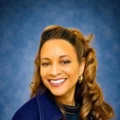
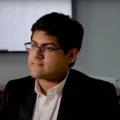
Ananya Raghavan is an undergraduate student.
She shares her story and discusses her KevinMD article, “Reflecting on my experience as a teenage health care worker during the COVID-19 pandemic.”
Did you enjoy today’s episode?
Rate and review the show so more audiences can find The Podcast by KevinMD.
Subscribe on your favorite podcast app to get notified when a new episode comes out.
Click here to earn 1.0 AMA PRA Category 1 CME for this episode.
Also available in Category 1 CME bundles.
Powered by CMEfy – a seamless way for busy clinician learners to discover Internet Point-of-Care Learning opportunities that reward AMA PRA Category 1 Credit(s)™. Learn more at about.cmefy.com/cme-info
Do you know someone who might enjoy this episode? Share this episode with anyone who wants to hear health care stories filled with information, insight, and inspiration.

Hosted by Kevin Pho, MD, The Podcast by KevinMD shares the stories of the many who intersect with our health care system but are rarely heard from.


Transcript
Kevin Pho: Hi, and welcome to the show, where we share the stories of the many who intersect with our health care system but are rarely heard from. My name is Kevin Pho, founder and editor of KevinMD. Rate and review the show at KevinMD.com/rate. Subscribe at KevinMD.com/follow. Today on the show, we have Ananya Raghavan. She’s an undergraduate student. She wrote the KevinMD article “Reflecting on my experience as a teenage health care worker during the COVID-19 pandemic.” Ananya, welcome to the show.
Ananya Raghavan: Hi, thanks so much for having me. Pleasure to be here.
Kevin Pho: We’ll get into the article in a little bit, but first off, share your story and journey to where you are today.
Ananya Raghavan: Sure. Currently, I just finished my freshman year at Columbia University, where I’m majoring in biomedical engineering on the pre-med track. About a year ago, I was a senior in high school. It was the midst of the COVID pandemic. I was virtual, taking all my classes online, and so I was wondering if there was any way that I could help with the pandemic efforts.
If you’re 18, there’s not really much you can do in terms of health care-related activities, but I knew that a pharmacy was recruiting near where I lived. So I applied to be a pharmacy technician, and 18 is the minimum age at which you can be a certified pharm tech. That is how my whole journey started, and that was sort of the motivation for my KevinMD article as well.
Real physician voices, twice a week
Free, and one click to unsubscribe.
Kevin Pho: All right, so we could jump right into that. It’s titled “Reflecting on my experience as a teenage health care worker during the COVID-19 pandemic.” Now, talk about that article, but before you do, what was your motivation to jump in and become a pharm tech during your senior year?
Ananya Raghavan: Sure. To be honest, I was finding that online classes just weren’t as engaging as I was used to. I loved my in-person classes in high school, so I was looking for something more to do. I was finding that I had a bit more free time on my hands because school was shortened to a minimum day. So I was looking at what other opportunities existed for me. This was something that I had seen, and my friend, who also worked at the same pharmacy, had told me that they were recruiting. So I decided to apply and see what could happen, and that’s what happened.
Kevin Pho: Yeah, so tell me about that experience. You had no pharm tech experience in the past and just applied. What was it like, especially in the midst of the pandemic?
Ananya Raghavan: Yeah, it was a lot. I felt like I was sort of struggling. I didn’t really know what was happening initially, because in addition to all the regular pharm tech duties, pharmacy technicians during the pandemic had to worry about administering COVID tests and COVID vaccines. They also had to work with a lot more exposure to the virus, and that involved looking at everything through screens and having hindered patient interaction. So there were a lot of challenges that just came with battling the pandemic in general. In addition to adjusting to a normal job as a pharmacy technician, which I had no prior experience with, I was also adjusting to what being a pharmacy technician meant during the pandemic.
Kevin Pho: So tell me about some of these obstacles and challenges that you had to overcome specifically as it relates to COVID, because I’m sure during that time it was a little bit chaotic, and the guidelines were changing day by day. Tell me what that experience was like. Walk us through a typical day from the lens of the pandemic.
Ananya Raghavan: Sure. I would go into work, and of course, at the counter, there’s first of all a huge screen, which makes it sort of difficult to talk to the patient on the other end who might be picking up their medication. The other thing that we had going was a drive-through, and I would often be manning the drive-through, which got very crowded because a lot of people had to get rapid COVID tests done.
Initially, it was difficult because we didn’t have the equipment to conduct these COVID tests, so we would be shipping them to places in Massachusetts, for example, and then people could get the results within three to four days, until we finally got an Abbott machine that would allow us to do a rapid test. Until we had that machine in place, there would be a line of 20 cars outside the drive-through, because all of these people had to get tested, and it was not as rapid as one would like. So before that process was expedited, it was really hectic in the pharmacy.
The other thing was the COVID vaccine. A lot of people, especially in the at-risk categories, I mean senior citizens over the age of 65, came to our pharmacy specifically to get the COVID vaccine. Then later on, what happened was people started booking these appointments and they would not show up, and our pharmacy didn’t have anything in place that would prevent these vaccines from going to waste. I discussed this in my article as well, but that was something that I was seeing. So in general, there were these sort of adjustment periods. Not everything was perfect. There were some rough ends; we hadn’t quite worked out the optimal solution as to how to deal with all the pandemic efforts.
Kevin Pho: So you talk about some poignant anecdotes in your article. Why don’t you share with my audience who didn’t get a chance to read the article some of these anecdotes that you shared?
Ananya Raghavan: Sure. The first one, which I introduced the article with, is what happened on my first day at work. Essentially, what happened is I’m this 18-year-old girl. I walk in, and I’m told to step to the side by my colleague, which makes sense, because I truthfully do not really know what’s happening, and it’s my first day on the job. I see this couple walk in, and they speak in somewhat broken English, but I understand that they want to get the vaccine. That’s what I took out of it. My colleague asked them if they had health insurance, and they nodded their heads no. So she turned them away, because she said that in order to get the vaccine, you needed health insurance.
I had known before coming to the pharmacy itself, and this was on a lot of news channels everywhere, that you don’t need health insurance to get the vaccine. The vaccine is federally subsidized. It’s paid for by our taxpayer dollars, and regardless of whether a person has or does not have health insurance, they are eligible for the vaccine. Often, when you are asked about your health insurance on the questionnaire, it’s mainly to gather data about groups of people. It has nothing to do with whether you’re eligible or not eligible for the vaccine.
But I knew all of this, and I didn’t say a thing. I just sat there, sort of silently watching this happen, and they left the pharmacy. I remember thinking, “Well, that wasn’t right. They don’t need health insurance.” So there were experiences like that, where I sort of knew something, or I saw something that I had misgivings about, or I was confused, and I sort of stood there silently. Many months later, I reflected on this experience, and I was wondering, “Well, what would have happened if I had said something? Could they potentially have gotten the vaccine if only I had opened my mouth?” So I was interested in whether similar experiences happen in health care, and that was the motivation for me writing the op-ed.
Kevin Pho: Yeah, so tell me about, I know you’re just starting off on your medical education journey, what are some of the biggest lessons that you think you’ve learned from this teenage experience as a pharm tech?
Ananya Raghavan: I guess some of the biggest lessons that I’ve taken away from my experience are that we have a voice, and I think we have a voice for a reason. It’s important to use it. If I could do the whole experience again, I would definitely make more use of my voice, raising it and making sure that my opinion is heard. Something that I didn’t realize until recently is that no matter how young you are or how inexperienced you are, you still have a voice, and it’s a valid voice.
It’s especially tough, and I know people in health care probably face similar situations. There’s almost like a social totem pole, if you will, and your experience sort of dictates where you fall on that social totem pole. For me, my youth and my inexperience, I felt that they invalidated my voice, and so I didn’t raise these concerns that I should have. That’s a lesson that I had taken away, because in other settings, for example, and this is mentioned in my article, a nurse sees a doctor make a mistake that can potentially have very damaging consequences. So it’s important in many scenarios, especially in health care, where we’re dealing with people and their bodies, to raise one’s voice. That’s the biggest takeaway from my whole experience: the power of one’s voice.
Kevin Pho: Now, I’m sure that you’ve replayed that scenario in your head many times. If you were to do this scenario all over again, how would you have raised your voice? Is this something that you would have done on the spot, keeping in mind this is your first day on the job? I know sometimes it’s very difficult to speak up. What exactly would you have done differently?
Ananya Raghavan: You know, there are a couple of different avenues, and of course, I do replay the scenario in my mind. Realistically, because it was my first day on the job, a direct confrontation with my colleague would have been difficult, me telling her, “Well, I don’t think this is right.” But I could have done that, and honestly, that would have been the best option, because that could have prevented the couple from leaving the pharmacy right then and there.
The other option was, of course, to alert the manager, or somebody with more authority than myself or my colleague, who could have kept them at the pharmacy and allowed them to get their vaccine. All it really takes is one person to raise the issue and another person to understand whether that person is correct or not and then make the final judgment. But unfortunately, I didn’t take that step then, and I’m hopeful that in a future scenario, I would take that step.
Kevin Pho: No, absolutely. Well, just the fact that you’re reflecting on it, and you’re so early in your medical education journey, I’m sure those are valuable lessons that you could take forward.
We’re talking to Ananya Raghavan. She is an undergraduate student on the pre-medical track. Her KevinMD article is titled “Reflecting on my experience as a teenage health care worker during the COVID-19 pandemic.”
So during that time, during COVID-19, while you were working as a pharm tech, and in your other interactions with the health care system, are there any other poignant experiences that you’ve learned from or come across as the pandemic progressed?
Ananya Raghavan: Sure, there’s a couple. One of the things which, unfortunately, I realized pretty early on is that no matter how much I want to help, I’m somewhat limited. It’s a phenomenon that in the article I reference as learned helplessness. At some point, you realize that there is a limit to how much you can help, and often you feel like you’re standing by and watching things happen, and you’re unable to do anything.
A lot of times, and this didn’t just happen once but many times, people came to the pharmacy, and when they got their medication, I handed them the package, and they saw the copay, and it was something that they couldn’t afford. So they left the pharmacy empty-handed. For me, that was an experience I had never dealt with before, mainly because the medication is supposed to be the way of helping them. But if they can’t afford the medication, then what am I really doing to make their lives better? So that was a tough experience for me to handle, and it was sort of difficult to reconcile. Am I still helping if these people are leaving empty-handed? Then what really is my role here? So that was one challenge that I faced.
The second was that I also had ideas that I wanted to implement. For example, I mentioned the vaccines going to waste. This is not original. Many other pharmacies and workplace environments had this in place, where the extras would go to people on a waitlist, for example. So I had this idea, which is again not original, where people of high priority could be put on a waitlist. You would essentially tell us information about your age, your other medical-related illnesses, for example, or conditions, and that would help place you on this priority list. That would ensure that if somebody canceled last minute, these people who were still looking for a vaccine might potentially be able to get one.
But I was told that this is difficult. We would need to create a form, and that would have to go through an approval process to put on the website, and there were a lot of things that would have to be in place in order for this to happen. So that idea was sort of shut down, and we continued to waste vaccines. At some point, it also goes along with this helplessness, where you have ideas about how you can potentially help or improve a situation, and they just don’t happen, whether for feasibility reasons or for any other reasons. So those are the kinds of challenges that I was facing and having to reconcile.
Kevin Pho: Now, you’ve had experience on the pharmacy side as a pharm tech, and that’s actually not a perspective a lot of physicians like myself have. I often don’t know what goes on behind the scenes in the pharmacy. So tell us, what’s something that surprised you, or something that’s unexpected, that physicians may not know about in terms of what goes on behind the scenes of the pharmacy counter?
Ananya Raghavan: Sure. I mean, physicians in general may know about this, I’m not sure, but I’ll just talk about this because I see this happen sometimes. When prescriptions are written, they’re filled out by us, where we copy the information written by the physician, either typed or handwritten. In that process, we get to see some information about what the medication may be related to.
I still remember how in the notes somewhere, it was written that this patient was allergic to a medication, and it seems that the physician had actually prescribed a medication that was a derivative of what the patient was allergic to. That was caught by one of our pharmacy technicians and brought to the attention of the manager, who called the physician and wanted to ensure that the patient did not get a medication that they could potentially be allergic to.
So it’s almost like the role of a middleman, sort of checking and rechecking decisions made by the physician or the doctor. In that sense, it’s a pretty important role, and it was inspiring to see some of my colleagues catch these mistakes and bring them to attention. So again, it goes back to that idea of raising one’s voice. You see something that may be potentially wrong.
Kevin Pho: And my final question, what are some of your take-home messages that you want to leave with the KevinMD audience?
Ananya Raghavan: My take-home messages, you know, I’m pretty young, so I’m sure many people who will be listening to this will be much more experienced than me. But if I learned anything from my own experience, it would be the power of one’s voice, like I said. So not to be silent: If you see something that you believe is not right, or that you have misgivings about, raise that concern, because it may be valuable, and it may save something in the long run or the short term. So that’s my main takeaway.
Kevin Pho: Wonderful. Well, best wishes on your continuing medical education journey. Thank you so much for sharing your story, time, and insight.
Ananya Raghavan: Thanks so much for having me.
Listen and followApple PodcastsSpotifyYouTubeMore apps · Browse all episodes