












Listen and followApple PodcastsSpotifyYouTubeMore apps · Browse all episodes
“For many health care professionals, the stresses of their roles routinely take a heavy toll on their mental and physical well-being. It did for me. The pandemic and the unprecedented loss of life were more overwhelming than any of us could have imagined, and for some, it simply pushed them over the edge. But, even before the pandemic, our peers have been suffering from depression, anxiety, and exhaustion and needed resources to help them better cope and manage their well-being. For me, I learned the path to a healthier, more balanced, and purposeful life. I took up ultra-running, which has helped me enormously. I also developed strategies and tactics that I can rely on to keep me on an even keel, even when things get extra challenging. My journey is what inspired me to write a book and share what I have learned with others. The resources which will now be made available as a result of the Dr. Lorna Breen Health Care Provider Protection Act are vital to supporting more health care professionals. Many medical associations are applauding the new legislation. We as medical professionals should not hesitate to avail ourselves of any and all resources designed to help us improve our mental and physical well-being so we can continue to help and heal others.”
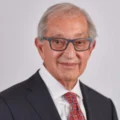
Anthony Avellino is a pediatric neurosurgeon and the author of Finding Purpose: A Neurosurgeon’s Journey of Hope and Healing.
He shares his story and discusses his KevinMD article, “New legislation addresses health care professionals’ mental health needs.”
Did you enjoy today’s episode?
Rate and review the show so more audiences can find The Podcast by KevinMD.
Subscribe on your favorite podcast app to get notified when a new episode comes out.
Click here to earn 1.0 AMA PRA Category 1 CME for this episode.
Also available in Category 1 CME bundles.
Powered by CMEfy – a seamless way for busy clinician learners to discover Internet Point-of-Care Learning opportunities that reward AMA PRA Category 1 Credit(s)™. Learn more at about.cmefy.com/cme-info
Do you know someone who might enjoy this episode? Share this episode with anyone who wants to hear health care stories filled with information, insight, and inspiration.

Hosted by Kevin Pho, MD, The Podcast by KevinMD shares the stories of the many who intersect with our health care system but are rarely heard from.


Transcript
Kevin Pho: Hi, and welcome to the show, where we share the stories of the many who intersect with our health care system but are rarely heard from. My name is Kevin Pho, founder and editor of KevinMD. Rate and review the show at KevinMD.com/rate. Subscribe at KevinMD.com/follow.
Today on the show, we welcome back Anthony Avellino. He is a pediatric neurosurgeon, and his book is titled Finding Purpose: A Neurosurgeon’s Journey of Hope and Healing. We’re going to talk about his latest KevinMD article today, titled “New legislation addresses health care professionals’ mental health needs.” Anthony, welcome back to the show.
Anthony Avellino: Great, Kevin. I’m very, very honored, and I truly appreciate the opportunity again, because your KevinMD platform really allows many to share.
Kevin Pho: And obviously, I couldn’t do it without guests like yourself, so thank you so much for coming back. Now, for those who didn’t get a chance to listen to our first episode together, just briefly share your story and journey to where you are today.
Real physician voices, twice a week
Free, and one click to unsubscribe.
Anthony Avellino: Sure. So I’m a pediatric neurosurgeon, experienced health care administrator, and endurance ultrarunner who has battled with depression, obsessive-compulsive tendency, suicide, and stuttering as long as I can remember. I graduated from Columbia University College of Physicians and Surgeons. I say that because Dr. Lorna Breen was an ED doctor there. But really, the COVID-19 global pandemic has made many of us experience fear, anxiety, and depression due to the isolation, lack of structure, financial uncertainty, new work-from-home realities, child care pressures, elder care pressures, and working long hours.
And really, my story: In becoming a neurosurgeon, I sought to live a life bringing healing to those with neurological disease. After completing my neurosurgery training at the University of Washington, I felt a tremendous sense of pride, knowing that I was prepared to have a great impact on patients and families in their time of greatest need and hopelessness. I entered each day with the knowledge that I’d given my all. I, like many of my colleagues, though, ignored the fatigue and underestimated the accumulated trauma and stress, until suddenly I became one of those stats. I was burnt out and depressed. The administrative, clinical, and personal stressors struck down my physical and mental health.
So on September 12, 2009, I attempted to actually take my life. But through that experience, and through the employee assistance program, I gained a greater understanding of what my purpose was. And really, my hope is to help people find self-coping skills, because as you know, health care provider burnout, nursing burnout, is real. As I often say, we have a million physicians in the United States. Conservatively, at 40 percent burnt out, we have over 400 physicians that are burnt out, and so that’s truly a public health crisis.
Kevin Pho: So you’re in one of the most demanding fields, pediatric neurosurgery. As you reflect back on your career, how’s the situation as it relates to burnout in your field now compared to, say, 10 years ago?
Anthony Avellino: I truly think that navigating the COVID-19 pandemic has really helped many health care systems realize that health care burnout is real. And really, it gave the executive teams at many health care institutions the ability to pause and really bring health care worker wellness to the forefront. Because I don’t think we’re buying into the concept, but I think the COVID pandemic has given people the opportunity to pause. And I think health care systems are now really bringing awareness to wellness and developing strategies for health care workers, because I think people are realizing that with over 40 percent of physicians burned out, having the ability to provide better self-coping skills is actually really important.
Kevin Pho: So we’re going to talk about the Dr. Lorna Breen Health Care Provider Protection Act during this episode, but before we get into that, tell us a little bit about Dr. Lorna Breen and who she was.
Anthony Avellino: Yes. So Dr. Lorna Breen was a well-respected emergency department physician at NewYork-Presbyterian Hospital. She was one of those frontline heroes we heard so much about during the peak of COVID-19. She was in the ED helping many patients infected with COVID-19 before vaccines were available and when personal protection equipment was in dangerously low supply. She was working long hours. She was exhausted, and then she contracted the virus. She quarantined at home. Right after she recovered, she was back at the hospital helping others.
Sadly, though, the weight of the pandemic, the longer hours, the isolation of being home, and the exposure to much loss of life really took a toll on her, and she took her own life on April 26, 2020. So her legacy is memorialized with the Dr. Lorna Breen Health Care Provider Protection Act.
Kevin Pho: You talk about that in your KevinMD article, “New legislation addresses health care professionals’ mental health needs.” Now, for those of you who get a chance to read your article, just walk my audience through it and share the story of why you decided to write it.
Anthony Avellino: So I think starting with the stats, because I think the stats give the opportunity for people to pause. But each year, almost 400 physicians die by suicide. Reading that sentence should be enough to give anyone who has dedicated their life to helping and saving others cause for concern. As you know, medical students’ rate of depression is 15 to 30 percent higher than that of the general public. Physicians are more than twice as likely to take their own lives as the general population. But what’s more important, and more concerning, is that female physicians are two and a half to four times as likely to die by suicide as women in other occupations. So these are national stats, and we can and should do things differently. If we recognize and reduce the stressors that lead to burnout, we can create supportive environments that foster our own physical and mental well-being.
So, what the Lorna Breen Health Care Provider Protection Act provides: The U.S. government took an important step to address the high incidence of health care professionals’ burnout and depression. On March 18, 2022, President Biden signed into law the Dr. Lorna Breen Health Care Provider Protection Act. The law provides several requirements for the Department of Health and Human Services. Key among them, it’s really fourfold.
One, the act awards grants to hospitals, medical professional associations, and other health care entities for programs to promote mental health and resilience among health care workers. Two, it awards grants for relevant mental and behavioral health training for health care students and residents. Three, it develops and implements an awareness campaign to encourage health care professionals to seek support and treatment for mental and behavioral health concerns. And lastly, it disseminates best practices to prevent suicide and improve mental health and resiliency.
So really, what it does is a few things. One, it raises the awareness of mental health. Hopefully, it removes the stigma of mental health, so physicians, nursing staff, and health care workers have the ability to seek help.
Kevin Pho: So correct me if I’m wrong, but this is one of those rare pieces of legislation that was passed on a bipartisan basis. Is that correct?
Anthony Avellino: Right, yes, it was. And the importance of the act is really that it gives the public and health care entities the ability to begin to develop programs to help physicians or nurses, because we’re truly in a public health care crisis right now, with over 40 percent of physicians being burnt out. On top of that, there’s the COVID-19 pandemic, the isolation, working long hours. This is the time to really begin to develop programs.
Kevin Pho: So for those physicians who may be struggling with burnout, what kind of programs, what kind of expectations should they have as a result of this act going forward?
Anthony Avellino: What I hope the act does, it does three things. One, it educates health care workers on the signs and symptoms of burnout through lectures, so they can seek help. Because I know that in my story, I didn’t really know the signs and symptoms very well. I always thought that, playing football, you had to work through the pain, and I didn’t actually know that. So I think one is letting people know what the signs and symptoms are. Number two, it really helps in developing programs or wellness surveys to track measures of success. And third, it develops wellness programs around a whole host of things. It could be nutrition, it could be exercise, it could be sleep.
But really, what I would hope it does, what I would love to see, is health care systems integrate wellness programs within a health care worker’s workday. What I mean by that is, rather than having these wellness programs before work or after work, it’d be great if every week health care workers had some dedicated time within their workday to really focus on these things. And I think that would be a very powerful message.
Kevin Pho: We’re talking to Anthony Avellino. He’s a pediatric neurosurgeon. He’s the author of the book Finding Purpose: A Neurosurgeon’s Journey of Hope and Healing. Anthony, I think that this piece of legislation is certainly just a start, but in your opinion, what more do you think needs to be done to address health care provider burnout?
Anthony Avellino: I think one of the most important things is to remove the stigma, letting the American public know that mental health is real, and having the ability to come forward if they actually have any concerns. What I hope the Lorna Breen Act does is really develop programs and remove some of that stigma, so people are willing to come forward. Because as I often say, no one should ever be at the brink as I was, and it’s sad that Dr. Lorna Breen was at that brink. But what I hope comes out of it is this: I hope it gives people hope, I hope it gives people the opportunity to pause, and I hope it gives people the opportunity to seek help, because there is help out there. I know, I’ve been through it, and it’s really important.
Kevin Pho: Now, when you talk about this act to the public and to your colleagues, tell me how this has moved the needle when it comes to normalizing the stigma of behavioral health issues in the clinician workforce.
Anthony Avellino: I think it does a few things. One, it enables the public to understand what physicians and nurses are going through. And I think the COVID-19 pandemic has been so high-profile within the media, and it’s not all glorified as some think. And so, one, it gives the American public an understanding that this really is a crisis. And then two, what I hope it does, I hope it provides self-resources so people can develop their self-coping skills.
Kevin Pho: And my final question: What are some of your take-home messages that you want to leave with the KevinMD audience?
Anthony Avellino: It’s my journey, and just being excited about the Lorna Breen Act, that inspired me to actually write my book. And really, in my book, what I sort of end with is, my wife and I developed this: Life is like an ultra race. You must stay in the present and let the journey unfold. You need to celebrate your successes along the journey.
But my wife and I developed an algorithm, and what I’d like to leave you with is your TACTICS. What I mean by that is, if you take each letter of that word, T is take time for yourself and lead a peaceful life. A is always eat healthy, exercise, and sleep. C is continually self-improve. T is treasure family and friends. I is I choose the day I have. C is control disappointments and respond positively. And S stands for you have to smile and laugh.
So remember your TACTICS. But really, it’s having the ability to take a pause every day and having the ability to figure out what brings you joy, because life is a journey, and you have to listen, you have to learn, and you have to heal.
Kevin Pho: Anthony, thank you so much for coming back on the show and sharing your time and insight.
Anthony Avellino: Sure. All right, Kevin, well, I very, very much appreciate this, because this is really a very important step forward.
Listen and followApple PodcastsSpotifyYouTubeMore apps · Browse all episodes