



When you are a medical student, you secretly believe a comforting myth: Once you pass your boards and survive training, you will finally stop running.
Then you become an attending physician. And one morning, it hits you: You are still sprinting. You are wearing different clothes, but you are still gulping lukewarm coffee, and still staring at a glowing tablet.
The tragic comedy of that shared rat race is now a two-minute rock-and-roll music video, “The Daily Dash (Uh-Oh Light).” The video exposes a chronic, longitudinal syndrome with two distinct clinical presentations: The lyrics apply with equal absurdity whether you are in training or an attending.
“Tablet flashing uh-oh light / Did cause a crash!”
To a resident or medical student rounding, the “uh-oh light” is a midnight critical lab alert or a Code Blue. To an attending, the “uh-oh light” is opening your EMR after dinner to discover an insurance company just rejected your claims, for no reason at all. Different crash, same BP spike. The daily dash has morphed, but it’s never-ending.
Real physician voices, twice a week
Free, and one click to unsubscribe.
“Students dropped study mode / To see Veeeeee Fib and RUN the code!”
In training, you happily abandon your cafeteria sandwich to run to an exciting code. As an attending, you abandon your short lunch break to put out a clinic fire or handle an urgent add-on patient.
“Who touched my differential list?!”
In the video, the clinic chief taps the clipboard and shakes a fist while trainees gasp. In training, building a differential diagnosis list is a challenging intellectual exercise. In clinic practice, “fixing the differential list” is a high-stakes game of reimbursement survival: figuring out how to revise and reorder your ICD diagnoses so an insurance payer’s algorithm will not auto-deny the visit.
“From the clinic, chief’s voice did ring”
Trainees spend morning rounds bracing for the clinical chief to pimp them on a rare syndrome. Attendings brace for the administrative chief calling to say you missed two documentation bullet points or coded a modifier wrong. You never actually outgrow getting called to the principal’s office; the principal just trades a white coat for a spreadsheet.
“Question neural tubes twisted into Rubik’s cubes!”
For students, the Rubik’s cube is trying to untangle embryology trivia before exams. For attendings, the Rubik’s cube is navigating prior-authorization phone trees, peer-to-peer calls with someone outside your specialty, and endless EMR click-boxes while the 15-minute clinic clock ticks down.
“Study, sleep, eat. Repeat! This degree is bittersweet.”
Why does that final chorus hit a fifty-year-old attending just as hard as a twenty-four-year-old medical student? Because the demands of clinic and patient communication have never been higher, and AI is supercharging the treadmill speed.
Every Monday morning, patients walk into the exam room armed with ChatGPT printouts and viral (often dead wrong) health headlines. At the same time, thousands of new specialty papers hit PubMed every week. Attendings are forced to perpetually “study” after hours just to stay one step ahead in clinic the next morning.
Meanwhile, both students and attendings feel that bittersweet pinch as AI looms. We train for a decade to be master clinicians, yet neither school, nor training, nor daily clinic workflows are built for the AI revolution that is already lurking in exam rooms.
Stepping off the hamster wheel
The first step is a daily Rx: “Laughter is the best medicine.” The second step is to ditch the treadmill and start using modern tools.
Technology should give clinicians and learners their time back, not steal it. Instead of drowning doctors and patients in five-page academic PDFs and sensationalized news, we can use AI to distill new research into 20-second visual takeaways and popular headlines into 10-second clinical reality checks. And instead of taxing debt-burdened students with overpriced, brute-force board prep, we can make practice questions and visual mastery maps completely free.
Until then, if you need a two-minute laugh between patients, or between study blocks, turn up the volume.
Lyrics: “The Daily Dash (Uh-Oh Light)”
Rounding wards late one night
Tablet flashing uh-oh light
That ruby red rash
Did cause a crash
And suddenly I’m Daily Dash!
[Chorus]
I did the Dash!
They did the Daily Dash
The Daily Dash!
It was a medical smash
I did the Dash!
It caught on in a flash
I did the Dash!
They did the Daily Dash
From library halls on campus east
To cafeterias where interns feast
Students dropped study mode
To see Veeeeee Fib and RUN the code!
[Chorus]
They did the Dash!
They did the Daily Dash
The Daily Dash!
It was a medical smash
They did the Dash!
It caught on in a flash
They did the Dash!
They did the Daily Dash
Morning rounds just begun
Attendings having fun!
Question neural tubes
TWISTED into Rubik’s cubes!
From the clinic, chief’s voice did ring
Troubling her, just one thing
Tapping chart, shaking fist
Who touched my differential list?
[Chorus]
Now it’s the Dash!
They do the Daily Dash
The Daily Dash!
It is a medical smash
Now it’s the Dash!
It caught on in a flash
Now it’s the Dash!
They do the Daily Dash
[Outro]
Study, sleep, eat. Repeat!
This degree is bittersweet.
Study, sleep, eat. Repeat!
Waaaaah-ooh
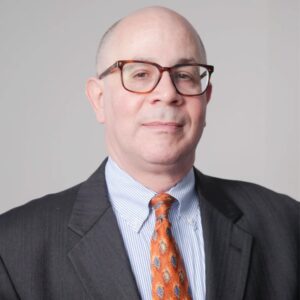
Harold Kraft is a dual-career physician and software entrepreneur. A board-certified anesthesiologist, Kraft is the founder of LaserMD Pain Relief, a pain management clinic in Los Angeles. Kraft also founded Sherpa Healthy, Daily Dash, and the Digital Health Ambassador Program.