













I work in San Francisco. Every morning I walk six blocks from the train to my office, and as I look down the street, I notice how many cars are wearing hats. The “hat” is the rooftop sensor dome, LiDAR and cameras, on the Waymo self-driving cars that fill my city’s streets. If they have not come to your city yet, they are on their way. Waymo opened to the public in San Francisco only two and a half years ago, in June 2024. Today, Waymo and newcomer Zoox together run more than a thousand driverless taxis here. It is common to see two or three on a single block.
Two recent events inspired this article. The first was a tech company that approached me, with great enthusiasm, to pitch its latest idea: an AI companion bot to combat loneliness among seniors. Loneliness in older adults is a serious health risk. Roughly one-third of seniors experience loneliness or social isolation, and they have higher rates of depression, anxiety, and cognitive decline, along with an increased risk of heart disease and stroke. Lonely older adults also tend to have longer hospital stays, more readmissions, and greater dependence on high-risk medications. If an AI companion can ease that loneliness and remind people to take their medications, what could be wrong?
The second was reading Sherry Turkle’s new book, Artificial Intimacy: Who We Become When We Talk to Machines, which I bought after hearing her on Ezra Klein’s podcast. On the show, she described her concerns about the rise of AI companionship and its effect on human relationships. I was amused that Klein, who has often voiced misgivings about AI, kept anthropomorphizing chatbots and describing his own use of them in familiar terms until Turkle reminded him that it “doesn’t care for you at all.” AI models are built to be agreeable and engaging, and if you have begun working with them, you know they can feel remarkably real as they express empathy, care, and concern. But they aren’t real, and we need to reflect on whether we cure loneliness by replacing human interaction with synthetic compassion.
Together, these two experiences made me consider what we will lose when physicians are replaced by AI. Don’t laugh. The rapid spread of Waymo on my city’s streets should convince you that when money is at stake, the inconceivable becomes real very quickly. So I began asking myself: What is the difference between caring for patients and caring about them?
Real physician voices, twice a week
Free, and one click to unsubscribe.
Over my career, I have cared for thousands of patients. I have spent many hours at the bedside, sometimes doing little more than sitting and holding a hand through grief and pain. That was part of caring for them. But I believe I also cared about them, as people with distinct personalities, spirits, and souls. I chose medicine, in part, because it let me do both. The distinction is that I can care about patients because I am real.
Sadly, a common criticism of modern medicine is that patients are cared for but no longer feel cared about. The physician shortage, the priority on productivity over relationships, the electronic health record (EHR) that has doctors clicking at a screen instead of looking at the patient, and new delivery models such as telehealth have opened a gulf between doctor and patient. Some patients now report preferring non-physician practitioners, who have less training but more time to give. As physicians drift away from patients, patients are showing that they need to feel cared about as well as cared for, and that they will leave a flesh-and-blood doctor to find it.
If we physicians believe, in our hubris, that patients will not abandon us for a docbot that makes them feel more cared about, we are deluding ourselves. The bot’s empathy and words of sympathy are not real, but they are appreciated. If people are already trading human relationships for what they find in chatbots, the doctor-patient relationship is simply next in line. Meanwhile, the barriers between patients and doctors keep growing: 15-minute appointments, the demands of the EHR, ever-expanding regulation, and poor economics at the bedside. Employed primary care practices lose an average of $150,000 to $200,000 per provider each year. Whatever care doctors feel, these pressures have squeezed most of its expression out of the exam room.
Docbots will be convenient, fluent in any language, knowledgeable, and they will have all the time in the world. I have been on this earth for more than sixty years and practicing medicine for more than thirty, and the pace of change in the past few years has been staggering and accelerating. This is not the time to say something cannot happen. My prediction is that within two, five, or ten years, AI “physicians” (docbots) will replace or supplement doctors in many roles. I view this with some trepidation, but also with acceptance. I have been moving through the stages of grief, and this article is a feeble attempt to fight the last one: acceptance. Though when economics align with convenience and the appearance of concern, it is easy to see patients leaving their doctors for docbots. Even if they aren’t real.
Robert Pretzlaff is chief medical officer of Chinese Hospital and its affiliated health plan, Chinese Community Health Plan, in San Francisco. A physician executive with more than two decades of leadership experience, he has served as senior vice president, chief medical officer, and chief clinical officer at Henry Mayo Newhall Hospital; chief medical officer at Lodi Memorial Hospital and at Lumeris; and regional chief medical officer, then chief physician executive and president of Dignity Health Medical Group in Nevada. Earlier, he was division chief of pediatric critical care at UC Davis Medical Center.
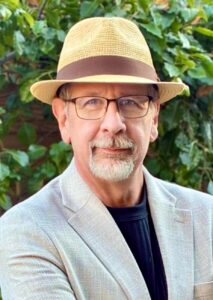
Board-certified in pediatrics and pediatric critical care, Dr. Pretzlaff has authored 28 peer-reviewed articles and six book chapters spanning clinical research, bioethics, law, and health care finance, with work appearing in Health Care Analysis and Physician Executive.
An experienced sailor, he also writes fiction as R.K. Preston, including the novel Sea Change.