




Listen and followApple PodcastsSpotifyYouTubeMore apps · Browse all episodes
“COVID-19 melted down the world at a very inopportune time in history. Just as medicine was getting a handle on previously intractable conditions, from sophisticated diabetes management to less invasive surgical procedures, a new threat that devastates our population with few good treatments overwhelms health care.
Medical workers come to the rescue, as we always do, though at a personal and communal price. Somebody else keeps our food available, allows our communications to flow without interruption, and maintains most of our transportation systems, even though many of us have fewer places to go.
Our elected and appointed officials went to work, most no smarter or less contentious than they were before, but emergency support came through in the form of research subsidies to enable better treatment and prevention, mass purchases to enhance lab capacity, and for many an emergency boost to available personal funds. Heroes all, except for the ones you see on TV that you wish to exclude.”
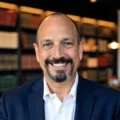
Richard Plotzker is an endocrinologist who blogs at Consult Maven.
He shares his story and discusses his KevinMD article, “Doctors as organizational stewards.”
Did you enjoy today’s episode?
Rate and review the show so more audiences can find The Podcast by KevinMD.
Subscribe on your favorite podcast app to get notified when a new episode comes out.
Click here to earn 1.0 AMA PRA Category 1 CME for this episode.
Also available in Category 1 CME bundles.
Powered by CMEfy – a seamless way for busy clinician learners to discover Internet Point-of-Care Learning opportunities that reward AMA PRA Category 1 Credit(s)™. Learn more at about.cmefy.com/cme-info
Do you know someone who might enjoy this episode? Share this episode with anyone who wants to hear health care stories filled with information, insight, and inspiration.

Hosted by Kevin Pho, MD, The Podcast by KevinMD shares the stories of the many who intersect with our health care system but are rarely heard from.


Transcript
Kevin Pho: Hi, and welcome to the show, where we share the stories of the many who intersect with our health care system but are rarely heard from. My name is Kevin Pho, founder and editor of KevinMD. Rate and review the show at KevinMD.com/rate. Subscribe at KevinMD.com/follow.
Today on the show, we have a longtime KevinMD writer and commenter. Richard Plotzker is a retired endocrinologist. His latest KevinMD article is titled “Doctors as organizational stewards.” Richard, great to finally meet you, and welcome to the show.
Richard Plotzker: Nice to be here.
Kevin Pho: We’ll get into the article in a little bit. Just briefly share your story and journey to where you are today.
Real physician voices, twice a week
Free, and one click to unsubscribe.
Richard Plotzker: OK. I go back to the medical class of 1977, when the world of medicine was different. Our professors were World War II docs, a few Korean War docs. Then, out of residency, I became an internal medicine hospitalist for the VA, when only the VA had hospitalists. After a while, it looked like I was kind of languishing, and I was already doing the endocrinology at the VA, since they didn’t have an endocrinologist, and I decided now was the time to get formally trained, which I did in the late 1980s. Then I was in practice for 20 years, and as solo practice became more difficult, as most of the physicians have found out, I accepted a job and stayed there for eight years, until a reasonably planned retirement in 2018.
Kevin Pho: Now, as you reflect on your decades-long career, what would you say are some of the biggest changes in medicine that you’ve observed?
Richard Plotzker: Oh, that’s a long question. There are a number of demarcation points. The electronic record is one, where we check boxes in lieu of thinking verbally, which is, you know, what you were trained to do. In college, to get into medical school, you had to do pretty well, and that means answering essay questions, not just circling boxes. So that’s the biggest demarcation, and that’s here to stay.
It has its pluses and minuses. The minuses are more noticeable first; the pluses are a little more elusive. I mean, it’s kind of nice to be able to just sit at my screen and go look up X-rays and actually look at the films. However, people of my era are a little spoiled, because we used to have somebody on the team call down to the X-ray department, and we’d go down in a group and look at the films. So I got used to doing that myself. But, you know, in recent years, my residents seemed more interested in the report than in the image, even though the image is much more easily retrieved. So there’s also a change in what’s valued, whether it was better then or better now. I guess no time is really better than any other. It’s how you spin it.
Kevin Pho: Sure. So let’s talk about your KevinMD article. It’s titled “Doctors as organizational stewards.” Now, for those of you who get a chance to read your article, can you just walk my audience through it and share the story of why you decided to write it?
Richard Plotzker: Oh, sure. Being retired, we kind of look for something to do. And you learn that when you don’t have to go to work every day, and you’re not getting phone calls every day, you’re kind of still a doctor. You think like a doctor. You get your subscriptions. You belong to your organizations. Some things you give up; some things you don’t. But you’re not in the middle of things. I mean, I got out right before COVID, and I kind of missed not being in the frame. I mean, that’s a bit of a regret. But you’re still a doctor, and the opportunities to be a doctor don’t disappear. I mean, the state of Delaware has a program for retired doctors to engage in public health in various ways.
As COVID came along, our Orthodox synagogue basically closed down, because we don’t use electronics on the key days of the calendar year. And then it could be reopened. Well, who are your experts? Well, the doctors. So the congregational president assembled some doctors and said, “What do we need to do to have worship?” And we got together and decided what to do. Some we did well. Some, thinking like doctors, we did poorly. We don’t ask for advice that we don’t have. We pool our ignorance and come to an average answer.
But, you know, even without retirement, doctors are still members of their gym. They’re members of their house of worship. They send their kids to school. They’re scout volunteers. We engage in a lot of useful things that have value, where our medical experience, in the right circumstances, can contribute better than anybody else’s experience. And reopening during COVID was one of those. You know, what’s safe? You need to know that as a physician, but you also need to know how your congregation works. You know, where do people gather? What are the traps? I assume it’s the same for the people involved in scouting or the people involved in the PTA: Should your school open? Shouldn’t it open? And how do you decide?
So we had our meetings, and as people who read the article can figure out, some went well, and some kind of exposed our Achilles’ heel, both as doctors and also as an organization, where you kind of see, well, you know, our organization doesn’t even know who our experts are. It’s all done from somebody’s memory. We can’t even figure out who knows how to paint the wall if we need the wall painted. So you learn something from the effort.
Kevin Pho: Now, working as a physician, and I assume you were in solo practice for a lot of it, doctors tend to work in silos. They work by themselves. How did it feel for you, now that you are working as part of this committee? How was that transition?
Richard Plotzker: Well, interestingly enough, everybody on the committee, and our congregation is well on Medicare, it’s an older group, everybody on the committee was in solo practice or a small group. So, you know, we’re all used to being very independent, having our own agendas, maybe resenting somebody else interfering, and, you know, being kind of a little skittish about going outside ourselves. Do we really know how to keep the air clean? No, we don’t. Are we going to ask somebody who does? No, no, we’re in charge here.
So you kind of think like a physician. I don’t know if being in solo practice is quite the villain on that. Even in the years when I was employed, which was about half my career, there’s a streak of independence. And yes, you can be part of the team and should be part of the team, but you can also be kind of critical when you think the team is going wrong.
Kevin Pho: How was that transition for you? When you practiced for decades and then went into a planned retirement, was it difficult for you to disconnect from clinical medicine?
Richard Plotzker: The key word is plan. I planned this, technically, from my first residency paycheck, when they took out Social Security and a little bit for the pension fund, and you always had the key means of retiring. But I actually planned this about five years in advance, that I would work until a certain time. And then, you know, the skills get a little bit rusty. You get a little bit tired. Toward the end, I was the only endocrinologist there. And you know, just like the athletes, they know when they’ve peaked and when it’s time to let the next person take over. I’ve always had good residents. I know somebody’s going to take over.
Kevin Pho: Now, for those retired physicians who still want to maintain a little bit of a connection to medicine, what kind of options in general do they have?
Richard Plotzker: I can tell you what I do. I don’t know what everyone else does. Again, the state of Delaware has a program for that. Our regional medical center set up a program about two or three years ago for late-career, retired physicians. I’ve given a couple of presentations there. It’s very much dependent on a champion to maintain it. The champion left, and now it’s collapsing.
I still get my New England Journal and my JCEM. I have a quota that I read in the New England Journal: It’s two articles per week. I look at what’s on KevinMD every day, and, you know, there’s always something that kind of catches my attention, that yes, this is very interesting, but it would be even more interesting if you were to take this insight, and, you know, don’t feel particularly shy about commenting. One of the nice things about KevinMD is that they don’t, either they don’t have trolls or they screen the trolls out, unlike most social media.
So, you know, there are these forums where you can still be part doctor. But even when you’re not doing medical activity, the imprint of what you did for the last 40 years, looking at the tail, dealing with decisions that didn’t go well, dealing with side effects, those are generally applicable everywhere.
Kevin Pho: Do you miss clinical medicine?
Richard Plotzker: I miss the patients. I can’t say I miss the electronic record. I don’t. I was not fond of the metrics. “You didn’t call these last 200 people with their lab results.” Yes, I did. “But it says on the computer that you didn’t.” Because I didn’t remove it from the box. But yes, I did call them. I miss having people take me at my word. But I think the retirement was planned, it was at the right time, and the activity has reasonably replaced it.
Kevin Pho: We’re talking to Richard Plotzker. He’s a retired endocrinologist. His latest KevinMD article is “Doctors as organizational stewards.” Richard, for those doctors nearing retirement, what kind of advice do you have for them to smooth that transition?
Richard Plotzker: First advice: Make sure you can afford it, because if you don’t, you’re going to have some very big uncertainties. So don’t do it until you’re ready to. Unfortunately, some people will be exited out, either by loss of health or by, you know, in this day of consolidation and layoffs, my hospital is here and your hospital is gone, or you didn’t meet your metrics. So some people will be involuntarily evicted.
But I guess the best advice is to have something else that you can do, so that you don’t expect to go to the golf course every day, unless you would have gone to the golf course every day but that was the passion that was deterred by having to make a living. But you’ll have something that you like doing, that’s going to keep your mind engaged, that’s going to keep you socially immersed.
I think what I miss from COVID is the collapse of the University of Delaware’s senior program, where the value of being part of that is, yes, we get to learn from experts in the course, but you also get to sit in the lounge with the other people who’ve also had careers, and they are very, very interesting people. Physicians who do clinical medicine also become very adept at interviewing other people and finding out about them, and that’s a skill that can be maintained in many forms. If it was satisfying when you did it as a doctor, it’s going to be satisfying to do it when you’re not a doctor.
Kevin Pho: And my final question: What are some of your take-home messages that you want to leave with the KevinMD audience?
Richard Plotzker: Well, I think most of the articles on KevinMD come from younger people, and what you see when you read them is that, hey, you didn’t discover this first. You know, there were crises before COVID. There were malpractice crises in the 1970s. There was a disruption from Flexner. You’re not the first person to deal with medical disruptions. It’s been there before. Learn from it.
And the other message is, you don’t know what the world is going to be like in 40 years, when you’re ready to retire. You make your decision when you’re in your 20s and have to sign up for organic chemistry, so make sure you really want to do that. Because for all the people who talk about side gigs and escaping, there are few equivalent escapes. I mean, those escapes are pretty rare. So make sure you like what you’re doing.
Kevin Pho: Richard, thank you so much for sharing your time and insight. Thanks again for being on the show.
Richard Plotzker: OK, thank you very much for having me. I had a good time.
Kevin Pho: Thank you.
Listen and followApple PodcastsSpotifyYouTubeMore apps · Browse all episodes