






Listen and followApple PodcastsSpotifyYouTubeMore apps · Browse all episodes
“When Lauren came to my office as a 16-year-old, she had been diagnosed with postural orthostatic tachycardia syndrome (POTS) and a few other chronic illnesses. By the end of the appointment, she left with a diagnosis of Ehlers-Danlos Syndrome (EDS).”
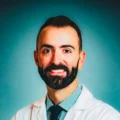
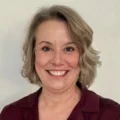
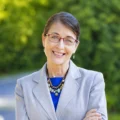
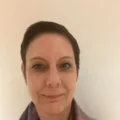
Linda Bluestein is an integrative medicine physician. Lauren Vasko is a patient advocate.
They share their stories and discuss the KevinMD article, “The journey to diagnosing a mysterious illness.”
Did you enjoy today’s episode?
Rate and review the show so more audiences can find The Podcast by KevinMD.
Subscribe on your favorite podcast app to get notified when a new episode comes out.
Click here to earn 1.0 AMA PRA Category 1 CME for this episode.
Also available in Category 1 CME bundles.
Powered by CMEfy – a seamless way for busy clinician learners to discover Internet Point-of-Care Learning opportunities that reward AMA PRA Category 1 Credit(s)™. Learn more at about.cmefy.com/cme-info
Do you know someone who might enjoy this episode? Share this episode with anyone who wants to hear health care stories filled with information, insight, and inspiration.

Hosted by Kevin Pho, MD, The Podcast by KevinMD shares the stories of the many who intersect with our health care system but are rarely heard from.


Transcript
Kevin Pho: Hi, and welcome to the show, where we share the stories of the many who intersect with our health care system but are rarely heard from. My name is Kevin Pho, founder and editor of KevinMD. On today’s show, we have Linda Bluestein and Lauren Vasko. Linda is an integrative medicine physician. Lauren is a patient advocate. Together, they wrote the article “The journey to diagnosing a mysterious illness.” Linda, Lauren, welcome to the show.
Linda Bluestein: Hi, thanks for having us.
Kevin Pho: So I’m going to ask each of you to briefly share your story and journey to where you are today. Linda, why don’t you go first?
Linda Bluestein: Sure. So I am an integrative pain medicine physician, as you stated, and I basically came into this by accident. I’m an anesthesiologist by training, but then my own connective tissue disorder, Ehlers-Danlos syndrome, interfered with my ability to function in my job. So I ended up writing an article in 2017 about pain management in EDS, and then I had people emailing me and saying, “Where can I come see you?” Then I ended up opening a clinic, and Lauren was my very first patient.
Real physician voices, twice a week
Free, and one click to unsubscribe.
Kevin Pho: Wonderful. Lauren, briefly share your story and journey to where you are today.
Lauren Vasko: Yeah. So I struggled with my health, mainly starting in high school. I had a lot of symptoms, and we weren’t able to find a diagnosis right away. So we went through a long process of trying out different treatments, going to different doctors, and going to Mayo Clinic, just to find what was going on. I ended up finding myself in Dr. Bluestein’s office, and that is where I finally got my diagnosis of Ehlers-Danlos syndrome and started my journey to treatment and feeling better.
Kevin Pho: All right. Linda, in your KevinMD article, you share a little bit about Lauren’s story. So briefly summarize that article and walk my audience through it.
Linda Bluestein: Sure. So Lauren had been through a lot of very challenging experiences and had even been in a wheelchair for a period of time. When she came to me, she was dealing with a lot of symptoms and a lot of different things. Usually, if someone presents to a doctor’s office with that type of picture, if they have chronic pain in multiple different body parts and they are dealing with orthostatic intolerance and maybe heat intolerance and a variety of different things, oftentimes we don’t know how to connect those dots, so we get frustrated. Rather than offering some kind of resources, even if we don’t have treatment options, a lot of people will end up either coming across as though they don’t believe the person, or they actually won’t believe the person. It sounds like that’s what happened a lot in Lauren’s case.
Of course, I can’t really speak so much to what happened before she came to see me as much as what I can say about after she came to see me. We’ve been working together since 2017, not so much recently because she’s doing so well, but she really had struggled with a lot of different symptoms and a lot of different impairments in just day-to-day tasks and things like that. She’s a testament to what can be accomplished if people are able to work really hard at the different treatment options and put things together in a meaningful way. Some people can really make some improvements.
Kevin Pho: And Lauren, when you first met Linda, go back to that first day when you were walking into that office or exam room. How did you tell your story to Linda?
Lauren Vasko: We started with just going through the history. I think the first question was like, “Tell me your history,” and how it first started with all my symptoms. It was just going through all the challenges we had, going through a lot of the symptoms, and where I was at then.
Kevin Pho: So tell us what you were feeling. Tell us what you said that day.
Lauren Vasko: I mean, I was at a low place, I would say, in general and was really struggling, and this was, I don’t know, a last resort. We just really had no idea what else to do. I don’t think I was in school at that point, or I was missing a lot of school. So just to have another person to try out and see if they would provide any answers was just a huge sense of hope, and it ended up being a huge relief once we were able to find what was going on and get treatments and everything.
Kevin Pho: Give us a sense of how many clinics you had gone to, how many clinicians you had seen, and how many medical institutions you went to before seeing Linda.
Lauren Vasko: I probably went to maybe two dozen doctors before I was able to see Dr. Bluestein. That included different types of doctors, different offices, and different states. We tried a lot of different resources and weren’t able to get very far, so it was frustrating.
Kevin Pho: And at that time, you said this was back in 2017 or so. Just give us a sense of what your typical day was like. Just paint us a picture and try to make us experience what exactly you were going through when you were going through what you said was the lowest point of your life.
Lauren Vasko: Yeah. I was in 24/7 pain. I think my pain was probably around a six or seven every day. I was taking a three-hour nap every day after school, barely able to get the homework done. I couldn’t really wake up on my own; my mom always had to get me up, and it just took a very long time. I was taking a lot of ibuprofen and a lot of Tylenol to get through the pain, but it just wasn’t strong enough. I struggled with friends and struggled just with staying awake in school. So it was just a lot of challenges with my daily life.
Kevin Pho: And Linda, when Lauren was telling her story, or after she shared her story with you, what did you do next?
Linda Bluestein: The first thing that I wanted to do was to let her know that there was hope. Each person’s story is unique, but there are some common threads that we definitely see. I was someone who had been in pain 24/7 like Lauren a number of years ago and was no longer in pain 24/7. I call that pain brain, where you can’t let go of it even for five minutes. It just is there, and it just pervades every fiber of your being.
So I really wanted her to know that there was hope, that I was not going to give up on her, and that I had some ideas as to an initial treatment plan and initial places to start, but that we would work together, and that it would be a process and likely would take a while. So patience was a very important feature, and then also follow-up appointments and things like that. She was extremely good about following up, and she was extremely good about communicating and things like that, so that really made things a lot easier in working with Lauren and her family.
Kevin Pho: And Linda, what makes the pain from Ehlers-Danlos different?
Linda Bluestein: Most people who have Ehlers-Danlos have all the types of pain. So they have nociceptive pain from actual or potential tissue trauma. That could be from subluxations, dislocations, tendinopathy, and a variety of different things. People with Ehlers-Danlos have a connective tissue disorder; they have joint instability or joint laxity, and so they end up having pain or triggers from those types of joint problems and connective tissue and soft tissue problems.
Then they can also have neuropathic pain, so pain from within the nervous system, and that can be related to thoracic outlet syndrome or carpal tunnel. It can be a variety of compressive-type neuropathies, small-fiber neuropathy, things like that. A lot of those are more common in people with Ehlers-Danlos than in the general population.
And then nociplastic pain is extremely common. So I do central sensitization inventory questionnaires and a variety of different questionnaires. I do PTSD questionnaires, anxiety, depression, and a bunch of different things to really try to help put the whole picture together, because those things are very common in people that are in chronic pain, when you’re in pain all the time. So people with Ehlers-Danlos very commonly have all three types of pain, and the pain triggers, the nociceptive pain triggers, getting that input into the nervous system, just really help to set in that nociplastic pain, or that pain that comes from dysfunction of the nervous system.
So when someone comes in and they say they have pain everywhere, which I literally have had, I had an 11-year-old come in with pain everywhere. Fortunately, I had Mom as a patient recently, and she said he’s like a normal kid in school now. But a lot of people, I think, have pain everywhere, so therefore they need opioids or something like that, and that’s usually not the answer. That may be a very unpopular thing to say with some people, but unfortunately, opioids can sensitize the nervous system. They can cause mast cell degranulation and can actually make things worse, not better.
Kevin Pho: So Lauren, talk about your treatment journey over the years that you had with Linda.
Lauren Vasko: I think the biggest thing with treatment with Dr. Bluestein versus treatment with any other doctor was that she was finding the root cause of every symptom I had and treating it, and it was more of a holistic approach, like she mentioned. I never felt like there was a dead end to our treatments. If we tried this medicine and it didn’t work, we would move on to the next one. There were just so many different options beyond just medicines that we tried that really made a huge difference in my treatment and just my recovery.
Kevin Pho: And Lauren, what’s your life like today?
Lauren Vasko: I’m working full time in marketing. I graduated from Marquette University in May, and I’m living a pretty normal life. I’m able to have time to do social things, and I live like a normal 23-year-old.
Kevin Pho: All right. We’re talking to Linda Bluestein and Lauren Vasko. Linda is an integrative medicine physician. Lauren is a patient advocate, and together they wrote the KevinMD article “The journey to diagnosing a mysterious illness.” Now I’m going to ask each of you for your take-home messages to the KevinMD audience. Lauren, I’m going to have you go first.
Lauren Vasko: I would just say that if you’re a patient, keep fighting. Be persistent in your treatment. You’re your best advocate, and you know your body the best. So keep being persistent with doctors, and just find supportive friends, family, and people online that can join you in your journey.
Kevin Pho: And Linda, your take-home messages to the KevinMD audience?
Linda Bluestein: I would love for all the clinicians to know that if somebody comes to you and they have symptoms in a variety of different body parts and you can’t connect the issues, there’s a saying: “If you can’t connect the issues, think connective tissues.” I think that’s the simplest way to remember that connective tissues are present everywhere in the body. They can wreak havoc in just about every system of the body. Things like gastrointestinal symptoms are really common, chronic pain, dysautonomia, difficulty with upright posture, etc. So it can cause a whole lot of problems. So if you’re thinking, “This is really mysterious,” please think of connective tissues. At least you have to consider it, right, in order to at least rule it in, rule it out, refer out, offer resources, etc.
Kevin Pho: Lauren, thank you so much for sharing your story, time, and insight. Thanks again for being on the show.
Linda Bluestein: Thanks for having us.
Lauren Vasko: Thank you.
Listen and followApple PodcastsSpotifyYouTubeMore apps · Browse all episodes