














Listen and followApple PodcastsSpotifyYouTubeMore apps · Browse all episodes
“I’ve consistently found that most of the doctors who want coaching help feel like I did when I struggled with my weight: They weren’t feeling like their lives were completely out of control or their problems were insurmountable. It wasn’t like the TV trope, wherein a woman turns to food because she’s alone and miserable and rejected by society—for the most part, the women who come to me for help losing weight aren’t clinically depressed or struggling to function normally in their lives. But they are stressed. They are dealing with a regular array of real-life challenges. They’re turning to food to suppress and neutralize their emotions. And many of them can point to specific causes of their weight struggle, or reasons they haven’t yet been successful in reaching their goals.”
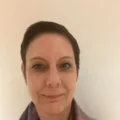
Katrina Ubell is a pediatrician and author of How to Lose Weight for the Last Time: Brain-Based Solutions for Permanent Weight Loss.
She shares her story and discusses her KevinMD article, “Emotional eating: Why you always want food.”
SUBSCRIBE TO THE PODCAST → https://kevinmd.com/podcast
RATE AND REVIEW → https://kevinmd.com/rate
FOLLOW ON INSTAGRAM → https://www.instagram.com/kevinphomd
FOLLOW ON TIKTOK → https://www.tiktok.com/@kevinphomd
GET CME FOR THIS EPISODE → https://earnc.me/GCmDJn
Powered by CMEfy – a seamless way for busy clinician learners to discover Internet Point-of-Care Learning opportunities that reward AMA PRA Category 1 Credit(s)™. Learn more at about.cmefy.com/cme-info
Transcript
Kevin Pho: Welcome to the show, where we share the stories of the many who intersect with our health care system but are rarely heard from. My name is Kevin Pho, founder and editor of KevinMD. Rate and review the show at kevinmd.com/rate. Subscribe at kevinmd.com/podcast. Today on the show we have Katrina Ubell. She’s a pediatrician, and she’s the author of the book How to Lose Weight for the Last Time: Brain-Based Solutions for Permanent Weight Loss. There’s an excerpt from that book on KevinMD titled “Emotional eating: Why you always want food.” Katrina, welcome to the show.
Katrina Ubell: I’m so glad to be here. Thank you so much for having me.
Kevin Pho: We’ll get into your article and book in a little bit. First off, briefly share your story and journey to where you are today.
Katrina Ubell: Yeah. So like you said, I’m a pediatrician. I worked in general practice for over 10 years, and the side note to that is that throughout that time, really mostly starting in medical school, I really started struggling with my weight. I was using food, like so many of us do, to manage my emotions, which I was not connected to. I didn’t know that I was suppressing my emotions. I just thought I liked food a lot, but that’s really what I was doing.
As so many of us do as we go through our training, the hobbies and the activities that help us to process emotions, process stress, and feel better about things, we just don’t have time for them anymore. And it doesn’t help that you walk into the residents’ lounge and there’s a huge tray of donuts and muffins and things like that, or you’re at noon conference and you’re getting fed pizza and things like that. So over the course of time, I really started to develop more of an issue with my weight. Over the next 15 years or so, I gained and lost 40 pounds at least 10 times. I did Weight Watchers a whole bunch of times and tried a whole bunch of other things, and in hindsight, I can now see how even that dieting actually made my emotional eating worse.
So I was approaching 40 years old and really starting to feel like, “What am I doing here? What is actually happening?” We can do things enough times before we start going, “Wait a minute. Maybe this isn’t working. Maybe I need to approach this in a different way.” I still did not at all identify as an emotional eater, but I thought, “I think I need to try something different, at least.” And I set out on this journey to figure out what was going on with my weight.
The other thing I have to say is that deep down, with my medical knowledge and just my background, I felt very connected to the idea that it should not have to be so complicated to lose weight and keep it off. So many things involved so much time. I have three kids. I had this busy practice. Really, it’s this difficult to lose weight and keep it off? And obviously so many people are struggling, and they continue to struggle. I just couldn’t believe that it had to be so complicated.
So I set out to figure out a different way, and through a very convoluted journey, I ended up with life coaching, which I did not even really know what that was. But by that point, I had identified that if emotional eating is eating for any reason other than fuel for your body, because of physical hunger, and maybe a little planned-out pleasure from time to time, then yes, I do that. OK, yeah, I am an emotional eater. But I don’t know what to do about that. And so I thought life coaching might actually help me figure this out. I just want to say, I didn’t feel like I qualified for any kind of binge-eating diagnosis. It wasn’t to that point. So I really felt, “What are the resources for someone like me?”
It was through life coaching that I figured out that, yeah, we have to look at our food and how we move our bodies and stuff, but arguably there’s a much larger percentage of the issue that comes down to the way we think, the way we feel, and how those things are driving our actions. It’s the classic “we know what to do, we’re just not doing it” thing. How many doctors say that all the time, right? We’re giving this advice, but we’re not following it ourselves personally. This is the piece of figuring out, “Oh, you know what? There’s a reason I am using food to solve a problem for me.” And it could be alcohol, too, for some people, right? What is the problem that food solves for me? Maybe if I could figure out what that is, I could find a different solution and separate how my body is nourished, and some natural pleasure that I get from food, from my emotional life, the stresses of being a human in this world and then being a doctor in this world, and find other ways to meet those emotional needs.
Once I really started working on this, I was like, “I think I might not be the only doctor struggling with this.” I really had this narrative that the reason I struggled so much was because my life is so unpredictable. I never know when I have to start work. I never know when I’m going to finish work. I never know what lunchtime is going to be like. How can I follow a plan where I have to fit my food into boxes and weigh things out or whatever? It just wasn’t going to work. And through this, I found a way to help doctors with all different kinds of schedules and backgrounds to really stop overeating and not use food in that way anymore.
So when you work with your body to function the way human bodies are meant to function, and you know how to manage your emotional life, it’s really, really not that hard to lose weight and keep it off. And like I said, I was like, “I’ve got to bring this to my fellow physicians. They’ve got to be struggling like I was, too.” And it turned out that, yeah, a lot of them really were, and that’s what I’ve been doing for the last six years.
Real physician voices, twice a week
Free, and one click to unsubscribe.
Kevin Pho: So you talk more about that journey in your KevinMD excerpt, which is titled “Emotional eating: Why you always want food.” Go into detail about that light bulb moment. You mentioned life coaching. At what point did you realize that with overeating, or if you want to lose weight, there’s definitely an emotional component to that? Tell me about that light bulb moment you had.
Katrina Ubell: Before I even knew about life coaching, I had hired a dietitian, a nutritionist, to work with me, and her husband was a doctor. So I thought, “OK, she’s going to be more knowledgeable about what day-to-day life is like as a doctor, so maybe she’s going to be able to help me.” And a lot of it wasn’t actually very helpful. She would tell me things like that I should stop in the middle of afternoon clinic to eat a snack, and I was just like, “I hear what you’re saying, and also, I’m never going to do that,” when I’m already 40 minutes behind and all this other stuff.
But one thing that she did encourage me to do was, she gave me an assignment, and like so many of us, I’m a good student. I will take the assignment and do it. She asked me to go find any book by this author, Geneen Roth, and read it. I knew of her work a little bit. She talked about compulsive eating; that was the word that she used, and I didn’t really identify with that term at all. So I found the shortest, easiest-looking-ever-to-read of her books and read it, and in there she started to introduce that idea of what she’s calling compulsive eating, or eating for reasons outside of your body needing nutrition.
Even then it didn’t really hit me, but it was truly one of those in-the-shower moments where I was like, “Wait a minute. OK, so if that’s what emotional eating is, then yes, I do that. So now what?” Right? So that light bulb moment was, “Oh, OK. Then I don’t need to be spending so much time counting points and figuring out if macro counting is going to be the best thing,” all that kind of obsessive thinking about food and managing food. That’s not going to be the avenue. Trying the latest diet trend isn’t going to be the thing. I’ve got to figure out how I can be helped from an emotional standpoint.
And I actually found life coaching in a different way. A friend of mine had become a life coach and had helped me with just a family issue, and then I started to see, “Oh, wait a minute. This actually applies here as well.” And I mean, it really was a big chance. People did not know what this was, and I didn’t really either, but I really felt, “No, but this makes sense,” right? If what precedes our actions, the ones we want to be taking and the ones that we don’t want to be taking, and this is cognitive behavioral therapy, if this sounds familiar to people, if what precedes that is your feelings and then your thoughts, it might be good to know what our thoughts and feelings are.
I came to it going, “My thoughts? I don’t know what I think. I just have song lyrics in my head all day. And what do I feel? I have no idea.” What are we taught to do in medicine? You’ve got to be professional. You’ve got to just stuff that stuff down, and you’re like the duck, right? On the surface, it’s all calm and smooth and peaceful, and underneath you’re just paddling like crazy. So I had to really learn how to access my emotions.
I think part of that, too, is that so many of us, as we’re going through our training, are taught to deny our physical needs. It doesn’t matter if you need to go to the bathroom; now’s not a good time. If you’re tired, too bad. If you’re hungry, too bad. If you’re thirsty, too bad. And so we start to almost leave our bodies and just live in our heads. Whatever the messages are from the body doesn’t really matter, because we’re not going to listen to them anyway. We just override that. So part of this work is repopulating, coming down from our heads into our bodies. How do you know that you need to eat? Do you even know what it feels like to be hungry anymore? How do you know when you’ve had enough food? Those signals are all within us. We’ve just trained ourselves to not listen.
Kevin Pho: So take us through a scenario. You mentioned a lot of physicians were probably in similar situations to what you were in, in terms of being so busy and struggling with their weight. In a typical scenario, let’s say you were to give advice to a physician who used to be in your place. Take them through that step-by-step process. What would they do next?
Katrina Ubell: Yeah. What I did was: Was I eating when I wasn’t physically hungry? So I didn’t change what I ate at all. I just made one change, because we know from all the research on habit formation that going all in on one thing that feels very doable is going to be the most likely to linger, ongoing, for us. So I just thought, what if, if we should only be eating when we’re physically hungry, I can agree that I will not eat if I’m not physically hungry? So I will actually check in with my body: Do I want to eat right now?
So many people have this, at the end of the day in the office or the end of the day after operating: You’re hungry, and dinner won’t be for a little while, so then you have a snack. You get home, you’re not actually hungry, but then it’s quote-unquote time to eat, so then you eat anyway. So what I did was, I just thought, “You know what? I think I can probably just wait to eat, and if I get hungry later, I will eat.” And also, it can be OK if my dinner was the animal crackers that I ate at five o’clock after the last patient, or whatever. And then that’s it. Maybe I can work on just getting more connected to my body in that way. I think that’s a really great place to start.
Another place to start, or another thing to try, is for people who will say, “I don’t know why. All of a sudden I was just in the pantry, and I was just eating this stuff”: developing some awareness. I always think of it as there’s a potential space between the decision to get the food and then putting the food in your mouth, chewing it up, and swallowing it. Can we expand that space a little bit? Not saying you can’t eat it, but just going, “I want to get a little bit more curious about why I am eating it.” Again, what is the problem that food is solving? And then once we can figure that out, maybe we can identify what that emotion is, and then maybe what that emotion feels like in the body. Can I just sit with myself for 30 seconds or a minute? And then maybe over time, we can expand that a little bit more.
And you’re not saying you can’t have it. You’re just saying, “If I still want it later, I will have it.” And then over the course of time, we will often find, “You know what? I sat with that for about five minutes, and now I don’t even really want that anymore,” because I actually could just be with myself in that emotion instead of trying to make it go away quickly by eating or drinking something.
Kevin Pho: So you mentioned that intersection with life coaching as well. Do you feel that life coaching is a necessary or important component for those who want to address their emotional eating issues?
Katrina Ubell: I think it’s a really useful way. I don’t think it’s the only way, because I don’t think that there’s one right way for anybody. But I do think that sometimes people have tried maybe going the therapy route, and I think therapy is amazing, and I definitely don’t want to take anything away from that, but there are definitely people who feel like they don’t really get the help they need there. And I feel like what’s really helpful with coaching is, at least with the people that I work with, these are highly functioning people who, you know, yeah, they have their struggles, of course, in their life, but they’re just looking to solve this problem, move on, and deal with their stress and deal with their burnout in a way that can, you know, it’s also private, and people sometimes like that, too. It’s something that they can just do independently on their own time, for themselves.
And I just think that even for people who, for any number of reasons, decide to maybe even take other steps, whether it be medication or surgery or things like that, operating on your body isn’t going to change the way you think about food and your relationship with yourself and your relationship with food. And so I think that if we want to really create what I call peace and freedom around food, which means you can be around all of your favorite foods, all of those trigger foods, and you’d be happy to eat them and that would be fine, and you’d be just as happy to not eat them and that would be fine as well, it just doesn’t matter that much to you, then we have to do work on our brains. That’s the part that we can’t skip.
Kevin Pho: We’re talking to Katrina Ubell. She’s a pediatrician, and she’s the author of the book How to Lose Weight for the Last Time: Brain-Based Solutions for Permanent Weight Loss. Katrina, what are some of the other main messages that you want readers to come away with after reading your book?
Katrina Ubell: I think what’s really important, especially just speaking to health care providers, particularly if you’re somebody who hasn’t struggled with your weight: I hear from people a lot that their doctor said, “It’s just calories in, calories out.” It can come across as insensitive. Now, of course, we don’t mean that. Doctors, you know, the vast majority, are coming from this place of having a servant’s heart and really wanting to help people make a difference. But I would also say that you have to understand that if someone you’re taking care of is struggling with their weight, or you’ve asked them, encouraged them, to lose weight and they haven’t been successful, it’s not just as simple as eating less and moving more. It really isn’t, to the point where I feel like it’s 20 percent what you’re eating and 80 percent what’s going on in your brain. And so even just to identify that and to be aware of it, I think, is going to really help doctors to be able to offer truly supportive advice to their patients.
One of the reasons I wrote this book was for doctors to be able to have something really easy to refer their patients to, because right now a lot of them are referring them to my podcast, Weight Loss for Busy Physicians, but we have about 300 episodes. So you can imagine a new patient, new to podcasts, going, “This is so overwhelming.” So this could be that easy way for a doctor to say, “Hey, you know what? Maybe check this book out. Go to the library and ask for it, whatever it is, and see if any of this resonates with you.” There might be some things that you haven’t tried before, some things that you’re not aware of.
And I think we all have to change our whole narrative around it. People sometimes say anyone who struggles with their weight is just a miserable person. I find that actually pretty offensive, because guess what? We’re all miserable people. All of us have our ways. Some of us are just using food to deal with it, and other people are using other things to deal with it. So we don’t have to judge that. We all have emotions. This is normal. This is just a coping strategy that’s been developed, and it can be deconditioned as well.
Kevin Pho: So other than buying your book, what’s the immediate next step for physicians who do want to lose weight?
Katrina Ubell: I think probably the best thing to do is steal a little moment, a quiet moment, in the car or in the shower like I was, and just really think about what you think when you think of yourself as an emotional eater. Is that something that resonates? Can I say, “Yeah, you know what? I do that”? When I learned this and shared it with my husband, who’s an ear, nose, and throat surgeon, he doesn’t struggle with his weight, but I told him what this is, and he was like, “Oh yeah, I totally do that. When someone cancels, I go get a handful of peanut butter-filled pretzels.” All of us are doing this, probably to some degree at least, with something. So we don’t need to feel shame about this. There’s nothing wrong with you if you struggle with your weight. And I think being able to take that away then allows you to maybe open your mind a little bit more to, OK, what might those next steps be?
Kevin Pho: My final question: What are some of your take-home messages that you want to leave with the KevinMD audience?
Katrina Ubell: It’s really not about the food. Really, really. Our minds are so powerful. We know this more and more; there’s more and more data about how powerful our minds are. The way we think creates our results in life. If we don’t like our results, we have to look at how we think. We just have to. And that can be with anything that anybody is struggling with.
Kevin Pho: Katrina, thank you so much for sharing your time and insight, and thanks again for being on the show.
Katrina Ubell: Thank you so much.
Listen and followApple PodcastsSpotifyYouTubeMore apps · Browse all episodes