






Listen and followApple PodcastsSpotifyYouTubeMore apps · Browse all episodes
“With regard to health care in the USA, the quote from Dickens is twice correct. We are in the best of times for knowledge, capability, and potential. We also are in the worst of times with regard to the application of our knowledge and the outcomes achieved, especially when compared to other nations.”
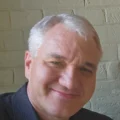
Henry Buchwald is a surgeon.
He shares his story and discusses his book, Healthcare Upside Down: A Critical Examination of Policy and Practice.

The Podcast by KevinMD is brought to you by the Nuance Dragon Ambient eXperience.
With a growing physician shortage, increasing burnout, and declining patient satisfaction, a dramatic change is needed to make health care more efficient and effective and bring back the joy of practicing medicine. AI-driven ambient clinical intelligence promises to help by revolutionizing patient and provider experiences with clinical documentation that writes itself.
The Nuance Dragon Ambient eXperience, or DAX for short, is a voice-enabled, ambient clinical intelligence solution that automatically captures patient encounters securely and accurately at the point of care. Physicians who use DAX have reported a 50 percent decrease in documentation time and a 70 percent reduction in feelings of burnout, and 83 percent of patients say their physician is more personable and conversational.
Rediscover the joy of medicine with clinical documentation that writes itself, all within the EHR.
VISIT SPONSOR → https://nuance.com/daxinaction
SUBSCRIBE TO THE PODCAST → https://kevinmd.com/podcast
RATE AND REVIEW → https://kevinmd.com/rate
FOLLOW ON INSTAGRAM → https://www.instagram.com/kevinphomd
FOLLOW ON TIKTOK → https://www.tiktok.com/@kevinphomd
GET CME FOR THIS EPISODE → https://earnc.me/zXe6xz
Powered by CMEfy.
Transcript
Kevin Pho: Hi, and welcome to the show, where we share the stories of the many who intersect with our health care system but are rarely heard from. My name is Kevin Pho, founder and editor of KevinMD. Rate and review the show at KevinMD.com/rate. Subscribe at KevinMD.com/podcast. Today on the show, we have Henry Buchwald. He is a surgeon, and his book is titled Healthcare Upside Down: A Critical Examination of Policy and Practice. There’s an excerpt on KevinMD titled “American health care: the best of times and the worst of times.” Henry, welcome to the show.
Henry Buchwald: Thank you so much. Thank you for having me.
Kevin Pho: We’ll get into your book and article in a little bit. First off, briefly share your story and journey to where you are today.
Henry Buchwald: I grew up in New York City and went to Columbia College, Columbia Medical School, and Columbia Presbyterian Hospital for internship, and then the Air Force, and I was privileged to serve in the Strategic Air Command. And then I came to Minnesota for the rest of my education in surgery, and I stayed here and became a professor of surgery. Basically, I’ve divided my time between academics, research, and active clinical practice. I think I’ve done about 10,000 operations in my lifetime.
From that perspective, the perspective of a clinician, I’ve come to the realization, and that’s why I wrote this book, that terrible things have happened to our health care. It’s been turned upside down. It no longer serves the patients. It serves the administration that’s in charge of it and who are profiting from it.
Real physician voices, twice a week
Free, and one click to unsubscribe.
Kevin Pho: So before we talk about the book, let me just ask for your perspective on general surgery. You’ve done 10,000-plus operations. You’ve seen a lot over your decades-long career. Just comment on the evolution of surgery. What do you think are some of the biggest changes over the years when it comes to surgery?
Henry Buchwald: Surgery was put on the map in the late 19th century, when anesthesia was available, and surgery went from incisional, draining an abscess, to excisional, extirpative surgery. That was the heyday. In the 1950s and ’60s, we did these huge cancer operations. Then came reparative surgery: aortic valve replacements, heart surgery.
And today, I’m glad you asked, I’m actually the advocate for the American College of Surgeons for metabolic surgery, and I think that’s the new area, which means operating on a normal organ to achieve a metabolic goal. Now, the best example in modern times is bariatric, or obesity, surgery, and there I’ve done over 4,000 of these. We operate on normal intestine, normal stomach, and we achieve a metabolic goal. We change the body’s metabolism for the better, and this is going to be a new and promising field.
As a matter of fact, I’m working with the NFLPA. The former football players have a lot of concussions, traumatic brain injury, and it would seem that we can come up with some sort of simple surgical solution that might help them, where there is today no other therapy. So surgery, as everything else, is in evolution, and the newest wrinkle in it, I think, is metabolic surgery.
Kevin Pho: All right. So let’s talk about your book. It’s titled Healthcare Upside Down: A Critical Examination of Policy and Practice. Now, before talking about the book itself, tell me the events leading up to you writing that book.
Henry Buchwald: The event is 60 years of doing surgery and seeing a time when surgery and medicine was a great contributor and we were number one in the world. I’ve written several books, but my books for lay audiences, this is a book for a lay audience. I’ve written an atlas and so on; those are medical books. But the last book I wrote was Surgical Renaissance in the Heartland, and it was about the time in Minnesota when heart surgery started here, obesity surgery started here, transplantation, and the surgeon was an independent entity, free to do research, free to think, free to contribute. And that has changed.
When I talk about the book, let’s do it now. It’s changed, following the language. We used to be a clinic, a hospital, and now we are called a firm. So we’ve taken on business language, and we are now called providers, no longer doctors. And most people now in medicine, most doctors, and I’m still a doctor, I’m not going to become a provider, most doctors are employees. So their independence has been taken. And the worst of it is the patient has become, quote, a client, and is treated like a client.
At this stage in my life, I thought, “What can I do about all this? Maybe I can write a book full of facts and statistics, but nicely framed, so that people read it and can do something about it.” Because the ultimate message in the book is it’s up to us. It’s up to citizens. Nobody’s going to do it for us.
Kevin Pho: So let’s follow up on that thread, where you said physicians are now providers and patients are now clients. The language of business is taking over medicine. What are the repercussions of that?
Henry Buchwald: Oh, the repercussions are you get connected with a robot, and then maybe you get a human being, and that human being is not the doctor that you asked for. It’s an interrogator. They want to know why you’re calling and how are you calling, and then they tell you, “You can’t see your doctor,” or, “He or she is not available, and we’ll give you another doctor.” So the doctor-patient relationship has been destroyed, and I think that’s the essence of it.
A patient used to say, “My doctor.” Now, what does that mean? It means an emblem of trust. And the doctor would say, “My patient.” Now, that’s not possessiveness; it’s the accepting of responsibility. In today’s system, the doctor goes home at four or five, a hospitalist takes over, or the night staff takes over, emergency staff takes over. The doctor-patient relationship no longer exists, and therefore the feeling of responsibility for your patient doesn’t exist, and the patient doesn’t have somebody that they feel, “This person is looking after me. I trust them.” So that’s the epitome of it: It’s a destruction of that cardinal principle that has lasted for decades, for generations, for centuries.
Kevin Pho: So your book is titled Healthcare Upside Down. What are some other major ways that the American health care system is proverbially upside down?
Henry Buchwald: The book has 14 chapters, and the first chapter is statistics, but I try to make the statistics very palatable. There are eight parameters that world health is measured by. The first one everybody knows about is longevity: How long do you live? And then there’s infant mortality, and what diseases do you cure. We are well below every Western country in Europe, Australia, New Zealand, and our neighbor Canada. Our life expectancy is at the level of countries that we would consider third-world countries.
And yet there is propaganda, so to speak, that we’re number one. We’re not number one. We’re way down on the list. We’re only number one in one thing: cost. 17 percent of our gross national product goes to health care. The nearest country is Switzerland, at 9 percent. And so we cost more than anybody else in the world, almost twice as much, and we provide somewhere one third down the list. That can be dramatically seen in longevity and life expectancy. That’s where you start. You start with the statistics and say, “Why is this happening to us?”
Kevin Pho: So answer that question. What are some of the major reasons that explain those statistics?
Henry Buchwald: Because health care has been turned upside down, because today it is in the hands of administrators. For instance, the CEOs of hospitals, the CEOs of pharmaceutical companies, of instrument companies, and certainly the insurance carriers, they’re taking home 20, 25 million dollars annually. And that’s the CEO, and then there are sub-CEOs and vice presidents and presidents and little presidents and so on. And where is that money coming from? It’s being sucked out of actual health care. It’s being sucked out of really paying doctors and nurses. And not only are they profiting, not only are they profiteers, but they’re administrative.
So in other words, if you are now an employee physician, they can tell you, “No, we don’t want you to use this drug or do this treatment or do this operation, because it’s not profitable. And we want you to bring in a lot of patients into the hospital in the beginning, because then we can do X-rays and lab and make a lot of money. But then we want them out. We don’t want them there just because they’re in pain and need some nursing care. That doesn’t make any money. We want them out. We want the next profitable patient in.”
And if you have a bunch of employee doctors, and one of them has a full slate of patients, you call and you say, “I’d like to see this doctor again,” and they say, “I’m sorry, he’s not available, she’s not available,” and you put somebody else in the slot who hasn’t got their dance card full. It’s run from that administrative perspective like a pyramid: The administrators are on top, and the patient is now on the bottom.
And with that goes the following realization: The patient pays for everything. You know, we say socialized medicine is a terrible thing. 65 percent of our health care is socialized, if you count the Armed Forces, Medicare, Medical Assistance, and the Indian Health Service. All these, Obamacare, these are all socialized medicine programs, and the rest is private industry. And you wouldn’t buy a car without seeing it, and come there and have somebody give you a different car, but we do that with medicine. We pay either through taxes or insurance premiums, and we have nothing to say about the care.
And so, actually, in the chapter I have on vocabulary, I coined a word called administocracy, and we’re living under an administocracy, where we, the citizens, the ultimate payers of health care, have nothing to say about the health care we get. And that’s wrong. That’s health care upside down.
Kevin Pho: Now, for the remaining time of the interview, I want to focus on some of your main solutions on how we can address this problem.
Henry Buchwald: I have about 10 suggestions, and I’m like the little boy who said the emperor has no clothes. They didn’t make him a tailor and have him clothe the emperor. So there are suggestions, but of course we have to work through our groups, because in essence, what happens in this country is done by lobbying. We have to work through our political organizations. We have to work through our representatives. We have to work through the media, and I’m so grateful to you for having me on this show. We have to educate people and say, “People, we should say it’s enough. Let’s do something.”
Now, one way of doing things, at least in the private sector, would be having insurance companies that are fraternal organizations. As I said, I’m a veteran. I belong to USAA, and it’s a fraternal organization. It isn’t a business. Sure, it is a business, but it is run by the people who are insured by it. And so that’s one way of getting at the private insurance.
There are many things that can be done. For instance, a national movement by a philanthropist could make this. There’s big data out there. You can mine big data in the huge tanks of computerized data to show what we’re actually paying for. So first comes knowledge, then comes the willingness to do something about it. And individuals are not going to be able to do anything themselves, but through their organizations: the American Medical Association, the postal workers, etc.
Kevin Pho: We’re talking to Henry Buchwald. He’s a surgeon, and his book is titled Healthcare Upside Down: A Critical Examination of Policy and Practice. Henry, what are some take-home messages that you want to leave with the KevinMD audience? And I believe that you also want to end with an excerpt from your book.
Henry Buchwald: From the epilogue, the end of the book, I’m going to read you the last two paragraphs.
“The opening moment of life, birth, involves health care for mother and child. Growing up and achieving adulthood involves health care. Being able to live a mature life, to work, to love, to have children, is dependent on health care. And the final chapter, aging, can be realized and even made pleasurable by health care. Health care is therefore integral to life from beginning to end. Health care is not a commodity but a necessity. Health care needs to be treated with respect. The establishment, practice, and financing of health care affects everyone, should not be neglected by anyone, and must be the concern of all of us.
“I’ve been a doctor for 60 years, and during those years, at times, I’ve also been a patient. I’ve held the hands of my patients. I’ve been the one whose hand has been held. I have received trust and given trust. The therapeutic decisions my patients and I reached were not subject to the interdiction of a third party. I do not want to have my life’s role as a physician and surgeon, my joy in the process, usurped by an administocracy. As a patient, I do not want to hold hands with a robot and confide my health problems to a faceless entity. As a doctor, a patient, a person, I reject the currently shattered doctor-patient relationship. Health care is upside down. Let us set it right side up.”
Kevin Pho: Thank you so much for joining me on the show and sharing your time and insight.
Henry Buchwald: Thank you so much again for having me.
Listen and followApple PodcastsSpotifyYouTubeMore apps · Browse all episodes