


















Listen and followApple PodcastsSpotifyYouTubeMore apps · Browse all episodes
“Scientific research impacts our lives, however, and much more profoundly than we generally appreciate. Considering the wide-ranging benefits, science is not just for scientists. Research discoveries are often translated to tools and applications down the road, usually without reference to the original science behind them. Without science, we would not have electricity, antibiotics, clean water, cell phones, nutrition labels on food products, eyeglasses, cars, cancer therapy, microwaves, vaccines, or pacemakers. And these are just a few examples! You get the idea … Science is vital to daily life.”
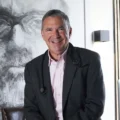
Iris Schrijver is a lifestyle medicine physician and author of On the Path to Health, Wellbeing, and Fulfilment.
She shares her story and discusses her KevinMD article, “A scientific lens on life and intuition.”

The Podcast by KevinMD is brought to you by the Nuance Dragon Ambient eXperience.
With so many demands on their time, physicians today report record levels of burnout. Burnout is caused by many factors, one of which is clinical documentation. Studies indicate physicians spend two hours documenting care for every hour spent with patients.
At Nuance, we are committed to helping physicians do what you love – care for patients – and spend less time on clinical documentation. The Nuance Dragon Ambient eXperience, or DAX for short, is an AI-powered, ambient clinical intelligence solution that automatically captures patient encounters securely and accurately at the point of care. Physicians who use DAX have reported a 50 percent decrease in documentation time and a 70 percent reduction in feelings of burnout, and 83 percent of patients say their physician is more personable and conversational.
Rediscover the joy of medicine with clinical documentation that writes itself, all within the EHR.
VISIT SPONSOR → https://nuance.com/daxinaction
SUBSCRIBE TO THE PODCAST → https://kevinmd.com/podcast
RATE AND REVIEW → https://kevinmd.com/rate
FOLLOW ON INSTAGRAM → https://www.instagram.com/kevinphomd
FOLLOW ON TIKTOK → https://www.tiktok.com/@kevinphomd
GET CME FOR THIS EPISODE → https://earnc.me/4OBSFE
Powered by CMEfy.
Transcript
Kevin Pho: Hi, and welcome to the show, where we share the stories of the many who intersect with our health care system but are rarely heard from. My name is Kevin Pho, founder and editor of KevinMD. Rate and review the show at kevinmd.com/rate. Subscribe at kevinmd.com/podcast. Today on the show, we welcome back Iris Schrijver. She’s a lifestyle medicine physician, and she’s the author of the book On the Path to Health, Wellbeing, and Fulfilment. There’s an excerpt from that book on KevinMD titled “A scientific lens on life and intuition.” Iris, welcome back to the show.
Iris Schrijver: Thank you, Kevin, for having me on again.
Kevin Pho: So for those who didn’t get a chance to listen to our first interview together, just briefly share your story and journey to where you are today.
Iris Schrijver: Yes. So I’m originally from the Netherlands, and that’s where I went to medical school. Then in the United States, I did a research fellowship and eventually became board-certified in clinical molecular genetics and in clinical pathology, which is laboratory medicine. Then I had a long and rewarding career as a faculty member in the pathology department at Stanford University, where I wore many different hats. That was a great time, and ultimately, I became a full professor.
But at some point, my husband and I both decided to step away from employment and to move from California to Oregon, although I’m still very happily affiliated with Stanford as an adjunct clinical professor. That allows me to do mentoring and teaching and case consultations. But going to Oregon and pursuing a new lifestyle enabled us to pursue many new adventures, and both of us remained engaged with our profession. You know, as physicians, we have so many different options to remain engaged. I became involved with a free clinic, Clackamas Volunteers in Medicine, a clinic for underinsured and uninsured people, and eventually I became its medical director. Now I’m setting up a lifestyle medicine program for this clinic.
I also finally had time to write my new book, which is On the Path to Health, Wellbeing, and Fulfilment. During the writing of that book, I learned more about the relatively new medical specialty of lifestyle medicine, and it turned out to be a great fit. I was so impressed with the science behind lifestyle medicine, and with the urgency with which we need it in our world and in our practice today, that I actually put the book on the back burner for a little while and devoted myself to becoming certified in lifestyle medicine. So now I’m a lifestyle medicine physician.
It was a great fit, because then I picked up my book again, and it is rooted in lifestyle medicine. The basis of lifestyle medicine is scientific evidence; it shows us how we can truly improve health and quality of life. My book is about the scientific basis of what we think we know about healthy living, so it was really a great fit to put those two together.
Real physician voices, twice a week
Free, and one click to unsubscribe.
Kevin Pho: Now, for those who aren’t familiar with exactly what lifestyle medicine is, just define that for us.
Iris Schrijver: Lifestyle medicine is the medical specialty that uses evidence-based lifestyle therapeutic interventions as a primary approach to prevent, treat, and often reverse the chronic diseases that are so common today. It does that by addressing the root causes. It looks at the whole person, and it enables people to adopt and sustain healthy habits to improve their health and quality of life. That way, we can actually accomplish health restoration, and we can regain the vitality that so many of us have lost.
Lifestyle medicine does that through six major pillars. The first pillar is a whole-food, predominantly plant-based way of eating. The second pillar is optimizing and individualizing physical activity plans, and those two together already improve your mood, increase your chances of longevity, and, of course, improve your health. Then there is improving restorative sleep, making and maintaining good social connections, stopping tobacco and other harmful substances, and, finally, managing stress with healthy coping strategies. Those together are excellent for our patients, but also for health care providers. It has a ripple effect throughout. I always say if you talk the talk, you have to walk the walk.
Kevin Pho: All right, so let’s talk about the excerpt on KevinMD from your book. It’s titled “A scientific lens on life and intuition.” Now, for those who get a chance to read your excerpt, just walk my audience through it and share the story of why you decided to use that one.
Iris Schrijver: Yes. My book recently came out as a paperback and a Kindle, and that’s why I submitted the excerpt, so that it receives a wide audience, of course. The reason was that as a physician who practiced in academia for many years, but also in nonprofit medicine, I’ve become alarmed by the way that science is often misunderstood or dismissed altogether. You know, it’s often seen as something that is either not relevant, or too difficult, or maybe not interesting. With my article, I’m trying to highlight how vitally important it actually is. And you don’t have to be a scientist to appreciate science, after all, just like you don’t have to be a Michelin chef in order to appreciate good food.
The attitudes about science that we see today certainly affect our patients and the stories that they bring to us, but also physicians and the entire health care system. My book invites the reader to question what they think we know about healthy living. There is so much information out there, and it’s often contradictory, so it’s very difficult, I think, for many patients, for many physicians even, to discern what is factually correct and reliable. And yet our perceptions of truth and validity really influence our behavior and thereby our health. I wanted to take a deeper look at our lifestyle choices and what the impact is, and at the psychological factors that influence us.
So in the first half of the book, I look at where our knowledge comes from, what is actually a good foundation of knowledge, and how we are influenced, manipulated, and bamboozled. I do that often with anecdotes and stories from real life, just to highlight the importance of science and how it is integrated in everything we do in all of our life. There are amazing things that I mentioned in the article, such as that if you string the DNA from all of our cells together, you can wrap your DNA around the world two million times. That’s just awe-inspiring, but it’s also highly relevant. We wouldn’t have cars or glasses or clean drinking water or fleece or chemotherapy or vaccines without science, of course.
So the article is really written to inspire, and to remind us also, as physicians, that our practice must be rooted in science. And when patients don’t feel heard, and that’s often the case when we as physicians have very little time to see them, and they are confused about the type of information, or they don’t feel heard because they don’t really have the time they would like with their physician, when that happens, they are going to find information in sources they can understand. What concerns me is that when people do that, they may actually go to something that feels good. They may go to somebody who has a consistent message, but that message may be completely wrong, and it may not be conducive to their health in the long run.
We in health care are often quick to endorse that we want our patients to have good rapport with us. But the point of my article is that if we can harness science and understand it, but also convey it, then we practice from a position of strength. It’s a strength of lifestyle medicine, it’s the strength of the positive psychology techniques that we can apply to help our patients, and it is also a strength of medicine itself, of course. It’s the foundation of medicine, and that way we can arrive at what I call positive health.
Kevin Pho: So earlier on, you said that science sometimes is being dismissed. I’m sure that you could come up with many examples of that. I can, certainly, especially during the pandemic. But what would be at the top of your mind in terms of examples where you feel science is being dismissed?
Iris Schrijver: There’s a trend that I find really concerning. It was one thing when I read it; that in itself didn’t surprise me, but then if you look at the history, you can see the erosion of science as a foundation. For example, currently about 50 percent of Americans think that astrology, the position of the stars determining the course of your life, is either very scientific or somewhat scientific. What surprised me was that in 2004, more than 60 percent of Americans thought that astrology was total bogus. So what we see is that each year, fewer and fewer people dismiss it as bunk. That goes back to the increasing anti-science agenda in our country, where that becomes possible. People are thinking, “I hear this multiple times. It’s fun, it’s innocent maybe, and I believe it.”
It’s actually called the illusory truth effect. If people hear something more and more, and of course with social media, this goes way beyond astrology, which has relatively small importance, it also goes into our view of medicine, vaccines, physicians, and science itself. If you have the illusory truth effect, then if you hear something more often, you’re going to believe it more readily. It all goes back into how health information is perceived, remembered, and shared. And of course, the science itself changes too over time, and during the pandemic, what was truth at one point may be misinformation now.
Kevin Pho: What are some ways that we as clinicians, based in science, can really strengthen our science-based message to our patients?
Iris Schrijver: Yes, it’s a great question, and it’s hard. Patients often come with the information that they believe, and they have their own cultural background and their own frame of reference, of course, and we want to meet that. I like the concept of mindful caring. It’s an acronym I came up with, and to me it means that we always have to be mindful with our patients, right? Listen till you don’t exist, fully present when you interact with your patient. That’s the M.
The I is being inquisitive. We need to stay inquisitive as physicians, especially when we have time pressures. What is the actual science? I’ll give you a brief example with high cholesterol. The national guidelines are that physicians are supposed to talk about lifestyle with their patients first. Lifestyle changes don’t have side effects, after all, right? But what we see today, for various reasons, is that the patient expects a prescription, and the physician is again maybe thinking that the patient won’t adhere to lifestyle changes, or is under time pressure, so will most likely prescribe a statin. So that’s what I mean with being inquisitive: Keep science at the forefront.
We need to look not just at correlation but also at causation. A patient may come with a story about somebody who is drinking and smoking and never socially interacting, and yet lived to be 100. Then we need to explain that that is a case report, and that new research needs to be seen within the entire body of science and needs to be integrated, so that we can actually make these correlations and look at causality. So that’s the I.
The N is nurturing: nurturing yourself, of course, your practice, and your patients, and also your knowledge. Nourish your knowledge, and be discerning in where your knowledge comes from. So that’s the D, be discerning: What is worthy of our attention, and what is not worthy of our attention? I say it in that way because we have very little time to actually explore these kinds of things, so it’s ever more important to seek out reliable information. And then mindful: I think that if we want to practice medicine in the most fulfilling way, that’s the F, then we put all these factors together and arrive at mindful caring.
Kevin Pho: We’re talking to Iris Schrijver. She’s a lifestyle medicine physician, and we’re talking about her book, On the Path to Health, Wellbeing, and Fulfilment. Iris, what are some of the other main messages from your book that you want my listeners to come away with?
Iris Schrijver: I want listeners to understand that there is a lot that we know and a lot that we don’t know, of course. In my book, I highlight where our knowledge comes from and how we are influenced, but in the second half of the book, I also look at specific topics. I look at nature versus nurture, at stress, at prevention, at diets, all those kinds of things, and again, with lots of stories and examples, I highlight where we are today and where it’s likely to go in the future. I’m hoping to inspire people to be critical about their knowledge, but also to have fun with it. Science gives us tools, it helps us understand our world, and with science, we can reduce the power of baseless claims.
That is important for everybody. You may be a physician reading the book, or somebody else with a role in health care, or just somebody who’s interested in feeling good and optimizing health in any phase of life. The question really is: Are you going to be in the driver’s seat, or are you going to be taken on a roller coaster ride throughout your life?
Kevin Pho: And my final question: Any other take-home messages that you want to leave with the KevinMD audience?
Iris Schrijver: I would like for anyone to be an advocate for health, well-being, and fulfillment, which means that we do need a different health ecology and also a culture shift in medicine, but maybe also in daily life. Tap into that kindness, into that compassion. And I would say that if we can believe that better health and well-being are within reach, and I truly believe it, then it is very much helped if we stand up for science, that we not let it erode. Because then we create an environment in which health, happiness, and people can genuinely thrive.
Kevin Pho: Iris, thank you so much for sharing your time and insight, and thanks again for being on the show.
Iris Schrijver: It’s always nice to talk.
Listen and followApple PodcastsSpotifyYouTubeMore apps · Browse all episodes















