













Listen and followApple PodcastsSpotifyYouTubeMore apps · Browse all episodes
“I acknowledge that many problems currently plague our country. However, hunger, food insecurity, and poor health are national priorities that require an immediate and robust response. The Biden-Harris Administration’s hunger, nutrition, and health strategy answers the call for a multisector, concerted, and committed approach to improving the nation’s health. I look forward to the day when hunger and food insecurity will no longer be a policy imperative.”
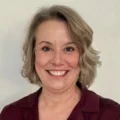
Janice Phillips is a nurse and public policy advocate.
She shares her story and discusses her KevinMD article, “The national strategy on hunger, nutrition, and health offers hope.”

The Podcast by KevinMD is brought to you by the Nuance Dragon Ambient eXperience.
With a growing physician shortage, increasing burnout, and declining patient satisfaction, a dramatic change is needed to make health care more efficient and effective and bring back the joy of practicing medicine. AI-driven ambient clinical intelligence promises to help by revolutionizing patient and provider experiences with clinical documentation that writes itself.
The Nuance Dragon Ambient eXperience, or DAX for short, is a voice-enabled, ambient clinical intelligence solution that automatically captures patient encounters securely and accurately at the point of care. Physicians who use DAX have reported a 50 percent decrease in documentation time and a 70 percent reduction in feelings of burnout, and 83 percent of patients say their physician is more personable and conversational.
Rediscover the joy of medicine with clinical documentation that writes itself, all within the EHR.
VISIT SPONSOR → https://nuance.com/daxinaction
SUBSCRIBE TO THE PODCAST → https://kevinmd.com/podcast
RATE AND REVIEW → https://kevinmd.com/rate
FOLLOW ON INSTAGRAM → https://www.instagram.com/kevinphomd
FOLLOW ON TIKTOK → https://www.tiktok.com/@kevinphomd
GET CME FOR THIS EPISODE → https://earnc.me/HvRfm7
Powered by CMEfy.
Transcript
Kevin Pho: Hi, and welcome to the show. Rate and review at KevinMD.com/rate. Subscribe at KevinMD.com/podcast. Today on the show, we welcome back Janice Phillips. She’s a nurse and a public policy advocate, and we’re going to talk about her KevinMD article, “The national strategy on hunger, nutrition, and health offers hope.” Janice, welcome back to the show.
Janice Phillips: Thank you so much for having me, Dr. Pho.
Kevin Pho: Thank you. So we’ll get into the article a little bit, but for those who didn’t get a chance to listen to our first episode together, just briefly share your story and journey to where you are today.
Janice Phillips: Thank you. I’ve been a nurse for over four decades now. I’ve had a wonderful career. I’ve really pretty much dedicated my career to working in the disparities realm, if you will. Sometimes, you know, Kevin, I feel like I’m the poster child for the determinants of health, because I’ve experienced some of those same factors, food insecurity and homelessness, and I bring a very lived experience to the dialogue around these issues. And I’m still on the forefront, trying to make sure that everyone has the opportunity to experience optimal health.
Real physician voices, twice a week
Free, and one click to unsubscribe.
Kevin Pho: Give an example of some of the work that you do that’s moved the needle when it comes to health disparities.
Janice Phillips: Well, just caring for trauma victims in an emergency room really fueled my interest in public health. So not only have I provided the direct care, I’ve actually worked in the community, trying to work with women around breast and cervical cancer screening and promoting early detection. I’ve counseled lots of women and communities and done a lot of public education around health disparities.
And in my current role here at Rush University Medical Center, I am the director of health equity, and I also help to co-chair our public health pillar and our Health Equity Institute. That’s pretty exciting for me, because I have finally connected the dots. Even though I bring practice experience and I’ve done research and disparities work, I’m connecting the dots and looking at what those policy drivers are that continue to influence whether or not people can live healthy lives. So I’m really into that, and I just really appreciate a great cadre of colleagues who are like-minded, who are trying to improve health and well-being, particularly among our underserved populations.
Kevin Pho: One of the topics that you mentioned as part of your story was the interest in food insecurity, and that’s one of the themes in your KevinMD article, “The national strategy on hunger, nutrition, and health offers hope.” Now, before getting to the article, give us a little bit of context around why you wrote that article.
Janice Phillips: You know, Kevin, I was just really intrigued to see that we had not had this dialogue at the White House. They had not convened a conference of this magnitude around hunger issues in over 50 years. And then I’m also intrigued by the fact that when I even see the word hunger, I used to think that was a problem only in third-world countries. Hunger, hunger. I know that there’s food insecurity, but the word is about people that are going to bed hungry at night.
And I think of a country like ours: Even with the holiday season coming up, I know that there’s going to be lots of food that will be wasted, but yet there’s a population of people who won’t be able to sit at that Thanksgiving table, or there’ll be people that will still be struggling just trying to put food on their table, not only during this holiday season but beyond. And so I’m just really encouraged that there’s a renewed interest in trying to address hunger, nutrition, and health, but also a little discouraged that we even have to have this conversation. But nonetheless, I’m encouraged that there are sectors, disciplines, and others who are really moving forward to try to make a difference.
Kevin Pho: So paint us a picture of some of the hunger issues that you’re seeing. What are some examples? Do you have any studies or data?
Janice Phillips: Well, you know, we have patients, we have communities that we serve. We actually ask our patients, “Do you have enough food that will last you? What will you do if your food runs out?” We have actually opened up a food pantry so that our patients would have access to food. In our cancer center, we discovered that even our cancer patients didn’t have enough food to meet their nutritional needs once they were home or discharged from the hospital. We opened up another pantry in another building, so people can come and get fresh fruits and vegetables. And then we have partnerships with community partners to make sure that our patients are connected to food resources.
I’m happy and encouraged by what I see health care institutions doing now, saying, “Yeah, we do good clinical care, but that’s just not enough. We’ve got to be able to help meet some of these basic needs if we want our patients to be healthy.”
Kevin Pho: Now, you wrote about how the Biden-Harris administration recently had a meeting, or a national strategy, on hunger, nutrition, and health. So tell us about that.
Janice Phillips: They have a number of objectives outlined in this strategy. One is to increase access to nutritious foods. They’re looking to pilot test some tailored meals for people that are receiving Medicare or Medicaid. We also know that when people do not have healthy diets, that puts them at an increased risk for a number of chronic conditions, so pilot testing these nutritional meals will be very important.
They’re looking to expand nutritional programs in our schools. You know, even though our kids may go to school every day, what happens when school is out? What happens during the summer months? If they have no food at home, then how can we expect them to continue to grow and to thrive? And so, expanding those types of opportunities for those in need.
The agenda also calls for increasing physical activity. Many Americans are very inactive, but we also know that some communities do not have access to safe places to exercise, or green spaces where they can go out and engage in physical activity. And then, last but not least, how do we measure all of this? What are our metrics? How do we know that we’re going to be successful in these endeavors? And so the agenda calls for some of these strategies, and it also calls for an all-hands-on-deck approach. So there are numerous sectors who have donated their financial support to make these things happen.
Kevin Pho: So what kind of time frame are we looking at when it comes to tangible results? Is this something theoretical, or are they having concrete programs, or is it just in a pilot stage?
Janice Phillips: Well, the goal is to eliminate hunger by 2030. That’s literally around the corner, but if you look at 2030, which is less than 10 years, I think it’s feasible. And I think even though the strategy calls for 2030, every day we should be intentionally trying to address these issues. It will take time for some progress, but I’d like to believe that there are enough resources that we can be successful at this, all hands on deck, taking a serious look at this, thinking about what our responsibilities are as global citizens in terms of reducing waste and sharing our resources. And I think we could probably achieve that goal, and I don’t think we have to wait until 2030 to do it. We should be working toward that goal every single day.
Kevin Pho: And what’s your opinion on this agenda? Do you think that it’s enough? Is there anything that you would have liked to see?
Janice Phillips: I think it’s a great start. I think it is comprehensive, and I really like the notion that it’s not just the federal government. It’s an all-hands-on-deck approach: What can other sectors do? It might be our food industries, it might be our park industries, this all-hands-on-deck approach. And so I think it’s a great starting point, but I do think that we have to be mindful to monitor the progress, because it will take money, and it will take time. Even though we might have sectors that are donating financially, if there are any kind of congressional appropriations that need to be put in place, we’ve got to make sure that happens through our advocacy, but also that it trickles down to those communities that are most in need.
Kevin Pho: Give us a sense of how much money we are talking about, and what kind of metrics are they using to measure success?
Janice Phillips: Well, right now they have commitments of about $8 million from a number of sectors. I think the metrics are still being worked out, but I’m encouraged, because we already have some of our health care institutions who are already doing some of this work, who are already trying to track their progress. As you know, the social determinants of health, we’ve been talking about that for a number of years now in our institutions. I work at a health care institution; we’re already on board with that.
So collectively, we all should have some metrics that we can share, because again, we’re looking at very specific communities in different parts of the country. Maybe we can pool our data together in some type of repository, but we all should be measuring our progress, and I think we’ve got a pretty good start on that already.
Kevin Pho: So this is a macro solution to the issue. Is there anything that we could do on an individual level, or on a clinic or hospital level? Anything that I, as a primary care physician, or some of my physician listeners who are listening to you, anything that we can do to help?
Janice Phillips: Be aware of the issue. Don’t be blindsided like me, thinking that this doesn’t apply to people in our own backyard. Some of us even have family members who experience problems with nutrition and access to food. We can donate to our food pantries or to those causes that are trying to ensure greater food security.
And what I’ve done on a personal level: I am much more mindful now of what I waste. I mean, do I need all of that in the refrigerator? No. Why am I wasting things? Do I have anything to share? Can I lend my voice to some of the advocacy issues around more funding and appropriation of resources?
Kevin Pho: Yeah. So give us an example. When you took a look at your fridge and you thought to yourself, “Do I really need all this food?” what would be an example or an illustration of that?
Janice Phillips: Oh my goodness. You know, I could go to the produce section, and you buy all this romaine lettuce, for example. Hey, y’all don’t even eat a salad every day. Why am I buying all this? It’s the truth. Why am I going for all this romaine? I have good intent: I’m going to eat a salad every day. I don’t eat a salad every day, and then I end up throwing it out. I literally end up throwing it out. Or I buy these tomatoes, bunches and bunches of tomatoes, and I don’t eat them, and I look around and there’s mold on them. I’m like, how does that happen? And then I end up tossing it. That’s a waste of resources. It’s a waste of money.
So how do I, in my mind, say, OK, what am I going to eat this week? How do I go about meal planning? Because instead of wasting that, I could take that resource, the money that I spent on food that I’m wasting, and donate it to a particular cause.
Kevin Pho: We’re talking to Janice Phillips. She’s a nurse and a public policy advocate. Her KevinMD article is titled “The national strategy on hunger, nutrition, and health offers hope.” Janice, tell us some of the next steps that we can expect and some of your take-home messages for the KevinMD audience.
Janice Phillips: There’s this movement to achieve health equity, and addressing hunger, nutrition, and physical health is a part of that. They are among those underlying structures or barriers that keep us from achieving that goal. I think our partnerships with the communities that we serve are extremely important, and I think no matter where we are, whatever institution or organization we work for, do we have our own agenda? Do we have a road map or some type of initiative that will address some of those basic social needs? I think collectively we can really move the needle on this, but we have to be mindful, and we also have to be willing to take a look at this, particularly if we’re in the business of improving health and health outcomes.
Kevin Pho: Janice, thank you so much again for sharing your time and insight. Thanks for coming back on the show.
Listen and followApple PodcastsSpotifyYouTubeMore apps · Browse all episodes