
















Listen and followApple PodcastsSpotifyYouTubeMore apps · Browse all episodes
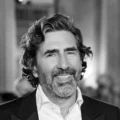
We are joined by Ketan Kulkarni, a physician entrepreneur. We dive into the often-used but loosely defined word “success.” With the constant bombardment of images of success through the media, it’s easy to feel lost and unclear about what true success means. We explore the different parameters of success and how they’re constantly changing. Ketan shares his insights on how success is not just one single goal or achievement and how it’s important to have a comprehensive definition and vision for success. We also discuss the importance of feeling successful and how it’s just as important, if not more, than appearing successful. Tune in to gain a deeper understanding of what success means and how to achieve it in a meaningful and fulfilling way.
Ketan Kulkarni is a physician entrepreneur.
He shares his story and discusses his KevinMD article, “Is success really just about wealth and achievements?”

The Podcast by KevinMD is brought to you by the Nuance Dragon Ambient eXperience.
With a growing physician shortage, increasing burnout, and declining patient satisfaction, a dramatic change is needed to make health care more efficient and effective and bring back the joy of practicing medicine. AI-driven ambient clinical intelligence promises to help by revolutionizing patient and provider experiences with clinical documentation that writes itself.
The Nuance Dragon Ambient eXperience, or DAX for short, is a voice-enabled, ambient clinical intelligence solution that automatically captures patient encounters securely and accurately at the point of care. Physicians who use DAX have reported a 50 percent decrease in documentation time and a 70 percent reduction in feelings of burnout, and 83 percent of patients say their physician is more personable and conversational.
Rediscover the joy of medicine with clinical documentation that writes itself, all within the EHR.
VISIT SPONSOR → https://nuance.com/daxinaction
SUBSCRIBE TO THE PODCAST → https://kevinmd.com/podcast
RATE AND REVIEW → https://kevinmd.com/rate
FOLLOW ON INSTAGRAM → https://www.instagram.com/kevinphomd
FOLLOW ON TIKTOK → https://www.tiktok.com/@kevinphomd
GET CME FOR THIS EPISODE → https://earnc.me/dEtesg
Powered by CMEfy.
Transcript
Kevin Pho: Hi, and welcome to the show. Rate and review at KevinMD.com/rate. Subscribe at KevinMD.com/podcast. Today on the show, we have Ketan Kulkarni. He’s a physician entrepreneur. His KevinMD article is titled “Is success really just about wealth and achievements?” Ketan, welcome to the show.
Ketan Kulkarni: Thank you, thank you for having me here. It’s like a dream come true, meeting a celebrity, and it’s so much a pleasure to be here and connect with the tribe.
Kevin Pho: Well, thank you. Thank you so much. And as I said before, I couldn’t do it without physicians like yourself writing for my site and coming on the show. So we’ll talk about your article in a little bit, but first off, just briefly share your story and journey to where you are today.
Ketan Kulkarni: Yeah, so I started, after 14 years of training like most of us in the tribe, with a focus that was, in retrospect, fairly narrow, as a clinician researcher. I went on to become very successful in my academic program, but then I faced burnout, and I realized that I needed to rediscover my own identity. That led to serial leadership training and subsequently a coaching certification, and I figured out that my identity was much broader than just being a physician. It is very important to be a physician and do a great job treating our patients and be a researcher, but I was looking for a broader identity. I discovered, or rediscovered, that I was interested in entrepreneurship, interested in writing, interested in content creation, interested in launching startups, and really having a meaningful, purposeful life that has a positive impact on the globe. And that’s where I am now, creating and co-creating learning with folks like yourself all across the world.
Real physician voices, twice a week
Free, and one click to unsubscribe.
Kevin Pho: So you mentioned earlier that you are a clinician researcher. You did that for many, many years and were very successful in what you did. Why was that not enough of an identity for you? Why did you want something more than that?
Ketan Kulkarni: Yeah, because I think when I was deep into the clinician researcher role, I realized, when I was going through burnout, that I did that at the cost of many other things. I was maybe ignoring my health; I was ignoring my relationships. I was working 16-hour days. During 14 years of training, I pretty much put my art interests, sports interests, and so many other entrepreneurial interests just on the back burner, because it is very intensive, and it needs to be intensive training to become the expert we are expected to be.
But in retrospect, again, I think we need to preserve who we are, be authentic, and be who we are to become the best vision and version of ourselves. And I think that was the inner calling that told me, “Well, this is great. You’re contributing as much as you can, but that’s part of the whole and not the whole itself.” So that was a sudden aha moment that happened over a few years, probably between 2017 and 2019. Then I decided, “OK, I have to take on the challenge,” and I’ve met amazing people since. It’s just been phenomenal.
Kevin Pho: There are a lot of physicians now who can experience the same feelings that you were feeling back then, right? They’ve spent decades in their training, they’re defined by being a physician, and they may experience symptoms of burnout. Now, you actually took that step to broaden your identity. How hard was it for you to do that? Because physicians, by nature, spend many, many years being a physician; that’s their only identity. How difficult was it for you to break out of that and broaden that?
Ketan Kulkarni: Yeah, I think that’s a wonderful question, and I think it was difficult. It became possible through seeking help, seeking mentorship, seeking coaching, developing my inner drive, and developing more trusted relationships where I could share, “Well, this is how I feel,” and they were going to positively support me. And coaching was a big part of it. I became a certified coach because a couple of coaches I met through one of the leadership programs I did were absolutely phenomenal. They almost ripped apart my brain and put it back together, saying, “These are your fallacies.” So it’s a very powerful tool, right? Athletes use it, professional business people use it, so why not us? I thought there was so much room to grow in that space that I ended up becoming one myself, and that helped me, I think.
And being without pride, really connecting with more people. The more we talk about it and the more we put the tools out there, I think the better it will get. That was one of the reasons for writing our first book, because Francis Yu, who is from New York, and I looked at hundreds of resources, and we couldn’t find one single resource that could easily explain, in a very coffee-table type of read, just put all the concepts out there and explain what it means to be authentically successful and fulfilled in life. And we didn’t want other people to go through four years of reading to figure out an answer that’s already in the public domain. It’s just that we need to make it accessible, talk about it, and really present the evidence.
There’s a lot of rah-rah stuff out there: “Anybody can do anything.” Well, that’s all true, but we really wanted to back it up. We are scientists and physicians, right, and we want everything backed by evidence. We decided, “Well, let’s take it up.” We spent two years doing the research and all the reading, from ancient texts to psychology to everything, and then put it all together. So it was a great journey of growth. That’s how it happened. There is discomfort, but I think if we want to grow, it is going to be somewhat uncomfortable. We cannot do a better performance if we don’t accept the growth system; that’s what I learned.
Kevin Pho: All right, so let’s talk about your KevinMD article titled “Is success really just about wealth and achievements?” Now, how did this article come together?
Ketan Kulkarni: Yeah, so I think it came together through my own journey and Francis Yu’s journey. When I was in that somewhat narrow focus of clinician researcher, I was driven to publish in The Lancet or JAMA or whatever international, highly profiled journal, go present all over the world, do a lot of good clinical work, be on the committees, and have that identity. But if you really look at it through a critical lens, it was all driven by achievement. And we know now, based on the data that’s published in the success literature, it’s very clear that achievement, whether one achievement or a series of achievements, is not equal to success. There’s phenomenal literature that success is a very broad church, and it means something much more than just achievement. It has a lot of importance; it includes a lot of different angles and scopes. It needs to talk about relationships; it needs to talk about your community, your contribution, your meaning, your legacy, your significance. It’s more like a kaleidoscope, right? It’s a big pattern. So if you are a clinician researcher who’s very well known globally, but you have multiple failed relationships, and you have no support and no family, and your finances are not taken care of, that’s the problem, right?
And the other big piece I had to learn, and you’ve been phenomenal at that, is that finance is a very big part of this equation, right? Not everybody needs to become an ultra-high-net-worth individual, but we need to manage our finances. Very few of us will go off the grid and live in the jungles without needing any money. So if we need money for transactions, we have to understand that that’s a means goal. And how is that going to support our end goal? But then it comes to us to take the responsibility to supply those means to have the end goals, whatever they may be. Some people travel, other people research something; you can do whatever you want. But I think we need to figure out what our money mindset is: What does money actually mean to us, and how do we build a strong relationship with money?
And that’s how the article came together. In our book, too, we addressed all these concerns: What’s the literature on success? What does it truly mean? How do we achieve it? And then it talks about what we call outer excellence: What does success really mean? How does finance really work? What does money mean to you? What do personal growth and leadership mean? And how do we put it all together to become the CEO of our life? So the article is really to give snapshots of all that literature and present that evidence to our listeners and readers.
Kevin Pho: So I think what you said really resonated, in that success can’t just be your academic or your clinical achievements. It’s like legs of a stool, right? You have your financial success and, of course, your success with family and relationships as well. And I think that point certainly should resonate with a lot of physicians out there. Now, sometimes it’s easy to measure these standards of success, like when it comes to clinical achievements, how many awards you get, or even when it comes to money, whatever your net worth is. How do you measure success for something that’s less obvious, say relationships and family? How does one feel successful when it comes to something without any clear standards?
Ketan Kulkarni: Yeah, and that was one big thing we realized: Most of our yardsticks for success, which society, peers, the internet, the media, everybody bombards at us all the time, are external parameters of success, only because they are so easy to measure. It’s very difficult to dispute a net worth of $10 million. If somebody shows they’ve got $10 million, they’ve got it. But the intrinsic parameters of success are far more nuanced, I think, and we really need to understand our own core values, do some of the thought work, learn to manage our thoughts and emotions, and really align ourselves with our core mission and values and purpose and what it truly means to us.
So it does require what we now call success blueprinting. We need to truly understand what our own blueprint is all about, because you may be all about reaching as many physicians in the world as you can and spreading your message to them, but for somebody else, it may be just compassion. They might just want to donate their time for the purpose of making others feel better, at whatever little cost. Somebody else might just want to travel and learn about global cultures. But unless we truly ask ourselves who we are and what is really important to us, which I don’t think is a five-minute answer. People really need to do the work to figure that out and then define their intrinsic parameters, or lens, if you will, to truly align their inner excellence and outer excellence.
And that’s, I think, the hard part: There’s no simple yardstick to measure inner excellence. Only we can decide. Like, how many times do you get asked, “Well, do you feel successful?” You look amazingly successful, but if you didn’t feel successful and that was not enough, well, it’s not enough. Or if you had very little but you feel very fulfilled, and you’re contributing, and it’s all meaningful, well, that’s fantastic, right? That’s amazing. Nobody needs to say, “Well, that guy’s only got a net worth of, he’s making about $500,000.” Why does it matter? They are very fulfilled and happy with that.
So I think that’s where the journey began: How do we collaborate? We talk about precision medicine all the time, but how do we apply precision medicine concepts to each of us? That’s really, really important. And I think there is very good published science for that. It’s just that we need to spread the message, talk about it, and really create a framework so that all of us can really apply those things, access them, and be their best visions and versions.
Kevin Pho: Now, through your coaching practice, and I think through your colleagues, you yourself talk to a lot of physicians as well. In general, what is the typical physician’s vision of success? Is it singularly focused, like you were when you were a clinical physician, or is it broad, as we mentioned? In general, how do physicians view success, just from your experience in coaching?
Ketan Kulkarni: Yeah, and I think, and I have had the opportunity to present all over the world and talk to a lot of people and now meet physicians from all disciplines, and even professionals, like I’ve got a lot of friends in engineering and law and other professions, it seems that a lot of our success definition is very narrow and focused on achievement. We rarely get asked the question, “Well, how do you feel successful? Do you actually feel successful? How are your relationships doing? How is your health doing? Are you working extra-long hours all the time? Are you absorbing too much media content that’s really wasting your time?”
I think the culture is very driven by achievement and towards achievement, and often it’s intangible, right? We are often told at international conferences, “Well, that guy is very well published.” What does that mean? Is it a thousand papers or 20 papers or 50 or 100, and in what journals? We’ve set these pedestals so high that it almost becomes intangible. We don’t have any good definitions of what those things mean, and I think a lot of people end up racing and chasing towards those metrics. So it almost becomes like an arrival fallacy.
That was one of the things that led to my own journey. When I was talking to big international experts, it came across that, well, they are at 500 papers, they’re very well known, and they’re fantastic. But when I talked to them, and maybe I’m nosy, I asked them, “Well, how do you actually feel on a day-to-day basis?” They’re like, “Oh my God, it’s crazy.” Well, I was expecting to hear the answer, “It’s great, I’m looking forward to this in my life,” and that came across, but from far fewer people compared to the other answer: “Oh, I can’t really deal with that. It’s just too much, and I’m just going to stop this in the next five years and go to whatever place and just relax.”
We cannot live from vacation to vacation, or anniversary to anniversary, or a good event to a good event. You have to have something more comprehensive. I think there was a great article in KevinMD recently where they talked about almost the concept of a working retirement. It has to be a constant remodeling of things. We cannot set a hypothetical deadline and a mirage that it’s going to be fantastic after that. It never happens. So I think the gist of what I’m trying to say, probably, is that we need a comprehensive framework for success and to consistently apply it, because it works. I think it’s all established, and it’s up to us to grow up.
Kevin Pho: Yeah, I think that singular focus on achievement, like the example that you mentioned, could also be a primary contributor to burnout as well, because there is never going to be enough achievement for physicians, who could always be chasing that next one, right? So when you talk about broadening the definition of success, and you could talk about your own coaching, how difficult is it for physicians to accept that?
Ketan Kulkarni: I think the change is already happening. When it was starting, maybe when you first started, maybe it was just nonexistent, but the more I’m talking to people, the more it seems that it’s being brought to the limelight, right? A lot more physicians I know are physician entrepreneurs, physician authors, physician media people, physician whatever you want to put there. They’re not just physicians; they’re human beings who have the role of an excellent physician and XYZ, however many identities they want. So I think the change is happening already, and if we consistently apply these principles, like we presented in our book, then I think it’s going to happen.
A lot of people are taking it upon themselves to create their own tribes. There are so many beautiful podcasts and platforms available. We don’t even really need to look too much. If you start googling now for physician podcasts, there are tons out there. I’m really optimistic that in time to come, we will be able to battle the burnout, we will be able to improve our quality of life, and we will deliver excellent patient care.
I also don’t think the answer is that everybody quits practice and starts setting up their own business. That’s going to create another big problem. So I think we do need to figure out how to have fulfilling medical practices and do whatever else you want in life. There are going to be difficult night calls, and you’ve got a new patient and integrations. We are trained, and heavily well trained, to do that well. But then how do we make that acceptable, and not put the wrong things on the pedestal, like, “You have to work 24/7. You have to burn the midnight oil. It’s never enough”? I’ve heard all of those things repeated over and over, and they say, “Oh, no, this is what the job demands,” so that’s the minimal expectation. But who said it? It’s we ourselves who have said it.
And there’s abundant literature, right? Excessive hard work and long work hours are actually deleterious to health and outcomes and performance in the long term, but yet we will put up with it. There was a famous researcher in Canada I was talking to who said, “I don’t want to take on any new projects. I’m at a point of really hurting my health permanently.” And it really moves me, right? That’s just not right. You have these brilliant people at the top of their careers. They need to feel successful, not just be a pure success because they have XYZ achievements.
Kevin Pho: We’re talking to Ketan Kulkarni. He is a physician entrepreneur. His KevinMD article is titled “Is success really just about wealth and achievements?” Tell us some of your take-home messages that you want to leave with the KevinMD audience.
Ketan Kulkarni: I think the biggest take-home message is that there is an established framework for success. Success is a broad definition. Please reach out, whoever your tribe is. If you feel that you’re not fully happy and fully fulfilled and feel like you need or want more, there are so many resources out there, a lot of them for free. KevinMD is a fantastic resource. Reach out and talk to people like I did. If we can figure it out, you can figure it out, and you can help others figure out what your version of success is.
And I think, secondly, we just need to hold hands together and collectively move forward as a tribe. I think that’s a big one, because we can’t do it all alone. We need all the people to connect and communicate and do it together. And I think the future is bright. The more I look, like five years ago, I didn’t know anybody as a physician who wrote a book; now I know thousands. Maybe just my lens has changed, because now I have all these people in the network. Now I know hundreds and hundreds who have pretty large-scale businesses. More so, how does that happen? I think we just have to align ourselves with that, right? So I think if you and I can take a few steps and move forward, all of us can do it. That’s probably my biggest take-home message.
Kevin Pho: Well, thank you so much for sharing your story, time, and insight, and thanks again for being on the show.
Ketan Kulkarni: Thank you so much.
Listen and followApple PodcastsSpotifyYouTubeMore apps · Browse all episodes