
















Listen and followApple PodcastsSpotifyYouTubeMore apps · Browse all episodes
In this episode, we discuss personalized medicine with guest Ketan Desai, a physician-executive. We explore how Henry Ford’s mass production method influenced the pharmaceutical industry, and how personalized medicine presents new challenges. CAR T-cell therapy is an example of personalized medicine, but it cannot be mass-produced and is expensive, costing up to $1 million per patient. We examine the pushback against excessive healthcare spending and how the high cost of personalized medicine may lead to a need for balance between innovation and practicality. Join us as we delve into the future implications of personalized medicine.
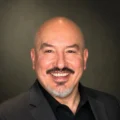
Ketan Desai is a physician-executive.
He shares his story and discusses his KevinMD article, “Can personalized medicine live up to its hype in health care?”

The Podcast by KevinMD is brought to you by the Nuance Dragon Ambient eXperience.
With so many demands on their time, physicians today report record levels of burnout. Burnout is caused by many factors, one of which is clinical documentation. Studies indicate physicians spend two hours documenting care for every hour spent with patients.
At Nuance, we are committed to helping physicians do what you love – care for patients – and spend less time on clinical documentation. The Nuance Dragon Ambient eXperience, or DAX for short, is an AI-powered, ambient clinical intelligence solution that automatically captures patient encounters securely and accurately at the point of care. Physicians who use DAX have reported a 50 percent decrease in documentation time and a 70 percent reduction in feelings of burnout, and 83 percent of patients say their physician is more personable and conversational.
Rediscover the joy of medicine with clinical documentation that writes itself, all within the EHR.
VISIT SPONSOR → https://nuance.com/daxinaction
SUBSCRIBE TO THE PODCAST → https://kevinmd.com/podcast
RECOMMENDED BY KEVINMD → https://kevinmd.com/recommended
GET CME FOR THIS EPISODE → https://earnc.me/z39Xts
Powered by CMEfy.
Transcript
Kevin Pho: Hi, and welcome to the show. Subscribe at KevinMD.com/podcast. Get CME for this episode by clicking on the CME link in the show notes. Today we welcome Ketan Desai. He’s a physician-executive. His KevinMD article is titled “Can personalized medicine live up to its hype in health care?” Ketan, welcome to the show.
Ketan Desai: Thank you very much.
Kevin Pho: We’ll get into the article in a little bit. First off, just briefly share your story and journey to where you are today.
Ketan Desai: OK, thank you. So I’m a physician and a scientist, with a basic science PhD in molecular biology and an MD in allergy and immunology. And I’m also an author. I’ve been writing since I was about 15, 20 years old. I have a book on Amazon called Germs of War, which deals with bioterrorism, which some of you may or may not like, that subject. But I’ve been writing for a while, and so this article is one of those that I’ve written for more of a medical audience. I also write for audiences investing in biotech companies.
Real physician voices, twice a week
Free, and one click to unsubscribe.
Kevin Pho: All right, so let’s go right into your article, titled “Can personalized medicine live up to its hype in health care?” Now tell us, how did this particular article come together?
Ketan Desai: I was consulting. I do a lot of consultation for biotech companies, and so I was consulting for a company which is making a drug that will make steroids safer, and one of the indications they’re looking at is lupus. So when they spoke to some of the KOLs, or key opinion leaders, they said, “Oh no, we’re going to use stem cell therapy and CAR-T therapy for treating lupus.” And I was thinking to myself, “Is this realistic, to use such an expensive modality to treat patients with lupus?” And so I delved into the science of CAR-T therapy and stem cell therapy to see how realistic and feasible it is to use such treatments for, I would say, minor diseases, by any chance. But at the same time, there are enough patients with lupus, for example, that it is just not feasible to treat 300,000 patients with CAR-T therapy.
Kevin Pho: So they asked you for your perspective. You consulted for this biotech company. Why did they initially come up with this approach?
Ketan Desai: So they did not come up with the approach. The approach they came up with was to give another drug to decrease the side effects of steroids. It was one of the KOLs they spoke to, one of their ad board members, who said, “Oh no, we’re going to use CAR-T therapy for treating lupus.”
Kevin Pho: So when you gave them that feedback, what was their response?
Ketan Desai: Oh, they were very pleased with the response, because they understand and appreciate that treating a large number of patients with CAR-T therapy is very difficult, impossible, actually. It may be applicable to one or two patients here and there, but to use this modality, or personalized medicine, for a large number of patients, it’s just not possible.
Kevin Pho: So you talk about personalized medicine in this article. Just so everyone’s on the same page, in your mind, what is personalized medicine?
Ketan Desai: That’s a very good question. Personalized medicine is something that is applicable to only that person. That kind of treatment is applicable to only that person and no one else. So for example, if a patient comes to me and has a gene defect, and that gene defect can be treated by, let’s say, gene therapy, that gene therapy can be given only to that patient. I cannot take that particular gene therapy and give it to anybody else, right? So similarly, CAR-T therapy is when you take the T cells out from that patient, modify them, and inject them back into the patient. You cannot give that to anybody else. It’s highly personalized. Same thing with stem cell therapy: If I take somebody’s stem cells out, modify them, and give them back, I can only give that back to that patient, not to anybody else. So these are all examples of highly personalized medicine.
Kevin Pho: So what’s the current state of personalized medicine? What are some typical diseases that we use it for today?
Ketan Desai: It’s mainly used for cancer, cancer which is refractory to all therapies. They use that for CAR-T therapy. And you will find that a lot of companies have now come up that want to use CAR-T therapy. In fact, if you Google, you’ll find 20, 30 companies that use CAR-T therapy. And the venture capitalists really like it, because in their minds they’re looking at big dollar signs, because personalized medicine will cost $1.5 million, as opposed to a simple treatment of steroids, which will cost $30, right? So to them, it’s a huge profit margin. So you find all these companies proliferating based on CAR-T therapy, and the VCs and private capital inject money into it mainly for monetary reasons, not because they think it’s going to be of any help, sorry, for people.
Kevin Pho: Now tell us some of the challenges that biotech companies face when developing a personalized medication.
Ketan Desai: So the challenges are mainly scientific. If you come across a new therapy, you have to make sure that it’s going to work in that particular disease model. And then of course, you have the practicality of doing a clinical trial. It’s not easy to do a clinical trial in CAR-T therapy, from a practical point of view, because you don’t have many sites that can do it. Number two, you have to find the appropriate patients who are willing to go through CAR-T therapy, and not many want to do that, because it is associated with significant side effects, both short-term and long-term. And then of course, you have funding issues.
And then fourthly, you have issues unique to biotech using CAR-T therapy, for example, what we call chemistry, manufacturing, and controls, CMC. In a regular drug, CMC is pretty straightforward. You go to a CDMO, or a contract manufacturer, you manufacture the drug, you take it to the FDA and give them the CMC file, and you have the drug. When CAR-T therapies are personalized, you cannot have that standardized way of manufacturing. It’s all very personalized, and so manufacturing becomes very, very difficult.
Kevin Pho: So you mentioned CAR-T therapy several times as an example of personalized medicine. You mentioned some short- and long-term side effects of this. What are some of those?
Ketan Desai: Yeah, so it’s something like a cytokine release syndrome. So they have a lot of flushing and diarrhea and fever and all the systemic symptoms associated with the infusion. So you’re infusing T cells and the appropriate cytokines that will keep the T cells active, and that leads to a lot of the side effects of this.
Kevin Pho: So CAR-T therapy currently, what’s it being used to treat today?
Ketan Desai: It’s mainly for cancers, with specific indications. Some of them are bone cancers, like leukemias and lymphomas, mainly leukemias.
Kevin Pho: Now, are they part of regular treatment algorithms? Are they second-line, third-line treatments?
Ketan Desai: They are fourth-line, actually. Because if you look at cancer treatment, it’s extremely complicated. So first line; if they fail, then the second line, then the third line. And then when all the normal therapies are gone, it’s only then that you go to experimental. So as long as they have something that hasn’t been tried, they have to do that first, which is what makes it very difficult to do clinical trials, because there are so few patients that meet the criteria.
Kevin Pho: So in the mind of an oncologist, or tell us an example or story, when will a personalized medical therapy like CAR-T therapy come into the decision-making process?
Ketan Desai: So the patient says, “I’ll try everything at this point.” And then of course, the doc has to find a company willing to sponsor that patient in the CAR-T therapy program, because, I mean, not all insurance pays for it at this point.
Kevin Pho: So how difficult is that whole process, in terms of finding a company that would sponsor a particular patient?
Ketan Desai: It is actually quite difficult. Even though there are at least 20 companies doing it, they are in their clinical studies. They have inclusion and exclusion criteria also, so the patient has to match the inclusion and exclusion criteria. Not all patients match the criteria. And so a patient may have one disease, whereas the active trial is going on for something else.
Kevin Pho: So what’s the road map for personalized medical therapies, CAR-T therapy and whatnot? What do the next few years hold for them?
Ketan Desai: I think it’s going to be extremely fluid. One of the things that I mentioned in my article is the state of affairs with the funding for Medicare and Medicaid. If the Republican Congress cuts that funding, cuts Medicare especially, a lot of the insurance companies take the lead from Medicare. So once Medicare cuts something off, either decreases reimbursements or cuts something off, then the insurance companies will follow. And so here is a problem for the hospital that’s trying to do a CAR-T therapy: Their cost is not going to go down. It’s still going to cost that much to develop that CAR-T therapy, but if they’re going to get less money for it, then it becomes a disincentive for them.
Kevin Pho: What’s the incentive for the biotech companies to continue with CAR-T therapy and other personalized drugs? Because it sounds like the yield is pretty low. It’s very expensive and may not even get covered by insurance or Medicare. Tell me about the risk that these biotech companies face.
Ketan Desai: Yeah, so what you mentioned are all the risks. But the benefit that they see at the end of it is a large dollar sign. So they are still thinking in the old paradigm of, “Build it and they will buy,” like Medicare used to do up till now. That has changed now, because now Medicare can do price negotiation with the companies, which used to not take place in the past. And so it’s going to start negotiating prices, even for this. They haven’t come to the realization that’s coming down the pike, and so they are still thinking in the old paradigm: “We’re going to make a lot of money doing this.” That hasn’t changed.
Kevin Pho: And what are your thoughts on that mindset?
Ketan Desai: I think that’s a very antiquated mindset. First of all, I don’t think we should be chasing science because of dollar signs. We should be chasing science because it’s the right thing to do. And in a few individualized cases, it may be OK. So for example, if you have a certain kind of gene defect where I can take a gene therapy and apply it to many patients, whether that be sickle cell anemia or thalassemia or something like that, then yes, I think that makes sense. But to treat each individual patient per se, I think it’s not feasible, both from a practical point of view as well as from economic policy. I don’t think our country can afford it. So we spend 20 percent of our GDP on health care, right? We can’t afford to spend any more. We’re not building bridges. We’re not fixing roads. Our electricity and airports are basically running down. And we are spending all our money on health care, and that’s not sustainable.
Kevin Pho: We’re talking to Ketan Desai. He’s a physician-executive. His KevinMD article is titled “Can personalized medicine live up to its hype in health care?” So Ketan, you mentioned that personalized drugs are typically in oncology, bone cancers in particular. Anything outside of oncology that’s on the horizon when it comes to these potential applications?
Ketan Desai: Yeah, people have tried them in autoimmune diseases as well, like I was mentioning, lupus. So some people have done small trials of four or five patients. I think one was in Italy, and it showed pretty good results, actually. I want to note that the results are good, but the point is, this is a long-term treatment, in the sense that we have just seen the data come out at three, four, five months. You have no idea what will happen 10 years down the road. And of course, like I said before, I don’t think it’s feasible or practical.
Kevin Pho: Now, is it primarily small biotech companies that are in this field? Are any of the big players pursuing personalized medicine?
Ketan Desai: So GSK did go into this. It had agreements with two companies, but I forgot the names. But a couple of years ago, it divested from that and said, “You know, we don’t want to do this anymore.” So you had examples where everybody jumps into the fray and then looks at it carefully and says, “Maybe not.”
Kevin Pho: Now, we’re talking mostly about the States. What about other parts of the world and their approaches to personalized medicine?
Ketan Desai: I mean, Europe spends, for example, 10 percent of GDP, as opposed to our 20, and their health care policies are far more restrictive in terms of reimbursement. And so one can argue the cost of doing something in Europe is less than here, but so is the reimbursement, and so are the guidelines. For example, in the U.K., you have an organization called NICE, N-I-C-E, and the role of NICE is to make sure that the drugs that are being approved are cost-effective, not just effective and safe, but cost-effective. So they use something called QALYs, or quality of life instruments, to make sure that what you’re doing is actually worthwhile. And so if they apply this QALY principle to stem cell therapy and stuff like that, I have grave doubts it’ll pass muster.
Kevin Pho: And my final question: Tell us some of your take-home messages that you want to leave with the KevinMD audience.
Ketan Desai: The critical message is that the old way of thinking is over. It’s time to re-look at this whole issue in a fresh, pragmatic manner.
Kevin Pho: And how could biotech companies do that?
Ketan Desai: By forgetting the dollar signs all the time and looking at what’s really feasible and practical.
Kevin Pho: OK. Ketan, thank you so much for sharing your time and insight. Thanks again for being on the show.
Ketan Desai: Thank you very much. Have a good day.
Listen and followApple PodcastsSpotifyYouTubeMore apps · Browse all episodes