












Listen and followApple PodcastsSpotifyYouTubeMore apps · Browse all episodes
In this episode, pediatrician Wendy Schofer discusses physician appreciation. She emphasizes that appreciation is an offering of love that fulfills the psychological need for belonging and love. Wendy relates the five love languages to how physicians can express and receive appreciation and highlights the importance of appreciating ourselves. Tune in to learn more about how physicians can feel appreciated in the current environment and the importance of self-appreciation.
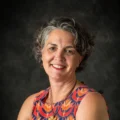
Wendy Schofer is a pediatrician.
She shares her story and discusses her KevinMD article, “The power of self-appreciation: Why physicians need to start acknowledging their own contributions.”

The Podcast by KevinMD is brought to you by the Nuance Dragon Ambient eXperience.
With so many demands on their time, physicians today report record levels of burnout. Burnout is caused by many factors, one of which is clinical documentation. Studies indicate physicians spend two hours documenting care for every hour spent with patients.
At Nuance, we are committed to helping physicians do what you love – care for patients – and spend less time on clinical documentation. The Nuance Dragon Ambient eXperience, or DAX for short, is an AI-powered, ambient clinical intelligence solution that automatically captures patient encounters securely and accurately at the point of care. Physicians who use DAX have reported a 50 percent decrease in documentation time and a 70 percent reduction in feelings of burnout, and 83 percent of patients say their physician is more personable and conversational.
Rediscover the joy of medicine with clinical documentation that writes itself, all within the EHR.
VISIT SPONSOR → https://nuance.com/daxinaction
SUBSCRIBE TO THE PODCAST → https://kevinmd.com/podcast
RECOMMENDED BY KEVINMD → https://kevinmd.com/recommended
GET CME FOR THIS EPISODE → https://earnc.me/7ipQLh
Powered by CMEfy.
Transcript
Kevin Pho: Hi, and welcome to the show. Subscribe at KevinMD.com/podcast and get CME for this episode by clicking on the CME link in the show notes. Today we welcome back Wendy Schofer. She is a pediatrician. Her most recent KevinMD article is titled “The power of self-appreciation: Why physicians need to start acknowledging their own contributions.” Wendy, welcome back to the show.
Wendy Schofer: Thank you so much. It’s such a pleasure to be here with you.
Kevin Pho: So Wendy has been on the show multiple times. For those interested in hearing her story, just go to KevinMD.com/podcast. In the upper right-hand corner, there’s a search bar; search Wendy’s name for her prior episodes and her story. But today, let’s go straight into your most recent article. Tell me, how did this one come together?
Wendy Schofer: You know, it’s funny. I had a couple of friends who were talking about how they were going to be doing presentations for National Doctors’ Day, which is right around the corner, and they were being asked about appreciation and topics to talk about. I’m like, “Oh, I’ve got an earful on that one.” Really, you can get an earful on appreciation. But I really just started expanding upon that.
You know how we always have those grumbles about the emails that come out on Doctors’ Day addressing all providers, and how it feels like it misses the mark.
Real physician voices, twice a week
Free, and one click to unsubscribe.
Kevin Pho: Why is that? When you get those emails saying, “Thank you, providers,” how does that make you feel?
Wendy Schofer: I don’t feel seen. I totally don’t feel seen. I mean, first of all, I don’t need another email. Getting to open yet another email is not the way that I feel appreciated. And I get it: They’ve got a lot of people they’re trying to express that to over this large area, but it just misses the mark. And then, of course, as a physician, I don’t feel seen when I’m called a provider at all.
Kevin Pho: So what are some reasons why you think physicians need that appreciation?
Wendy Schofer: Gosh, I mean, I think it just goes back to our human needs. We need to feel included and loved, and to have that give and take, feeling that what we are giving is being received in a way that is meaningful for us. So I think that’s a part of appreciation. It’s a form of love, and think of what that does for us as far as our psychological human needs. Oh, we need that. We still need that.
And I think there’s so much in the business sense of medicine, looking at the numbers, looking at the metrics, and how we can keep everything going. But ultimately, we are humans, and we have needs. So it’s really about looking at that connection, that sense of well-being, and that sense that I’m being seen.
Kevin Pho: Over the past few years, especially through the pandemic, tell us about physicians being seen and how that may have deteriorated over the years.
Wendy Schofer: You know, I think everybody has a different experience, a different story, with that. Early on in the pandemic, for some folks, there was this wave of appreciation. There were parades, people hooting and hollering out the windows, and a lot of expressions of gratitude. There were also those of us who were underemployed early on in the pandemic, and so it felt like it didn’t really resonate. I’m glad that others were receiving that appreciation, but it felt false to me as I was being told that there wasn’t enough work for me to come in. So it goes both ways.
It actually reminds me of what we had spoken about before, my military experience, and folks who thank me for my service. I’ve had a really hard time with that over time, receiving that expression of gratitude and appreciation, because I kept on thinking that I needed to do something in particular in order to be receiving of that. Well, I wasn’t in XYZ war zone, so who am I to receive that? I think that also came up in that comparison early on in the pandemic: It was OK for others to receive that appreciation, but maybe not me.
And I think it’s evolved over time as well. It’s really hard, really hard, with the pace and the volume. It’s definitely come back; there’s definitely plenty of work to go around. But how are we receiving that appreciation now?
Kevin Pho: So as a physician, what are some ways that you like to feel that appreciation? How would you like to receive that appreciation?
Wendy Schofer: I feel that right in my heart when you ask. In the story, I talk about the five love languages. There’s physical touch, words of affirmation, acts of service; we can go through all of them. But I was joking around, saying, “Well, we’re not going to be having that physical touching. I don’t want that from the CEO.”
But I realized that was actually the biggest thing that was missing for me, especially in those early days of the pandemic. I missed that physical connection. With parents, one of my biggest ways to connect with moms who are going through all of it is to give them a hug. It’s that solidarity, that “I’m here with you,” and, I don’t know, the emotional regulation that we have with a hug. I missed that. And of course, I never turned down a single kid who ever came up to me offering me a hug, and then all of a sudden during the pandemic, I’m like, “Six feet, kid. Six feet.” So that was really hard. I realized I was joking about how it’s not about physical touch, but actually, it is for me. It’s a big thing, receiving that appreciation, receiving that love.
And then also the words of affirmation mean a lot, for me in particular, collecting those cards from families. I just had a family with a challenging evaluation this past week, and at the end of it, they said, “Can you just be our doctor all the time?” I’ve got to tell you, that spoke volumes to me, because I was thinking the entire time, “Man, this is just a mess. This has taken forever. They’re going to be upset.” And here they’re saying, “You’re taking your time. We want you to work with us all the time.” So it’s those words that mean a lot to me.
Kevin Pho: So sometimes that same encounter can be completely different from our perspective and from the perspective of the patient. And sometimes we need the patient or the patient’s family to express their perception of how that visit went in order to affirm what we’re doing.
Wendy Schofer: Yeah, and the thing that reminded me of, because we talked about that, where you mentioned self-appreciation: It’s so natural. As I was going through that visit, I was thinking, “It’s taking so long. This is a hungry family. They’re going to be upset.” I was going to all the negative, as opposed to thinking about how I was giving them the best darn care, how I was being thorough. All of those were things that I could have offered myself right there: appreciating what I am doing, how I’m being the physician that I want to be, the physician that they need.
And I think it comes back to that. It meant a lot for them to say something to me, but that wasn’t the whole story. I mean, it countered all of the negative stuff that I was thinking along the way, that they were going to be upset, that their bellies were rumbling from waiting so long. But I could have offered that the entire time. And I think that’s the opportunity. As we wait for other people to affirm us, to express that appreciation, we can be waiting a long time.
Kevin Pho: What are some things that we can do among physicians ourselves to help with that self-appreciation piece? Because sometimes, you’re right, we can’t just wait for others to appreciate us, whether it’s patients or the administration. What can we do within the physician community?
Wendy Schofer: Yeah, I think just talking about it is a big step. We’re humans. We’re just normal. We want to be able to have connection, to feel appreciated, and to be able to express that out loud, because we are so not machines. We are not machines, and we need this. So I think it’s just having these types of conversations, being vulnerable about it, and saying, “Yeah, this is really important to me.”
And I think part of that helps me see that I can speak up and speak out in expressing that with other people, just in my day-to-day: recognizing what I see, how I appreciate how people have brightened my day, how they make my day easier. It’s putting it in terms like, “This is something that we are going through together. I appreciate who you are. I appreciate what you’re doing,” because that’s something that means so much to me. Oh, I’m totally fueled by that, and so I want to be able to share that with others. I think that’s a big part of it. When we recognize how important it is for us, we can then share that, and it can be a mutual, beautiful, virtuous cycle.
Kevin Pho: So for the patients listening to you right now, let’s give them examples of some words they can use, small things they could do to express some of that gratitude that makes such a big difference in your life.
Wendy Schofer: Oh, man. Well, I mean, I’m a patient too. We all are. So I think it’s something to just recognize: We all have a negativity bias. I recognize that as I get the evaluation forms after my visit, and they’re like, “You need to rate XYZ services and doctors,” I’m like, “Whatever, I don’t have time for this.” But I totally have the time when something didn’t go so well. Of course I totally have the time then. So it’s just noticing that.
I would just offer: Who made your day brighter today? Who has helped you? How has this helped you? And I don’t know that that’s even particular to offering it to your doctor or your nurse in the medical setting, but it’s just thinking about that along the way. How do you want to recognize someone who maybe made your life a little bit brighter?
I think about that all the time. I think we may have talked about this before with the evaluations. I work in urgent care, and so no one comes to see me on their best day. No one. And I just have it in the back of my mind that all I am trying to do is make their day a little bit better. But I realize that nobody’s coming in and saying, “Oh, this was amazing.” So I offer this to my administration: Instead of an evaluation afterward asking how this was and how that was, ask, “Who can we thank for the excellent care that you received today?” I guess it’s just a reframing.
Kevin Pho: And we can all do that. Now, following up on that, a lot of administrators often wonder what the best way is to appreciate the physician staff. If you had a direct line to CEOs, and we do have a lot of administrators listening to you, what are some suggestions you could give to them?
Wendy Schofer: Ask your people. Yeah, I mean, some people are like, “Yeah, I totally don’t need anything in particular. I don’t want anything.” Other people are like, “Bring on the pizza party.” I love meeting people face-to-face. I would love to get to know you, to know who you are. But I think that is something where we could really ask that question of our people and not make generalities about it. And I think the more we understand what’s behind that answer, the more we have that direct human connection. I think that’s what goes the furthest. So reach out. Reach out to your people. Ask them. I’m sure they have some input.
Kevin Pho: We’re talking to Wendy Schofer. She’s a pediatrician. Her latest KevinMD article is titled “The power of self-appreciation: Why physicians need to start acknowledging their own contributions.” Wendy, tell us some of the take-home messages that you want to leave with the KevinMD audience.
Wendy Schofer: Oh, my goodness. You know, it’s really something. I think that as we are talking right now about recognizing other people, and what we can do to let them know how they’ve brightened our day, let’s not overlook what it is that we’re doing, and that part about self-recognition. Even just those words of affirmation that we can give ourselves: “You totally nailed that diagnosis,” or, “Hey, I got a note done while the patient was here.” It’s just recognizing those successes, offering ourselves appreciation for who we are, what we’re doing, and what we’re learning.
And I think that’s a big part. As we’re growing, it doesn’t all look beautiful. So how are we growing along the way? That’s something that we can offer to ourselves along the way. We don’t have to wait for someone else to do it.
Kevin Pho: Wendy, thank you so much again for sharing your time and insight. Thanks for coming back on the show.
Wendy Schofer: It’s such a pleasure.
Listen and followApple PodcastsSpotifyYouTubeMore apps · Browse all episodes