Listen and followApple PodcastsSpotifyYouTubeMore apps · Browse all episodes
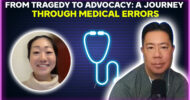
In this episode, we talk to Amber Gipson-Fine, a project manager, about her personal experience with a medical error and the importance of medical apologies. March was Endometriosis Awareness Month, and Amber shares her journey with the disease and how a medical error nearly led to unnecessary surgery. We discuss the process of disclosing medical errors to patients and the benefits of medical apologies. Join us as we explore the impact of medical errors on patients and the role of medical apologies in restoring trust in medical care.
Amber Gipson-Fine is a project manager.
She shares her story and discusses her KevinMD article, “Why an apology matters in medicine.”

The Podcast by KevinMD is brought to you by the Nuance Dragon Ambient eXperience.
With a growing physician shortage, increasing burnout, and declining patient satisfaction, a dramatic change is needed to make health care more efficient and effective and bring back the joy of practicing medicine. AI-driven ambient clinical intelligence promises to help by revolutionizing patient and provider experiences with clinical documentation that writes itself.
The Nuance Dragon Ambient eXperience, or DAX for short, is a voice-enabled, ambient clinical intelligence solution that automatically captures patient encounters securely and accurately at the point of care. Physicians who use DAX have reported a 50 percent decrease in documentation time and a 70 percent reduction in feelings of burnout, and 83 percent of patients say their physician is more personable and conversational.
Rediscover the joy of medicine with clinical documentation that writes itself, all within the EHR.
VISIT SPONSOR → https://nuance.com/daxinaction
SUBSCRIBE TO THE PODCAST → https://kevinmd.com/podcast
RECOMMENDED BY KEVINMD → https://kevinmd.com/recommended
GET CME FOR THIS EPISODE → https://earnc.me/MiebQd
Powered by CMEfy.
Transcript
Kevin Pho: Hi, and welcome to the show. Subscribe at KevinMD.com/podcast and get CME for this episode by clicking on the CME link in the show notes. Today we welcome back Amber Gipson-Fine. She’s a project manager. Her most recent KevinMD article is titled “Why an apology matters in medicine.” Amber, welcome to the show.
Amber Gipson-Fine: Thanks for having me again.
Kevin Pho: You’ve been on the show previously. For those interested in seeing your past episode, just go to KevinMD.com/podcast, click on the search bar for Amber’s name, and you can listen to her prior episode. But let’s jump straight into your KevinMD article today, “Why an apology matters in medicine.” So tell us the background and what led you to write this article.
Amber Gipson-Fine: Thanks. Last year, in 2022, I was struggling with a lot of chronic pain and ended up with a diagnosis of endometriosis. It impacts one in 10 women; it’s very common. Unfortunately, the treatment options and the path to treatment are often complicated. When I was going through all these exams, which involve a lot of ultrasounds, I was in the middle of another one when I ended up with the results of an endometrioma, a pretty large cyst on one of my ovaries, and surgery is recommended for that. So the rest of 2022 was basically planning around surgery in January 2023. And I think I was caught off guard when I had my pre-op appointment, because the medical error was caught at that point.
So basically, what happened was an AI dictation error. The physician who was interpreting my scan in the scanning room said something to the effect of “2.8,” and that ended up recording as 8 centimeters. That was a huge clinical difference. When I was in the appointment with my gynecologist, I was surprised and caught off guard by how casual it was: “Oh, this must have been a medical error. This must have been a transcription problem, so we don’t need to do surgery anymore. Let’s sort of shift gears.”
So all my questions became irrelevant, and the treatment course changed entirely. Overall, of course, I’m very thankful that an unnecessary surgery didn’t occur. But it hit me after I left the appointment: What were my rights as a patient? What was I to do about this? Were the scanning physician and the ultrasound tech going to get any feedback? And again, at the time, I didn’t even know where the error occurred. So that’s what inspired the article.
Real physician voices, twice a week
Free, and one click to unsubscribe.
Kevin Pho: So let me make sure I get the details right. You were undergoing various ultrasounds and imaging studies, and at first they thought that it was an 8-point-something-centimeter endometrioma, when it was really 2.8, and it was lost in a transcription error. Is that correct?
Amber Gipson-Fine: Yeah, that’s correct. And it ended up being software, and I didn’t realize.
Kevin Pho: Now, what was the time course? How long did you go thinking that you had an 8-centimeter mass on your ovary?
Amber Gipson-Fine: At least two months. I don’t know about other people, but speaking for myself, I read the results well before I see my physician, and that is sometimes anywhere between two weeks and four weeks before you actually get them interpreted. In this case, it was about two months of thinking that I needed to undergo surgery, prepare, take time off, disclose to various people that this was going on, and obviously explain it to my parents. So it was a fraught period, definitely very emotional.
Kevin Pho: Who caught the error? Was it overread by a radiologist? Did your gynecologist personally look at the scans? Who eventually caught that error?
Amber Gipson-Fine: It was my gynecologist, once we had the pre-op appointment. So it was really right before, a couple weeks, generously, before surgery, and that’s what really concerned me. I also asked her direct questions about it because I was confused. What I had been told as a patient is that surgery was needed because endometriomas don’t go away on their own, and I completely understood that, especially that a mass that large was going to stick around.
So I was confused myself when the second round of scan results came back and it was so much smaller. I was questioning myself, and that question led to taking a deeper look at the scans. I was also surprised that the first round of scans wasn’t gone into by other physicians before we met. For the second round, my physician was actually able to go in, see the exact scans, and look at the measurements herself, but I was surprised that that hadn’t been done on the original set.
Kevin Pho: So tell us what happened next. Was there a little bit of a debrief to talk about this error? Because going two months thinking that you had this large mass when you really didn’t is obviously a very, very long time. So regarding that AI error itself, was there any debrief between you and the hospital medical system?
Amber Gipson-Fine: No, and that was my problem. I did end up asking during this appointment, during pre-op, when the medical error was disclosed and caught, “Would the imaging physicians in this case be given that feedback?” And my physician said, “I don’t think so. Glad we caught it,” and sort of quickly moved on. I don’t blame her for that reaction, because honestly, it could be a policy, something at the hospital, so no adverse thoughts on that from me. It was just the cavalier, casual nature of the comment that really caught me off guard, and like I said, I didn’t really process it until I left that office.
So I left that pre-op appointment and I said, “Hold on, wait a second. I am really unsure of what happened. I believe I do deserve the knowledge there.” And I’m very thankful. I texted my boss, who is a physician at Rush, explained the situation, and said, “Can I confide in you? What would you do in this situation?” And that’s when I found out about patient services, an office that makes total sense to me, for when patients have an adverse experience or additional questions, or don’t feel like they’re being treated properly, thankfully not so extreme in my case. I had no idea. I’ve been working years and years in academic medicine and had no idea that that was a right I had as a patient. And thankfully she did suggest that, because within a week and a half, I was able to have that conversation with the imaging physician and really get closure.
Kevin Pho: How did that go? Tell us about that.
Amber Gipson-Fine: It was really lovely, to be honest. What I kept telling everybody in my close social network is this is the ideal outcome that I wanted, and thankfully I got it. What I mean by that is I was reaching out to patient services, and I basically asked for two things. I tried to make it as clear as possible that I didn’t want any other action, legal, etc., to really go on. I didn’t want punishment for the resident who was also working on the case. That didn’t seem fair to me, and it is also a large part of residency. I hope that residents feel like they can make mistakes, within reason, that can then be caught by attendings. It’s a learning experience.
So I reached out and I said, “Demand one: Just please correct my medical chart and mention in writing that there was an error.” So basically, validate that this was something that happened. And then two, if possible, because truthfully I didn’t know if it was, have one of the physicians who interpreted my scans apologize and explain to me what happened.
So I was very surprised that a physician investigator within that department reached out to me and set up the meeting. It was the three of us, basically: the physician investigator, and then the attending who read my scans. It was a 15-minute conversation, but it was really lovely. I achieved closure because it was a genuine apology. There was no ego in this conversation. He really took accountability, explained that it was an AI error, explained how it was going to be prevented in the future, and also ultimately asked about my health care and how I was doing, which is really all I was asking for, but I was skeptical of the whole process.
Kevin Pho: So when you talked about this with your family or close social network, and talked to other patients, you mentioned that your experience was an ideal outcome. Would you say that your outcome is common?
Amber Gipson-Fine: Truthfully, Kevin, that’s where I’m nervous, and that’s why I wrote this article, because I don’t think it is common. I think that’s for a couple of reasons. To be fair on the health care infrastructure end, I don’t think a lot of medical errors are known by the patients they happen to, and I’m not even advocating that they should always be known. If the standard of care went beautifully and a small error was caught, or even a large error, and it didn’t impact the patient’s care whatsoever, which wasn’t necessarily my case, and thankfully the near miss was caught, I don’t think that that’s a requirement. So I’m really not trying to cause unnecessary conversations in this.
I do have a sneaking suspicion that if I wasn’t an employee, if I didn’t read the scan myself, if I didn’t ask someone, because again, I didn’t know patient services was a thing, if I didn’t seek those resources myself, I don’t think I would have gotten any of those deliverables. And that’s my point of advocacy within public health. So I sincerely hope that this experience that I had becomes more common, or is more common than I think, but truthfully I’m not sure, because it’s such a unique set of circumstances coming together, and I don’t think most patients receive that service.
The other side of that, again, to be fair to physicians, because I do want to emphasize how this was really handled correctly, in my opinion, in this particular case, and that the physician really came to that conversation with humility, is that physicians are also experiencing a lot of burnout. There are infrastructure issues within hospitals that are very pervasive, and so I don’t think medical errors are the sole burden of clinicians. That would really be missing the mark on this. So I think some infrastructure changes need to happen in order to not make this just a straightforward legal battle between patients and physicians. I think that is doing a disservice to both sides.
Kevin Pho: So when you talk about infrastructure changes, in your ideal world, what would those changes be?
Amber Gipson-Fine: I think clear legal guidelines, not just about lawsuits, would be great. What the literature shows from my research is that when patients and families are aware of medical errors, apologies are not all created equal. You can please correct me if I’m wrong, but I don’t think medical education necessarily goes over what a quality apology looks like, how to empathize on that level, and also how to cope with shame. I think we all have that when any of us makes a mistake, not even in health care; there is this large element of shame.
So I think it’s important to address it on the clinician side. What does it mean to make a mistake? How can we be accountable for this without taking it out on ourselves and blaming ourselves for the rest of our career? And then also, what do patients seek in an apology, not only to release ourselves of any potential legal burdens in the future but also just to connect on a human level? Because I do truly believe that’s why the vast majority of clinicians go into health care: to connect and basically heal their patient population.
Kevin Pho: So you said that not all apologies are created equal, and I think that’s a very important point. Just from your research and talking to other patients, what are some examples on that spectrum of apologies that you’ve heard? What would be an example of, say, a more authentic apology?
Amber Gipson-Fine: Absolutely. Highlighting the thing that it was: “This is what occurred. I should have caught it, and this is what I’m going to do in the future to prevent such an issue from happening.” It’s also seeing the person as a person. It was really lovely to connect in person, but even if it was a phone call or virtual, which was actually what I was expecting. The in-person element was a nice surprise. But there, as I mentioned, there was no ego. It wasn’t excuse after excuse, “Oh, I’m sorry,” sort of like a sarcastic or narcissistic take on what happened. And while this wasn’t just human error, as I mentioned, it was AI, there was a very clear understanding that we were ideally both on the same side of this. He was also frustrated that my care was impacted and understood that this was a problem for me.
So the less effective apologies, I think, are ones that are quick, that don’t seem genuine. Genuine nature is really subject to different interpretations, but I think it’s a mix between accountability and empathy, and a way of seeing the person for who they are and then also how their care was impacted, and it’s not this sort of rushed nature. As I mentioned, it was a 15-minute conversation. I would have taken a two-minute in-depth apology, so anything beyond that, I think, is above and beyond and really helps with closure.
Kevin Pho: Now, from what I’ve seen, when physicians commit a medical error, or even when they write about it on KevinMD or in Facebook physician groups, that lack of legal clarity in terms of what’s perhaps admissible in a potential medical malpractice lawsuit is always in the back of physicians’ minds. So how do you advise physicians to straddle that balance between the genuine accountability that leads to an authentic apology and that fear in the back of our minds that, hey, whatever I’m saying now could be used against me later on? From your perspective, as someone who’s gone through this from a patient standpoint, what kind of advice would you share with physicians?
Amber Gipson-Fine: I really appreciate that point, and I’m glad that you’re bringing it up, because I always want to make it clear that I see myself as someone with a foot in each department. So yes, I’m a patient who had a medical error happen to them, but I’m also ultimately a public health practitioner who really appreciates working with the clinicians that I do. And I think that legal ambiguity, as you mentioned, is really complicated.
I think in the ideal scenario, it would be a physician who could reach out to the hospital’s or private practice’s legal division and simply ask, “This is my plan. This is what I would like to do, because the patient knows that this happened. Can I get ahead of this by reaching out to them?” And what the literature shows, imperfectly, in full disclosure, is that the closer we get to a genuine apology from clinicians, the less likely legal action is to be taken against them. But of course, it’s not a perfect one-to-one ratio, and so I do think that concern is real. It ideally should be a collaboration between clinicians and their legal department, because clinicians can’t be expected to do it all, and they do understandably want to protect their practice and everything that they worked extremely hard for.
Kevin Pho: Are you afraid that once physicians reach out to administration or the legal department, that would sometimes water down the language and make it more inauthentic by just injecting legalese into what physicians can and can’t say?
Amber Gipson-Fine: I think that can definitely happen, and I think that is a reality that all hospitals and different practices should be straddling. I also think a lot of this sometimes just goes off of, and this isn’t science, right, this is just vibes-based, but I would like to think that if there was a patient whom a physician was seeing for five-plus years and had a really good relationship with, that conversation would be less intimidating and maybe wouldn’t have to go through legal at all, because they feel like this relationship is built on trust.
Versus, there is a phenomenal article by Dr. Daniela Lamas in the New York Times that she wrote in 2022 about a near miss that she had that was caught by another physician in the emergency department, and that was not a physician she had ever seen before, to my knowledge. She talks about the issues with burnout, and in this case, the patient didn’t know. So in those cases, I think it’s fully appropriate to not disclose to the patient, so long as everything went well and the patient obviously, at base minimum, survived, but also didn’t have care that made them worse or have other severe outcomes.
Kevin Pho: We’re talking to Amber Gipson-Fine. She’s a project manager. Her KevinMD article is titled “Why an apology matters in medicine.” Amber, tell us some of your take-home messages that you want to leave with the KevinMD audience.
Amber Gipson-Fine: I think, as we just discussed, Kevin, it’s really tempting to worry about legal consequences regarding medical errors, and also, they’re so frequent. So within public health research, and also just general clinical research, the idea of minimizing medical errors is very daunting. I think the closer we get to advocating for all of these systems working together, on the patient and human rights end, and then also within legal confines, the closer we’re going to get to truly equitable care.
So I am definitely not giving advice on a physician-to-physician level, but I do think whatever makes the most sense for a particular physician in a case study should be seen through the lens of both patient and clinician, ideally not through the lens of being fearful of a lawsuit. And the closer we get to that, the closer we get to equitable care.
Kevin Pho: Amber, thanks again for coming on the show and sharing your story, time, and insight.
Amber Gipson-Fine: Thanks so much, Kevin.
Listen and followApple PodcastsSpotifyYouTubeMore apps · Browse all episodes