















Listen and followApple PodcastsSpotifyYouTubeMore apps · Browse all episodes
In this episode, we delve into the story of Lazarus, a man who died and was raised from the dead by Jesus Christ. Our guest is William Lynes, a urologist who takes a clinical approach to this biblical tale. We explore the details of Lazarus’ illness, whether he was truly dead or just severely ill, and the significance of his resurrection in the context of Jesus’ teachings. Join us for a thought-provoking conversation about faith, miracles, and the power of Jesus Christ.
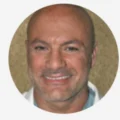
William Lynes is a urologist.
He shares his story and discusses his KevinMD article, “Lazarus: the dead man brought back to life.”

The Podcast by KevinMD is brought to you by the Nuance Dragon Ambient eXperience.
Ambient intelligence augments human capabilities to make our lives easier. The applications are many, especially in health care. Ambient clinical intelligence is offsetting the most pressing challenges in health care today, such as burnout, physician shortages, physician and patient dissatisfaction, and underperforming financial outcomes, by applying the technology to clinical documentation.
The Nuance Dragon Ambient eXperience, or DAX for short, utilizes artificial intelligence and natural language processing to automatically document care. It securely listens to and captures the natural, clinician-patient encounter conversation unobtrusively, and turns that conversation into a clinical note for the clinician’s review and signature directly in the electronic health record. You just talk naturally, and DAX does the rest.
DAX is being used by thousands of physicians across 30 different specialties nationwide. It has already won the Silver Stevie award in the health care technology category and was ranked #1 for improving clinician experience in KLAS’s top 20 emerging solutions.
VISIT SPONSOR → https://nuance.com/daxinaction
SUBSCRIBE TO THE PODCAST → https://kevinmd.com/podcast
RECOMMENDED BY KEVINMD → https://kevinmd.com/recommended
GET CME FOR THIS EPISODE → https://earnc.me/Le9sB8
Powered by CMEfy.
Transcript
Kevin Pho: Hi, and welcome to the show. Subscribe at KevinMD.com/podcast, and get CME for this episode by clicking on the CME link in the show notes. Today we welcome back William Lynes. He’s a urologist, and his KevinMD article is titled “Lazarus: the dead man brought back to life.” William, welcome back to the show.
William Lynes: Thank you, Kevin. Thank you for inviting me back. It’s a pleasure talking to you.
Kevin Pho: For those who didn’t listen to our first episode together, just briefly share your story and journey to where you are today.
William Lynes: Well, I’m a retired Stanford-trained physician. I’m a board-certified urologist. I’m an author. I write primarily fiction in the form of medical thrillers; my two recent books include “A Surgeon’s Knot” and “Winterborn.” In addition to that, I’m a speaker, an advocate, and a survivor of physician burnout and suicide. And specific to our topic today, I’m a Bible-believing, born-again Christian. So that’s sort of my story.
Real physician voices, twice a week
Free, and one click to unsubscribe.
Kevin Pho: All right. Now, you mentioned that you’re an author as well. So how did you get into writing?
William Lynes: I started writing when I was in practice. I first wrote a fantasy adventure story with my children as the main characters, and then when I retired, I decided to write really about medical practice, and thrillers. So that’s how I got into it.
Kevin Pho: All right, excellent. So let’s talk about your most recent KevinMD article, “Lazarus: the dead man brought back to life.” Tell us, how did this article come together?
William Lynes: Well, a while back I got a phone call, I believe on a Saturday night, from my pastor. He was going to give a sermon on Lazarus on Sunday, and he asked me a lot of probing questions about the Scripture, and it caused me to read it. It’s described in John chapter 11, verses 1 through 45. His main questions were: How do we know that Lazarus was dead and raised from the grave?
Kevin Pho: All right. So for those who aren’t familiar with the Bible, just give us a little bit of background as to who Lazarus was and what his story was.
William Lynes: Lazarus was a friend of Jesus. He was the brother of Mary and Martha, who are described in the Gospels as well. He fell deathly ill. It’s not clear from the Scriptures what was wrong with him, but in the essay that I wrote, I proposed that he had sepsis from some particular cause, such as pneumonia. Mary and Martha asked Jesus to come and heal Lazarus. Well, Jesus arrived six days later. Unfortunately, Lazarus had died four days before, and they had buried him, actually, in a tomb with burial clothes.
There were multiple witnesses to his death, including the learned people of the time, like the Pharisees. Jesus said that he wanted the stone of the tomb rolled away. There was a lot of discussion about how there would be a death stench, which suggests that there was decomposition of the body. Jesus raised him from the grave, and we know that partly because he appears in John chapter 12 later on, and the Pharisees are actually threatening to execute Lazarus, because the story of Lazarus being raised from the dead was such a powerful testimony.
So that’s the story of Lazarus, and I hopefully was helpful to my pastor in describing those things.
Kevin Pho: All right. So you talk about how Lazarus potentially had sepsis. Go more into his illness.
William Lynes: Well, we know that he was deathly ill, and we don’t know from Scripture very much more than that. Because he fell ill on a short-term basis, I proposed that he had sepsis from, say, pneumonia or from a plague. But we don’t really know that; that’s really just sort of my supposition.
Kevin Pho: So what kind of symptoms did he have, from the Scriptures, that would make you potentially think that?
William Lynes: Cough and fever, primarily. Those two.
Kevin Pho: All right. So what happens next in terms of the story?
William Lynes: Well, Lazarus came out of the tomb. There was, you know, quite a commotion, and many, many people, including many Pharisees, believed in Jesus and his godly origin. It’s one of the major miracles in Jesus’ ministry.
Kevin Pho: All right. So after going through the story and analyzing his death, what are some things that we can learn from all of this?
William Lynes: Well, I think that the primary thing is that Jesus is God, that there is power in Jesus Christ, and that the Scripture is a powerful source of the events in Jesus’ ministry. So those are the things that I think you can sort of take home from this message.
Kevin Pho: All right. So in terms of the appearance of the body that made one think that Lazarus was dead, any specifics from the Scripture that would kind of confirm his death?
William Lynes: The main thing is that those around him were very concerned about a deathly stench, which is only seen in death and decomposition of the body. So sometime in those four days in which he was in the tomb, at least, people were concerned that this was happening. Now, when Jesus raised him from the dead and he exited the tomb, from the Scripture, he was perfect in terms of, you know, his skin and the smell and so forth. There’s no evidence that there was any residual decomposition. So that’s about all we know.
Kevin Pho: So let’s talk about your interest in this story and the medical origins of the story. What did you learn? Anything that surprised you as you researched deeper into Lazarus’ death?
William Lynes: Well, the main thing is that Lazarus was dead. Now, through the 2,000 years since this event, many, many people have talked about Lazarus as being ill. Now, we know he wasn’t ill, because he was buried, and these were learned people at the time. They don’t bury ill people; they bury dead people. So that’s the thing that was most clear to me.
There are other issues, in that Jesus took six days to get there. This probably was an attempt to actually demonstrate his power, and so that’s very interesting to me as well.
Kevin Pho: So as you read the Bible and the Scriptures, any other medical parables that you can glean from it? Anything from a medical standpoint that we can learn from reading the Bible?
William Lynes: Well, in regards to Jesus’ ministry, of course there are many examples of his healing powers, with lepers, with paralyzed people, and so that’s interesting to me as a Christian, as a physician.
Kevin Pho: All right. So what’s next? What’s your next project when it comes to your writing, in terms of that connection between the Scripture, the Bible, and medicine? What’s next?
William Lynes: Well, right now I have two books that have come out in the last year, which are medical thrillers. Each of them has a Christian subplot. “A Surgeon’s Knot” is a story about a surgery intern’s internship year; he becomes involved in substance abuse and becomes a Christian. The other book is “Winterborn,” which is a medical thriller, and there are some Christian elements to it.
But what I’m excited about with those two books is that just recently, my publisher and I have collaborated on changing the covers. In fact, just today we finalized the covers. The idea behind that is to relaunch their marketing, and so I’ve been really involved in that, and I’m quite excited to see the data supporting, hopefully, an improvement in the marketing.
Kevin Pho: So for those physicians who are interested in writing, perhaps publishing fiction novels like yourself, what are some tips that you can share with them?
William Lynes: Well, the publishing world is difficult. I’ve been writing for over 30 years, and I have self-published six novels, and then I have three novels published by a traditional publisher. Just be persistent. Don’t take the word of one publisher. I read a book once about publishing a book, how you publish a book, and the woman who wrote the book said that you send out 10 queries at a time, over and over again. So you don’t just send 10; you send 10, you get 10 rejections, you send 10 more. And that’s really what I’ve found through the years to be true.
I’ve also come to the conclusion, as John Grisham the author has, that writing a book is the easy part. Marketing the book is the difficult part, and it’s something that I’m not good at, unfortunately.
Kevin Pho: Now, how did you learn? Did you have a mentor? Did you have a publisher to help guide you?
William Lynes: Well, not much in the way of a mentor, just sort of working on my own. Now, for about three years, I’ve been working with a small publisher in Texas called Black Rose Writing, and they’ve been very helpful. But I spent many years just sort of cranking it out by myself.
Kevin Pho: Now, you mentioned as part of your story that you were burned out. Tell us how writing helped you through that.
William Lynes: Oh, gee, really. I’m a survivor of multiple suicide attempts associated with physician burnout. I retired after my third suicide attempt, really because I knew that practicing medicine and my existence were not compatible.
My writing has allowed me to do two things. One is to tell a story of the medical profession. I’m very interested in writing about surgical training; “A Surgeon’s Knot” is about a surgery internship exactly like the one I went through. And then the other thing that writing has allowed me to do is, I do write some nonfiction in regards to physician burnout. So writing has been very, very therapeutic in my life.
Kevin Pho: We’re talking to William Lynes. He’s a urologist, and his KevinMD article is titled “Lazarus: the dead man brought back to life.” Now, my final question, William: Tell us some of your take-home messages that you want to leave with the KevinMD audience.
William Lynes: I would leave it really with what I just said: that Jesus Christ, I believe, is God, that he is powerful, and that the Bible is God’s inerrant word. It is very demonstrative in the ministry of Jesus and in God’s plan for humanity.
Kevin Pho: William, thank you so much for sharing your time and insight, and thanks again for being here.
William Lynes: Thank you very much, Kevin.
Listen and followApple PodcastsSpotifyYouTubeMore apps · Browse all episodes