


Listen and followApple PodcastsSpotifyYouTubeMore apps · Browse all episodes
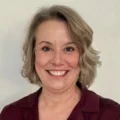
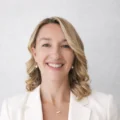
Join Thaís Salles Araujo, an internal medicine resident. Discover the potential benefits, challenges, and the need for greater awareness and education in integrating these therapies into modern medicine. Gain insights into the evolving landscape of patient care, with a focus on holistic well-being.
Thaís Salles Araujo is a palliative care fellow.
She discusses the KevinMD article, “Are doctors ready to discuss psychedelic therapies with patients?”

Careers by KevinMD is your gateway to health care success. We connect you with real-time, exclusive resources like job boards, news updates, and salary insights, all tailored for health care professionals. With expertise in uniting top talent and leading employers across the nation’s largest health care hiring network, we’re your partner in shaping health care’s future. Fulfill your health care journey at KevinMD.com/careers.
VISIT SPONSOR → https://kevinmd.com/careers

Discovering disability insurance? Pattern understands your concerns. Over 20,000 doctors trust us for straightforward, affordable coverage. We handle everything from quotes to paperwork. Say goodbye to insurance stress – visit Pattern today at KevinMD.com/pattern.
VISIT SPONSOR → https://kevinmd.com/pattern
SUBSCRIBE TO THE PODCAST → https://kevinmd.com/podcast
RECOMMENDED BY KEVINMD → https://kevinmd.com/recommended
GET CME FOR THIS EPISODE → https://earnc.me/iDI1Tj
Powered by CMEfy.
Transcript
Kevin Pho: Hi, and welcome to the show. Subscribe at kevinmd.com/podcast and get CME for this episode by clicking on the CME link in the show notes. Today we welcome Thaís Salles Araujo. She’s a palliative care fellow. Today’s KevinMD article is titled “Are doctors ready to discuss psychedelic therapies with patients?” Thaís, welcome to the show.
Thaís Salles Araujo: Well, good morning. Thank you, Kevin, for this opportunity to be talking here and sharing something that’s close to my heart.
Kevin Pho: So we’ll get into that article a little bit, but first off, just briefly share your story and journey to where you are today.
Thaís Salles Araujo: All right. So I’m Brazilian; I grew up there. I did my medical training, internal medicine, and also internal medicine residency there. Then I later moved to the U.S., where I also completed internal medicine again, and now I’m a palliative care fellow.
And on the side, I’ve always been very interested in complementary practices, and in Brazil, I completed a fellowship in acupuncture, which is a medical specialty over there. And then here, there’s a lot of medical education, and I’m interested in East-West and Eastern medicines. I’m also passionate about indigenous traditional medicines, and that’s where psychedelics, for me, are perfect.
Real physician voices, twice a week
Free, and one click to unsubscribe.
Kevin Pho: All right, so before we talk about psychedelics: You’ve been in the United States for a while now and within the medical education system here. Is there any emphasis on alternative and complementary therapies here in the United States compared to Brazil?
Thaís Salles Araujo: No, I know that in both systems, there isn’t that much of an emphasis. I’ve seen it changing through my medical training. It was zero when I started a long time ago, and now there’s been more, especially with the word integrative medicine and acupuncture; it’s been more mainstream. But I feel like the psychedelics and traditional indigenous medicine part of it is still far out of medical education, and that’s why I kind of brought it up.
Kevin Pho: Yeah, so what kind of education do medical residents typically get when it comes to alternative and complementary therapies?
Thaís Salles Araujo: So I can say, right now, it’s more that you search out your own interest, and you can maybe go to the East-West clinic, where there’s more. Look for some of the VA sites. The Veterans Affairs hospital system has the Whole Health system, and there are some practices that are offered there too. So that’s where you can get some exposure and get to learn a little bit more.
Kevin Pho: So you’re now a palliative care fellow. Tell us a little bit about that intersection between complementary and alternative therapies and palliative care.
Thaís Salles Araujo: Oh, I feel like they complement each other so well, especially because palliative care is a field that is very connected with treating the person as a whole, mind, body, spirit, and helping them reconnect. And with those practices, I think there are two parts. There are the practices, like putting a needle in for acupuncture or adding a supplement. There are so many studies already supporting symptom control with the addition of acupuncture for nausea and vomiting, or pain, or ginseng for fatigue and cancer-related fatigue. So there is good evidence on that already. And on the side of the philosophy, it just helps me connect with my patients and see them in their family system.
Kevin Pho: So you talk specifically in your KevinMD article about psychedelics. Your article’s called “Are doctors ready to discuss psychedelic therapies with patients?” So for people who aren’t familiar with psychedelic therapies, tell us exactly what that is.
Thaís Salles Araujo: OK, great. So those are very old practices, thousands of years old, that started in the context of ritualistic practices all over the world. The most popular one right now is psilocybin, which started in Mesoamerica, and ayahuasca in Brazil. And so those are the classic, original psychedelics, and nowadays we can separate some substances from those natural plants. They all came from natural plants and mushrooms. And some were synthesized for the first time in the ’60s. There are some; there are not many. And all I’m talking about is, like I said, the classic psychedelics. Ketamine is not part of the classic psychedelics as it is.
And what they all have in common is that, at the pharmacological, molecular level, they bind to our serotonin receptor, the one we know; they are kind of similar to serotonin in some ways. So that’s a little general introduction.
So they were seen for thousands of years as a sacred medicine used in this kind of spiritual, religious context. And pretty much since the ’50s, that’s when Westerners first started to have a deeper contact with those drugs and medicines, and then the new recreational use came up at this time.
Kevin Pho: Now, what medical conditions would you typically consider a psychedelic for?
Thaís Salles Araujo: So for now, the strongest studies are on mental illnesses, such as anxiety and depression. And the part, for me, that I feel is most interesting is existential distress, which is something that is beyond anxiety or depression, and it’s very prevalent in the palliative care population and patients facing life-threatening illnesses.
Kevin Pho: Now tell us a case study. Give us a story or an example, either from your training or your experience, where a psychedelic would be considered to help that patient. Tell us a story.
Thaís Salles Araujo: So I’m thinking of a patient, the patient that I mentioned in the article, who is a young woman with a lot of history in her childhood, growing up abroad, and nowadays facing extreme anxiety, depression, and fibromyalgia, just constantly in pain and suffering, and questioning also, “What’s the purpose of it all?” She’s also feeling very disconnected. She’s going back and forth to the hospital, going back and forth to the emergency rooms with just new symptoms, where it’s hard to separate how much is emotional and spiritual suffering or whether this is something else. She has already had scans all over her body. She has already tried all the mainstream psychoactive drugs and therapies and treatments, and she’s just feeling hopeless.
And in this case, I would say a psychedelic experience, which would be, first, a preparation with a clear intention and setting, then having the experience, and then a period afterward of continuing to have the support of an integration process. All this together, either individually or, more in the context of Brazil, in a community setting, like in a group. I would love for this to be available for her. Yes.
Kevin Pho: So how would one prescribe a psychedelic in a case like this?
Thaís Salles Araujo: So I think in the U.S. context, unfortunately, they’re mostly not legal, except for a couple of states that have decriminalized and legalized psilocybin specifically, like Colorado. And nowadays, from what I’ve searched, it’s pretty expensive.
Kevin Pho: Now, in which states is it legal to prescribe a psychedelic?
Thaís Salles Araujo: Two, I know. One’s just Colorado, and I forgot the other one.
Kevin Pho: Is it Oregon?
Thaís Salles Araujo: Oregon. Yeah, Colorado and Oregon, yes.
Kevin Pho: OK. So contrast that to your home country of Brazil. Are psychedelics routinely used in Brazil?
Thaís Salles Araujo: Yeah, so we have a different route over there. It’s available and used more in a religious community. There are religions in urban settings all over Brazil that use it as a sacrament. So that’s one way, and there are also professional people who, because it’s just not criminalized, do it in a formal way. But it’s not in the biomedical model at all. I’m actually going back there in January and February to do an investigation and study, just seeing how things are transitioning right now. But it’s mostly outside of the traditional biomedical model, and there is a lot of research going on, actually, mainly on ayahuasca.
So we’ll see how. This excites me a lot because I see that there is a lot of potential in how these things are going to come together. You guys have such a different path, you know. The U.S. is starting with the heavy research, while in Brazil, it was already happening in the general community, and now they’re bringing it to research and trying to find a way to use it safely, because, of course, there are many, many safety concerns to be aware of.
Kevin Pho: Now, in terms of your training and your experience, did you learn a lot of ways to prescribe it in Brazil? Did you have any training here in the United States in terms of how to use it?
Thaís Salles Araujo: No, neither in the United States nor in Brazil. I have not had formal training. I would say I’ve studied and read, and I know and realize how they’ve been using these research protocols. And that’s the field of learning, yes, that I would love to gain more knowledge in.
Kevin Pho: Now, when you bring up psychedelics as part of a patient’s treatment plan to your colleagues here in the United States, in general, what’s their reaction?
Thaís Salles Araujo: So in the lectures I’m giving to medical students and my fellows, they’re mostly curious and intrigued. And then I try to start by bringing in more of the history and cultural background, and then the pharmacological parts and the research and evidence. Then I bring in this part: There is so much that we just don’t know, or may never understand. And then, finally, this part of how to really do it. That’s actually the question that people want to know the most, and I wish I had a clear answer, but that’s the part that is still underdeveloped.
Kevin Pho: And my final question, Thaís. Tell us some of your take-home messages that you want to leave with the KevinMD audience.
Thaís Salles Araujo: So first, I learned from this medicine to be very respectful of its origin, knowing that traditional medicine has a lot to teach us about how to see a patient. I learned to be humble, that there’s so much yet going on and that there is so much. And there are many other ways of knowing just beyond what we learn in traditional medical school. I want to invite you to have this open mind, open heart, and to read more and do your research, so you have a meaningful discussion with your patients when they bring it up.
Kevin Pho: Thaís, thank you again for sharing your perspective and insight, and thanks again for coming on the show.
Listen and followApple PodcastsSpotifyYouTubeMore apps · Browse all episodes