













Listen and followApple PodcastsSpotifyYouTubeMore apps · Browse all episodes
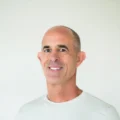
Join us for an enlightening conversation with Julia Hotz, journalist and author of The Connection Cure: The Prescriptive Power of Movement, Nature, Art, Service, and Belonging. We explore the transformative potential of social prescribing, a practice that shifts patient care from focusing solely on treatment to empowering holistic health and prevention. Discover inspiring stories, including how a simple social prescription changed a patient’s life and sparked a nationwide movement to include social prescribing in medical curricula.
Julia Hotz is a journalist and author of The Connection Cure: The Prescriptive Power of Movement, Nature, Art, Service, and Belonging.
She discusses the KevinMD article, “How a group of British medical students fought for social prescribing.”

Our presenting sponsor is DAX Copilot by Microsoft.
Do you spend more time on administrative tasks like clinical documentation than you do with patients? You’re not alone. Clinicians report spending up to two hours on administrative tasks for each hour of patient care. Microsoft is committed to helping clinicians restore the balance with DAX Copilot, an AI-powered, voice-enabled solution that automates clinical documentation and workflows.
70 percent of physicians who use DAX Copilot say it improves their work-life balance while reducing feelings of burnout and fatigue. Patients love it too! 93 percent of patients say their physician is more personable and conversational, and 75 percent of physicians say it improves patient experiences.
Help restore your work-life balance with DAX Copilot, your AI assistant for automated clinical documentation and workflows.
VISIT SPONSOR → https://aka.ms/kevinmd
SUBSCRIBE TO THE PODCAST → https://www.kevinmd.com/podcast
RECOMMENDED BY KEVINMD → https://www.kevinmd.com/recommended
GET CME FOR THIS EPISODE → https://www.kevinmd.com/cme
I’m partnering with Learner+ to offer clinicians access to an AI-powered reflective portfolio that rewards CME/CE credits from meaningful reflections. Find out more: https://www.kevinmd.com/learnerplus
Transcript
Kevin Pho: Hi, and welcome to the show. Subscribe at kevinmd.com/podcast. Today we welcome Julia Hotz. She’s a journalist, and she’s the author of the book The Connection Cure: The Prescriptive Power of Movement, Nature, Art, Service, and Belonging. There’s an excerpt from that book on KevinMD titled “How a group of British medical students fought for social prescribing.” Julia, welcome to the show.
Julia Hotz: Thank you so much for having me, Kevin. Great to be here.
Kevin Pho: So let’s start by briefly sharing your story and journey.
Julia Hotz: My story and journey. As you mentioned, I am a journalist. I am not a health expert. I am not a health care expert. But boy, during the pandemic, I was really fascinated by so much of the data I was seeing around health, particularly around the loneliness epidemic. I’ve been in the U.K. At the time, there was a statistic suggesting something like one in five people are coming to the doctor for a nonmedical social reason. This creates all kinds of pressure on the health care system.
And so I started out my journey by investigating what actually works to reduce loneliness. Why does loneliness have all of these health consequences? And came to find out that loneliness was just the tip of the iceberg. We’ve seen rising rates of lifestyle disease, anxiety, depression, ADHD, chronic pain, and dementia. And my journey to investigate social prescribing, which is a practice through which health workers are referring their patients to nonmedical, community-based activities, is actually a great antidote for this.
It turns out that 80 percent of our health is affected by our environment. And when we feel connected to our communities, when we feel like we have something to get us out of the bed in the morning, we feel like we have outlets to cope with stress, our health actually does improve.
Real physician voices, twice a week
Free, and one click to unsubscribe.
Kevin Pho: All right. And the surgeon general recently rehighlighted loneliness as an epidemic, and I’m interested to hear more about how social prescribing can mitigate some of that. You have an excerpt from your book on KevinMD. It’s titled “How a group of British medical students fought for social prescribing.” So tell us about that excerpt for those who didn’t get a chance to read it.
Julia Hotz: Totally. Well, I’ll just back up a second and say, when you hear about this social prescribing, the act of doctors prescribing an art class or a nature excursion, your clinician audience’s first thought might be, “OK, that sounds great, but how are they going to have time to do that? I mean, how are they going to have the resources to do that?” Doctors are already so overloaded with the number of things they have to do.
But this excerpt talks about how, actually, in the U.K., where this social prescribing movement began, this was a movement from the ground up. It started with a bunch of individual doctors saying, “I know that my patient doesn’t need another medication. I know they don’t need another therapy. I know I don’t need to refer them to a specialist. What they really need are some lifestyle changes, so I’m going to prescribe them a cycling group.”
And so this movement sort of began and was growing from the bottom up, but it still wasn’t quite implemented in the health care system. And it certainly wasn’t taught in medical schools until a group of British medical students said, “This is the future of medicine. We know that our health is determined by social factors in our environment. We want to start doing this.”
And so that excerpt is a scene from the perspective of one of the students who really led this revolution. He saw firsthand when there was this woman who was on eleven medications, had Parkinson’s disease. After he got to know what mattered to her, he prescribed her a salsa class. She went from eleven medications to two medications. She started seeing him much less.
And so then he really fought to start a network of medical students around the country who would start teaching social prescribing anyway. And spoiler alert, three years into that, the NHS and sort of the people in charge of the curriculum said, “You know what? You win. It seems like our medical professionals of the future really want this, so we are going to start teaching social prescribing in our curriculum.”
Kevin Pho: So in terms of examples of social prescribing, you mentioned things like a salsa class. What are some other typical ways that medical students or physicians can socially prescribe? Are there set courses? What exactly does that formal curriculum teach?
Julia Hotz: So I think it’s important to note that it really depends on where you are. This exists now in thirty-two countries. But let’s just continue with the U.K. example because that’s where it’s had the most uptake. A social prescription could look like a cycling group. I talk about that example. It could look like a sea swimming course. It could look like even someone connecting you to a volunteering opportunity.
And oftentimes in the U.K., it’s not just the primary care provider doing the social prescribing. They’re also enlisting what’s called a link worker, which is a position that sort of serves as an in-between between the medical professional and the community, who actually has the time, number one, to get to know what matters to you.
So if you were my patient, Kevin, I would try to understand, “What gets you out of the bed in the morning? What did you love to do as a kid but haven’t had a chance to do so since? What are you curious about in your neighborhood?” And then that link worker would take that information and say, “OK, well, in our community, here is what is available.” Maybe it’s cooking classes that are on offer. Maybe you’re looking for a job. Social prescriptions can also be to prescribe job help.
So it really depends. It’s a combination, I would say, of combining what matters to you, but then also a lot of evidence depending on what you’re coming in for. So if your symptoms are something resembling depression, if you are at risk of obesity, I might prescribe you some sort of movement-related activity because we know that moving our bodies is good for our metabolic health. It increases our serotonin production. It increases our endorphins. If you’re struggling with anxiety, I might prescribe you something connected to art because art can be a helpful coping mechanism for anxiety. So it really depends, I would say.
Kevin Pho: In your excerpt, you talk about the shift of the focus from “What’s the matter with you?” to “What matters to you?” Talk a little bit more about that distinction and why that matters.
Julia Hotz: Yeah, that shift really sticks with people. I think it’s a bit of a double-edged sword. It is so great that today there’s so much less stigma around talking about our health, particularly talking about our mental health. And so it’s tempting to see the world through sort of the lens of our diagnosis: “I can’t do this because I have anxiety. I can’t do this because I have ADHD. Oh, this is my depression talking.”
But actually, what these health workers are trying to do is acknowledge, “Yes, you are struggling with these symptoms, but it’s not your whole story.” And if you tell me, “When in your life are you feeling the least oppressed? When are you feeling the most focused? When are you feeling the least anxious? Tell me a little bit about the whole story of Kevin,” that would help me understand what I can do to help you feel those symptoms less often. That is the logic, and I have to tell you, it really works.
I’ll just quote one of the patients I interviewed who had very severe anxiety, panic disorder, agoraphobia, social anxiety. And he said to me, “I’m glad I got help for my anxiety.” He went on some medication. He got therapy. But he said, “There came a point where I started to see everything through the lens of my anxiety, and it became a self-fulfilling prophecy. But when I was given my social prescription and I was instead sort of reconnected to some of the things I loved to do as a kid, like reading or going to concerts or having book discussions, my anxiety actually went on the back burner.”
And so I think this is true for all kinds of symptoms. We’ve talked a lot about mental health issues and symptoms, but it’s true for physical health as well, that instead of just focusing on treating what the patient’s presenting symptoms are, we can encourage them to adopt a healthier lifestyle by focusing on what matters to them and actually helping them get resources and accountability to stick to that healthier lifestyle change.
Kevin Pho: So you mentioned that the genesis of this was in the U.K. Are there any initiatives in the United States that formally implement social prescribing?
Julia Hotz: Yes, there are, believe it or not. And this, I’m sure, is really going to shock your audiences. There are insurers that are now covering social prescriptions. For example, in New Jersey, the state where I’m originally from, there’s an insurer, Horizon Blue Cross Blue Shield, that’s covering up to six months of arts prescriptions for patients at risk of overspending on their insurance. It’s a partnership with all kinds of arts organizations in Newark, the New Jersey Performing Arts Center, and that’s just one of many examples.
I will say that it looks a lot like grassroots or sometimes statewide examples. We’re yet to have this sort of national authorizing social prescribing policy and fund as they do in the U.K. But also, I’m sure, and you’ve had people on your podcast who’ve talked about this, there are people who have been “prescribing nature.” Parks prescriptions are a huge movement. They’ve been prescribing walks and exercise, and now there’s more of a formal movement to do it. There’s a group called Social Prescribing U.S.A., which is a coalition of doctors and community workers and social workers around the country that’s trying to make this mainstream by 2035 by sort of crowdsourcing those grassroots examples.
Kevin Pho: So tell us a spectrum of responses from patients. I’m sure some patients expect to go to the clinician’s office for a medicine, perhaps, and leave with a prescription for a salsa class or art class. So tell us a spectrum of reactions that you receive from interviewing patients.
Julia Hotz: Definitely. I mean, you might think, I definitely thought, that if I were to go to my doctor presenting with, “I get migraines and chronic headaches,” and my doctor were to say, “Oh, I know what you need. You need a prescription for an art class,” I might say, “Well, wait a minute. What about my headache? I could just take an art class myself. Why? I came here to get relief for this headache.”
So I will say that it doesn’t look like that. It looks like a slower conversation. And certainly, if someone is coming in seeking medication, the doctor’s still going to prescribe medication. These are not either-or. But it’s just about, let’s say you’ve taken that medication and it’s still not working.
I think it’s also about doctors explaining the huge evidence base surrounding these social prescriptions. We know that migraines, headaches are associated with stress, some repressed anger. If we can find. And there’s also a lot of evidence suggesting that nature is an incredibly effective stress coping mechanism. It can help us improve our focus. It can help us feel more calm. We lower our blood pressure, our heart rate. We have less ulcers.
Understanding how these social prescriptions can have a scientific basis the same way that our pharmaceutical medications do, I think that helps patients come around to it. And I think it helps patients come around to it when it’s not just a blanket social prescription based on whatever I, the doctor, think. It’s really a conversation guided by the patient.
And so I think this is where a lot of active listening from doctors and their teams, like I said, it’s not always just the doctor. Sometimes it’s that link worker. Sometimes it’s the social worker they work with who can really get to know, yes, the patient, of course, is seeking relief from their symptoms, but what does health look like in the long term for them?
Kevin Pho: So we talked a little bit about the data, the evidence. So we mentioned some conditions. So just briefly describe some specific diagnoses that are helped by social prescribing.
Julia Hotz: Sure. Well, let’s continue with that nature theme, and let’s continue with perhaps one of the most quickly rising diagnoses since the pandemic, ADHD. ADHD presents with symptoms like inattention, easily distracted, these sorts of things. I would say four decades of research we have now suggesting that nature is uniquely equipped to restore our attention. In other words, when we spend time in nature, we emerge feeling more calm, better at focusing.
The research suggests this is not a coincidence. This is very much rooted in our evolutionary tendency to have to pay attention to nature in order to survive. And now, following that sort of theoretical framework, there are studies suggesting that time in nature, there was a study of children with ADHD. Spending twenty minutes in nature had comparable effects to taking Ritalin for those kids.
The same with adults. A twenty or an hour walk along a busy highway versus one in a natural setting increases our perception of awe. It lowers our blood pressure. There are studies in Japan around forest bathing that show we reduce our stress cortisol response. We produce, like I said, less ulcers. And this is not just subjective research. This is blood samples. This is through urine samples.
So I would say nature for sort of the spectrum of disorders surrounding attention and stress is really, really powerful. But the book really goes into the deep science of all five kinds of social prescriptions for movement, nature, art, volunteer service, and a sense of belonging, how these can have deep health benefits.
Kevin Pho: Like I said earlier, your excerpt comes from your book The Connection Cure: The Prescriptive Power of Movement, Nature, Art, Service, and Belonging. So regarding the book itself, tell me the audience that the book’s meant for and just some key messages that you want them to come away with.
Julia Hotz: I would say that the book is primarily written for a mainstream audience. Maybe you are somebody who struggled with ADHD. Maybe you know somebody who’s struggled with ADHD. Maybe you’ve just been feeling kind of blah since the pandemic. The book is set up so that it’s covering these sort of in-depth patient profiles of some of our most common ailments.
But the second part of the book asks the how, and it is talking to people who work in health care, doctors, policymakers, medical school professionals. How have these thirty-two countries gone from thinking, “Gee, social prescribing is a good idea,” to actually integrating it into their health care system? So that is the part of the book that I think your audiences will really resonate with.
And I would say that the key messages are that this is not a new idea. I mean, the idea of recognizing that our health is determined by social factors, that our symptoms are always biopsychosocial in nature, is a common theme across so many disciplines. It’s looked like integrative medicine, lifestyle medicine, holistic health. I would say that social prescribing is a unifying practice for all of these ideas. It’s unifying across primary care, across emergency medicine, across mental health fields as well. And it’s actually giving people a blueprint to do something about it.
Instead of forcing clinicians to rely on their own sort of knowledge base of what’s available in the community or of what they might intuit is a good prescription for their patient, it’s giving people resources, a framework, a how-to guide to actually integrate this into their health care systems. And I think it’s a book of hope. I think there’s a reason why thirty-two countries around the world have now adopted some form of social prescribing, and I would hope that people would be interested in reading this book to see that they can be ahead of that curve.
Kevin Pho: The book is called The Connection Cure: The Prescriptive Power of Movement, Nature, Art, Service, and Belonging. Julia, thank you so much for sharing your perspective and insight. Thanks again for coming on the show.
Julia Hotz: Thank you so much, Kevin. Great to be here.
Listen and followApple PodcastsSpotifyYouTubeMore apps · Browse all episodes